Moist Zucchini Bread (The Squeeze-and-Forget Method)
A tender, warmly spiced quick bread that transforms fresh summer zucchini into a moist, walnut-studded loaf. We broke down the most-watched YouTube methods to build one foolproof technique centered on a single non-negotiable step: squeezing the zucchini until it cries uncle.
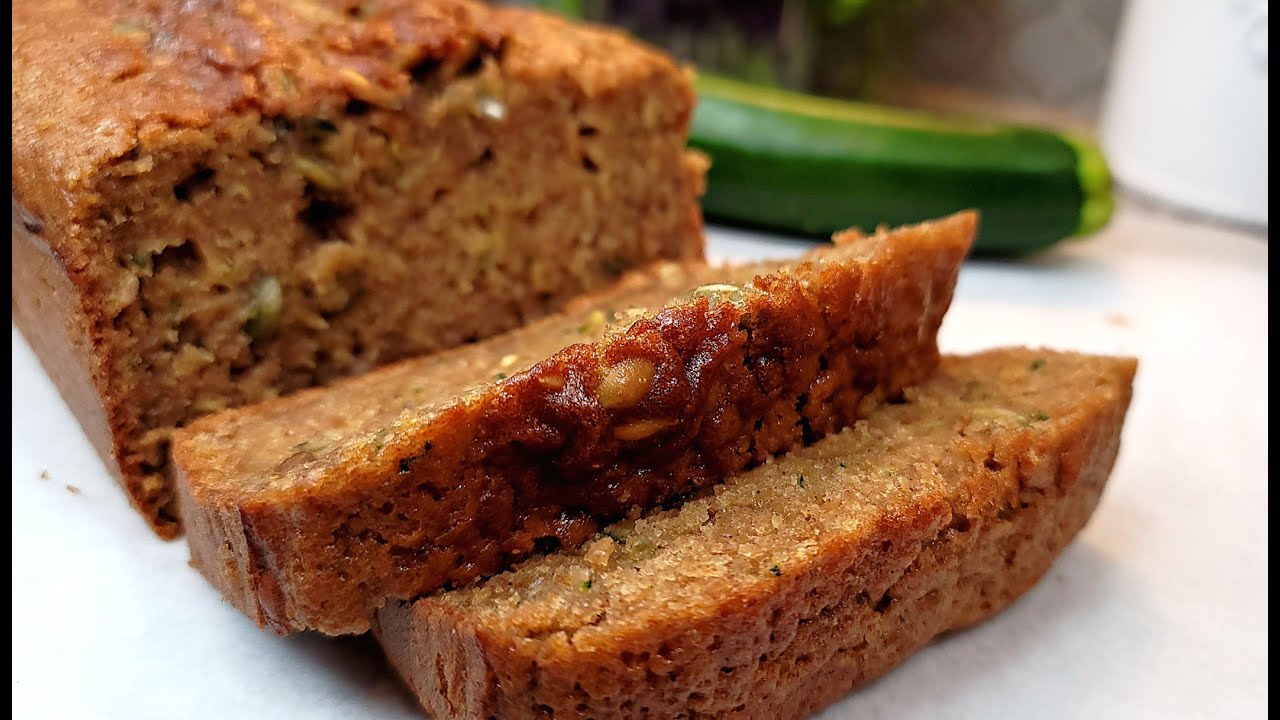
“Every zucchini bread failure can be traced to one moment: the cook who skipped squeezing. Zucchini is 95% water by weight. That water has to go somewhere — and if you don't force it out before baking, it goes into your crumb, turning what should be tender and sliceable into a dense, gummy mess that collapses when you look at it sideways. This recipe is built around solving that one problem. Everything else is just spice math.”
Why This Recipe Works
Zucchini bread is a paradox. The ingredient that makes it moist is also the ingredient most likely to ruin it. Zucchini is approximately 95% water by weight — more water per gram than most vegetables you'd find in a quick bread. Used correctly, that water creates the tender, cohesive crumb that makes this loaf so satisfying. Used incorrectly, it creates a gummy, sunken disaster that looks done on the outside and raw in the center.
The entire recipe is structured around managing that moisture. Every other decision is secondary.
The Squeeze Is the Recipe
Most zucchini bread instructions say "squeeze out excess moisture" and leave it there, as if the reader intuitively knows what "excess" means. It means almost all of it. Three cups of shredded zucchini contains roughly half a cup of free water. That water will express itself into your batter during mixing, and again during baking — unless you remove it first.
The method: shred on the large holes of a box grater, pile into a clean cotton kitchen towel, gather the edges, and twist until nothing more drips out. Then do it again. You're looking for the towel to be visibly saturated and the shredded zucchini to feel almost dry to the touch — lighter in weight and slightly compressed. This is not optional. It is the recipe.
Quick Bread Chemistry in Plain English
This batter uses both baking soda and baking powder, which is not redundancy — it's precision. Baking soda requires an acid to activate (here: the lemon zest and trace acidity in the eggs). Baking powder contains its own acid and activates on heat alone. Together they produce a two-stage rise: initial lift when the wet and dry ingredients combine, and a second push when the batter hits the oven. The result is a loaf with even height and no collapsed center.
The catch is that overmixing defeats both leaveners. Over-stirred batter develops gluten strands that trap the CO₂ instead of letting it expand freely, resulting in a dense loaf with a characteristic tunnel running through the center. Fold until the flour streaks disappear — twelve strokes maximum — and then stop. The batter should look rough and slightly lumpy. That is the correct texture.
Oil Over Butter
Vegetable oil produces a more consistently moist crumb than butter in quick breads, and the science is straightforward. Butter is roughly 18% water, which evaporates during baking and leaves a slightly drier texture. Oil is pure fat — it coats the flour proteins more completely, inhibiting gluten formation and creating a more tender, longer-lasting crumb. Butter-based zucchini bread is excellent on day one. Oil-based is excellent on day three. This recipe is built for longevity.
The Lemon Zest Factor
Warm spice profiles — cinnamon, nutmeg — can read as flat or one-dimensional without a counterpoint. The lemon zest is that counterpoint. It doesn't make the bread taste citrusy; it makes the spices taste more like themselves by providing aromatic contrast. Two tablespoons sounds aggressive for a bread this size, but the volatile oils in fresh zest are significantly milder than lemon juice. Don't reduce it.
Why Two Loaves
One loaf bakes unevenly. This much batter in a single standard loaf pan creates a dramatically domed center that stays underdone while the sides and bottom overbake. Splitting into two pans gives you controlled height, even heat distribution, and a flat enough top that each slice is uniform from edge to edge. One loaf goes on the counter. The other goes in the freezer. Wrapped in plastic and then foil, it holds for three months and thaws overnight to something indistinguishable from fresh-baked.
The architecture of this recipe is not complicated. It is simply honest about the one thing — that squeeze — that most versions omit.
Where Beginners Mess This Up
Before we start, read this. These are the 4 reasons your moist zucchini bread (the squeeze-and-forget method) will fail:
- 1
Not squeezing the zucchini dry: Shredded zucchini holds an enormous amount of water. If you fold it into the batter wet, you introduce so much extra liquid that no amount of baking time will fully set the crumb. Squeeze it in a clean kitchen towel — hard, twice — until no more liquid runs out. This is the whole game.
- 2
Overmixing the batter: Once the dry ingredients hit the wet, gluten development begins. Every extra stir builds more structure — the wrong kind. Overmixed quick bread turns dense and tough with a tunnel running through the center. Fold until the last streak of flour disappears, then stop. Twelve folds maximum.
- 3
Testing for doneness too early: Zucchini bread has a deceptively wet interior that stays moist long after the outside looks done. Test at 55 minutes with a toothpick inserted dead center. A few moist crumbs are fine. Wet batter means more time. Clean means you may have already overbaked — pull it immediately.
- 4
Slicing before it's fully cool: The crumb structure sets as the bread cools. Cut into a warm loaf and you'll compress the crumb, producing gummy slices that look underdone even when they're not. Give it a full hour on a wire rack. Patience here is a technique, not a suggestion.
The Video Reference Library
Want to see it in action? Here are the exact videos we analyzed and combined to build this foolproof recipe translation:
The foundational reference video for this recipe. Clear demonstration of the zucchini squeezing step and the fold technique that keeps the crumb tender.
🛠️ Core Equipment
- Box graterThe large holes produce the right shred size — fine enough to disappear into the crumb, coarse enough to retain some texture. A food processor produces too-fine shreds that release water explosively during baking.
- Clean kitchen towelThe only reliable tool for squeezing zucchini completely dry. Paper towels shred under the pressure. Cheesecloth works but is overkill. A worn cotton dish towel is ideal — it absorbs and holds the expelled water rather than letting it run back in.
- Two standard 9x5 loaf pansThis recipe produces enough batter for two loaves. Crowding it into one pan raises the center dramatically and creates an underdone core no matter how long you bake. Two pans, even heat, even bake.
- Wire cooling rackCooling the loaves on a solid surface traps steam underneath and softens the crust unevenly. A wire rack allows airflow around the entire loaf, setting the crumb structure uniformly from bottom to top.
Moist Zucchini Bread (The Squeeze-and-Forget Method)
🛒 Ingredients
- ✦2.25 cups all-purpose flour
- ✦3 cups zucchini, shredded and patted dry
- ✦1.75 cups granulated sugar
- ✦3 large eggs, room temperature
- ✦0.66 cup vegetable oil
- ✦1.25 teaspoons baking soda
- ✦0.75 teaspoon salt
- ✦1.5 teaspoons ground cinnamon
- ✦1.5 teaspoons vanilla extract
- ✦0.75 cup chopped walnuts
- ✦0.33 teaspoon ground nutmeg
- ✦0.33 teaspoon baking powder
- ✦2 tablespoons fresh lemon zest
👨🍳 Instructions
01Step 1
Preheat your oven to 350°F. Grease two standard 9x5 loaf pans with cooking spray or butter and lightly flour them.
02Step 2
Shred the zucchini using the large holes of a box grater. Transfer to a clean kitchen towel, gather the edges, and twist firmly to squeeze out as much moisture as possible. Repeat twice.
03Step 3
Whisk together the eggs, vegetable oil, sugar, vanilla extract, and lemon zest in a large bowl for about 2 minutes until slightly lighter in color and well combined.
04Step 4
In a separate bowl, sift together the flour, baking soda, baking powder, salt, cinnamon, and nutmeg.
05Step 5
Add the dry ingredients to the wet mixture and fold gently with a rubber spatula until just combined — stop the moment the last visible streak of flour disappears.
06Step 6
Fold in the squeezed zucchini and chopped walnuts until evenly distributed throughout the batter.
07Step 7
Divide the batter evenly between the two prepared loaf pans, filling each about three-quarters full.
08Step 8
Bake at 350°F for 55 to 65 minutes, until a toothpick inserted into the center comes out clean or with a few moist crumbs.
09Step 9
Cool in the pans for 12 to 15 minutes. Run a thin knife around the edges, then turn the loaves out onto a wire rack.
10Step 10
Cool completely on the rack — at least 1 hour — before slicing.
Nutrition Per Serving
Estimates based on standard preparation. Adjustments alter macros.
🔄 Substitutions
Instead of All-purpose flour...
Use Whole wheat flour (1.5 cups whole wheat + 0.75 cup all-purpose)
Slightly denser crumb with a nuttier flavor. Add 1-2 tablespoons of extra liquid if the batter looks stiff. Increases fiber content meaningfully.
Instead of Granulated sugar...
Use Coconut sugar or maple syrup (1.5 cups coconut sugar or 1.25 cups maple syrup)
Coconut sugar produces subtle caramel notes. Maple syrup darkens the crumb and may reduce bake time by 3-5 minutes. Both have a lower glycemic index than white sugar.
Instead of Vegetable oil...
Use Extra virgin olive oil or melted coconut oil
Olive oil adds a subtle fruity undertone that works surprisingly well with the spices. Coconut oil creates a slightly drier crumb. Both provide healthier fat profiles than standard vegetable oil.
Instead of Walnuts...
Use Pecans or almonds
Pecans add buttery sweetness and are softer in the crumb. Almonds add more crunch and a slightly higher protein contribution. Both are direct swaps at the same volume.
🧊 Storage & Reheating
In the Fridge
Wrap tightly in plastic wrap or store in an airtight container for up to 5 days. The flavor deepens on day 2 as the spices meld into the crumb.
In the Freezer
Freeze whole loaves or individual slices for up to 3 months. Wrap in plastic first, then foil, then bag. Thaw overnight at room temperature.
Reheating Rules
Individual slices toast beautifully in a toaster or toaster oven at 350°F for 3-4 minutes. Adds a slight crunch to the exterior while keeping the interior soft.
❓ Frequently Asked Questions
Why is my zucchini bread gummy or dense in the center?
Two culprits: unsqueezed zucchini or underbaking. Zucchini releases water aggressively during baking, and if that water wasn't removed before it went into the batter, the crumb can't set. Always squeeze thoroughly. If the exterior looks done but the center tests wet, tent with foil and bake another 10 minutes.
Do I need to peel the zucchini before shredding?
No. The skin is thin, mild, and disappears completely into the baked crumb. Peeling is extra work with no payoff. Just wash the zucchini well and grate it skin-on.
Can I make this as muffins instead of a loaf?
Yes. Fill a greased muffin tin three-quarters full and bake at 350°F for 20-25 minutes. The same toothpick test applies. This batter makes approximately 24 standard muffins.
Why does the recipe make two loaves?
The yield is intentional. One loaf to eat now, one to freeze or give away. Halving the recipe works technically, but the batter ratios become harder to measure accurately at smaller quantities.
My bread sank in the middle after baking — what happened?
Usually one of three causes: overmixing (too much gluten), underbaking (pulled before the center set), or opening the oven door before the structure was stable. Don't open the oven before the 50-minute mark.
Can I add chocolate chips?
Yes. Fold in 0.75 cup of semi-sweet chips with the walnuts. Reduce the walnuts to 0.5 cup to keep the add-in ratio balanced. The bitterness of dark chocolate plays particularly well against the warm cinnamon.

The Science of
Moist Zucchini Bread (The Squeeze-and-Forget Method)
We turned everything on this page into a beautiful, flour-proof PDF cheat sheet. Print it out, stick it to your fridge, and never mess up your moist zucchini bread (the squeeze-and-forget method) again.
*We'll email you the high-res PDF instantly. No spam, just perfectly cooked meals.
AlmostChefs Editorial Team
We translate the internet's most popular cooking videos into foolproof, beginner-friendly written recipes. We analyze multiple methods, test them in our kitchen, and engineer a single "Master Recipe" that gives you the best possible result with the least possible stress.