Classic Yakgwa (The Korean Honey Cookie That Rewards Patience)
A traditional Korean confection of lightly spiced wheat dough fried low-and-slow in vegetable oil, then steeped in warm honey syrup until each piece becomes a dense, fragrant jewel. We break down the dough ratio, the exact frying temperature, and the syrup soak that most home cooks rush — and ruin.

“Yakgwa is one of the oldest confections in Korean culinary history — a fried, honey-soaked cookie that appears at every major ceremony from royal court banquets to modern Chuseok tables. It is also one of the most frequently botched. The dough looks simple. The frying looks simple. The syrup soak looks simple. Every one of those steps has a specific failure mode that turns what should be a tender, lacquered jewel into a greasy, chewy disappointment. Here is what actually goes wrong, and how to stop it.”
Why This Recipe Works
Yakgwa has been on Korean tables for over a thousand years. It appears in Goryeo dynasty records as an offering for royal ceremonies. It sits on Chuseok ancestral tables alongside songpyeon and japchae. And it is currently experiencing a viral moment with younger Korean audiences who rediscovered it during the pandemic and turned it into a social media phenomenon. None of that changes the fundamental fact: most people who attempt to make it at home produce a greasy, chewy disk that tastes like fried dough with honey poured over it. The recipe itself is not the problem. The execution is.
Why the Dough Works the Way It Does
Yakgwa dough is a fat-coated flour system — the sesame oil is added before any liquid and worked in until every flour particle is coated. This is not technique for technique's sake. The fat coating physically blocks water from reaching the flour proteins and forming gluten. No gluten network means the finished cookie shatters instead of chews. It is the same principle behind shortbread and pie dough, deployed with sesame oil instead of butter, and informed by a flavor architecture built around warmth and gentle spice rather than dairy richness.
The soju matters for structural reasons too. Its alcohol disrupts any nascent gluten bonds that form during mixing and then evaporates completely during the low-temperature fry, leaving behind the faint fermented complexity of Korean rice wine without any alcoholic presence in the final cookie.
The Low-Temperature Fry Is Counterintuitive on Purpose
Most frying operates on the principle of fast surface sealing — high heat, quick contact, crust forms immediately, interior steams inside the crust. Yakgwa inverts this entirely. At 120–125°C, there is no rapid surface sealing. Instead, the heat penetrates slowly and evenly from the outside in, allowing the dough to puff gently as the sesame oil layers separate, and cooking the interior completely over 15–20 minutes before the exterior reaches the amber color that signals doneness.
This is why a candy thermometer is not optional. The frying temperature for yakgwa looks wrong on paper — most home cooks see 125°C and assume the thermometer is broken. It is not. The oil at that temperature barely shimmers. A test piece sinks and rises slowly, almost lazily. This is correct behavior. Trust the thermometer, not your instincts.
The Honey Syrup Is a Structural Element
After frying, each piece of yakgwa contains a network of tiny air pockets created by the separating layers and steam expansion. When you submerge a hot, just-fried piece in warm honey syrup, capillary action pulls the thin syrup into those pockets and replaces much of the residual frying oil. This is why the timing and temperature of the soak matter so much: the syrup must be warm enough to stay fluid but not so hot that it immediately seizes the exterior and blocks penetration. It must soak long enough for that replacement to complete — not just coat the surface.
The result of a proper soak is a cookie that is simultaneously crisp at the very outside edge, tender through the interior layers, and dense with the flavor of honey and ginger all the way to the center. Cut one open and you can see the color gradient where the syrup has traveled.
What "Blood Sugar Awareness" Actually Means Here
Yakgwa is made with honey, fried in oil, and soaked in more honey. It is not a health food, and treating it as one serves nobody. What the blood sugar designation in the original database flags is real: honey has a lower glycemic index than refined sugar, and the fat content from sesame oil and frying slows glucose absorption compared to a dry baked confection. For someone managing blood sugar, a single piece of yakgwa consumed after a meal is meaningfully different from the same quantity of hard candy. That is the honest extent of the designation — context for how to eat it, not permission to eat it without consideration.
Two pieces with tea. That is the traditional serving. That is still the right serving. Some things do not need to be optimized.
Where Beginners Mess This Up
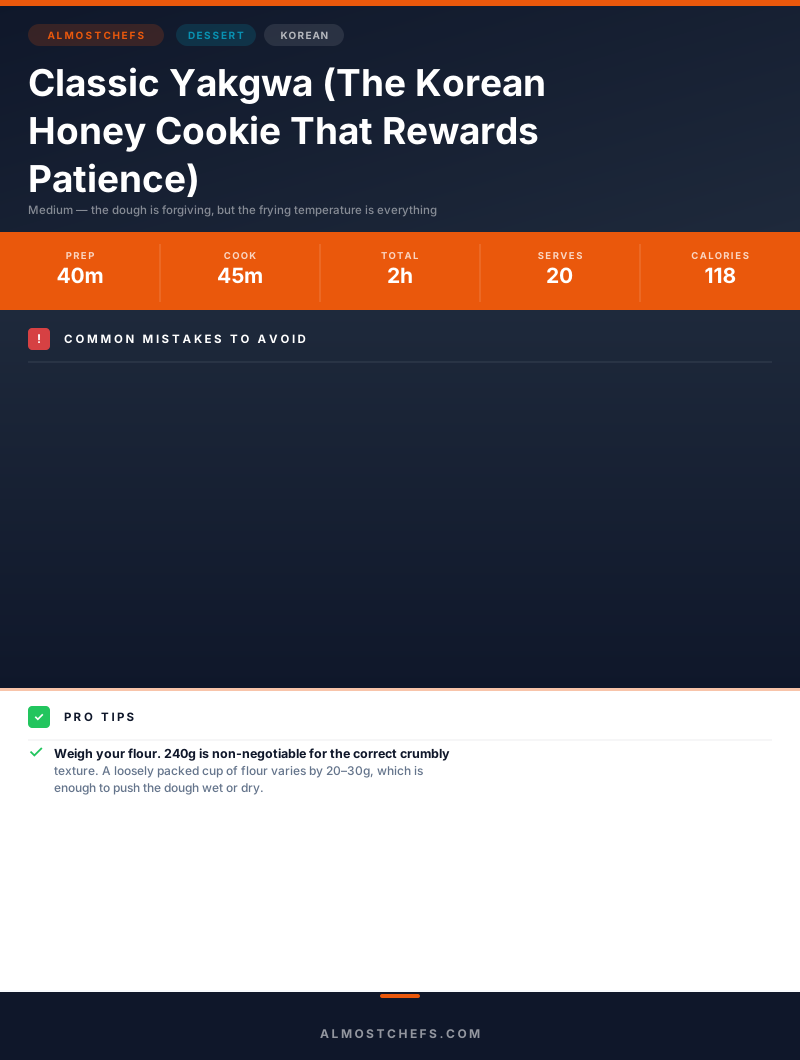
Before we start, read this. These are the 4 reasons your classic yakgwa (the korean honey cookie that rewards patience) will fail:
- 1
Overworking the dough: Yakgwa dough should feel like barely-held-together sand — crumbly, reluctant, almost falling apart. The moment you knead it like bread dough, you develop gluten and the finished cookie turns rubbery instead of melting apart in layers. Mix with your hands until the dough just holds when pressed. Stop there.
- 2
Frying at the wrong temperature: The correct frying temperature is 120–130°C (248–266°F). This sounds too low, because it is too low for most frying — but that is the point. Yakgwa needs to cook all the way through from the inside out over 15–20 minutes at low heat. Crank the oil to 170°C and the outside browns in two minutes while the center stays raw dough. A candy thermometer is not optional.
- 3
Rushing the honey soak: After frying, each piece must soak in warm honey syrup for at least 20 minutes — ideally 30. The syrup is not a glaze, it is a penetrating bath. During the soak, the hot syrup replaces some of the oil inside the cookie and creates the signature dense, sticky interior. Pull them out at 10 minutes and you get a surface coating. Wait the full time and you get transformation.
- 4
Making the dough too wet: The liquid ratio is critical. Too much honey or soju in the dough makes it soft and prone to absorbing excess oil during frying. The dough should crack slightly at the edges when pressed — if it feels smooth and pliable, you've added too much liquid. Scale by weight, not volume, to hit the right ratio every time.
🛠️ Core Equipment
- Candy or instant-read thermometerOil temperature control is the single most important technical element of yakgwa. You cannot gauge 125°C by eye — the oil barely shimmers at that temperature. Without a thermometer you are guessing, and guessing wrong means raw interiors or burnt exteriors.
- Heavy-bottomed pot or wokMaintains oil temperature stability when the cold dough pieces hit the oil. A thin pot drops temperature sharply with each addition, which throws off the timing and produces uneven results. The heavier the vessel, the steadier the fry.
- Yakgwa mold or decorative stampThe pressed pattern on yakgwa is not decorative — the indentations expand during frying and help the interior cook evenly. A smooth piece of dough cooks far more inconsistently than a stamped one. Silicone cookie stamps or traditional wooden molds both work.
- Wire cooling rack set over a sheet panLets excess oil drain after frying before the syrup soak. If you put oil-soaked cookies directly into honey syrup, the two liquids compete and the syrup cannot penetrate evenly.
Classic Yakgwa (The Korean Honey Cookie That Rewards Patience)
🛒 Ingredients
- ✦2 cups all-purpose flour (240g by weight)
- ✦3 tablespoons sesame oil
- ✦3 tablespoons honey
- ✦3 tablespoons soju or rice wine (cheongju)
- ✦1 tablespoon fresh ginger juice
- ✦1/2 teaspoon ground cinnamon
- ✦1/4 teaspoon fine sea salt
- ✦Neutral vegetable oil, for deep frying (about 4 cups)
- ✦1/2 cup pine nuts or black sesame seeds, for garnish (optional)
- ✦**Honey Syrup:**
- ✦1 cup honey
- ✦1/2 cup water
- ✦1 tablespoon fresh ginger, thinly sliced
- ✦1 small cinnamon stick
👨🍳 Instructions
01Step 1
Combine flour, salt, and ground cinnamon in a large bowl. Drizzle in sesame oil and rub between your palms until the mixture resembles coarse, damp sand — no dry flour pockets, but no clumping.
02Step 2
Mix honey, soju, and ginger juice together in a small bowl. Pour over the flour mixture and stir with a fork until the dough just comes together. Do not knead. Press a piece between your fingers — it should hold its shape without feeling soft or elastic.
03Step 3
Wrap the dough in plastic and rest at room temperature for 30 minutes. This relaxes any residual gluten and makes pressing the mold patterns far easier.
04Step 4
Meanwhile, make the honey syrup: combine honey, water, ginger slices, and cinnamon stick in a small saucepan. Bring to a gentle simmer over low heat, stir until honey dissolves, then keep warm on the lowest setting. Do not boil.
05Step 5
Roll the rested dough to 1cm (about 3/8 inch) thickness on a lightly floured surface. Cut into rectangles approximately 4x5cm, or press into a traditional yakgwa mold. Pierce each piece 2-3 times through the center with a skewer or chopstick to aid even frying.
06Step 6
Pour vegetable oil into a heavy-bottomed pot to a depth of at least 6cm. Heat over medium-low until a thermometer reads 120–125°C (248–257°F). Adjust heat to maintain this range throughout frying.
07Step 7
Fry the yakgwa in small batches — no more than 6 pieces at a time — for 15–20 minutes, turning every 3–4 minutes, until they are deep amber brown on all sides and feel firm when pressed with a spoon.
08Step 8
Transfer fried pieces to a wire rack set over a sheet pan. Let drain for 5 minutes, then submerge in the warm honey syrup.
09Step 9
Soak in the syrup for 25–30 minutes, turning occasionally. The pieces should darken in color and feel heavier as they absorb the syrup. Remove and place on the rack to drain. Garnish with pine nuts or black sesame seeds while still tacky.
10Step 10
Allow to cool completely at room temperature for at least 1 hour before serving. The texture continues to set as they cool — they are better the next day.
Nutrition Per Serving
Estimates based on standard preparation. Adjustments alter macros.
🔄 Substitutions
Instead of Soju...
Use Dry sherry or sake
Any neutral rice wine works. The alcohol opens the gluten structure slightly and evaporates during frying, leaving subtle fermented depth. Non-alcoholic option: replace with equal parts water — the texture changes slightly but remains acceptable.
Instead of Honey...
Use Rice syrup (jocheong)
Traditional yakgwa often uses rice syrup, which is less sweet and more neutral in flavor than honey. The texture of the finished cookie is slightly chewier. Rice syrup in the dough, honey in the soak is a common hybrid approach.
Instead of All-purpose flour...
Use Cake flour
Lower protein content means even less gluten risk. The finished cookie is slightly more delicate and tender. Do not use bread flour — the higher protein content makes the texture tough.
Instead of Vegetable oil (frying)...
Use Rice bran oil or sunflower oil
Both have high smoke points and neutral flavors. Avoid olive oil or coconut oil — the flavor intrudes significantly on the delicate sesame-ginger profile.
🧊 Storage & Reheating
In the Fridge
Store in an airtight container at room temperature for up to 5 days. Refrigeration makes them hard and diminishes the syrup texture — avoid unless the kitchen is very warm.
In the Freezer
Freeze in a single layer on a sheet pan until solid, then transfer to a zip-lock bag. Stores up to 2 months. Thaw at room temperature for 2 hours before serving.
Reheating Rules
Yakgwa does not reheat well. Serve at room temperature only. If frozen pieces feel too firm after thawing, a brief 10-second microwave at 30% power softens them without making them greasy.
❓ Frequently Asked Questions
Why is my yakgwa greasy?
Almost always an oil temperature problem. If the oil is below 115°C, the dough absorbs oil like a sponge before it has a chance to form a crust. Verify your thermometer is accurate by testing the boiling point of water (100°C at sea level). If it reads off, adjust accordingly.
Why did my yakgwa not puff up during frying?
Either the oil was too cold, or the dough was overworked. The puffing happens when steam generated inside the cookie expands the layers created by the sesame oil coating. If gluten holds those layers shut, there is nowhere for the steam to go.
Can I bake yakgwa instead of frying?
You can, but the result is a different confection. Baked yakgwa is drier, less layered, and the honey soak does not penetrate as deeply because the baked exterior is more porous but also more absorbent of moisture than oil-fried. If frying is a barrier, bake at 160°C for 20-25 minutes — it is still delicious, just not traditional.
My dough keeps cracking when I press the mold. What's wrong?
The dough is probably too dry or too cold. Let it rest an extra 10 minutes at room temperature, then try again. Press the mold firmly and evenly — rocking the mold side to side, rather than lifting and re-pressing, reduces cracking.
How do I know when the syrup soak is finished?
The cookies should feel noticeably heavier than when they went in, and the color should have deepened by at least two shades. The surface should look lacquered and slightly translucent at the edges. If you cut one open, the interior should show a darker, slightly sticky crumb — not dry pale dough.
Is yakgwa the same as약과 from convenience stores?
Commercially produced yakgwa uses shortcuts — industrial fryers, glucose syrup instead of honey, stabilizers — that extend shelf life but flatten the flavor. Homemade yakgwa has a measurably more complex flavor from real honey and fresh ginger. The texture is also different: commercial versions tend to be uniformly dense, while properly made homemade yakgwa has distinct layered crumb.
The Science of
Classic Yakgwa (The Korean Honey Cookie That Rewards Patience)
We turned everything on this page into a beautiful, flour-proof PDF cheat sheet. Print it out, stick it to your fridge, and never mess up your classic yakgwa (the korean honey cookie that rewards patience) again.
*We'll email you the high-res PDF instantly. No spam, just perfectly cooked meals.
AlmostChefs Editorial Team
We translate the internet's most popular cooking videos into foolproof, beginner-friendly written recipes. We analyze multiple methods, test them in our kitchen, and engineer a single "Master Recipe" that gives you the best possible result with the least possible stress.