Easy Wonton Soup (Restaurant Quality in 30 Minutes)
Delicate pork-and-shrimp wontons folded in the traditional style, simmered in a savory aromatic broth with bok choy, mushrooms, and julienned carrot. We broke down the most common home-cook failures to give you a foolproof weeknight method that tastes like it came from a proper Chinese kitchen.
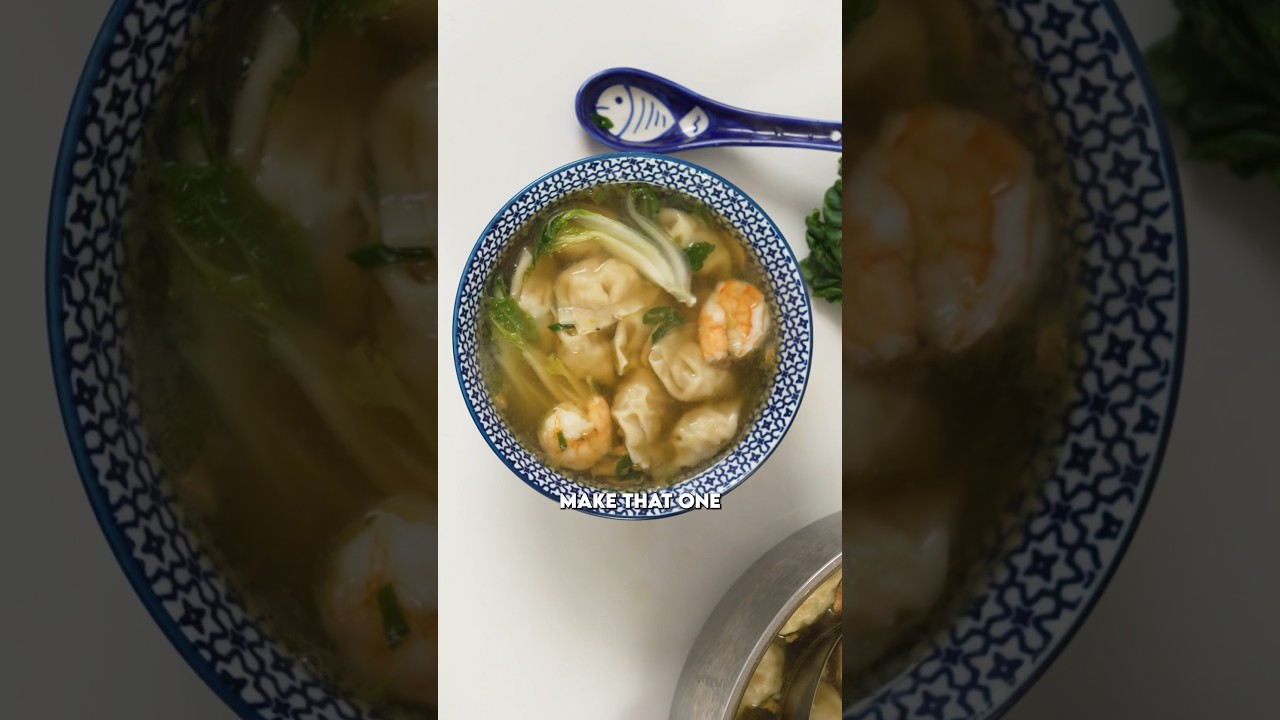
“Wonton soup has a reputation for being a restaurant-only dish because the folding looks fussy and the broth seems like a professional secret. Neither is true. The filling takes four minutes to mix, the fold is a triangle-and-pinch anyone can learn in sixty seconds, and the broth is built from pantry staples in under ten minutes. The real gap between disappointing homemade wonton soup and the kind you'd pay twelve dollars for is almost always the same two things: underseasoned filling and overcooked wontons. Both are completely fixable.”
Why This Recipe Works
Wonton soup is not a project. It is a thirty-minute weeknight dinner that gets abandoned at the planning stage because people see the folding step and assume expertise they don't have. The fold is a triangle and a pinch. You can learn it in sixty seconds. The filling is five ingredients stirred together in a bowl. The broth is aromatics plus stock. This is not difficult food.
What it is, however, is unforgiving of two specific mistakes — and those two mistakes are why most homemade wonton soup is disappointing.
The Filling Has One Chance
Once a wonton is sealed and in the broth, the filling is locked in. There is no adjusting seasoning, no fixing bland pork, no adding more ginger. Whatever you put in that wrapper is what you eat. This means the filling needs to be seasoned aggressively — more salty, more gingery, more aromatic than feels comfortable. Taste the raw mixture before you wrap a single piece. If it tastes mild, it will taste like nothing in the finished bowl.
The pork-to-shrimp ratio in this recipe is roughly equal by weight, which is the classic balance. Pork provides fat and savory depth; shrimp provides a sweet oceanic note and a firmer texture that keeps the filling from going dense. Chop the shrimp fine enough that it integrates into the pork rather than sitting as discrete chunks — large shrimp pieces create uneven filling that doesn't seal into a compact shape and tends to bulge the wrapper.
Sesame oil goes in the filling and the broth. In the filling, it's a flavor compound that doesn't survive high heat well, so you want it stirred in raw. In the broth, you add it at the end for the same reason. Two applications, two jobs.
The Broth Is a Ten-Minute Build
A proper wonton broth tastes like it simmered for hours because the aromatics are doing fast, efficient work. Garlic and ginger hit hot oil first — thirty seconds of direct heat blooms their volatile compounds in a way that adding them to liquid never achieves. Then the stock goes in and picks up everything they've released. By the time the broth is simmering, it already has structural depth.
Rice vinegar is the finishing move that most home cooks skip. Added after the heat is off, it sharpens every other flavor in the bowl — not by making the broth taste sour, but by providing the acid contrast that makes savory flavors register more fully. A few drops is enough. Think of it the way you'd think about a squeeze of lemon on a piece of fish.
The cornstarch slurry is optional but worth the effort. A heavy-bottomed pot with gentle, even heat plus a lightly thickened broth means the liquid clings to the wontons rather than running off. It's the difference between a bowl that feels cohesive and a bowl where everything slides apart the moment you lift your spoon.
The Fold Is Not Art
Triangle, wet edges, press from center outward, bring corners together, pinch. Five steps. The most important of these is pressing from center outward — this pushes out any air pockets that will expand in the heat and blow the seam. A sealed wonton with no air pockets will survive vigorous simmering. A poorly sealed wonton with a trapped air bubble will open in the broth, releasing filling into the liquid and leaving you with an empty wrapper.
Keep wrapped wontons covered with a damp cloth while you work. Exposed wonton wrappers dry and crack at the edges within a few minutes at room temperature, and a cracked edge cannot be sealed with water — it needs to be replaced. The damp cloth adds thirty seconds of setup and saves the batch.
Lower wontons into simmering broth one at a time using a spider strainer, releasing them just below the surface. The moment they float and turn fully translucent — five to seven minutes — they are done. Not almost done. Done. Pull them immediately or they go from silky to gluey in the time it takes to answer a text message.
This is fast, honest, reproducible food. The thirty-minute claim is real.
Where Beginners Mess This Up
Before we start, read this. These are the 4 reasons your easy wonton soup (restaurant quality in 30 minutes) will fail:
- 1
Underseasoning the filling before wrapping: Once the wontons are sealed and in the broth, you cannot fix the filling. It needs to taste aggressively seasoned on its own — salty, gingery, with a clean hit of sesame. If you taste the raw mixture and it seems mild, the finished wonton will taste like nothing. Season hard before you wrap.
- 2
Overcooking the wontons: Wonton wrappers are thin. They go from perfect to gluey and falling apart in about ninety seconds. The signal you want is the float: as soon as all the wontons bob to the surface and the wrappers turn translucent with no white patches, pull them. That's five to seven minutes from the moment they hit the broth — set a timer.
- 3
Sealing with dry edges: A dry wrapper edge will open up in the broth and release the filling into the soup. Wet your finger and trace the entire edge before folding. Press firmly from the center outward to push out any air pockets, which are the second-most-common reason wontons blow open.
- 4
Boiling instead of simmering: A rolling boil bashes the wontons against each other and against the pot. The wrappers tear, the filling escapes, and you end up with a cloudy, starchy mess. Bring the broth to a boil, then drop to a steady simmer before the wontons go in. They should drift gently, not bounce.
The Video Reference Library
Want to see it in action? Here are the exact videos we analyzed and combined to build this foolproof recipe translation:
The source video for this recipe. Walks through the filling ratio, the fold technique, and the broth build with clear close-ups on wonton shape and the translucency test for doneness.
🛠️ Core Equipment
- Large heavy-bottomed potEven heat distribution keeps the broth at a consistent simmer rather than cycling between boil and cold spots. Wontons need stable, gentle heat to cook through without the wrappers tearing.
- Spider strainer or slotted spoonFor lowering wontons into the broth one at a time without splashing, and for retrieving them without tearing the delicate wrappers. A regular spoon puts too much pressure on the seams.
- Small bowl of waterFor sealing wonton edges. Keep it right next to your assembly surface so you can wet each wrapper edge efficiently without stopping your rhythm.
- Sharp chef's knife or bench scraperFor the fine chop on the shrimp. Shrimp needs to be minced small enough that it integrates with the pork into a cohesive filling — rough chunks create lumpy wontons that don't seal cleanly.
Easy Wonton Soup (Restaurant Quality in 30 Minutes)
🛒 Ingredients
- ✦6 cups low-sodium vegetable broth
- ✦4 oz ground pork or ground chicken
- ✦4 oz shrimp, finely chopped
- ✦24 square wonton wrappers
- ✦2 tablespoons reduced-sodium soy sauce
- ✦1 tablespoon sesame oil
- ✦1 tablespoon rice vinegar
- ✦2 cloves garlic, minced
- ✦1 tablespoon fresh ginger, grated
- ✦3 green onions, thinly sliced
- ✦2 cups bok choy, chopped
- ✦1 medium carrot, julienned
- ✦8 oz mushrooms, sliced
- ✦1 teaspoon cornstarch
- ✦2 tablespoons water
- ✦Salt and white pepper to taste
- ✦1 tablespoon vegetable oil for cooking
👨🍳 Instructions
01Step 1
Combine the ground pork, chopped shrimp, 1 tablespoon soy sauce, 1 teaspoon sesame oil, half the minced garlic, and 1 sliced green onion in a bowl. Mix until fully integrated.
02Step 2
Place about 1 teaspoon of filling in the center of each wonton wrapper. Wet the edges thoroughly with a damp finger.
03Step 3
Fold each wrapper diagonally into a triangle, pressing firmly from the center outward to eliminate air pockets and seal the edges completely.
04Step 4
Bring the two bottom corners of the triangle together and press firmly to create the classic wonton shape. Set aside on a lightly floured surface.
05Step 5
Heat vegetable oil in a large pot over medium-high heat. Add the remaining garlic and grated ginger and cook for 1 minute until fragrant.
06Step 6
Pour in the vegetable broth and bring to a gentle boil, about 5 minutes.
07Step 7
Reduce heat to medium. Stir in the remaining soy sauce, rice vinegar, and remaining sesame oil.
08Step 8
Add the mushrooms and julienned carrots. Cook for 3-4 minutes until slightly softened.
09Step 9
Lower the wontons into the simmering broth one at a time using a spider strainer or slotted spoon. Stir gently to prevent sticking.
10Step 10
Cook the wontons for 5-7 minutes until they float to the surface and the wrappers are fully translucent with no white patches.
11Step 11
Stir in the chopped bok choy and cook for 2-3 minutes until the leaves are tender but still bright green.
12Step 12
Whisk together the cornstarch and water. Drizzle into the soup while stirring to thicken the broth slightly, about 1 minute.
13Step 13
Season with salt and white pepper. Ladle into bowls, top with remaining sliced green onions, and serve immediately.
Nutrition Per Serving
Estimates based on standard preparation. Adjustments alter macros.
🔄 Substitutions
Instead of Ground pork...
Use Ground turkey or ground chicken
Slightly leaner with comparable savory quality. Turkey can be a touch dry — add an extra half-teaspoon of sesame oil to the filling to compensate.
Instead of Regular soy sauce...
Use Low-sodium soy sauce or coconut aminos
Coconut aminos add subtle sweetness and cut sodium significantly. The flavor is slightly less sharp but works well in the broth.
Instead of Vegetable broth...
Use Bone broth or mushroom broth
Richer, more complex base with added depth. Bone broth adds body and a slight savory richness that makes the soup feel more substantial.
Instead of White button mushrooms...
Use Shiitake or maitake mushrooms
Deeper umami and more substantial chew. Shiitake stems are fibrous — remove them and save for stock.
🧊 Storage & Reheating
In the Fridge
Store broth and wontons separately for up to 2 days. Wontons sitting in broth overnight absorb liquid and become swollen and soft. Keep them apart and recombine when reheating.
In the Freezer
Freeze uncooked wontons flat on a parchment-lined sheet, then transfer to a bag for up to 3 months. Freeze broth separately in an airtight container for up to 2 months.
Reheating Rules
Bring broth to a simmer, drop in wontons, and cook 6-8 minutes from frozen or 3-4 minutes from fridge. Do not microwave assembled soup — the wrappers turn rubbery.
❓ Frequently Asked Questions
Why do my wontons fall apart in the broth?
Two causes: dry edges that didn't seal properly, or air pockets inside the fold that expand in the heat and pop the seam. Wet the entire edge thoroughly, press from center outward when folding, and simmer — never boil — once the wontons are in the pot.
Can I make the wontons ahead of time?
Yes. Assemble and refrigerate on a floured plate covered with a damp cloth for up to 4 hours. For longer storage, freeze them raw on a flat sheet before bagging. Do not refrigerate raw wontons overnight — the wrappers absorb moisture and become sticky and fragile.
How do I know when the wontons are cooked through?
The float test plus the translucency test. Wontons are done when they bob to the surface and the wrapper is completely translucent with no opaque white patches. Cut one open if you're unsure — the filling should be fully opaque with no pink.
My broth tastes watery. How do I fix it?
Add a splash of soy sauce and a few drops of rice vinegar. The vinegar is the key move — acid sharpens every other flavor in the broth without making it taste sour. A small amount of sesame oil stirred in at the end also adds significant depth.
Can I use rice paper instead of wonton wrappers?
No. Rice paper is designed to be softened in cold water and eaten without cooking — it disintegrates in hot broth. Wonton wrappers are wheat-based and hold their structure during simmering. They are not interchangeable.
Is the cornstarch slurry necessary?
No, but it improves the texture. Without it, you get a very clean, thin broth that tastes great but slides off the wonton. The light thickening creates a broth that coats everything slightly, making each spoonful feel more unified. It's a restaurant technique, not a shortcut.
The Science of
Easy Wonton Soup (Restaurant Quality in 30 Minutes)
We turned everything on this page into a beautiful, flour-proof PDF cheat sheet. Print it out, stick it to your fridge, and never mess up your easy wonton soup (restaurant quality in 30 minutes) again.
*We'll email you the high-res PDF instantly. No spam, just perfectly cooked meals.
AlmostChefs Editorial Team
We translate the internet's most popular cooking videos into foolproof, beginner-friendly written recipes. We analyze multiple methods, test them in our kitchen, and engineer a single "Master Recipe" that gives you the best possible result with the least possible stress.