Crispy Wiener Schnitzel (The 30-Minute Austrian Classic)
Thin-pounded pork or chicken cutlets breaded in a panko-breadcrumb blend and pan-fried until shatteringly crisp. We broke down the technique used in every major schnitzel video to deliver a foolproof home method that nails the coating every time — no deep fryer required.

“Most schnitzel fails at the same two moments: when the cook pounds unevenly and gets thick-thin meat that cooks inconsistently, and when the oil temperature drops the second the cutlet hits the pan. The result is a soggy, pale coating that slides off at the table. This recipe fixes both problems with one principle: respect the physics. Pound flat, fry hot, drain fast.”
Why This Recipe Works
Schnitzel is not complicated. It is precise. The difference between the pale, floppy cutlet you've been served at mediocre restaurants and the shatteringly crisp version that makes people reach for seconds is not a secret ingredient — it's a temperature maintained across five minutes of frying. That's it. Every other technique in this recipe exists to set up that five minutes correctly.
The Pound
Uniform thickness is not about aesthetics. A cutlet that varies from 1/4-inch to 3/4-inch across its surface is three different pieces of meat cooking at three different rates inside a single coating. By the time the thick center is safe to eat, the thin edges have lost all their moisture and dried into leather. The solution is a meat mallet and patience — working from the center outward in overlapping strokes, spreading the fibers rather than tearing them.
Plastic wrap on both sides prevents shredding and keeps the workspace clean. Don't skip it.
The Breadcrumb Blend
All panko produces a crust with height and crunch but inconsistent coverage — the large flakes leave visible gaps that fill with oil during frying. All fine breadcrumbs produces dense, compact coverage that traps steam and turns gummy. The blend solves both problems: panko provides the structure and crunch while traditional crumbs fill the voids for a sealed, even surface. This isn't fusion cooking — it's gap analysis.
The three-station breading sequence (flour, egg, crumbs) is architecture, not ritual. Flour gives the egg something to grip. Egg gives the crumbs something to grip. Without flour, the egg beads off the smooth meat surface and half the crumbs fall into the pan before the cutlet does.
The Oil
The most critical number in this recipe is 350°F. Below it, the breading doesn't set — it absorbs oil and becomes a fat sponge. At 350°F–375°F, something different happens: the surface moisture in the coating flashes to steam the moment it contacts the hot fat, creating a pressurized barrier between the oil and the meat. The coating crisps from the outside in, and the steam layer keeps the interior from drying out.
This is why you cannot crowd the pan. Two cutlets at once drop the oil temperature by 30–40 degrees but it recovers. A third cutlet pushes you below the threshold and you're braising. Everything comes out pale, soft, and wrong.
A cast-iron skillet or heavy stainless pan is the right tool here precisely because of its thermal mass — it absorbs the temperature shock of cold meat better than thin aluminum and recovers faster.
The Finish
Schnitzel is one of the few dishes that is measurably worse with every minute it sits. Serve it from the pan to the plate to the table in under three minutes and you have something excellent. Let it sit covered for ten minutes and you have a steamed mess. The lemon at the table is not garnish — the acid cuts through the residual oil and brightens the entire dish. Don't pre-squeeze it. Let each person do it themselves the moment they're eating.
That's the whole recipe. Pound flat, fry hot, serve fast.
Where Beginners Mess This Up
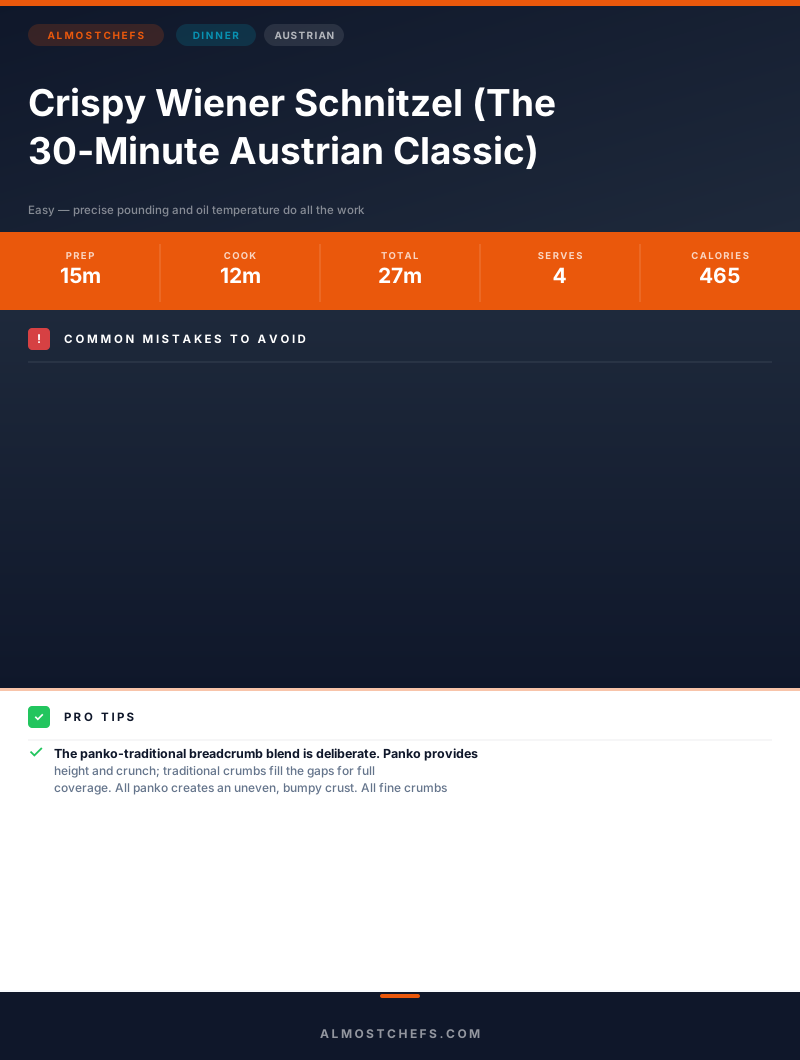
Before we start, read this. These are the 4 reasons your crispy wiener schnitzel (the 30-minute austrian classic) will fail:
- 1
Uneven pounding: A cutlet that's 1/4-inch thick on one end and 3/4-inch on the other will always fail. The thin end dries out before the thick end is safe to eat. Work from the center outward with firm, even strokes — not aggressive hammering that tears the meat.
- 2
Oil that's not hot enough: Schnitzel dropped into lukewarm oil absorbs fat instead of crisping. The oil must shimmer and immediately sizzle a bread cube before the cutlets go in. If the oil is right, the coating sets within seconds and creates a steam barrier that keeps the interior juicy.
- 3
Crowding the pan: Two cutlets maximum per batch. A third drops the oil temperature so fast that you're braising, not frying. Pale, oily schnitzel is almost always a crowding problem, not an oil quality problem.
- 4
Skipping the drain: Schnitzel straight from the pan onto a plate steams itself soggy from below. A paper towel-lined rack gives excess oil somewhere to go and keeps the coating crisp for an extra five minutes — which is all the time you need to plate and serve.
The Video Reference Library
Want to see it in action? Here are the exact videos we analyzed and combined to build this foolproof recipe translation:

The foundational technique video — meticulous pounding demo, three-station breading walkthrough, and close-up of exactly what the oil should look like before the cutlets go in.
2. Schnitzel Masterclass
Deep dive into the coating science: why the breadcrumb blend matters, how to test oil temperature without a thermometer, and the timing difference between pork and chicken.
3. 30-Minute Austrian DinnerStreamlined version for weeknight cooks. Covers the pounding and frying in real time so you can see the pace and color progression before you attempt it yourself.
🛠️ Core Equipment
- Meat mallet ↗The only tool that pounds cutlets to a uniform 1/4-inch without tearing the fibers. A rolling pin or wine bottle works in a pinch, but the textured face of a [meat mallet](/kitchen-gear/review/meat-mallet) creates small surface indentations that help the breading adhere.
- Large heavy-bottomed skillet ↗Maintains oil temperature when cold meat hits it. A thin pan drops temperature immediately and recovers slowly. Cast iron or a heavy stainless [skillet](/kitchen-gear/review/cast-iron-skillet) is ideal.
- Three shallow dishes ↗One for flour, one for egg wash, one for breadcrumbs. The three-station setup keeps one hand dry and one hand wet, preventing the breading from clumping into paste on your fingers.
- Instant-read thermometer ↗Takes the guesswork out of oil temperature. Target 350°F–375°F. Below that, you're frying in grease. Above, the coating browns before the meat cooks through.
Crispy Wiener Schnitzel (The 30-Minute Austrian Classic)
🛒 Ingredients
- ✦4 thin pork cutlets or boneless chicken breasts, about 4 ounces each
- ✦1 cup all-purpose flour
- ✦2 large eggs
- ✦2 tablespoons whole milk
- ✦1 cup panko breadcrumbs
- ✦1/2 cup traditional dried breadcrumbs
- ✦1 teaspoon kosher salt
- ✦1/2 teaspoon freshly ground black pepper
- ✦1/2 teaspoon garlic powder
- ✦1/2 teaspoon paprika
- ✦3/4 cup light olive oil or avocado oil, for frying
- ✦2 medium lemons, cut into wedges
- ✦3 tablespoons fresh flat-leaf parsley, finely chopped
- ✦2 cloves garlic, minced
- ✦2 tablespoons unsalted butter
- ✦Salt and pepper to taste, for finishing
👨🍳 Instructions
01Step 1
Pat the meat cutlets completely dry with paper towels, then place each one between two sheets of plastic wrap.
02Step 2
Using a meat mallet, pound each cutlet to an even 1/4-inch thickness, working from the center outward with firm, controlled strokes.
03Step 3
Set up your three-station breading line: seasoned flour (salt, pepper, garlic powder, paprika) in one shallow dish, whisked eggs and milk in a second, and combined panko and traditional breadcrumbs in a third.
04Step 4
Working one cutlet at a time, dredge in seasoned flour and shake off all excess. The flour coat should be thin and even, not caked.
05Step 5
Dip the floured cutlet into the egg wash, coating both sides completely and letting any excess drip off.
06Step 6
Press the cutlet firmly into the breadcrumb mixture, coating both sides and patting gently to ensure full adhesion. Do not press so hard you compress the crumbs — you want an airy layer, not a compact shell.
07Step 7
Heat oil in a large heavy-bottomed skillet over medium-high heat until it shimmers and a small bread piece sizzles immediately on contact.
08Step 8
Lay two cutlets into the oil without overlapping. Fry for 3–4 minutes until the coating is deep golden brown.
09Step 9
Flip each cutlet once using tongs and cook for another 2–3 minutes until the second side matches the first.
10Step 10
Transfer to a paper towel-lined plate. Repeat with remaining cutlets, keeping oil temperature consistent between batches.
11Step 11
Toss chopped parsley and minced garlic together, then scatter over the warm schnitzel immediately before serving.
12Step 12
Serve at once with lemon wedges. Squeeze fresh lemon juice over each portion at the table.
Nutrition Per Serving
Estimates based on standard preparation. Adjustments alter macros.
🔄 Substitutions
Instead of Pork or chicken cutlets...
Use Turkey breast cutlets
Slightly drier if overcooked — turkey has less intramuscular fat as a buffer. Monitor closely and pull at 160°F internal. Reduces calories by 15–20 per serving.
Instead of Panko and traditional breadcrumbs...
Use Almond flour mixed with finely grated Parmesan
Creates a nuttier, more savory crust with excellent crispiness. Reduces carbs by roughly 12g per serving and adds protein. Keto-compatible.
Instead of All-purpose flour...
Use Brown rice flour or chickpea flour
Brown rice flour produces nearly identical texture. Chickpea flour adds protein and a subtle earthiness. Both reduce refined carbohydrates by approximately 30 percent.
Instead of Whole milk in egg wash...
Use Unsweetened plant-based milk, or omit milk and use eggs alone
Eggs alone produce equally crispy results with no perceptible texture difference. Eliminates dairy entirely without compromising the coating.
🧊 Storage & Reheating
In the Fridge
Store in an airtight container for up to 3 days. The coating will soften — reheat properly to revive it.
In the Freezer
Freeze breaded uncooked cutlets on a sheet pan, then transfer to a zip bag for up to 2 months. Fry directly from frozen, adding 2–3 minutes per side.
Reheating Rules
Reheat in a 400°F oven on a wire rack for 8–10 minutes. This restores most of the crunch. Microwave turns it into cardboard — avoid.
❓ Frequently Asked Questions
Why does my breading keep falling off?
Three likely causes: the meat was wet before breading, you skipped the flour station, or you flipped the cutlet too early before the crust set. Dry meat thoroughly, use all three stations in order, and don't move the cutlet until it releases naturally from the pan.
Can I bake instead of fry?
You can, but the result is not schnitzel — it's a breaded baked cutlet. The crust won't crisp the same way without direct contact with hot fat. If you must bake, use a 425°F oven with a wire rack over a sheet pan and spray the coated cutlets heavily with oil before going in.
What's the difference between Wiener Schnitzel and regular schnitzel?
Technically, Wiener Schnitzel must use veal by Austrian law. What most people call schnitzel — pork or chicken — is correctly called Schnitzel Wiener Art (schnitzel in the Vienna style). The technique is identical; only the protein differs.
How do I keep schnitzel warm for a crowd?
Wire rack on a sheet pan in a 200°F oven, uncovered. This circulates air around the crust and keeps it from steaming itself soft. Never stack, never cover with foil.
My schnitzel is greasy. What went wrong?
The oil was too cool when the cutlet went in. Below 350°F, the coating absorbs fat instead of crisping in it. Get the oil properly hot before the first cutlet, and let it return to temperature between batches.
Do I need to rest schnitzel before serving?
No — unlike steak, schnitzel has no resting benefit. It should go from pan to plate to fork as fast as possible. The crust is at peak crispness the moment it drains.
The Science of
Crispy Wiener Schnitzel (The 30-Minute Austrian Classic)
We turned everything on this page into a beautiful, flour-proof PDF cheat sheet. Print it out, stick it to your fridge, and never mess up your crispy wiener schnitzel (the 30-minute austrian classic) again.
*We'll email you the high-res PDF instantly. No spam, just perfectly cooked meals.
AlmostChefs Editorial Team
We translate the internet's most popular cooking videos into foolproof, beginner-friendly written recipes. We analyze multiple methods, test them in our kitchen, and engineer a single "Master Recipe" that gives you the best possible result with the least possible stress.