Creamy White Sauce Pasta (The Weeknight Alfredo You'll Actually Make)
A velvety, restaurant-quality white sauce pasta built on a proper roux — butter, whole milk, heavy cream, aged Parmesan, and a pinch of nutmeg. We stripped out the guesswork so you get silky, cling-to-the-noodle sauce every time without a broken sauce or a clumpy mess.

“Most white sauce pasta fails the same way: the sauce breaks, goes gluey, or tastes like thickened milk instead of something you'd order twice. The fix isn't a better recipe — it's understanding three small things: the roux ratio, when to add the Parmesan, and why pasta water is not optional. Get those right and this becomes the most reliable weeknight dinner in your rotation.”
Why This Recipe Works
White sauce pasta is the easiest dish in Italian cooking to get technically right and the easiest to get subtly wrong. When it's bad, it's either glue — stiff, starchy, and heavy — or it's watery milk with cheese floating in it. When it's right, the sauce clings to each noodle in a thin, glossy coat that tastes like more than the sum of its parts. The difference between those outcomes comes down to two minutes, one pan, and a rule about when to add the cheese.
The Roux Is Not a Formality
Every cream sauce that doesn't break starts with a properly cooked roux. Four tablespoons of butter plus two tablespoons of flour, whisked together over medium-low heat for a full two minutes. Not thirty seconds. Not until the butter melts. Two minutes.
The flour contains raw starch granules that taste exactly like you'd expect raw flour to taste — chalky and flat. Heat converts those granules into a thickening network that melts smoothly into liquid rather than clumping. Short-change this step and the flour flavor persists through the entire finished dish. You'll taste it, your guests will taste it, and they won't be able to name it but they'll know something's off.
The roux is also your emulsion foundation. Cream sauces break because fat separates from water when the temperature swings or the ratio goes wrong. A properly built roux gives the sauce structural integrity — the starch molecules act as a bridge between the fat and liquid phases, keeping everything cohesive through simmering and tossing.
Milk Before Cream, Slow Stream Always
Add the whole milk first in a thin, steady stream while whisking. Not a pour — a stream. The goal is to incorporate the liquid into the roux gradually so the starch hydrates evenly. Dump the milk in all at once and you get lumps that no amount of whisking will fully undo.
Whole milk matters here. The fat content is what gives the sauce its body at lower quantities of cream. Skim milk produces a thin, watery sauce that needs so much cream to compensate that you've made the dish unnecessarily rich. Whole milk and a measured half cup of cream is the ratio that produces creaminess without heaviness.
Parmesan Off Heat — Non-Negotiable
This is the rule that separates smooth pasta from gritty pasta. Parmesan is a hard, crystalline cheese. Its proteins behave differently from softer cheeses: when exposed to direct high heat, they seize immediately and clump rather than melt. You get white rubbery pellets suspended in a greasy sauce.
The fix is simple: pull the pan completely off the burner before adding the cheese. Residual heat — the heat stored in the pan, the sauce, and the pasta — is more than enough to melt Parmesan smoothly. Add it gradually, stirring as you go. The sauce transforms from a cream base into something velvety and complex without a single clump.
Pasta Water as Sauce Architecture
Pasta water is starchy, slightly salty, and already at the right temperature. It's also the only thing that adjusts sauce consistency without diluting flavor. Every home cook who skips saving the pasta water eventually faces the same problem: a thick sauce that won't move, solved incorrectly by adding plain water, which breaks the emulsion and turns the whole thing watery.
Reserve at least half a cup before you drain. Add it one tablespoon at a time during the final toss. The starch in the water acts as a secondary emulsifier, helping the sauce coat each noodle in a thin, adherent film rather than pooling at the bottom of the bowl.
The Mushroom Layer
The mushrooms aren't garnish — they're an umami foundation that makes the dairy taste deeper and more complex. But only if they're cooked correctly. Mushrooms are mostly water. Add them to a crowded pan and they steam, turning pale and soft. Give them space in a hot pan with olive oil and they brown, developing glutamates that read as savory richness in the finished dish.
Don't stir too early. Let them sit undisturbed for 2-3 minutes to develop a crust before you move them. A large heavy-bottomed skillet with a wide base makes this possible — the surface area is what lets moisture escape instead of pooling.
The nutmeg in the seasoning plays the same architectural role as a bay leaf in a braise: you won't taste it as nutmeg, but without it the sauce tastes like it's missing something. A quarter teaspoon is the ceiling. Above that, it becomes detectably spiced. Below it, it rounds the dairy without announcing itself.
Where Beginners Mess This Up
Before we start, read this. These are the 4 reasons your creamy white sauce pasta (the weeknight alfredo you'll actually make) will fail:
- 1
Adding Parmesan over direct heat: Parmesan is a hard, low-moisture cheese. Add it while the pan is on a hot burner and the proteins seize instantly — you get clumps and a greasy, split sauce. Always pull the pan off heat before stirring in the cheese. Residual heat is more than sufficient to melt it smoothly.
- 2
Skipping the roux cook time: The flour-butter roux needs a full 2 minutes of whisking over heat before you add any liquid. Undercooked roux tastes starchy and raw. Two minutes is the minimum to cook off the flour flavor and develop the base that will thicken the sauce properly.
- 3
Draining pasta without saving the water: Pasta water is emulsified starch — it's the only thing that loosens a thick sauce without diluting the flavor. Plain tap water breaks the emulsion and makes the sauce watery. Reserve at least half a cup before you drain, every time.
- 4
Cooking the pasta too far before adding to sauce: If your pasta is fully cooked when it hits the sauce, it overcooks in the final toss. Pull it at al dente — a slight firm bite — because it will continue cooking for 1-2 minutes in the warm sauce. This is the difference between pasta that holds its shape and pasta that turns mushy.
The Video Reference Library
Want to see it in action? Here are the exact videos we analyzed and combined to build this foolproof recipe translation:
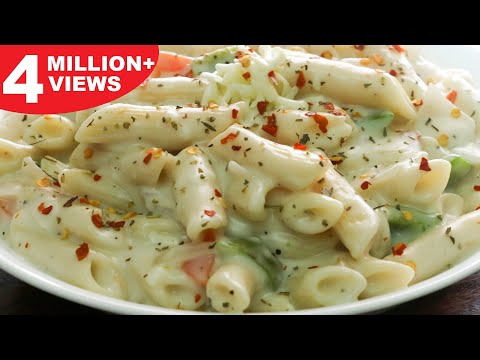
The source video for this recipe. Clear walkthrough of the roux technique, sauce consistency, and the final pasta toss. Good reference for understanding what the sauce should look like at each stage.
2. How to Make Perfect Alfredo Sauce
Deep dive into classic Alfredo technique — the original Roman method uses only pasta water and Parmesan, no cream. Useful context for understanding what creaminess actually comes from in a properly made sauce.
3. Why Your Pasta Sauce Breaks (And How to Fix It)Covers the science behind emulsification in cream sauces, why Parmesan clumps, and how starchy pasta water acts as a stabilizer. Essential viewing if you've ever had a white sauce turn greasy or grainy.
🛠️ Core Equipment
- Large heavy-bottomed skillet ↗Even heat across the full base prevents hot spots that scorch the roux. A thin pan creates burnt flour streaks that ruin the entire sauce. A wide surface also helps the sauce reduce evenly.
- Whisk ↗Essential for building a lump-free roux and incorporating milk in a slow, controlled stream. A wooden spoon will leave lumps. This is a whisk-only operation until the sauce is smooth.
- Large pot ↗Pasta needs room to move. A crowded pot drops the water temperature and produces uneven cooking. Use the largest pot you have and salt the water aggressively — it should taste like mild seawater.
- Fine-mesh sieve or colander ↗For draining pasta quickly so it doesn't over-cook sitting in hot water while you finish the sauce. Speed matters at this step.
Creamy White Sauce Pasta (The Weeknight Alfredo You'll Actually Make)
🛒 Ingredients
- ✦1 pound pasta (penne or fettuccine)
- ✦4 tablespoons unsalted butter
- ✦1 cup whole milk
- ✦1/2 cup heavy cream
- ✦4 cloves garlic, minced
- ✦3/4 cup grated Parmesan cheese
- ✦2 tablespoons all-purpose flour
- ✦1/2 teaspoon freshly ground black pepper
- ✦1/4 teaspoon ground nutmeg
- ✦1/2 teaspoon sea salt
- ✦2 cups fresh spinach, chopped
- ✦1/2 cup diced button mushrooms
- ✦1 tablespoon fresh parsley, chopped
- ✦2 tablespoons extra virgin olive oil
- ✦1/2 cup reserved pasta water
👨🍳 Instructions
01Step 1
Bring a large pot of heavily salted water to a rolling boil over high heat.
02Step 2
Add pasta and cook according to package directions until al dente, about 8-10 minutes. Before draining, scoop out at least 1/2 cup of pasta water and set aside. Drain the pasta.
03Step 3
Warm olive oil in a large skillet over medium heat. Add diced mushrooms and sauté undisturbed for 2-3 minutes, then stir, for a total of 4-5 minutes until browned and their moisture has evaporated.
04Step 4
Add minced garlic to the skillet and stir constantly for about 1 minute until fragrant. Do not let it color.
05Step 5
Reduce heat to medium-low and melt the butter into the garlic-mushroom mixture.
06Step 6
Sprinkle flour over the mixture and whisk continuously for 2 full minutes to cook out the raw flour taste and build a light roux.
07Step 7
Gradually pour in the whole milk in a thin, steady stream while whisking constantly to prevent lumps. Add the heavy cream and continue whisking until the mixture is completely smooth.
08Step 8
Simmer over medium-low heat for 3-4 minutes, stirring occasionally, until the sauce thickens enough to coat the back of a spoon.
09Step 9
Season with sea salt, black pepper, and ground nutmeg. Taste and adjust.
10Step 10
Fold in the chopped spinach and stir for 1-2 minutes until fully wilted.
11Step 11
Remove the skillet from heat entirely. Gradually stir in the grated Parmesan until fully melted and incorporated.
12Step 12
Add the drained pasta to the sauce and toss gently to coat. Add reserved pasta water one tablespoon at a time if the sauce is too thick — it should flow loosely around the noodles, not sit in a clump.
13Step 13
Transfer to a serving platter or bowls and garnish with fresh parsley and additional Parmesan.
Nutrition Per Serving
Estimates based on standard preparation. Adjustments alter macros.
🔄 Substitutions
Instead of Heavy cream...
Use Greek yogurt or crème fraîche
Slightly tangier flavor but maintains creaminess. Stir in off heat the same way as Parmesan — it will curdle if it hits a hot pan.
Instead of Butter...
Use Olive oil or ghee
Olive oil produces a lighter sauce with subtle fruitiness. Ghee maintains the richness and has a higher smoke point, which helps when sautéing the mushrooms and garlic.
Instead of Regular pasta...
Use Whole grain or chickpea pasta
Earthier flavor and firmer texture. Chickpea pasta has significantly more protein (about 14g per serving vs. 8g). Both work with this sauce but may need slightly more pasta water to loosen.
Instead of All-purpose flour...
Use Whole wheat flour
Slightly nuttier flavor. Absorbs liquid marginally faster — watch the sauce thickness and add pasta water a little sooner than you think you need to.
🧊 Storage & Reheating
In the Fridge
Store in an airtight container for up to 3 days. The sauce will thicken significantly when cold.
In the Freezer
Not recommended. Cream-based sauces separate on thawing and the pasta becomes mushy. Make fresh — this dish takes 35 minutes.
Reheating Rules
Add 2-3 tablespoons of water or milk to the container, cover loosely, and reheat on the stovetop over low heat, stirring frequently. Microwave works but dries out the pasta at the edges while the center stays cold.
❓ Frequently Asked Questions
Why does my white sauce taste like flour?
The roux wasn't cooked long enough. You need a full 2 minutes of whisking the flour-butter mixture over medium-low heat before adding any liquid. This cooks out the raw starch. If you add milk too early, the flour flavor never fully disappears no matter how long you simmer.
Can I make this without heavy cream?
Yes. Replace the heavy cream with an equal amount of whole milk. The sauce will be slightly thinner and less rich but still work. To compensate, reduce the sauce an extra minute before adding the pasta and use a bit more Parmesan to thicken.
Why did my Parmesan clump instead of melting?
You added it while the pan was still on the heat. Parmesan's proteins seize and clump when they hit a hot surface. Always remove the pan from the heat source completely before stirring in the cheese. Residual heat melts it smoothly.
Can I add chicken or shrimp to this?
Yes. For chicken, slice breast or thigh into strips and sear in the same pan before building the sauce, then set aside and return it at the end. For shrimp, 2-3 minutes per side in olive oil before the mushroom step — add them back in when you toss the pasta.
What pasta shape works best?
Ridged shapes like penne rigate or rigatoni hold sauce in their grooves. Fettuccine works well too because its flat surface maximizes contact with the sauce. Avoid spaghetti — the round surface sheds this type of sauce quickly.
My sauce is too thick. Can I fix it?
Yes — this is exactly what the reserved pasta water is for. Add it one tablespoon at a time while tossing the pasta. The emulsified starch loosens the sauce without diluting flavor. Never use plain water; it breaks the creaminess.
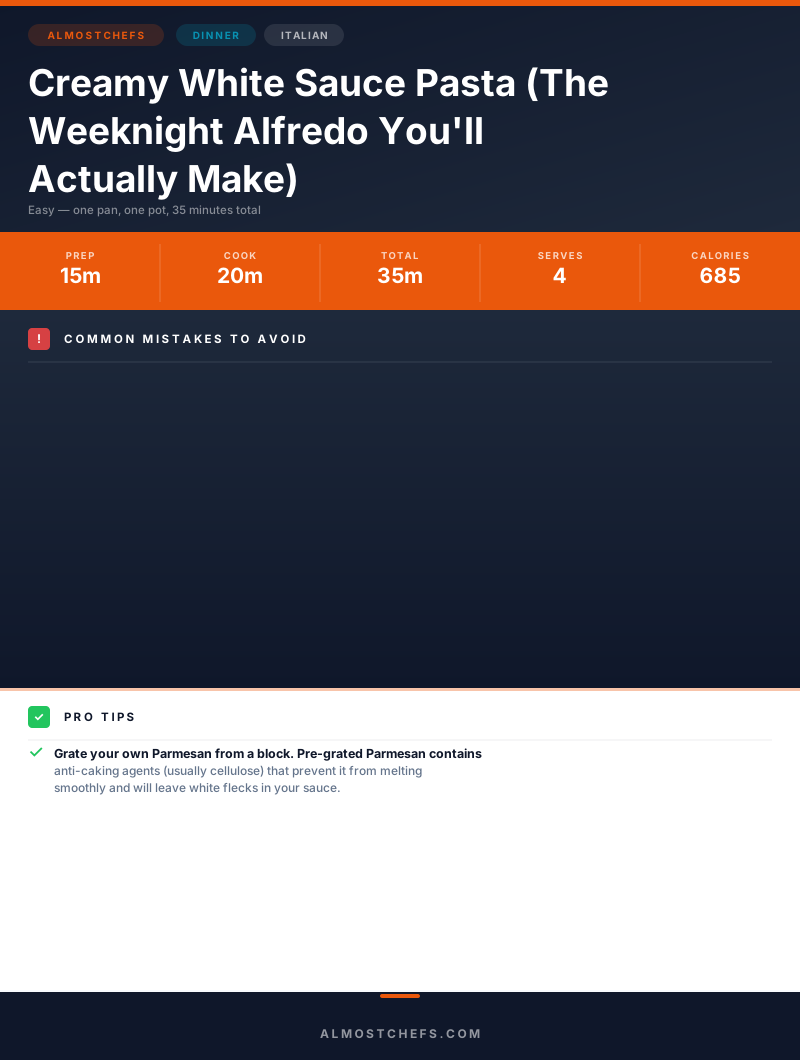
The Science of
Creamy White Sauce Pasta (The Weeknight Alfredo You'll Actually Make)
We turned everything on this page into a beautiful, flour-proof PDF cheat sheet. Print it out, stick it to your fridge, and never mess up your creamy white sauce pasta (the weeknight alfredo you'll actually make) again.
*We'll email you the high-res PDF instantly. No spam, just perfectly cooked meals.
AlmostChefs Editorial Team
We translate the internet's most popular cooking videos into foolproof, beginner-friendly written recipes. We analyze multiple methods, test them in our kitchen, and engineer a single "Master Recipe" that gives you the best possible result with the least possible stress.