The Perfect Wedge Salad (What Steakhouses Don't Tell You)
A crisp quarter head of iceberg lettuce topped with creamy homemade blue cheese dressing, crispy bacon, fresh tomatoes, and sharp alliums. We stripped out the excess and built a leaner, faster version that out-performs the steakhouse original — without losing a single thing that makes it worth ordering.
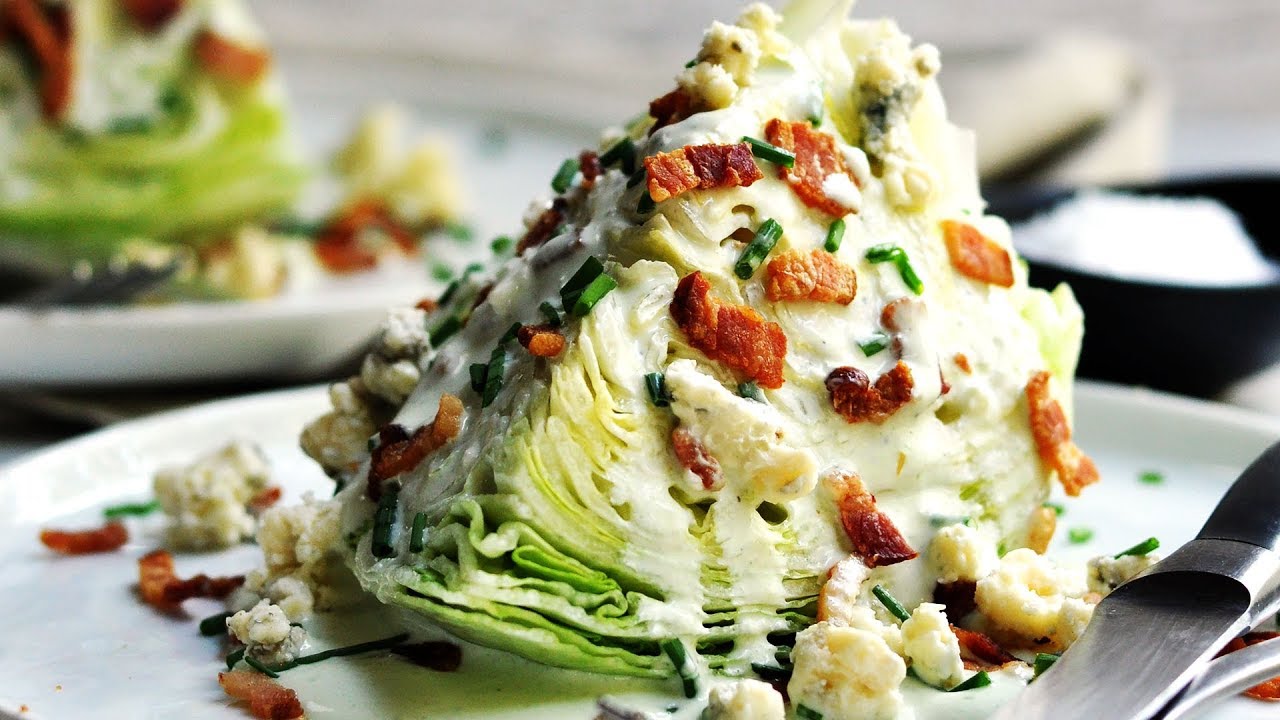
“The wedge salad is one of the most underrated dishes in American cooking — and one of the most consistently ruined. Steakhouses drown it in bottled ranch, nuke it with pre-crumbled cheese from a shaker, and call it done. The result is a soggy, flavorless wedge that costs fifteen dollars and apologizes for existing. Making it at home takes twenty-three minutes and produces something dramatically better. The secret is temperature, dryness, and a dressing that's actually worth eating.”
Why This Recipe Works
The wedge salad is an engineering problem disguised as a simple side dish. Three textures — cold crisp lettuce, creamy dressing, crunchy bacon — need to coexist on a single plate without collapsing into each other. Get the temperature wrong, the timing wrong, or the moisture wrong, and you get the thing you've eaten at a hundred forgettable steakhouses: a soggy wedge drowning in bottled dressing with limp bacon on top. This version solves each problem deliberately.
The Iceberg Argument
Iceberg lettuce has a reputation problem it doesn't deserve. Food culture spent the 2010s replacing it with arugula, radicchio, and kale — all valid choices — but iceberg is the only lettuce with the structural density to stay crisp through plating, dressing, and eating. Its low surface area per bite means that cold toppings don't immediately transfer their moisture into the leaves. Its tightly packed layers hold the wedge shape under the weight of cheese and bacon. These are not accidents. This is what iceberg is for.
The tradeoff is nutritional density. Iceberg is largely water, which is both its flaw and its feature. If you want more vitamins, swap to romaine. But know that you're optimizing for a different outcome. A wedge salad built on romaine is a good salad. A wedge salad built on iceberg is this specific thing — and this specific thing has been on menus since 1916 for a reason.
The Dressing Architecture
Most blue cheese dressings fail in one of two directions: too thin (slides off, pools at the bottom of the plate) or too thick (clumps on the surface, never integrates with the lettuce). Greek yogurt and buttermilk in combination solve this. The yogurt provides body and a clean lactic tang. The buttermilk thins it to pourable consistency while adding its own slightly funky, fermented depth that mirrors the blue cheese rather than competing with it.
The Dijon mustard is an emulsifier, not a flavor statement. At one teaspoon it keeps the dressing from breaking and adds a subtle background heat. The red wine vinegar sharpens everything without the sharpness reading as aggressive. The garlic needs to be fresh and minced — not powdered, not jarred. It blooms into the acid over the resting period and becomes something smoother than raw garlic and more vibrant than cooked.
The Crunch Hierarchy
This salad has four distinct textures: the dense cold crunch of iceberg, the fatty snap of cooled bacon, the creamy give of blue cheese, and the sharp bite of radish and red onion. Each one is doing a different job. The heavy skillet renders the bacon fat uniformly, producing pieces that shatter rather than bend. The radishes provide a peppery heat that the bacon and blue cheese can't supply. The red onion adds structural crunch and sulfurous sharpness that wakes up every other element on the plate.
If you leave out the radishes, the dish flattens. It still tastes good, but it loses the sharp edge that makes each bite feel complete. Radishes are cheap, accessible, and deeply underused in American cooking. This is one of their best applications.
Temperature as Technique
Cold plates are the most underrated step in this recipe. Iceberg starts softening the second it hits a room-temperature surface — cellular moisture migrates to the cut edges and the leaves begin to relax. Chilled plates extend crispness by several minutes, which is the difference between a salad that holds together through a shared appetizer course and one that collapses by the third bite. Put the plates in the refrigerator before you cook the bacon. They'll be ready by the time assembly begins.
This is the kind of step that sounds fussy but takes ten seconds and makes a real, measurable difference. Most of the technique in this recipe looks like that — small, fast actions that compound into a dramatically better result.
Where Beginners Mess This Up
Before we start, read this. These are the 4 reasons your the perfect wedge salad (what steakhouses don't tell you) will fail:
- 1
Wet lettuce: Water on iceberg is the enemy of every dressing. If you don't pat the wedges completely dry before plating, the dressing slides off, the bacon goes limp, and the whole thing tastes like cold water with toppings. Dry the cut faces and the exterior. Every surface.
- 2
Warm bacon: Bacon needs to rest on paper towels until fully cooled before it hits the lettuce. Warm bacon releases residual fat onto cold lettuce and creates a greasy, steamed texture instead of the sharp crunch you're after. Give it five minutes.
- 3
Blending the dressing too early: Blue cheese dressing needs to be made at least fifteen minutes before serving. The garlic, vinegar, and lemon need time to mellow into the yogurt base. Made immediately before serving, it tastes sharp and disconnected. Made ahead, it tastes cohesive.
- 4
Using warm plates: Wedge salad is a cold dish. Room-temperature plates start warming the lettuce the second it touches down. Chill your plates in the refrigerator for ten minutes before plating. This is not optional if you want the lettuce to stay crisp through the meal.
🛠️ Core Equipment
- Large heavy skilletEven heat across the pan surface renders bacon fat uniformly, producing crispy pieces without burnt edges. A thin pan creates hot spots that char half the bacon while the other half stays chewy.
- Chilled serving platesTemperature control is the single biggest variable in this dish. Cold plates keep iceberg crisp from the moment you plate to the last bite. Warm plates undo everything in under three minutes.
- Whisk and medium mixing bowlThe dressing requires proper emulsification — Greek yogurt, buttermilk, and lemon juice need to be fully incorporated before the garlic and mustard go in. A fork leaves the dressing streaky and uneven.
- Paper towelsNon-negotiable for both the bacon and the lettuce. Wet surfaces destroy this salad. Paper towels are doing as much work here as any piece of cookware.
The Perfect Wedge Salad (What Steakhouses Don't Tell You)
🛒 Ingredients
- ✦1 head iceberg lettuce, quartered into 4 thick wedges
- ✦6 slices bacon, chopped
- ✦1 cup cherry tomatoes, halved
- ✦1/2 cup crumbled blue cheese
- ✦1/3 cup plain Greek yogurt
- ✦1/4 cup low-fat buttermilk
- ✦2 tablespoons fresh lemon juice
- ✦1 tablespoon red wine vinegar
- ✦1 teaspoon Dijon mustard
- ✦2 cloves garlic, minced
- ✦1/2 teaspoon freshly ground black pepper
- ✦1/4 teaspoon sea salt
- ✦1/4 cup fresh green onions, thinly sliced
- ✦1/4 cup fresh chives, chopped
- ✦1/2 red onion, thinly sliced
- ✦2 radishes, thinly sliced
👨🍳 Instructions
01Step 1
Cook the chopped bacon in a large heavy skillet over medium-high heat, stirring occasionally, until crispy and golden brown, about 8 minutes. Transfer to a paper towel-lined plate and let cool completely.
02Step 2
Whisk together the Greek yogurt, buttermilk, lemon juice, red wine vinegar, Dijon mustard, minced garlic, black pepper, and sea salt in a medium bowl until completely smooth.
03Step 3
Taste the dressing and adjust seasoning — more salt for depth, more lemon juice to brighten, a pinch of sugar if the yogurt reads too tart.
04Step 4
Cover the dressing and refrigerate for at least 15 minutes while you prep everything else. This rest time is not optional.
05Step 5
Chill four serving plates in the refrigerator for at least 10 minutes.
06Step 6
Pat the lettuce wedges completely dry with paper towels — the cut faces, the curved exterior, everything. The drier the surface, the better the dressing adheres.
07Step 7
Arrange one lettuce wedge on each chilled plate, cut-side facing up to receive the toppings.
08Step 8
Distribute the halved cherry tomatoes evenly across all four wedges.
09Step 9
Layer the sliced red onion and thin radish slices over the tomatoes.
10Step 10
Sprinkle approximately 2 tablespoons of crumbled blue cheese over each wedge.
11Step 11
Top each wedge with the cooled crispy bacon pieces, distributing evenly.
12Step 12
Drizzle about 3 tablespoons of the chilled dressing generously over each wedge.
13Step 13
Finish with the fresh green onions and chopped chives. Serve immediately.
Nutrition Per Serving
Estimates based on standard preparation. Adjustments alter macros.
🔄 Substitutions
Instead of Blue cheese...
Use Feta or fresh goat cheese
Milder and creamier with less funk. Reduces saturated fat by about 3g per serving. Works especially well with the lemon-forward dressing — the acidity complements both cheeses.
Instead of Bacon...
Use Tempeh bacon or smoked chickpeas
Plant-based options that hold crunch well. Smoked chickpeas (roasted with smoked paprika and soy) are the better call — tempeh can turn chewy if the wedge sits before serving.
Instead of Iceberg lettuce...
Use Romaine hearts or a mix of radicchio and endive
Romaine holds up well and has more nutritional density. Radicchio and endive add a pleasant bitterness that makes the dish feel more sophisticated, though it changes the flavor profile significantly.
Instead of Buttermilk and Greek yogurt dressing...
Use Tahini dressing (tahini, lemon juice, garlic, water)
Fully vegan. Nuttier and earthier than the dairy version. Add a teaspoon of white miso for the savory depth that yogurt provides naturally.
🧊 Storage & Reheating
In the Fridge
Store components separately — dressing in an airtight jar for up to 4 days, bacon in a sealed container for up to 3 days. Assembled wedges do not store well. Build to order.
In the Freezer
Not applicable. This dish does not freeze.
Reheating Rules
Crisp leftover bacon in a dry skillet over medium heat for 2-3 minutes. Everything else is served cold and requires no reheating.
❓ Frequently Asked Questions
Why iceberg and not a more nutritious lettuce?
Iceberg has one structural property that no other lettuce can replicate: it stays crisp under cold, wet toppings for an extended period. Romaine wilts at the edges. Butter lettuce collapses. Iceberg maintains its architecture. That's the entire design principle of the dish. If you want more nutrients, use romaine — but accept that you're making a different salad.
Can I make this ahead for a dinner party?
Partially. The dressing can be made up to 2 days ahead and actually improves overnight. The bacon can be cooked and stored in the fridge. But the wedges should be cut and dried no more than 30 minutes before plating, and assembly should happen immediately before serving. Any longer and the lettuce softens.
My dressing is too thick — how do I fix it?
Add buttermilk one teaspoon at a time and whisk between additions. Greek yogurt brands vary significantly in thickness — some will give you a pourable dressing immediately, others produce something closer to a dip. Thin to your preference.
Is this actually gluten-free?
The recipe as written is gluten-free. The risk is cross-contamination in packaged bacon — some brands process on shared equipment with wheat-containing products. Check your bacon label if celiac disease is a concern.
How do I get the blue cheese flavor without the calories?
Use less blue cheese but better blue cheese. Two tablespoons of a high-quality Roquefort or Gorgonzola Piccante delivers more flavor per gram than four tablespoons of a generic crumbled blend. Quality over quantity always wins with assertive cheeses.
Why does my bacon go soft after I plate the salad?
Two reasons: the bacon wasn't fully cooled before plating, and the dressing hit the bacon directly. Cool the bacon completely before it touches the lettuce. When you dress the salad, aim the dressing at the lettuce, not the bacon. The bacon should receive only incidental dressing contact.
The Science of
The Perfect Wedge Salad (What Steakhouses Don't Tell You)
We turned everything on this page into a beautiful, flour-proof PDF cheat sheet. Print it out, stick it to your fridge, and never mess up your the perfect wedge salad (what steakhouses don't tell you) again.
*We'll email you the high-res PDF instantly. No spam, just perfectly cooked meals.
AlmostChefs Editorial Team
We translate the internet's most popular cooking videos into foolproof, beginner-friendly written recipes. We analyze multiple methods, test them in our kitchen, and engineer a single "Master Recipe" that gives you the best possible result with the least possible stress.