Classic Waldorf Salad (The 16-Minute Lunch That Actually Satisfies)
A crisp, creamy American classic with diced apples, toasted walnuts, celery, and grapes in a Greek yogurt-mayo dressing. We rebuilt the original Waldorf Astoria formula with one smart swap that adds protein without sacrificing the rich, tangy dressing that makes this salad worth making.
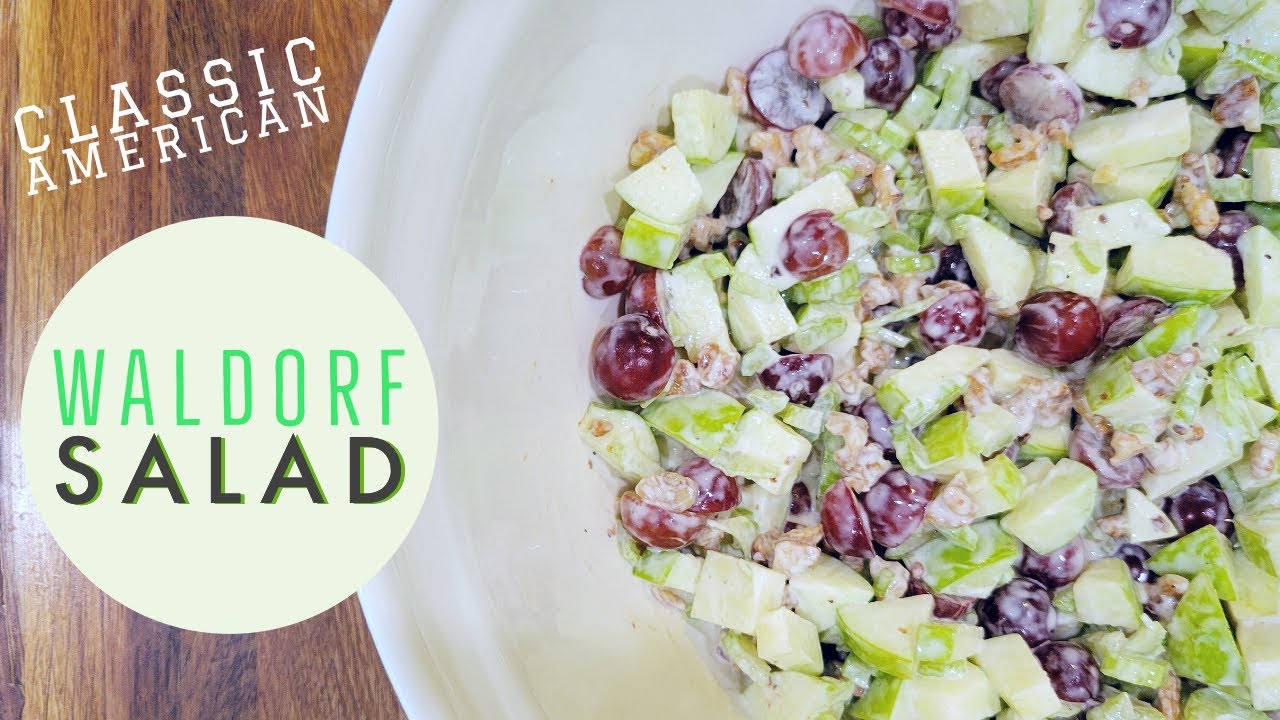
“Waldorf Salad has been on menus since 1893 and most modern versions still manage to get it wrong. The original had no walnuts, no grapes, and no lettuce — just apples, celery, and mayo. Every version since has been someone's improvisation. Ours swaps half the mayo for Greek yogurt, adds Dijon for sharpness, and insists on toasting the walnuts because raw walnuts in a cold salad taste like cardboard. Sixteen minutes. One bowl. A salad that actually holds up as a meal.”
Why This Recipe Works
Waldorf Salad is one of the few American dishes with a verifiable origin story. Oscar Tschirky, the maître d'hôtel of the Waldorf Astoria, created it in 1893 for a charity ball. The original had three ingredients: apple, celery, and mayonnaise. No walnuts. No grapes. No lettuce. What it had was a ratio — equal parts fruit crunch to creamy dressing — and that ratio is still the thing most modern versions get wrong.
The Dressing Architecture
Pure mayonnaise dressing works but it's heavy. By the time you've eaten a full serving, the richness accumulates into something that feels less like lunch and more like a commitment. Replacing half the mayo with Greek yogurt cuts the fat significantly while adding a brightness that plain mayo can't provide. The lactic acid in yogurt amplifies the apple's natural tartness and makes the Dijon mustard's sharpness land more cleanly.
The Dijon is not optional. It emulsifies the dressing slightly, distributes flavor evenly, and adds the kind of low-level heat that makes you keep eating without being able to identify why. A full tablespoon sounds like a lot — it isn't. The apple and honey blunt its sharpness down to a background note.
The Walnut Argument
Every serious version of this salad toasts the walnuts. Raw walnuts contain tannins — the same astringent compounds in red wine and tea — that register as bitterness when eaten cold and unsupported by heat. A cast iron skillet over medium heat for four minutes drives off the surface moisture, pushes the natural oils outward, and caramelizes the exterior just enough to convert bitterness into a deep, roasted nuttiness. The difference between raw and toasted walnuts in this dressing is the difference between a salad that's fine and one that gets asked about.
The Texture Equation
What keeps Waldorf Salad interesting over a full bowl is the texture contrast: creamy dressing against crisp apple, crunch of walnut, snap of celery, soft pop of grape. The moment any one of those textures fails, the salad becomes monotonous. This is why the apple gets lemon juice immediately after cutting, why you fold rather than stir, and why you serve on greens at the last possible second. Every procedural instruction in this recipe exists to protect the texture contrast from collapsing.
The celery bias cut — 45 degrees across the stalk — isn't precious restaurant technique. It genuinely reduces the fibrous, stringy quality of straight-cut celery while creating a larger surface area that holds dressing better. Two changes for the price of one knife adjustment.
Make-Ahead Reality
This is one of the better make-ahead lunch recipes because the Waldorf mixture improves overnight. The apple, celery, and grape juices slowly integrate into the dressing, the Dijon mellows slightly, and the walnuts absorb just enough moisture to lose their raw edge without going soft. The only thing that doesn't hold is the greens — they wilt in minutes. Keep them completely separate and combine at service. Everything else can be made 24 hours ahead with no quality loss.
Where Beginners Mess This Up
Before we start, read this. These are the 4 reasons your classic waldorf salad (the 16-minute lunch that actually satisfies) will fail:
- 1
Skipping the lemon juice on cut apples: Apples oxidize fast. Within 10 minutes of cutting, the surface browns and the texture softens at the edges. Tossing the diced apple immediately in lemon juice halts oxidation enzymatically and adds brightness to the dressing at the same time. It's a two-for-one step that most recipes mention but don't explain — so people skip it.
- 2
Not toasting the walnuts: Raw walnuts in a cold, creamy salad contribute bitterness and a soft, slightly chewy texture that reads as stale. Two minutes in a dry skillet over medium heat transforms them: the natural oils migrate to the surface, the bitterness mellows, and the crunch becomes genuine. Do not skip this.
- 3
Overdressing the salad: Waldorf dressing is thick and clingy. People tend to add more than they need, which buries the texture contrast between the apple, celery, and walnuts under a layer of cream. Fold in the dressing gradually and stop when everything is lightly coated — you should still see the individual components, not a homogeneous mass.
- 4
Dressing the greens too early: Mixed greens wilt within minutes of contact with the creamy dressing. If you're making this ahead, keep the Waldorf mixture and greens completely separate until the moment of service. The salad mixture itself holds well for 24 hours — the greens do not.
The Video Reference Library
Want to see it in action? Here are the exact videos we analyzed and combined to build this foolproof recipe translation:
The primary reference video demonstrating the full technique including the Greek yogurt dressing method and proper folding approach.
🛠️ Core Equipment
- Sharp chef's knifeClean cuts on apple keep the flesh from bruising and releasing excess moisture into the dressing. A dull knife tears, which accelerates oxidation.
- Dry skilletFor toasting walnuts. A [cast iron skillet](/kitchen-gear/review/cast-iron-skillet) holds heat evenly and prevents the nuts from scorching on one side while staying raw on the other.
- Rubber spatulaFor folding, not stirring. Folding preserves the structural integrity of the apple and grape pieces. A spoon shears through them.
- Large mixing bowlYou need room to fold without launching apple chunks off the side. Too-small bowls cause over-mixing.
Classic Waldorf Salad (The 16-Minute Lunch That Actually Satisfies)
🛒 Ingredients
- ✦3 medium Gala apples, cored and diced into 1/2-inch pieces
- ✦3 celery stalks, sliced into thin half-moons
- ✦1 cup red seedless grapes, halved
- ✦3/4 cup raw walnuts, roughly chopped
- ✦1/2 cup fresh parsley, finely minced
- ✦1/2 cup plain Greek yogurt
- ✦1/4 cup mayonnaise
- ✦2 tablespoons fresh lemon juice
- ✦1 tablespoon Dijon mustard
- ✦1 teaspoon raw honey
- ✦1/4 teaspoon fine sea salt
- ✦1/8 teaspoon freshly cracked black pepper
- ✦1/4 teaspoon garlic powder
- ✦4 cups mixed lettuce greens, loosely packed
👨🍳 Instructions
01Step 1
Dice the three apples into 1/2-inch cubes, discarding the core and seeds. Immediately toss the apple pieces with the fresh lemon juice to prevent browning.
02Step 2
Slice the celery stalks on a 45-degree bias into thin half-moon shapes.
03Step 3
Halve the red grapes lengthwise, working over a bowl to catch any juice.
04Step 4
Toast the walnuts in a dry skillet over medium heat for 3 to 4 minutes, shaking the pan frequently, until fragrant and slightly deepened in color.
05Step 5
Whisk together the Greek yogurt, mayonnaise, Dijon mustard, honey, sea salt, black pepper, and garlic powder in a large bowl until completely smooth.
06Step 6
Add the apple pieces with their lemon juice, celery, grape halves, toasted walnuts, and minced parsley to the dressing.
07Step 7
Fold everything together gently with a rubber spatula until the dressing coats all ingredients evenly, about 2 to 3 minutes of folding. Do not stir — fold.
08Step 8
Taste and adjust with additional salt, pepper, or lemon juice as needed.
09Step 9
Arrange the mixed greens across a serving platter or divide among four individual bowls.
10Step 10
Spoon the Waldorf mixture generously over the greens and serve immediately.
Nutrition Per Serving
Estimates based on standard preparation. Adjustments alter macros.
🔄 Substitutions
Instead of Mayonnaise...
Use Additional Greek yogurt or cashew cream
Full Greek yogurt replacement makes the dressing slightly tangier and significantly lighter. Cashew cream (soaked cashews blended smooth) adds richness without dairy and works well for vegan versions.
Instead of Gala apples...
Use Honeycrisp or Pink Lady
Both varieties hold their crunch longer after cutting and have a more complex sweet-tart flavor profile. Better choice if making ahead.
Instead of Walnuts...
Use Pecans or toasted sunflower seeds
Pecans add buttery richness with a softer crunch. Sunflower seeds are nut-free, stay crunchy longer in dressing, and add a mild nuttiness without overpowering the fruit.
Instead of Mixed lettuce greens...
Use Arugula, spinach, or baby kale
Arugula adds peppery contrast that cuts through the creamy dressing effectively. Baby kale holds up better if the salad sits for a few minutes before serving — it doesn't wilt as fast as delicate lettuce.
🧊 Storage & Reheating
In the Fridge
Store the Waldorf mixture (without greens) in an airtight container for up to 2 days. The apples will soften slightly by day two but the flavor improves.
In the Freezer
Not recommended. The yogurt-based dressing separates on freezing, and the apple and celery textures degrade completely.
Reheating Rules
Serve cold. This salad is not designed to be reheated. If serving from the fridge, let it sit at room temperature for 5 minutes to take the chill off before plating.
❓ Frequently Asked Questions
Can I make Waldorf Salad the night before?
Yes — with one condition. Make the Waldorf mixture (apple, celery, grapes, walnuts, dressing) and refrigerate it covered. Store the greens separately. Combine them immediately before serving. The mixture improves overnight. The greens wilt within minutes of contact with dressing.
Why is my Waldorf Salad watery?
The apples released moisture. This happens when the lemon juice step is skipped (the acid slows moisture release), when the apples sit too long before being folded in, or when the salad is over-folded and the fruit breaks down. Dice the apples last, toss immediately in lemon juice, and fold gently.
Do the walnuts need to be toasted?
Technically no, practically yes. Raw walnuts in a cold, creamy dressing taste bitter and soft. Toasting takes four minutes and converts them into something entirely different — crunchy, nutty, and warm-flavored. It's the highest-return-on-investment step in this recipe.
Is Waldorf Salad gluten-free?
This version is entirely gluten-free as written. All components — apple, celery, grapes, walnuts, Greek yogurt, mayonnaise, Dijon, and greens — contain no gluten. Check your mayonnaise label if cross-contamination is a concern.
What protein can I add to make this a complete meal?
Poached or rotisserie chicken is the most natural addition — it echoes the original Waldorf's history (the hotel version often included chicken). Chickpeas work well for a vegetarian option. Add either directly to the mixture before folding.
Can I use Greek yogurt instead of mayo entirely?
Yes. Full Greek yogurt replacement produces a tangier, lighter dressing with noticeably less richness. If you want the creaminess without the fat, use full-fat Greek yogurt — it has more body than low-fat versions and gets closer to the original mayo texture.
The Science of
Classic Waldorf Salad (The 16-Minute Lunch That Actually Satisfies)
We turned everything on this page into a beautiful, flour-proof PDF cheat sheet. Print it out, stick it to your fridge, and never mess up your classic waldorf salad (the 16-minute lunch that actually satisfies) again.
*We'll email you the high-res PDF instantly. No spam, just perfectly cooked meals.
AlmostChefs Editorial Team
We translate the internet's most popular cooking videos into foolproof, beginner-friendly written recipes. We analyze multiple methods, test them in our kitchen, and engineer a single "Master Recipe" that gives you the best possible result with the least possible stress.