Fresh Vietnamese Spring Rolls (The No-Tear Rice Paper Method)
Crisp vegetables, tender shrimp, silky rice vermicelli, and fresh herbs wrapped in translucent rice paper — served cold with a peanut dipping sauce that does most of the heavy lifting. We broke down the most-watched techniques to nail the wrapper hydration that trips up everyone on their first attempt.
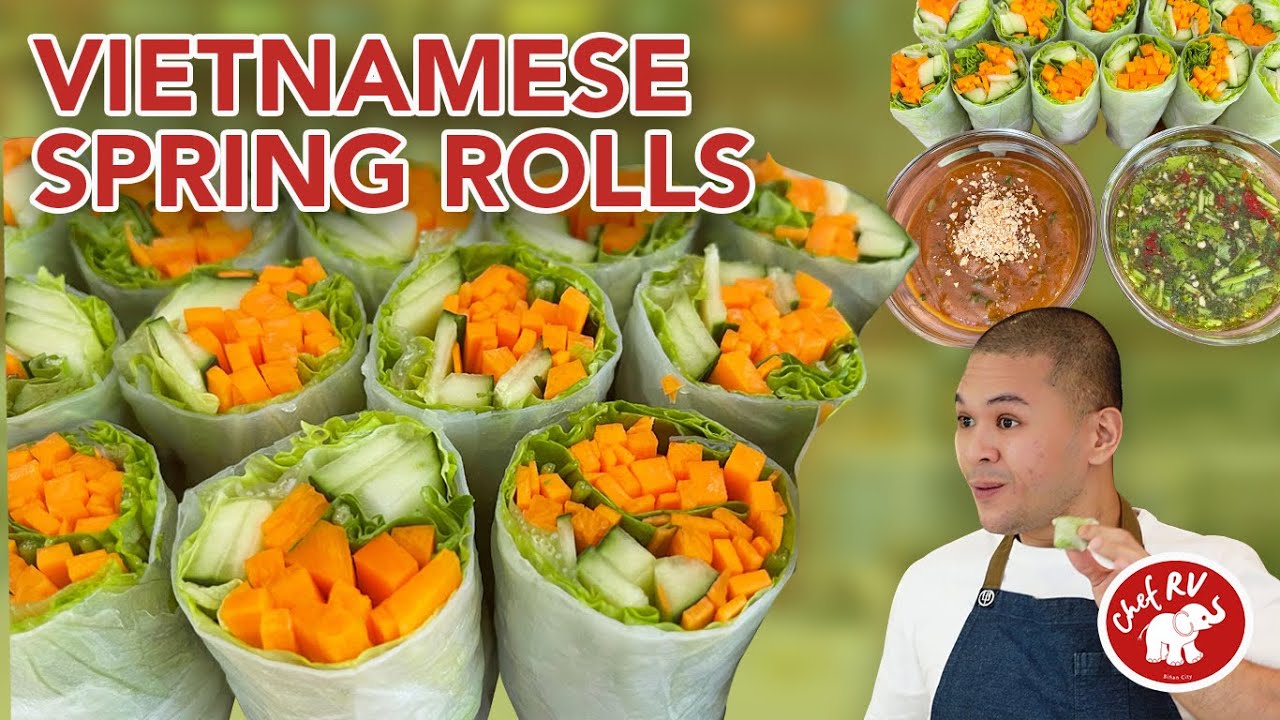
“Rice paper tears. It sticks to itself. It goes from stiff to soggy in six seconds flat if you don't know what you're doing. Every failed spring roll attempt comes down to one thing: not understanding that rice paper keeps hydrating after you pull it from the water. Most people soak it until it's pliable, then spend the next two minutes watching it turn into tissue paper. The fix is deceptively simple — and once you get it, you'll roll these in under a minute each.”
Why This Recipe Works
Vietnamese spring rolls — gỏi cuốn — are a dish that looks like it requires no technique and actually requires precise technique executed invisibly. The goal is a wrapper so translucent it disappears, a filling so balanced it reads as effortless, and a sauce so well-calibrated it ties everything into a single coherent bite. When it works, it looks like nothing. When it doesn't, it looks exactly like what it is: a torn, soggy mess with too many noodles.
The Wrapper Is Not Passive
Rice paper is the least understood ingredient in the Vietnamese pantry. Made from rice flour, tapioca starch, and water, it behaves unlike any other wrapper material in cooking. Where wheat dough is forgiving and elastic, rice paper is brittle when dry and almost frictionless when fully hydrated. The window between "not ready" and "ruined" is measured in seconds.
The physics are simple once you understand them: the starch matrix in rice paper continues absorbing water after you remove it from the bowl, driven by the concentration gradient between the dry interior and the water-laden surface. This means the wrapper is always slightly underdone at the moment you pull it, and finishes hydrating on the cutting board. Pull it at the right moment — stiff enough to handle, pliable enough to roll — and the carryover hydration works for you. Pull it too late and the carryover turns a borderline wrapper into tissue paper.
Warm water (around 100°F) produces even, predictable hydration. Cold water is slower and uneven. Hot water over-hydrates the surface before the center has a chance to catch up. A wide shallow bowl lets the wrapper lie flat during soaking, which produces more even results than a deep bowl where the edges curl up and hydrate faster than the center.
The Filling Architecture
Fresh spring rolls are built on restraint. The fillings that photograph best — voluminous stacks of noodles, aggressive herb bundles, chunky avocado slabs — are the hardest to roll and the most prone to causing structural failure. A well-built roll is modest at the core: a small nest of vermicelli, a measured layer of julienned vegetables, two or three shrimp halves, and an herb layer that adds aroma without adding bulk.
The shrimp go down first, cut-side up. They become the visible "face" of the roll through the translucent wrapper — coral pink against translucent white is the signature visual of this dish. Beyond aesthetics, placing the shrimp against the wrapper means they anchor the first tuck, keeping the roll tight through the rest of the assembly.
Julienned vegetables — carrot, cucumber — need to be uniform matchstick cuts. Uneven cuts create pressure points where thicker pieces push against the wrapper during rolling and create weak spots. This is also why the noodles are pre-separated into loose nests rather than placed as a tangle; a compacted noodle mass becomes a hard irregular mass inside the roll, concentrating stress in all the wrong places.
The Herbs Are Not Garnish
Mint, Thai basil, and cilantro are structural flavor components, not decoration. Vietnamese cooking treats fresh herbs as a main ingredient — not a finishing touch sprinkled on top — and gỏi cuốn is the purest expression of that philosophy. The herbs provide the dominant top notes of the dish: the cool menthol of mint, the anise-spice of Thai basil, the citrus-earth of cilantro. Without them, you have a competent noodle roll. With them, you have something that tastes unmistakably, specifically Vietnamese.
Use whole leaves, not chopped. Chopped herbs release their volatile oils immediately through oxidation and turn the wrapper green. Whole leaves stay intact, releasing their aroma only when the roll is bitten.
The Peanut Sauce Is the Point
Most of the flavors in the roll itself are mild, clean, and subtle by design. The hoisin-peanut sauce is where the dish finds its register — savory, nutty, acidic, with a low-grade heat from sambal oelek that builds slowly across multiple bites. The sauce is not optional and it is not interchangeable with jarred versions, which are almost universally too sweet and too thick to provide the right contrast.
The ratio is forgiving: start with hoisin and peanut butter in roughly equal volumes, add lime and fish sauce for acid and funk, then thin to a dripping-but-coating consistency with warm water. The fine-mesh sieve you used to drain the noodles serves double duty here — run the finished sauce through it if you ground the peanut butter from chunky. Texture uniformity in the sauce means it clings to the cut edge of each roll instead of pooling beneath it.
Why You Shouldn't Refrigerate Before Serving
Cold changes rice paper. Below 50°F, the starch network tightens and the wrapper loses its characteristic suppleness, becoming slightly rubbery at the surface and brittle at the edges. Serve rolls at room temperature, within two hours of rolling if possible. If you must prep ahead, the damp paper towel method maintains surface moisture and delays hardening. But the best spring roll is always the one you just rolled — soft, fragrant, vivid.
Where Beginners Mess This Up
Before we start, read this. These are the 4 reasons your fresh vietnamese spring rolls (the no-tear rice paper method) will fail:
- 1
Over-soaking the rice paper: Rice paper continues to absorb moisture after you remove it from the water. Pull it when it's still slightly stiff — about 10 to 12 seconds in warm (not hot) water. It will finish softening on your work surface while you're arranging the filling. If it's already pliable when you pull it, it will be mushy and tear-prone by the time you start rolling.
- 2
Overloading the filling: The urge to pack in maximum ingredients is understandable and completely wrong. Too much filling prevents a tight roll, creates uneven pressure on the wrapper, and causes tearing at the seams. A good spring roll is mostly negative space — modest, intentional layers that let each ingredient read clearly through the wrapper.
- 3
Using cold tap water to hydrate: Cold water extends soak time unpredictably and leaves the wrapper unevenly hydrated — stiff at the center, soft at the edges. Warm water (around 100°F, not boiling) produces even hydration in a consistent 10-12 seconds. A shallow wide bowl or a pie plate works better than a deep bowl.
- 4
Skipping the peanut sauce shortcut: Hoisin-peanut sauce made from scratch tastes exponentially better than jarred versions and takes four minutes. Most recipes bury this fact. The sauce is not a condiment — it's the backbone of the dish. If the sauce is weak, the rolls are weak.
The Video Reference Library
Want to see it in action? Here are the exact videos we analyzed and combined to build this foolproof recipe translation:
The definitive walkthrough for rice paper hydration timing and filling layering sequence. Close-up camera work makes it easy to see the exact moment to pull the wrapper from the water.
Focuses on the rolling technique — how to tuck, tension, and seal without tearing. Especially useful for understanding how tight the initial tuck needs to be before folding the sides.
Breaks down the hoisin-peanut sauce formula and shows how to adjust consistency, heat level, and sweetness. The ratio breakdown alone is worth the watch.
🛠️ Core Equipment
- Wide shallow bowl or pie plateFits a full rice paper sheet flat without folding. A deep bowl forces you to bend the wrapper, which creates stress fractures and uneven hydration. A 10-inch pie plate is ideal.
- Clean damp kitchen towel or cutting boardYour rolling surface needs to be slightly damp — not wet, not dry. A damp surface prevents the wrapper from sticking while providing gentle resistance for rolling. A dry surface is a disaster.
- Fine-mesh sieve or colanderFor draining and rinsing the cooked rice vermicelli quickly. The noodles need to be rinsed under cold water immediately after cooking to stop carryover cooking and prevent clumping.
- Sharp paring knifeFor halving the finished rolls cleanly on a diagonal. A dull knife drags through the wrapper and compresses the filling. One clean cut, no sawing.
Fresh Vietnamese Spring Rolls (The No-Tear Rice Paper Method)
🛒 Ingredients
- ✦12 rice paper wrappers (8.5-inch round)
- ✦1 pound medium shrimp, peeled, deveined, and cooked
- ✦3.5 ounces dried rice vermicelli noodles
- ✦1 large head butter lettuce, leaves separated
- ✦1 medium cucumber, julienned
- ✦2 medium carrots, peeled and julienned
- ✦1 ripe avocado, thinly sliced
- ✦1 cup fresh mint leaves
- ✦1 cup fresh Thai basil leaves
- ✦1/2 cup fresh cilantro leaves
- ✦4 green onions, cut into 3-inch lengths
- ✦3 tablespoons hoisin sauce
- ✦2 tablespoons creamy natural peanut butter
- ✦1 tablespoon fresh lime juice
- ✦1 teaspoon fish sauce
- ✦1 teaspoon chili garlic sauce (sambal oelek)
- ✦2-3 tablespoons warm water, to thin sauce
- ✦2 teaspoons toasted sesame seeds, for garnish
👨🍳 Instructions
01Step 1
Cook the rice vermicelli in boiling water for 3-4 minutes until tender. Drain immediately and rinse under cold running water until completely cooled.
02Step 2
Halve the cooked shrimp lengthwise. This creates a clean presentation visible through the wrapper and makes portioning easier.
03Step 3
Make the peanut sauce: whisk together hoisin sauce, peanut butter, lime juice, fish sauce, and chili garlic sauce. Add warm water one tablespoon at a time until the sauce reaches a consistency that coats a spoon but still drips slowly.
04Step 4
Set up your rolling station: warm water in a wide shallow bowl, a damp cutting board as your surface, and all filling ingredients prepped and within arm's reach.
05Step 5
Submerge one rice paper wrapper in the warm water for exactly 10-12 seconds. It should still feel slightly stiff when you remove it — not fully pliable.
06Step 6
Lay the wrapper flat on the damp cutting board. In the lower third of the wrapper, arrange 2-3 shrimp halves cut-side up (pink side visible), then layer a small amount of noodles, a lettuce leaf, and a pinch of carrots and cucumber alongside.
07Step 7
Add 3-4 mint leaves, 2-3 Thai basil leaves, and a few cilantro sprigs on top of the vegetables.
08Step 8
Fold the bottom edge of the wrapper up and over the filling, pulling back firmly to create a tight first tuck. Fold in both sides like a burrito. Then roll forward — firmly but not forcefully — to seal.
09Step 9
Place finished rolls seam-side down on a plate. Do not stack them — they will stick together. Lightly dampen the plate surface to prevent sticking.
10Step 10
To serve, halve each roll on a diagonal with a sharp knife. Arrange cut-side up. Sprinkle sauce with toasted sesame seeds and serve alongside.
Nutrition Per Serving
Estimates based on standard preparation. Adjustments alter macros.
🔄 Substitutions
Instead of Shrimp...
Use Poached chicken breast or firm tofu
Chicken breast sliced thin works beautifully. For tofu, press and pan-fry extra-firm tofu until golden for texture contrast. Both absorb the peanut sauce differently — chicken more cleanly, tofu more completely.
Instead of Fish sauce...
Use Soy sauce or tamari
Soy sauce lacks the fermented depth of fish sauce but keeps the sodium punch. Add a small squeeze of lime to compensate for the missing brightness.
Instead of Rice vermicelli...
Use Kelp noodles or spiralized zucchini
Kelp noodles are virtually calorie-free, slightly crunchy, and require no cooking. They change the texture profile significantly — more snappy, less yielding. Spiralized zucchini adds moisture; pat dry before using.
Instead of Peanut butter...
Use Sunflower seed butter or tahini
For nut allergies, sunflower seed butter is the closest in texture and richness. Tahini makes the sauce more Middle Eastern in character — still excellent, just different. Both require the same thinning process.
🧊 Storage & Reheating
In the Fridge
Store finished rolls in a single layer in an airtight container lined with a damp paper towel. Keep for up to 2 days — though they are best within a few hours of rolling. Store sauce separately.
In the Freezer
Not recommended. Rice paper becomes brittle and the herbs turn black when frozen and thawed.
Reheating Rules
These are served at room temperature. If refrigerated, let them sit for 15 minutes before serving to take the chill off. Do not microwave — the wrapper becomes rubbery.
❓ Frequently Asked Questions
Why does my rice paper keep tearing?
Almost always over-soaking. Pull the wrapper from the water while it still has a slight firmness — it finishes softening on the rolling surface. Also check that your filling isn't overloaded; too much filling creates internal pressure that stresses the wrapper from the inside out.
Can I make these ahead of time for a party?
Yes, up to 2 hours ahead. Arrange in a single layer on a tray, cover with a barely damp paper towel, and wrap tightly in plastic wrap. Do not refrigerate — the cold makes the wrappers stiff and slightly gummy.
What's the difference between fresh spring rolls and fried spring rolls?
Fresh spring rolls (gỏi cuốn) use hydrated rice paper and are served at room temperature — no cooking after assembly. Fried spring rolls (chả giò) use a different wrapper (wheat or wheat-rice blend) that crisps in hot oil. Totally different texture, technique, and flavor profile.
My peanut sauce is too thick. How do I fix it?
Add warm water one teaspoon at a time, whisking after each addition. You want the sauce to coat a spoon but flow off slowly. If you've over-thinned it, a small additional spoonful of peanut butter corrects it immediately.
Can I use regular basil instead of Thai basil?
You can, but Thai basil has an anise-clove note that regular Italian basil lacks. The flavor difference is significant — Thai basil is sharper and more aromatic. If you can't find it, increase the mint and cilantro quantities slightly to compensate.
Do the rolls need to be refrigerated before serving?
No — they are meant to be served at room temperature, which is when the wrappers are most supple and the herbs most fragrant. Refrigeration changes the texture of the wrapper noticeably. If you must chill them, the damp paper towel method (see storage) preserves the texture better than uncovered refrigeration.

The Science of
Fresh Vietnamese Spring Rolls (The No-Tear Rice Paper Method)
We turned everything on this page into a beautiful, flour-proof PDF cheat sheet. Print it out, stick it to your fridge, and never mess up your fresh vietnamese spring rolls (the no-tear rice paper method) again.
*We'll email you the high-res PDF instantly. No spam, just perfectly cooked meals.
AlmostChefs Editorial Team
We translate the internet's most popular cooking videos into foolproof, beginner-friendly written recipes. We analyze multiple methods, test them in our kitchen, and engineer a single "Master Recipe" that gives you the best possible result with the least possible stress.