Authentic Vietnamese Coffee (Stop Rushing the Drip)
A slow-drip Southeast Asian coffee brewed through a traditional phin filter and combined with sweetened condensed milk. We broke down exactly why the drip speed matters, how to bloom the grounds correctly, and why your phin technique is probably the reason your cup tastes flat.

“Vietnamese coffee has two ingredients and an eight-minute brew time, and yet most people who try to make it at home end up with either watery disappointment or a chalky sludge that refuses to dissolve. The problem is never the coffee. It's the bloom, the grind, and the instinct to rush a process that is specifically designed to be slow. This is the method that fixes all three.”
Why This Recipe Works
Vietnamese coffee is a lesson in intentional slowness. The phin filter has no moving parts, no valve, no timer, no pressure mechanism. It is a metal cup with holes in the bottom, and it produces one of the most complex coffee beverages on earth because someone understood that extraction quality is a function of time, not force.
The Phin Is Not Optional
Every brewing method produces a different chemical profile. Espresso uses 9 bars of pressure to force water through grounds in 25 seconds, pulling oils and emulsified fats that create crema. Pour-over uses fast, controlled pours through a paper filter that absorbs oils and produces clarity. The phin uses gravity and resistance to extend contact time between water and grounds to 4-5 minutes, pulling sweet, earthy, low-acid compounds that dissolve slowly at lower pressure.
This is why substituting a Keurig or an Aeropress doesn't produce the same drink. The flavor profile of Vietnamese coffee is the product of the extraction physics, not the bean. The bean matters — Robusta has roughly twice the caffeine of Arabica and a naturally heavier, earthier flavor — but even the best Vietnamese coffee beans brewed under pressure taste like dark espresso, not cà phê.
If you don't own a phin filter, buy one. They cost less than a single coffee shop order, require no paper filters, and last decades.
The Condensed Milk Problem
Sweetened condensed milk is not a sweetener. It is an emulsifier, a fat carrier, and the textural backbone of the entire drink. At 3 tablespoons per 6-ounce brew, it contributes approximately 40% of the liquid volume before you even account for cream. This is why Vietnamese coffee feels heavier in the mouth than any comparable hot coffee beverage — you are drinking a coffee-milk hybrid, not a sweetened coffee.
The positioning matters: condensed milk goes in the cup first, coffee drips on top. This is not tradition for tradition's sake. The hot dripping coffee hits the cold, viscous condensed milk and does the stirring work through kinetic energy. Reversing the order means 60 seconds of manual stirring through cold resistance.
Why Robusta
Most specialty coffee culture dismisses Robusta as an inferior, bitter bean. In the context of Vietnamese coffee, that framing is exactly wrong. Robusta's natural bitterness is the counterweight to the intense sweetness of condensed milk. A fruity, acidic Ethiopian Yirgacheffe single-origin would be destroyed by condensed milk — the acid and sweetness would produce something cloying and confused. Robusta's flat, earthy bitterness absorbs the sweetness and produces a balanced cup with chocolate and caramel notes that emerge from the contrast.
This is the same principle behind espresso and sugar in Italian coffee culture. Bitterness is not a flaw. It is architecture.
The Iced Version Is Different Physics
Cà phê sữa đá is not iced coffee. Iced coffee is regular-strength coffee served cold. Cà phê sữa đá is deliberately over-concentrated coffee designed to be diluted by melting ice over the 10-15 minutes you spend drinking it. This means your first sip should taste almost too strong. Your last sip should taste like coffee. The arc is the experience.
Use more ice than you think is correct. A glass that's half full of ice dilutes too quickly and collapses the flavor before you finish. Pack the glass. The kitchen scale isn't necessary here, but consistent ice-to-coffee ratios are what separate a good batch from a great one when you're dialing in your preferred strength over multiple brews.
The bloom, the grind, the temperature, the condensed milk position — none of these steps are complicated. Every one of them is just physics that someone decided to skip. Don't skip them.
Where Beginners Mess This Up
Before we start, read this. These are the 4 reasons your authentic vietnamese coffee (stop rushing the drip) will fail:
- 1
Skipping the bloom: Pouring all the water in at once is the most common mistake. The bloom — a 30-second pre-wet with just one ounce of water — allows CO2 trapped in freshly ground coffee to escape. If you skip it, those gases create a barrier that prevents even extraction and produces flat, hollow-tasting coffee.
- 2
Packing the grounds too tightly: The phin filter relies entirely on gravity. If you tamp or compress the grounds, the water has nowhere to go and either stalls completely or forces through in one concentrated bitter stream. Level the grounds gently — do not press.
- 3
Using water that's too hot: Boiling water at 212°F scalds dark roast grounds instantly, pulling harsh, acrid compounds before the good ones have a chance to develop. Pull the kettle off heat and wait 30 seconds — you want 200°F. This single change eliminates most bitterness complaints.
- 4
Not dissolving the condensed milk first: Adding condensed milk on top of finished coffee instead of the bottom means you spend 60 seconds stirring a cold, viscous layer through hot liquid. Put the condensed milk in the cup first. The hot coffee drips directly onto it and does the work for you.
The Video Reference Library
Want to see it in action? Here are the exact videos we analyzed and combined to build this foolproof recipe translation:
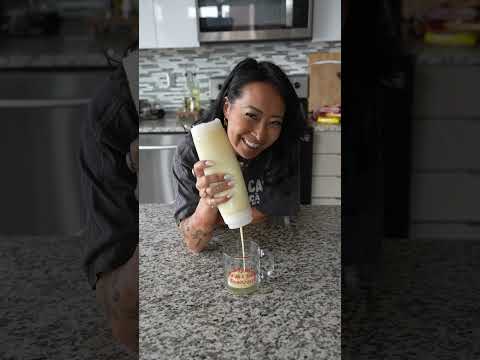
The reference video for phin filter technique — demonstrates the correct bloom, grind coarseness, and condensed milk layering method. Watch the drip rate at the 3-minute mark to understand what a proper extraction looks like.
2. Vietnamese Coffee Deep Dive
Explores the regional differences between Hanoi and Saigon styles, why Robusta beans are preferred in traditional preparations, and how condensed milk replaced fresh milk historically.
3. Iced Vietnamese Coffee MethodFocuses specifically on the iced preparation — ice quantity, dilution timing, and why you should use a larger glass than you think you need. Includes a side-by-side of rushed vs. properly dripped coffee.
🛠️ Core Equipment
- Vietnamese phin filter ↗The phin is a four-piece gravity brewer — chamber, perforated press, lid, and base — that controls extraction speed through resistance rather than pressure. There is no adequate substitute for the specific texture it produces. It costs under $10 and lasts indefinitely.
- Gooseneck kettle ↗Precise, slow water pouring is critical for filling the phin chamber without disturbing the grounds bed. A wide-mouth kettle dumps water unevenly and dislodges the coffee layer. A [gooseneck kettle](/kitchen-gear/review/gooseneck-kettle) gives you the control this brew demands.
- Instant-read thermometer ↗200°F is not a suggestion. Dark roast coffee is already Maillard-forward — it doesn't need more heat stress. A [kitchen thermometer](/kitchen-gear/review/instant-read-thermometer) takes two seconds and eliminates the single most controllable variable in the whole process.
Authentic Vietnamese Coffee (Stop Rushing the Drip)
🛒 Ingredients
- ✦2.5 tablespoons dark roast Vietnamese coffee grounds, coarsely ground
- ✦6.5 ounces freshly boiled water, at 200°F
- ✦3 tablespoons sweetened condensed milk
- ✦1 cup ice cubes (for iced version only)
- ✦1.5 tablespoons heavy cream or whole milk (optional, for creamier texture)
- ✦1 teaspoon sugar (optional, if preferred sweeter)
- ✦Pinch of salt (optional, enhances flavor depth)
- ✦1 Vietnamese phin filter
👨🍳 Instructions
01Step 1
Rinse all four phin filter components with hot water and place the base on top of your serving cup. This warms the metal and ensures the filter sits flush.
02Step 2
Add the sweetened condensed milk to the bottom of your cup before any coffee.
03Step 3
Fill the phin chamber with coarsely ground dark roast coffee grounds. Level the surface gently with the back of a spoon — do not press or tamp.
04Step 4
Pour approximately 1 ounce (2 tablespoons) of 200°F water directly over the grounds. Wait 30 seconds for the bloom — you should see the grounds swell slightly and a ring of foam appear at the edges.
05Step 5
Slowly pour the remaining 5.5 ounces of water into the phin chamber, filling it about three-quarters full. Place the perforated metal lid on top.
06Step 6
Allow the coffee to drip naturally for 4-5 minutes. You should see steady individual drops — not a stream, not a trickle. Occasional drops at the end signal the extraction is finishing.
07Step 7
Remove the phin filter once the dripping stops completely. Stir the hot coffee into the condensed milk using vigorous circular strokes until fully combined.
08Step 8
For hot: serve immediately. For iced: fill a clean glass with ice cubes and pour the combined coffee mixture over the top. Stir gently for 30-45 seconds.
09Step 9
If using heavy cream, pour it slowly over the back of a spoon held just above the surface of the coffee to create a floating cream layer. Do not stir — let it integrate slowly as you drink.
Nutrition Per Serving
Estimates based on standard preparation. Adjustments alter macros.
🔄 Substitutions
Instead of Sweetened condensed milk...
Use Unsweetened condensed milk plus 1-2 teaspoons honey or agave nectar
Lower glycemic response with more complex sweetness. Texture remains equally creamy. Stir the sweetener directly into the unsweetened milk before adding to the cup.
Instead of Sweetened condensed milk (dairy-free)...
Use Full-fat canned coconut cream plus 1 teaspoon maple syrup
Provides coconut undertones and lighter body. Requires more vigorous stirring to incorporate fully. Shake the can before opening — separation is normal.
Instead of Dark roast Vietnamese coffee grounds...
Use Medium roast specialty coffee, freshly ground
Produces a brighter, more acidic cup with fruity or floral notes. Less bold overall presence. Works well if you find traditional Vietnamese coffee too bitter.
Instead of Phin filter...
Use French press or pour-over cone with fine mesh filter
Faster extraction at 3-4 minutes with slightly different flavor clarity. The result is still excellent — just not identical. Increase grounds by half a tablespoon to compensate for the different resistance.
🧊 Storage & Reheating
In the Fridge
Brewed Vietnamese coffee without condensed milk keeps in an airtight container for up to 3 days. Add condensed milk fresh each time.
In the Freezer
Freeze brewed coffee in ice cube trays. Use the cubes in place of regular ice — they intensify the coffee flavor as they melt instead of diluting it.
Reheating Rules
Gently reheat on the stovetop over low heat. Microwaving changes the flavor profile noticeably — the high heat re-scalds the already-extracted compounds.
❓ Frequently Asked Questions
What brand of coffee should I use?
Trung Nguyen Legend is the standard starting point — it's a Robusta-Arabica blend roasted specifically for phin brewing and is available at most Asian grocery stores and online. Café Du Monde (the chicory blend) is a common alternative with an earthier, slightly bitter edge. Avoid pre-ground espresso blends — they're too fine for phin brewing and will stall your filter.
Why is my coffee dripping too slowly or not at all?
Two causes: grind too fine, or grounds too compressed. Vietnamese phin requires a coarse grind — similar to what you'd use for a French press. If you're buying pre-ground, look for 'coarse' or 'phin grind' on the label. If you ground it yourself and it stalls, adjust your grinder one step coarser for the next batch.
Can I make Vietnamese coffee without a phin filter?
Yes. A French press works well — use the same ratio, steep for 4 minutes, then press slowly and pour over condensed milk. A pour-over cone with a mesh filter also works. The flavor is slightly cleaner and less heavy than phin-brewed coffee, but the experience is close enough for daily use.
How much condensed milk should I use?
Three tablespoons is traditional for a 6-7 ounce brew. Vietnamese coffee is intentionally sweet — the condensed milk is not a topping, it's a structural ingredient that balances the Robusta bitterness. If you find it too sweet, reduce to 2 tablespoons, but don't go lower or the drink loses its identity.
What's the difference between Vietnamese iced coffee (cà phê sữa đá) and regular iced coffee?
Standard iced coffee is brewed hot and diluted by ice. Cà phê sữa đá is brewed intentionally concentrated through a slow phin extraction, then combined with sweetened condensed milk before hitting ice. The concentration is the point — the ice dilutes it back to the correct strength as it melts. Brewing at regular strength and pouring over ice produces a watered-down result.
Why does my Vietnamese coffee taste bitter?
Almost certainly a water temperature issue. Boiling water (212°F) scalds dark roast Robusta grounds immediately, extracting harsh phenolic compounds before the desirable oils. Pull your kettle off the boil and wait 30 seconds, or target 200°F with a thermometer. The bitterness should drop noticeably in your very next brew.
The Science of
Authentic Vietnamese Coffee (Stop Rushing the Drip)
We turned everything on this page into a beautiful, flour-proof PDF cheat sheet. Print it out, stick it to your fridge, and never mess up your authentic vietnamese coffee (stop rushing the drip) again.
*We'll email you the high-res PDF instantly. No spam, just perfectly cooked meals.
AlmostChefs Editorial Team
We translate the internet's most popular cooking videos into foolproof, beginner-friendly written recipes. We analyze multiple methods, test them in our kitchen, and engineer a single "Master Recipe" that gives you the best possible result with the least possible stress.