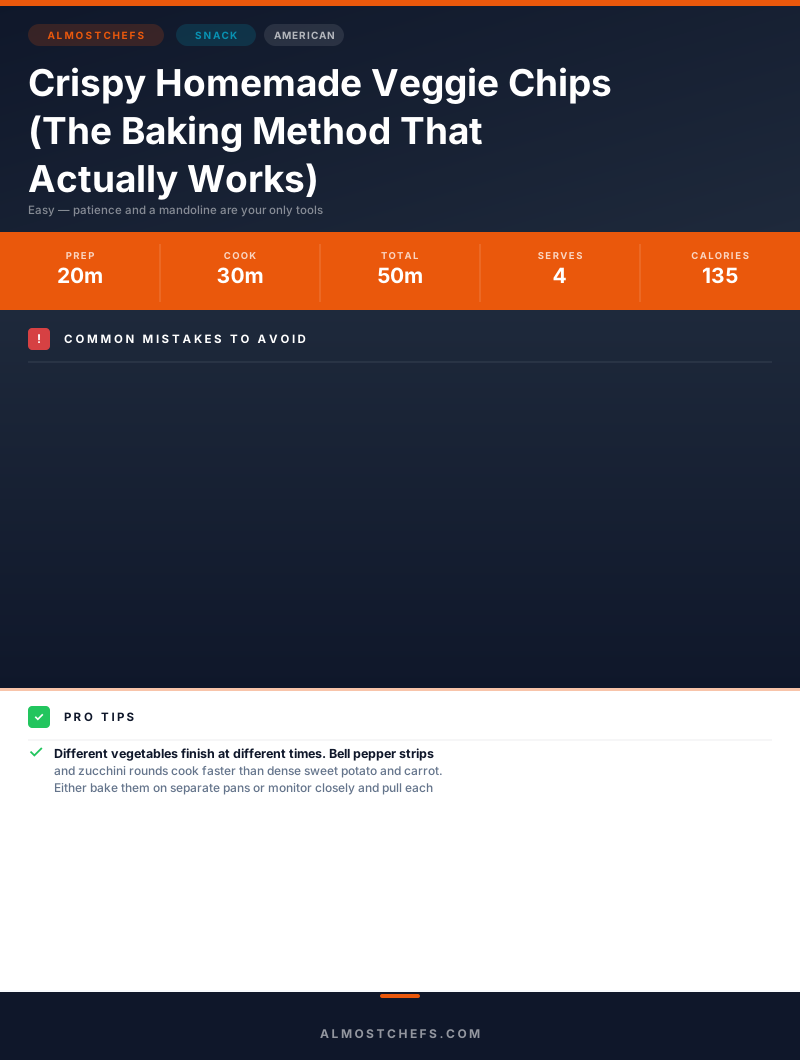
Crispy Homemade Veggie Chips (The Baking Method That Actually Works)
Thinly sliced vegetables baked until shatteringly crisp with a simple spice blend that lets natural flavors shine. We broke down the most common failure points to deliver a method that produces chip-level crunch without a deep fryer.

“Store-bought veggie chips are mostly air, starch, and disappointment. Homemade ones can be better — but only if you understand why most home batches come out soggy. The answer is almost always moisture. These vegetables are mostly water, and water is the enemy of crunch. Get the moisture out before they hit the oven and everything else takes care of itself.”
Why This Recipe Works
Veggie chips are a one-variable problem. That variable is moisture. Get the water out of the vegetable before it hits the oven, and you get a chip. Leave it in, and you get a steamed vegetable that's been sitting in a hot box for 30 minutes wondering what went wrong.
This isn't intuitive. Vegetables look dry. They feel dry. But zucchini is 95% water by weight. Carrots are 88%. Even sweet potato — the densest vegetable in this recipe — is 77% water. When heat hits that moisture, it converts to steam. Steam cannot create the dry, Maillard-browned surface that makes something crunch. It softens. It wilts. It collapses. The entire job of prep in this recipe is forcing as much of that water out as possible before the oven gets involved.
The Mandoline Is Not Optional
A mandoline slicer is the most important piece of equipment in this recipe, and it's non-negotiable. Here's why: a 2mm slice and a 4mm slice placed on the same pan will not finish cooking at the same time. The thin slice will be golden and crisp while the thick slice is still raw and pliable. By the time the thick slice crisps, the thin one is ash. Consistent slicing is the only way to get consistent results across an entire batch.
Set the mandoline to 1.5-2mm. Use the hand guard every single time. The blade is stationary, the injury always looks minor until it doesn't, and a bandaged finger ruins the cooking session more thoroughly than any failed chip.
Single Layer Is Physics, Not a Suggestion
Convection ovens work by circulating hot air around food surfaces. When slices overlap, two surfaces are shielded from that airflow. Those surfaces don't dry. They don't brown. They stay wet and they steam the surfaces around them. You get a cluster of chips where the outer edges are crisp and the middle pieces are pale and limp.
Two large rimmed baking sheets lined with parchment give you maximum surface area and even bottom heat. If your vegetables won't fit in a single layer across two pans, do two batches. There is no third option.
The Cooling Rack Finish
Most home cooks pull chips from the oven and leave them on the hot baking sheet. This is wrong. The pan retains heat for 8-10 minutes after leaving the oven, continuing to cook anything touching it. Chips that were perfectly timed get overcooked on the bottom while sitting on a hot surface. More importantly, a wire cooling rack allows air to circulate underneath each chip, pulling the last of the surface moisture away as the chips cool.
Here's the counterintuitive part: chips should feel slightly flexible when you pull them from the oven. They are not done. They finish crisping during the 10-minute cooling period as the internal steam escapes and the surface sets. If they feel rigid and fully crisp in the oven, they will be over-browned and brittle once cool. Trust the golden color as your signal, not the texture.
Spice Architecture
The spice blend goes on after the oil for a reason — fat is a carrier for fat-soluble flavor compounds. Paprika, garlic powder, and oregano all contain volatile aromatic molecules that dissolve in oil and distribute evenly across the vegetable surface. Add spices to dry vegetables and they clump unevenly. Add them to oiled vegetables and they coat every millimeter.
The lemon juice acts as a finishing acid that brightens everything and helps the spice mixture adhere. The optional nutritional yeast goes on immediately after baking, while the chips are still hot and slightly tacky, so it sticks rather than falling off. These are not arbitrary sequencing choices — they produce a consistently seasoned chip from edge to center.
Where Beginners Mess This Up
Before we start, read this. These are the 4 reasons your crispy homemade veggie chips (the baking method that actually works) will fail:
- 1
Skipping the drying step: Vegetables are 85-95% water by weight. If you slide wet slices into the oven, that moisture steams the chips instead of baking them. You get limp, pale, sad strips that never crisp up no matter how long you cook them. Pat every piece dry — aggressively — before you touch the oil.
- 2
Overlapping slices on the baking sheet: Each chip needs direct hot air contact on all sides. When slices touch or overlap, the contact point stays wet. Those chips never brown — they steam each other. Use two full-size sheet pans. If chips won't fit in a single layer, do two batches rather than cramming them together.
- 3
Uneven slice thickness: A 2mm slice and a 4mm slice will not finish at the same time. The thin one burns while the thick one is still raw. A mandoline set to 1.5-2mm is non-negotiable for consistent results. A chef's knife produces chips that finish at six different times.
- 4
Pulling them too early: Veggie chips look done before they are done. They will still be slightly flexible in the oven — they crisp up as they cool. If you wait until they feel rigid in the oven, they will shatter when they cool. Pull them when the edges are golden and let the cooling rack do the last 20% of the work.
The Video Reference Library
Want to see it in action? Here are the exact videos we analyzed and combined to build this foolproof recipe translation:

The source video for this recipe. Clear technique for slice thickness, drying method, and timing across different vegetable types.
2. How to Get Crispy Baked Vegetables Every Time
Deep dive into moisture removal techniques and oven temperature science for baked vegetable chips and snacks.
3. Mandoline Skills for Home CooksPractical guide to using a mandoline safely and getting consistent slices across root vegetables, squash, and peppers.
🛠️ Core Equipment
- Mandoline slicer ↗Consistent 1.5-2mm slices are the single most important variable in this recipe. A mandoline guarantees uniformity. A knife does not. Use the hand guard every time.
- Two large rimmed baking sheets ↗Single-layer separation is critical. One pan means overcrowding means steaming means sogginess. Two pans give every chip space to breathe and brown evenly.
- Parchment paper ↗Vegetables stick directly to bare metal and tear when you try to flip them. Parchment also promotes even bottom browning and makes cleanup instant.
- Wire cooling rack ↗Chips left on the hot sheet pan continue cooking from residual heat below. A wire rack lets air circulate underneath, stopping the cook and preserving crunch.
Crispy Homemade Veggie Chips (The Baking Method That Actually Works)
🛒 Ingredients
- ✦2 large carrots, peeled and thinly sliced lengthwise with a mandoline
- ✦2 medium zucchini, sliced into thin rounds
- ✦1 large red bell pepper, seeded and cut into thin strips
- ✦1 large sweet potato, peeled and thinly sliced into rounds
- ✦2 tablespoons extra virgin olive oil
- ✦1 teaspoon sea salt
- ✦1/2 teaspoon freshly ground black pepper
- ✦1/2 teaspoon garlic powder
- ✦1/2 teaspoon paprika
- ✦1/4 teaspoon cayenne pepper (optional)
- ✦1 teaspoon dried Italian seasoning
- ✦1/2 teaspoon onion powder
- ✦1 teaspoon dried oregano
- ✦1 tablespoon nutritional yeast (optional, for umami finish)
- ✦2 tablespoons fresh lemon juice
👨🍳 Instructions
01Step 1
Preheat your oven to 375°F. Line two large baking sheets with parchment paper.
02Step 2
Slice all vegetables to 1.5-2mm thickness using a mandoline. Carrots and sweet potato go lengthwise for chip-shaped pieces; zucchini in rounds; bell pepper in strips.
03Step 3
Lay the sliced vegetables on clean kitchen towels or paper towels. Press firmly and blot every surface until visibly dry. Do not rush this step.
04Step 4
Transfer dried vegetables to a large bowl. Drizzle with olive oil and toss until every piece is lightly and evenly coated. You want a sheen, not a pool.
05Step 5
Whisk together sea salt, black pepper, garlic powder, paprika, cayenne, Italian seasoning, onion powder, and oregano in a small bowl. Sprinkle over the vegetables and toss thoroughly.
06Step 6
Arrange slices in a strict single layer on the prepared baking sheets. No overlap. No touching edges. Use both sheets.
07Step 7
Bake for 15-20 minutes, then remove from the oven and flip each chip individually. Return to the oven, rotating the pans if your oven has hot spots.
08Step 8
Bake for another 10-15 minutes, checking every 5 minutes. Chips are done when edges are golden brown and the centers look dry. They will still feel slightly flexible — that is correct.
09Step 9
Remove from oven. If using nutritional yeast, sprinkle it over the chips immediately while they are still hot so it adheres.
10Step 10
Transfer chips to a wire rack immediately. Cool completely — at least 10 minutes — before tasting or storing. They finish crisping as they cool.
Nutrition Per Serving
Estimates based on standard preparation. Adjustments alter macros.
🔄 Substitutions
Instead of Extra virgin olive oil...
Use Avocado oil or coconut oil
Avocado oil is neutral and has a high smoke point — ideal for this temperature. Coconut oil adds a very faint tropical note. Both work well.
Instead of Sweet potato and bell pepper...
Use Beet slices and kale leaves
Beets take longer and need to go on a separate pan. Kale chips cook faster — pull them at 12-15 minutes. Both are legitimately excellent.
Instead of Standard paprika and cayenne...
Use Smoked paprika and ground cumin with a squeeze of lime
Smoked paprika adds depth without heat. Cumin brings earthiness. The lime hits at the end as a finishing acid — add after baking.
Instead of Baking at 375°F...
Use Dehydrating at 250°F for 45-60 minutes
Lower heat preserves more heat-sensitive nutrients and produces exceptional crunch with less browning risk. Takes longer but is more forgiving.
🧊 Storage & Reheating
In the Fridge
Avoid refrigerating — humidity in the fridge destroys crunch within hours.
In the Freezer
Not recommended. Freezing and thawing introduces moisture that ruins the texture permanently.
Reheating Rules
Spread on a baking sheet and bake at 300°F for 5-8 minutes to restore crispness. Do not microwave.
❓ Frequently Asked Questions
Why are my veggie chips coming out soft and not crispy?
Almost always a moisture problem. Either the vegetables weren't dried thoroughly enough before oiling, the slices were too thick, the pan was overcrowded, or they were pulled too early. Work through those four variables in order.
Can I make these in an air fryer?
Yes, and the results are excellent. Work in small batches, set to 350°F, and check at 8 minutes. Air fryers circulate heat more aggressively than ovens, so the timing is shorter and burning happens fast.
Which vegetables work best for homemade chips?
Low-moisture, firm vegetables work best: sweet potato, carrot, beet, parsnip, and taro. High-moisture vegetables like zucchini and bell pepper can work but require extra drying time and benefit from slightly lower oven temperatures.
How do I keep them crispy after storing?
Cool them completely before sealing — any residual warmth creates condensation inside the container. Store at room temperature in an airtight container. They're best within 2-3 days; after that, crispness degrades regardless of storage method.
Do I need to use every vegetable listed?
No. You can make an excellent batch with just sweet potato or just carrot. Mixing vegetables adds visual appeal but makes timing more complex since different vegetables finish at different rates.
Why does my sweet potato chip burn on the edges before the center crisps?
The slices are too thick or your oven runs hot. Sweet potato is dense and needs even, sustained heat. Try 350°F instead of 375°F, and make sure slices are no more than 1.5mm thick.
The Science of
Crispy Homemade Veggie Chips (The Baking Method That Actually Works)
We turned everything on this page into a beautiful, flour-proof PDF cheat sheet. Print it out, stick it to your fridge, and never mess up your crispy homemade veggie chips (the baking method that actually works) again.
*We'll email you the high-res PDF instantly. No spam, just perfectly cooked meals.
AlmostChefs Editorial Team
We translate the internet's most popular cooking videos into foolproof, beginner-friendly written recipes. We analyze multiple methods, test them in our kitchen, and engineer a single "Master Recipe" that gives you the best possible result with the least possible stress.