The Best Vegetable Soup (Stop Wasting Your Scraps)
A deeply savory, nutrient-dense soup built on a proper mirepoix base, layered vegetables, and a long simmer that extracts every ounce of flavor. We analyzed the most-watched YouTube methods to engineer one technique that delivers restaurant depth from pantry staples.
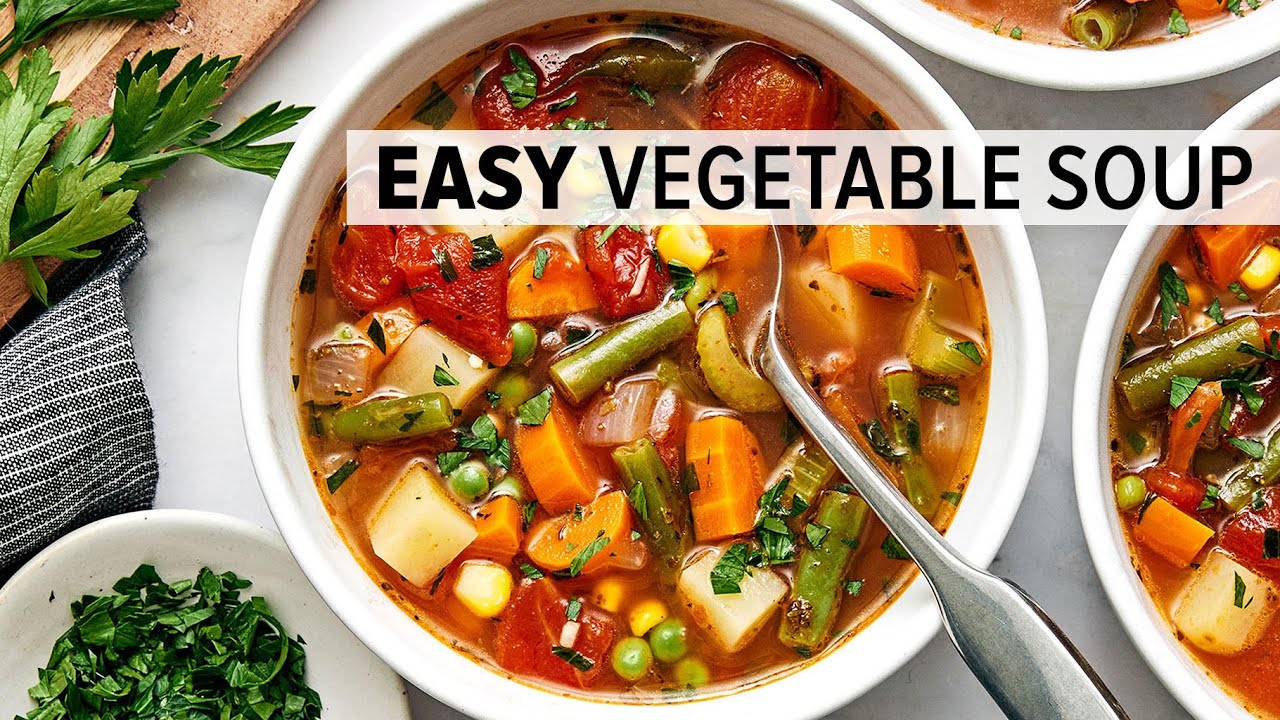
“Most vegetable soup recipes taste like hot water with vegetables floating in it. The difference between that and a bowl that actually satisfies comes down to one thing almost every home cook skips: building a proper flavor base before a single drop of broth hits the pot. We watched every major YouTube method and extracted the principles that turn a simple vegetable soup into something worth making on purpose.”
Why This Recipe Works
Vegetable soup is the most democratic dish in a home cook's repertoire. It asks for no expensive proteins, no specialized technique, no hard-to-source ingredients. And yet it is also one of the most commonly executed dishes that manages to be deeply, stubbornly disappointing. Not bad. Not offensive. Just inert — a bowl of soft things floating in faintly flavored water that satisfies nothing. The gap between that and a bowl of vegetable soup that genuinely compels you to finish it, then tilt the bowl and drink what's left, is not about ingredients. It is entirely about sequence and heat.
The Sweating Phase Is the Entire Foundation
Every meaningful vegetable soup begins the same way: onion, carrot, and celery in fat over sustained medium heat. This is the mirepoix — the classical French flavor base — and it is not optional, it is not decorative, and it cannot be abbreviated. The onion needs to become translucent and soft. The carrots need to begin releasing their sugars. The celery needs to lose its aggressive raw edge and contribute its savory aromatic compounds to the fat coating the bottom of the pot.
This process takes 7-8 minutes minimum. The reason most vegetable soups taste thin is that cooks reduce this to 2-3 minutes — just enough to barely soften the edges — before adding broth. What they've built at that point is essentially aromatic water. What 8 proper minutes builds is a fat infused with hundreds of Maillard-reaction compounds that will carry flavor into every cup of broth you add on top. A Dutch oven is ideal here because it retains even heat across the entire base without scorching any single zone while the others undercook.
Layering Vegetables by Cook Time
The most structural mistake in vegetable soup — after under-sweating the aromatics — is treating all vegetables as interchangeable additions that go in at once. They are not. Dense root vegetables like carrots and potatoes require 15-20 minutes of simmering. Tender vegetables like zucchini and green beans need 7-8 minutes. Frozen peas and corn need 3-4 minutes. If everything enters the pot at the same time, you will either have mushy zucchini and intact potatoes or properly textured zucchini and chalky potatoes. There is no setting that cooks them all equally — only a sequence that staggers them correctly.
The sharp chef's knife plays a role here too. Cutting everything to a uniform 3/4-inch size is the only way to ensure that the vegetables within each category cook evenly. A carrot cut to 3/4-inch and another cut to 2 inches will not finish at the same time. Uniform sizing is engineering, not aesthetics.
The Fond Is Where the Flavor Hides
After the aromatics have sweated and the spices have bloomed in the fat, the bottom of the pot will have developed a layer of browned residue — the fond. This is concentrated Maillard reaction product: pure flavor. The tomatoes go in before the broth specifically to deglaze this fond and incorporate it into the soup's base. The acid in the tomatoes loosens it from the pot; the stirring dissolves it into the liquid. By the time the broth arrives, the pot bottom is clean and every gram of developed flavor has been captured.
Finishing Moves That Separate Soup from Broth
Two finishing additions transform this soup from technically correct to genuinely good. The first is salt layered throughout the process — at the sweating stage, after the broth is added, and again at the end. Each addition penetrates the vegetables at a different stage of cook, building cumulative seasoning rather than surface coating. The second is a tablespoon of lemon juice added off-heat at the finish. The acid does not make the soup taste lemony. It brightens and lifts the entire bowl, balancing the sweetness from the cooked carrots and corn in a way that makes everything taste more defined. Leaving it out produces a soup that tastes rounded but slightly flat — close, but not finished.
This is the architecture of a bowl of soup that earns its existence. Not complicated. Not impressive-sounding. Just correctly built.
Where Beginners Mess This Up
Before we start, read this. These are the 4 reasons your the best vegetable soup (stop wasting your scraps) will fail:
- 1
Adding broth before the vegetables are properly sweated: Dumping broth over raw vegetables produces boiled vegetables in flavored water — not soup. Every vegetable must spend time in oil or butter over medium heat, releasing its moisture and beginning to caramelize. This is where the flavor is built. The Maillard reaction only happens in fat at high heat, not in liquid.
- 2
Cutting vegetables to inconsistent sizes: If your carrots are cut into 1-inch chunks and your zucchini into paper-thin slices, they will not finish cooking at the same time. Dense root vegetables take 3-4x longer than tender vegetables. Uniform sizing — roughly 3/4-inch pieces for everything — is not aesthetic, it's functional.
- 3
Under-seasoning at every stage: Salt added only at the end is surface salt — it sits on the food, not in it. You must season at the mirepoix stage, after adding broth, and again at the end. Each addition penetrates the vegetables at a different stage of cooking and builds cumulative, layered flavor.
- 4
Boiling instead of simmering: A rolling boil breaks down vegetable cell walls too aggressively, turning everything mushy and making the broth cloudy and harsh. A bare simmer — small lazy bubbles breaking the surface — gently extracts flavor while keeping each vegetable intact.
The Video Reference Library
Want to see it in action? Here are the exact videos we analyzed and combined to build this foolproof recipe translation:
A comprehensive walkthrough with clear technique on the sweating phase and broth-building. Best video for understanding why the order of operations matters as much as the ingredient list.
Focuses on the fond technique and why deglazing the pot before adding broth is the move that separates mediocre soup from something that tastes like it simmered all day.
Strips the method down to essentials without sacrificing depth. Great reference for timing — specifically when to add delicate vegetables relative to root vegetables.
🛠️ Core Equipment
- Heavy-bottomed Dutch oven or soup potEven heat distribution is critical during the sweating phase. A thin pot creates hot spots that scorch the onions before the other aromatics have a chance to soften. A [Dutch oven](/kitchen-gear/review/dutch-oven) is the single most valuable piece of equipment for soup-making.
- Sharp chef's knifeUniform vegetable cuts are the difference between a soup where everything finishes at the same time and one where half the vegetables are mush. A [sharp chef's knife](/kitchen-gear/review/chefs-knife) makes consistent sizing achievable in real time.
- Wooden spoon or silicone spatulaFor scraping the fond — the browned bits — off the bottom of the pot when you add the broth. That fond is concentrated flavor. You want all of it dissolved into the soup.
- LadlePractical and non-negotiable for portioning without destroying the vegetables you worked hard to keep intact.
The Best Vegetable Soup (Stop Wasting Your Scraps)
🛒 Ingredients
- ✦2 tablespoons olive oil
- ✦1 large yellow onion, diced
- ✦3 medium carrots, peeled and cut into 3/4-inch pieces
- ✦3 stalks celery, cut into 3/4-inch pieces
- ✦4 cloves garlic, minced
- ✦2 medium Yukon Gold potatoes, cut into 3/4-inch cubes
- ✦2 medium zucchini, cut into 3/4-inch pieces
- ✦1 cup green beans, trimmed and cut into 1-inch pieces
- ✦1 can (14.5 oz) diced tomatoes, with juices
- ✦6 cups vegetable broth
- ✦1 cup frozen corn kernels
- ✦1 cup frozen peas
- ✦1 teaspoon dried thyme
- ✦1 teaspoon dried oregano
- ✦2 bay leaves
- ✦1 teaspoon smoked paprika
- ✦Sea salt and freshly ground black pepper to taste
- ✦2 tablespoons fresh parsley, chopped (for finishing)
- ✦1 tablespoon lemon juice (for finishing)
👨🍳 Instructions
01Step 1
Dice the onion, slice the celery, and cut the carrots into uniform 3/4-inch pieces. Cut the potatoes and zucchini to the same size. Trim the green beans.
02Step 2
Heat olive oil in a large heavy-bottomed pot over medium heat. Add the onion, carrots, and celery. Season generously with salt and cook for 7-8 minutes, stirring occasionally, until the onion is translucent and the carrots have begun to soften.
03Step 3
Add the minced garlic, dried thyme, dried oregano, and smoked paprika. Stir constantly for 1-2 minutes until deeply fragrant.
04Step 4
Add the diced tomatoes with their juices. Stir and cook for 2-3 minutes, scraping the bottom of the pot to lift any browned bits.
05Step 5
Pour in the vegetable broth. Add the potatoes, bay leaves, and a second pinch of salt. Increase heat to bring the liquid to a gentle simmer — not a boil.
06Step 6
Simmer uncovered for 12-15 minutes until the potatoes are just barely fork-tender.
07Step 7
Add the zucchini and green beans. Simmer for another 7-8 minutes.
08Step 8
Add the frozen corn and peas. Stir and simmer for 3-4 minutes until heated through.
09Step 9
Remove the bay leaves. Taste and adjust seasoning — this is the final salt check.
10Step 10
Off heat, stir in the lemon juice and fresh parsley. Serve immediately.
Nutrition Per Serving
Estimates based on standard preparation. Adjustments alter macros.
🔄 Substitutions
Instead of Vegetable broth...
Use Chicken broth
Adds deeper umami and body. Not vegetarian, but produces a noticeably richer result. Low-sodium versions give you more control over the final seasoning.
Instead of Yukon Gold potatoes...
Use White beans or chickpeas
Adds protein and fiber. Beans also naturally thicken the broth as they release starch. Rinse canned beans before adding.
Instead of Zucchini...
Use Yellow squash, bell pepper, or kale
Any tender vegetable that cooks in under 10 minutes works here. Kale should go in for the last 5 minutes only.
Instead of Fresh parsley...
Use Fresh basil or fresh dill
Basil gives a Mediterranean finish. Dill gives an Eastern European profile. Both work. All three are better than dried herbs added at the end.
🧊 Storage & Reheating
In the Fridge
Store in an airtight container for up to 5 days. The soup thickens as it sits — add a splash of broth when reheating.
In the Freezer
Freeze in portions for up to 3 months. Potatoes become slightly grainy after freezing — acceptable in soup, where the texture change is minimal.
Reheating Rules
Reheat gently on the stovetop over low heat with a splash of water or broth. Avoid high heat which further breaks down the vegetables.
❓ Frequently Asked Questions
Why does my vegetable soup taste bland?
Almost always an under-seasoning issue. You need to salt at three separate stages: when sweating the aromatics, after adding the broth, and at the end. Single-stage salting produces flat soup. Also check your broth — low-sodium broth is a blank canvas that requires more seasoning than standard.
Can I add pasta or rice to this soup?
Yes, but cook them separately and add to individual bowls. Starch absorbs broth aggressively as the soup sits — if you cook pasta directly in the soup, it will drink the entire pot by the next day. Add uncooked pasta to the pot only if you are serving immediately.
What vegetables should I avoid putting in vegetable soup?
Brassicas like broccoli and cauliflower release sulfurous compounds during long simmers that can make the broth smell unpleasant. If you want them in, add in the last 5-6 minutes only. Beets will turn the entire soup magenta. Asparagus becomes stringy and unpleasant. Everything else is fair game.
Do I need to peel the vegetables?
Carrots benefit from peeling. Potatoes and zucchini do not need to be peeled — the skin adds texture and nutrition. Peel what has thick, bitter, or inedible skin and leave the rest.
How do I make this soup more filling?
Add white beans or chickpeas for protein, or stir in a cup of cooked farro or barley. Both bulk up the soup significantly without requiring additional broth. Serve with crusty bread to soak up the liquid.
Can I make this soup in a slow cooker?
Yes, but still sauté the aromatics in a pan first and deglaze with a splash of broth before transferring to the slow cooker. Slow cookers cannot replicate the Maillard reaction — if you dump raw vegetables in cold, the soup will taste like it was boiled, not built.

The Science of
The Best Vegetable Soup (Stop Wasting Your Scraps)
We turned everything on this page into a beautiful, flour-proof PDF cheat sheet. Print it out, stick it to your fridge, and never mess up your the best vegetable soup (stop wasting your scraps) again.
*We'll email you the high-res PDF instantly. No spam, just perfectly cooked meals.
AlmostChefs Editorial Team
We translate the internet's most popular cooking videos into foolproof, beginner-friendly written recipes. We analyze multiple methods, test them in our kitchen, and engineer a single "Master Recipe" that gives you the best possible result with the least possible stress.