Authentic Veg Thukpa Soup (The Himalayan Noodle Bowl You've Been Missing)
A hearty Tibetan and Nepali noodle soup built on a deeply spiced vegetable broth, layered with stir-fried aromatics, seasonal vegetables, and chewy wheat noodles. We broke down the most-watched Thukpa recipes on YouTube to find the technique that delivers real depth of flavor — not just hot water with noodles.
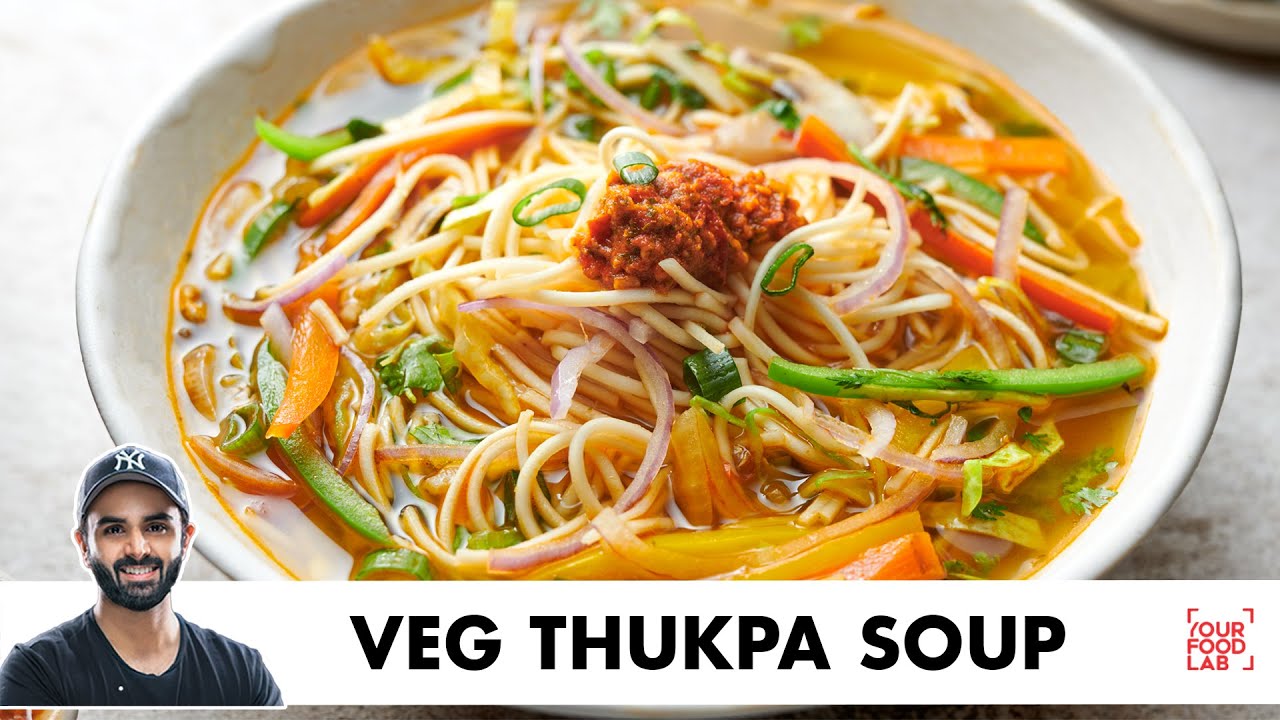
“Thukpa is the kind of soup that makes you question every thin, timid broth you've ever accepted. Born in the high-altitude kitchens of Tibet and adopted across Nepal and Northeast India, it is a noodle soup built for survival — warming, filling, and aggressively flavorful. The problem is that most homemade versions skip the stir-fry step, add the spices in the wrong order, and end up with something that tastes like vegetable water with noodles floating in it. We fixed that.”
Why This Recipe Works
Thukpa is what happens when a cuisine develops in an environment where warmth is not a luxury but a biological requirement. The Tibetan plateau sits at an average elevation of 14,000 feet, where temperatures drop to brutal lows and the body needs food that does more than satisfy hunger — it needs food that actively restores heat. The result is a noodle soup with architectural logic baked into every step: the stir-fry base generates deep aromatic flavor, the warming spices work through the entire bowl, and the wheat noodles provide sustained energy in a way rice or broth alone cannot.
Most Western interpretations reduce thukpa to "spiced vegetable soup with noodles," which is technically accurate the same way "wet bread" is technically accurate for pizza. What distinguishes thukpa from every other noodle soup in the pan-Asian canon is the stir-fry-first approach. You are not building a stock and adding things to it. You are building flavor directly in the pot through dry heat — browning onions, toasting spices in near-dry conditions, caramelizing the edges of the vegetables — and then introducing liquid to capture and distribute everything you've built. The broth is a medium, not a foundation.
The Aromatics Hierarchy
The sequence in which you add ginger, garlic, and onion is not arbitrary. Onions go first and alone, because they need the most time and the highest heat to brown properly. Their natural sugar content — around 5 grams per onion — caramelizes through the Maillard reaction only when the onion's surface moisture evaporates and direct heat contact with the pan begins. This takes three to four minutes at genuine medium-high heat. Add ginger or garlic at this stage and they'll burn before the onion is ready, turning bitter and sharp. So the onion goes in first, alone, and gets time to develop color before anything joins it.
Ginger and garlic are volatile aromatics — their flavor compounds are powerful but fragile. Ninety seconds of high-heat contact is all they need. Beyond that, you lose the fresh brightness and get something flat and slightly acrid. The green chilies go in at the same time, splitting the difference between infusing the oil with their heat and preserving some of their fresh vegetal character.
Why the Dry Spice Toast Changes Everything
The single most underestimated technique in this recipe is the moment where you push the aromatics aside and let ground cumin, coriander, turmeric, and black pepper make direct contact with the hot surface of a wok or heavy pot. Thirty to forty-five seconds. That's all you get, and that's all you need.
Ground spices contain fat-soluble flavor compounds — terpenoids, aldehydes, essential oils — that don't fully activate in water-based environments. They need either fat or dry heat to release. When you add ground spices to a wet broth, a significant portion of their aromatic potential dissolves uselessly, giving you a shadow of the flavor you paid for. When you toast them briefly in a near-dry pan, those same compounds volatilize, bloom, and then get absorbed by the oil and the aromatics already in the pan. The difference is measurable — the toasted version smells like a spice market; the untoasted version smells like vegetable water.
Watch the toast window carefully. You will know the spices are ready when they shift from raw-smelling to fragrant and slightly nutty. You will know you've gone too far when they start to smoke and turn acrid. The window is roughly 30 seconds at medium-high heat. Set a mental timer.
Noodle Discipline
Cooking noodles separately is the structural decision that separates thukpa you can serve the next day from thukpa that turns into a congealed block by the time you sit down. Wheat noodles — particularly flat egg noodles and fresh wheat varieties — are starch delivery systems. They absorb liquid continuously, even off heat, even in the refrigerator. Left in the broth for 10 minutes, they double in size and turn the broth thick and cloudy. Left overnight, they absorb nearly everything and you wake up to noodle paste.
The solution is simple: cook the noodles in a separate saucepan, drain immediately through a fine-mesh sieve, rinse under cold water to halt cooking and strip surface starch, then portion them into individual bowls at serving. The broth gets ladled over. This is how every serious thukpa cook handles the noodle problem, and it is the reason restaurant thukpa holds up across a lunch service while home versions collapse within the hour.
The Role of Acidity
Lemon juice or rice vinegar added at the very end of cooking is not decoration. Acidity is the element that lifts and sharpens every other flavor in the bowl — it makes the ginger taste brighter, the spices taste more distinct, and the broth taste more like itself rather than a homogeneous warm liquid. Added too early, the acid compounds from vinegar or lemon break down during simmering and the effect disappears. Added at the end, they remain intact and active. A tablespoon is enough to transform the entire character of the broth from heavy to vivid without making it taste sour.
Where Beginners Mess This Up
Before we start, read this. These are the 4 reasons your authentic veg thukpa soup (the himalayan noodle bowl you've been missing) will fail:
- 1
Skipping the dry-fry on the spices: Ground cumin, coriander, and turmeric must hit a dry or nearly-dry pan before the vegetables go in. This brief toast — 30 to 45 seconds — activates the fat-soluble flavor compounds in the spices. Added directly to wet broth, they taste raw and flat. Toasted first, they taste like they've been cooking for hours.
- 2
Adding noodles too early: Wheat noodles continue absorbing liquid long after they're cooked through. Add them too early and you get bloated, starchy noodles sitting in a cloudy, thickened broth. Cook the noodles separately, add them to each bowl at serving, and pour the broth over. This is not optional if you want leftovers that aren't one solid mass.
- 3
Under-building the aromatics: Thukpa's broth depth comes from properly browned onion, ginger, and garlic — not sweated, browned. You need to see some color on the onion before anything else goes in. Pale, barely-cooked aromatics produce pale, barely-there flavor. Give them three to four minutes of real heat before adding the vegetables.
- 4
Using the wrong noodles: Thukpa traditionally uses flat or round wheat noodles — the same family as Chinese wheat noodles or fresh udon. Rice noodles or pasta substitutes change the texture profile entirely and don't hold up to the bold broth. Fresh wheat noodles or dried flat egg noodles are the right call.
The Video Reference Library
Want to see it in action? Here are the exact videos we analyzed and combined to build this foolproof recipe translation:
The foundational video — clear technique on the stir-fry base, spice timing, and noodle handling. Watch this for the aromatics build and the moment-by-moment broth development.
Covers the fundamentals of building deep broth flavor from vegetable aromatics — useful context for understanding why the dry-fry step matters and how heat sequencing affects final taste.
Background on Tibetan and Nepali kitchen philosophy — the restraint in seasoning, the emphasis on warming spices over bold chilies, and why this cuisine rewards patience in the aromatics phase.
🛠️ Core Equipment
- Large wok or wide heavy-bottomed potYou need enough surface area for the stir-fry phase to actually brown the aromatics and vegetables rather than steam them. A narrow pot traps moisture and defeats the purpose. A wok's sloped sides help you control heat zones precisely.
- Separate saucepan for noodlesCooking noodles separately from the broth is the single most important structural decision in this recipe. It prevents the noodles from absorbing all the broth and turning into a starchy paste.
- Fine-mesh sieve or spider strainerFor draining and rinsing the cooked noodles under cold water immediately after cooking. The cold rinse stops the cooking and removes surface starch that would otherwise cloud the broth.
- LadleFor portioning the broth evenly across bowls. Each serving should be broth-forward — more liquid than solids. A ladle keeps you honest about the ratio.
Authentic Veg Thukpa Soup (The Himalayan Noodle Bowl You've Been Missing)
🛒 Ingredients
- ✦200g flat wheat noodles or fresh egg noodles
- ✦2 tablespoons neutral oil (vegetable or avocado)
- ✦1 large yellow onion, thinly sliced
- ✦1 tablespoon fresh ginger, finely grated
- ✦4 garlic cloves, minced
- ✦2 green Thai chilies, split lengthwise (adjust to heat preference)
- ✦1 medium carrot, julienned
- ✦1 cup green cabbage, thinly shredded
- ✦1 medium red bell pepper, thinly sliced
- ✦1 cup cremini mushrooms, sliced
- ✦2 cups fresh spinach or bok choy, roughly chopped
- ✦1 teaspoon ground cumin
- ✦1 teaspoon ground coriander
- ✦1/2 teaspoon turmeric powder
- ✦1/2 teaspoon black pepper, freshly ground
- ✦1/4 teaspoon red chili flakes (optional)
- ✦5 cups vegetable broth, low sodium
- ✦2 tablespoons soy sauce
- ✦1 tablespoon rice vinegar or fresh lemon juice
- ✦1 teaspoon sesame oil
- ✦Sea salt to taste
- ✦Fresh cilantro and sliced scallions for serving
- ✦Lemon wedges for serving
👨🍳 Instructions
01Step 1
Bring a separate saucepan of salted water to a boil. Cook the wheat noodles according to package directions until just tender — al dente, not soft. Drain immediately, rinse under cold running water to stop cooking and remove surface starch, and set aside.
02Step 2
Heat the neutral oil in a large wok or wide heavy-bottomed pot over medium-high heat until shimmering.
03Step 3
Add the sliced onion and cook for 3-4 minutes without stirring too frequently, letting the edges develop color. You want amber edges, not just translucency.
04Step 4
Add the ginger, garlic, and green chilies. Stir-fry for 90 seconds until the raw garlic smell softens and the mixture is fragrant.
05Step 5
Push everything to the side of the wok. In the cleared space, add the cumin, coriander, turmeric, black pepper, and chili flakes. Let the spices toast in the dry or near-dry pan for 30-45 seconds until they smell roasted, then mix them into the aromatics.
06Step 6
Add the carrot, bell pepper, and mushrooms. Stir-fry on high heat for 3 minutes until the vegetables soften slightly at the edges but still have structure.
07Step 7
Pour in the vegetable broth and soy sauce. Bring to a boil, then reduce to a steady simmer. Cook uncovered for 8-10 minutes to let the broth develop and the vegetables finish cooking.
08Step 8
Add the shredded cabbage and spinach (or bok choy). Stir and cook for 2 minutes until wilted. The cabbage should be just tender with slight bite remaining.
09Step 9
Stir in the rice vinegar or lemon juice and sesame oil. Taste and adjust seasoning.
10Step 10
Divide the cooked noodles among four bowls. Ladle the hot broth and vegetables generously over the noodles.
11Step 11
Top with fresh cilantro, sliced scallions, and a squeeze of lemon. Serve immediately.
Nutrition Per Serving
Estimates based on standard preparation. Adjustments alter macros.
🔄 Substitutions
Instead of Flat wheat noodles...
Use Fresh udon noodles or soba
Udon adds chewiness and absorbs the broth deeply. Soba brings a nutty undertone that pairs well with the ginger-forward broth. Avoid rice vermicelli — too delicate for this bold soup.
Instead of Vegetable broth...
Use Mushroom broth or miso broth
Mushroom broth deepens the umami substantially. Miso broth (light or white miso dissolved in hot water) adds fermented depth — reduce the soy sauce by half to avoid over-salting.
Instead of Soy sauce...
Use Tamari or coconut aminos
Tamari is gluten-free and nearly identical in flavor. Coconut aminos is lower sodium and slightly sweeter — use 1.5 tablespoons instead of 2 to compensate.
Instead of Green Thai chilies...
Use Serrano peppers or 1/2 teaspoon red chili paste
Serranos are milder and more widely available. Chili paste incorporates more evenly into the broth but loses the fresh green chili flavor. Either works — this dish's heat level is meant to warm, not overwhelm.
🧊 Storage & Reheating
In the Fridge
Store broth and vegetables separately from noodles for up to 3 days. Combined storage results in bloated, waterlogged noodles and a starchy, thickened broth within hours.
In the Freezer
Freeze the broth and vegetables (without noodles) for up to 2 months. Cook fresh noodles when reheating. The broth freezes exceptionally well and actually tastes better after a freeze-thaw cycle.
Reheating Rules
Bring the broth back to a boil in a saucepan, then reduce to a simmer for 3-4 minutes. Add fresh or pre-cooked noodles to the bowl, pour the hot broth over. Microwaving is fine for the broth — but always add noodles separately.
❓ Frequently Asked Questions
What exactly is thukpa?
Thukpa is a noodle soup originating in Tibet, widely adopted across Nepal, Bhutan, and the Northeastern Indian states of Sikkim and Arunachal Pradesh. The word translates roughly to 'noodles' in Tibetan. The defining characteristics are a spiced, aromatic broth, wheat noodles, and a stir-fry base — differentiating it from Chinese noodle soups, which are typically broth-first rather than stir-fry-first.
Can I use instant noodles for thukpa?
Technically yes, but avoid the seasoning packets — they'll overwhelm the carefully built spice balance of the broth. Use just the noodle block, cooked separately, and discard the packet. Ramen noodle blocks (without seasoning) are the most accessible substitute and hold up reasonably well.
Why does my broth taste flat even after seasoning?
Almost always a sign that the aromatics weren't browned enough or the spices weren't dry-toasted. Flat broth is an aromatics failure, not a seasoning failure. Adding more salt or soy sauce won't fix underdeveloped flavor — it just makes the flatness saltier. Start the aromatics phase over next time and don't rush the onion browning.
Is veg thukpa gluten-free?
Standard wheat noodles and soy sauce both contain gluten. For a gluten-free version, use rice noodles or certified gluten-free soba and substitute tamari for soy sauce. The flavor profile shifts slightly but remains cohesive.
How spicy is authentic thukpa?
Traditionally, thukpa is warming rather than fiery — the heat comes from black pepper, ginger, and mild green chilies rather than from chili-forward spice. It should feel like warmth radiating outward, not burn. That said, heat level is highly regional and personal. Adjust the chilies and chili flakes freely.
Can I make the broth richer without adding cream or dairy?
Yes. Add a tablespoon of natural peanut butter or tahini stirred into the broth during the last 3 minutes of simmering. It adds body and a subtle nuttiness that reads as richness without dairy. Alternatively, blend half a cup of the cooked vegetables back into the broth to thicken it naturally.

The Science of
Authentic Veg Thukpa Soup (The Himalayan Noodle Bowl You've Been Missing)
We turned everything on this page into a beautiful, flour-proof PDF cheat sheet. Print it out, stick it to your fridge, and never mess up your authentic veg thukpa soup (the himalayan noodle bowl you've been missing) again.
*We'll email you the high-res PDF instantly. No spam, just perfectly cooked meals.
AlmostChefs Editorial Team
We translate the internet's most popular cooking videos into foolproof, beginner-friendly written recipes. We analyze multiple methods, test them in our kitchen, and engineer a single "Master Recipe" that gives you the best possible result with the least possible stress.