Perfect Veal Piccata (The Pan Sauce You're Probably Overcooking)
Tender, pan-seared veal cutlets finished with a bright lemon-caper-mushroom sauce. We broke down the technique behind the restaurant version to give you a foolproof weeknight method that nails the golden crust and silky sauce every time — in under 40 minutes.

“Piccata is one of those dishes that looks expensive and tastes like it took hours but actually comes together faster than takeout. The failure rate is high anyway — either the veal turns rubbery, the sauce breaks, or the crust falls off the moment it hits the pan. Every one of those problems has a specific cause and a specific fix. Here's the method that solves all three.”
Why This Recipe Works
Piccata is the most misunderstood category of Italian-American cooking, and the misunderstanding is almost always the same: people treat it like a braise when it's actually a sprint. The veal cooks in under 10 minutes. The sauce builds in another 15. The whole thing is done before most people have finished chopping. The failures happen because cooks slow it down — lower heat to be safe, cook the veal through in one long stretch, let the sauce sit — and in doing so, they undo every advantage the dish has.
The Crust Is a Contract
When you pound veal to a quarter-inch and dredge it in flour, you're making a promise to the pan: high heat, fast contact, golden crust. The flour coating creates a thin protein matrix that, in a properly hot pan, sets into a crisp shell in 3-4 minutes. That shell does two things. First, it protects the delicate veal from direct heat, slowing moisture loss and keeping the interior tender. Second, it provides texture contrast against the silky, acidic sauce.
Break the contract — with a wet cutlet, too much flour, or a pan that isn't hot enough — and the coating turns into paste. It absorbs the sauce instead of holding against it. The veal becomes a soggy sponge. There's no recovery from this. The fix is upstream: dry the meat completely, use the thinnest possible flour coating, and get the skillet genuinely hot before the first cutlet touches it.
What the Fond Does
When you sear veal in olive oil, the proteins and sugars in the meat and flour caramelize against the pan surface. These caramelized compounds — collectively called the fond — are not an accident or a mess to clean up. They're the flavor base for the entire sauce. When the white wine hits the pan, it deglazes those compounds off the surface through a combination of heat and acid, dissolving them into the liquid. This is the moment the sauce becomes more than the sum of its parts.
A clean pan at this stage — nonstick surface, or a pan that never got hot enough to form fond — produces a thin, flat sauce that tastes like warm lemon juice with capers. The fond is the difference between that and something that tastes like it came from a restaurant kitchen.
The Emulsion Problem
Butter finishing is the technique that makes pan sauces silky instead of oily, and it has one rule: cold butter, pan off heat. Butter is an emulsion of water, milk solids, and fat. When you whisk cold butter into a warm liquid, the fat disperses into tiny droplets suspended throughout the water phase — this is the emulsion, and it's what gives the sauce its cohesive, glossy, coat-the-back-of-a-spoon consistency.
When the pan is too hot, the water in the butter flashes to steam and the emulsion never forms. The fat just pools on the surface. You get greasy piccata. The solution requires patience for exactly one step: pull the pan, count to thirty, then add the butter. Cold butter, in pieces, whisked continuously. That's the whole technique.
Mushrooms Are Not Traditional, But They're Correct
Classic piccata doesn't include mushrooms. This version does, and it earns its place. Cremini mushrooms, cooked down hard until their moisture evaporates and their edges begin to brown, contribute a layer of umami depth that lemon and capers alone can't provide. They also give the sauce body — something to chew against rather than a sauce that reads purely as acidic. Cook them fully before any liquid enters the pan. Wet mushrooms sitting in wine-and-broth dilute the sauce and take twice as long to develop flavor.
The Dijon mustard, a quarter-teaspoon-level addition, is an emulsification aid as much as a flavor contributor. Mustard contains compounds that help stabilize the butter emulsion at the end. You won't taste it as mustard. You'll taste it as a sauce that holds together.
Why Speed Is the Technique
Every component in this dish — veal, fond, emulsified butter sauce — degrades with time and heat. This is not a dish to start early and hold warm. The veal tightens. The emulsion breaks. The bright lemon flavor dulls into something flat and cooked-tasting. Make it fast, plate it immediately, serve it hot. Piccata rewards the cook who doesn't second-guess the clock.
Where Beginners Mess This Up
Before we start, read this. These are the 4 reasons your perfect veal piccata (the pan sauce you're probably overcooking) will fail:
- 1
Skipping the pat-dry step: Moisture on the surface of the veal creates steam the instant it hits the hot pan. Steam prevents browning — instead of a golden crust, you get a pale, grey, flour-paste coating that slides off in the sauce. Paper towels first. Every time.
- 2
Crowding the pan: Every piece of veal in the pan drops the pan temperature. Two cutlets in a cold pan = steaming again. Work in batches with space between each cutlet. The pan should stay hot enough that you can hear the sear throughout — if it goes quiet, the heat has dropped too far.
- 3
Adding butter to a hot pan: The butter finish at the end is what makes the sauce silky and restaurant-quality. If the pan is still on direct heat when you add it, the butterfat separates and you get a greasy, broken sauce. Pull the pan off the heat completely, then whisk in cold butter in small pieces.
- 4
Overcooking the veal: Thin-pounded veal goes from perfect to rubbery in under a minute. Three to four minutes per side on medium-high is the window. Once the cutlets go back into the sauce to finish, that's another 3-4 minutes — which is already more than enough. No more.
The Video Reference Library
Want to see it in action? Here are the exact videos we analyzed and combined to build this foolproof recipe translation:
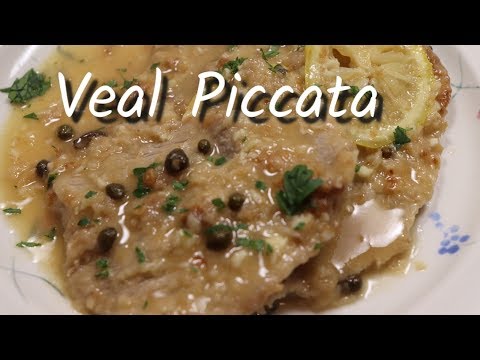
The primary reference for this recipe. Clear demonstration of the searing technique, deglazing sequence, and butter-finishing method that defines a proper piccata.
2. Pan Sauce Fundamentals
A deep dive into building restaurant-quality pan sauces — fond development, deglazing, reduction ratios, and emulsification. Essential background for understanding why the technique works.
3. Italian-American Classics at HomeCovers the broader family of Italian-American pan dishes — piccata, marsala, francese — and the shared logic behind all of them. Useful context for adapting the technique to chicken or turkey.
🛠️ Core Equipment
- Large stainless steel or cast iron skillet ↗You need a pan that holds and distributes heat evenly through multiple batches. Nonstick pans don't get hot enough for a proper sear, and they prevent the fond — the browned bits stuck to the pan — from forming. That fond is the flavor base for your sauce.
- Meat mallet or heavy rolling pin ↗Veal cutlets need to be pounded to an even thickness — about 1/4 inch. Uneven thickness means some parts overcook while thicker parts stay underdone. Uniform thickness means uniform cooking.
- Shallow dish for dredging ↗A rimmed plate or baking dish gives you room to coat each cutlet in flour without making a mess. The flour coating needs to be thin and even — no clumps.
- Wooden spoon or flat spatula ↗For deglazing. You need something sturdy to scrape the fond off the bottom of the pan when the wine hits. A silicone spatula works, but wood has better contact with the pan surface.
Perfect Veal Piccata (The Pan Sauce You're Probably Overcooking)
🛒 Ingredients
- ✦1.25 pounds veal cutlets, pounded thin
- ✦3/4 cup all-purpose flour
- ✦1 teaspoon kosher salt
- ✦1/2 teaspoon black pepper
- ✦3 tablespoons extra-virgin olive oil
- ✦4 cloves garlic, minced
- ✦1 cup low-sodium chicken broth
- ✦1/2 cup fresh lemon juice
- ✦3 tablespoons nonpareil capers, drained
- ✦2 tablespoons unsalted butter, cold
- ✦1/4 cup fresh Italian parsley, finely chopped
- ✦1 medium yellow onion, thinly sliced
- ✦8 ounces cremini mushrooms, sliced
- ✦1/2 cup dry white wine
- ✦2 teaspoons Dijon mustard
- ✦1 teaspoon dried oregano
👨🍳 Instructions
01Step 1
Pat the veal cutlets completely dry with paper towels, then season both sides evenly with salt and pepper.
02Step 2
Spread the flour in a shallow dish. Dredge each veal cutlet in flour, pressing lightly to adhere, then shake off all excess.
03Step 3
Heat olive oil in a large skillet over medium-high heat until it shimmers and moves freely, about 2 minutes.
04Step 4
Working in batches without crowding, sear the veal cutlets 3 to 4 minutes per side until deep golden brown. Transfer to a clean plate.
05Step 5
Reduce heat to medium. Add the sliced mushrooms to the same skillet and cook for about 5 minutes, stirring occasionally, until they release their moisture and begin to brown.
06Step 6
Add the minced garlic and cook for 1 minute, stirring frequently, until fragrant.
07Step 7
Pour in the white wine and scrape the bottom of the skillet with a wooden spoon to release all the browned bits. Simmer for 2 minutes until slightly reduced.
08Step 8
Stir in the chicken broth, fresh lemon juice, capers, and Dijon mustard. Whisk gently to combine.
09Step 9
Return the veal cutlets to the skillet, nestle them into the sauce, and simmer gently for 3 to 4 minutes.
10Step 10
Remove the skillet from heat completely. Add the cold butter in small pieces and whisk continuously until it melts into the sauce and creates a silky emulsion.
11Step 11
Taste and adjust seasoning with salt and pepper.
12Step 12
Transfer the veal to plates, spoon the sauce generously over each cutlet, and garnish with fresh parsley. Serve immediately with pasta, risotto, or roasted vegetables.
Nutrition Per Serving
Estimates based on standard preparation. Adjustments alter macros.
🔄 Substitutions
Instead of Veal cutlets...
Use Thin-pounded chicken breasts or turkey cutlets
Slightly less rich flavor but the same lean, delicate texture when pounded properly. Chicken is the most common restaurant substitution — Chicken Piccata is essentially the same dish.
Instead of All-purpose flour...
Use Whole wheat flour or brown rice flour
Slightly nuttier and earthier. Brown rice flour is the better gluten-free option — it creates a crisper crust than most GF alternatives.
Instead of Unsalted butter...
Use Extra-virgin olive oil or ghee
Olive oil produces a lighter, more herbaceous sauce that won't emulsify the same way. Ghee behaves more like butter and handles the butter-finish technique cleanly.
Instead of Nonpareil capers...
Use Chopped green olives or fresh dill with extra lemon
Olives add body and a different brine profile. Dill creates a fresher, more Scandinavian character. Neither is piccata, strictly speaking — but both are good.
🧊 Storage & Reheating
In the Fridge
Store leftover veal and sauce separately in airtight containers for up to 2 days. The sauce keeps better than the veal, which continues to tighten in the fridge.
In the Freezer
Not recommended. The butter emulsion breaks on freezing and the veal texture degrades significantly.
Reheating Rules
Reheat the sauce gently in a skillet over low heat. Sear fresh veal if possible, or reheat existing cutlets briefly in the sauce — just long enough to warm through, not to cook further.
❓ Frequently Asked Questions
Why did my sauce break and turn greasy?
The butter was added to a pan that was still too hot. Pull the skillet completely off the heat source and let it cool for 30 seconds before adding cold butter in small pieces, whisking continuously. The emulsion requires a specific temperature window to form.
Can I make this without wine?
Yes. Replace the wine with an equal volume of chicken broth and add an extra tablespoon of lemon juice to compensate for the acidity. The sauce will be slightly less complex but still work.
My veal crust is falling off in the sauce. What went wrong?
Two likely causes: the veal wasn't fully dry before dredging, or the flour coating was too thick. The crust needs to be paper-thin and the surface bone-dry for it to adhere. Also, let the cutlets rest on the plate for a minute after searing before returning them to the sauce — this helps the crust set.
Is veal piccata the same as chicken piccata?
Functionally yes, same technique and sauce. Veal has a more delicate, subtly sweet flavor and a finer texture. Chicken is more widely available and slightly more forgiving to cook. The sauce — lemon, capers, white wine, butter — is identical.
How do I know when the sauce has reduced enough?
Run a spoon through the sauce — it should leave a trail that fills in slowly, not immediately. It should coat the back of the spoon with a thin, even layer. If it runs off like water, simmer for another 2-3 minutes.
Can I make the sauce ahead of time?
You can make the sauce up to the butter finish and refrigerate it for up to 24 hours. Reheat gently and finish with fresh cold butter just before serving. Sear the veal fresh — it takes 8 minutes and loses nothing by being made to order.
The Science of
Perfect Veal Piccata (The Pan Sauce You're Probably Overcooking)
We turned everything on this page into a beautiful, flour-proof PDF cheat sheet. Print it out, stick it to your fridge, and never mess up your perfect veal piccata (the pan sauce you're probably overcooking) again.
*We'll email you the high-res PDF instantly. No spam, just perfectly cooked meals.
AlmostChefs Editorial Team
We translate the internet's most popular cooking videos into foolproof, beginner-friendly written recipes. We analyze multiple methods, test them in our kitchen, and engineer a single "Master Recipe" that gives you the best possible result with the least possible stress.