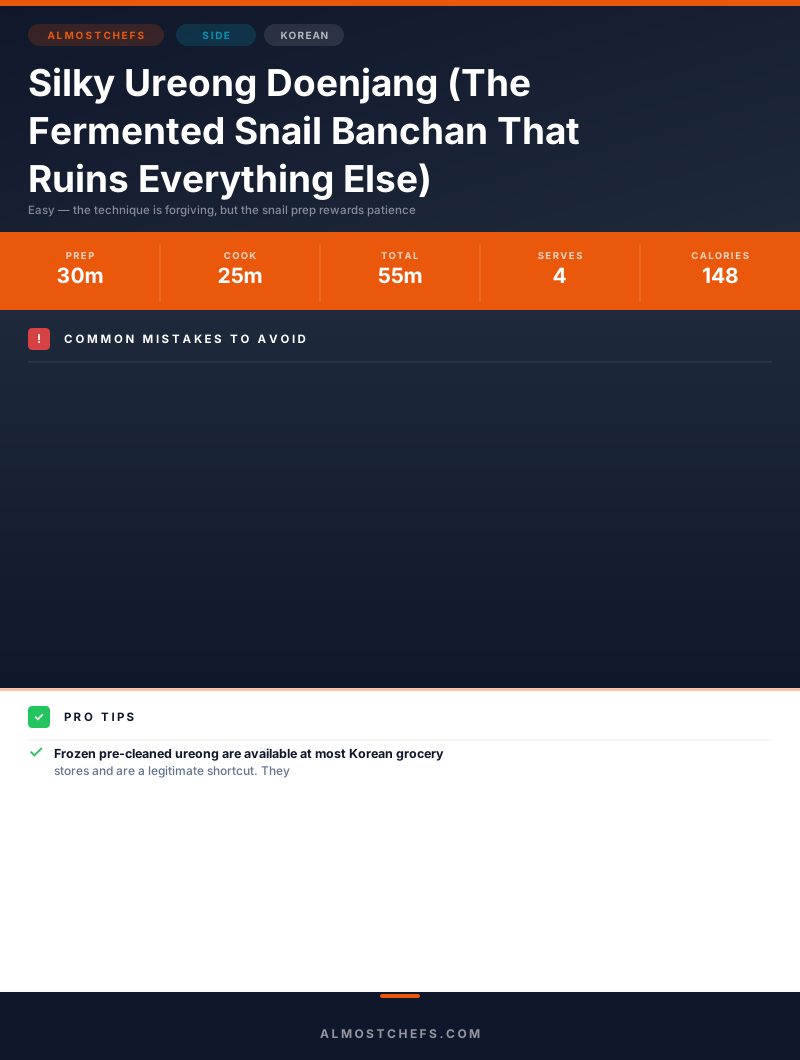
Silky Ureong Doenjang (The Fermented Snail Banchan That Ruins Everything Else)
A deeply savory Korean banchan of freshwater snails braised in fermented soybean paste with garlic, gochugaru, and perilla. The snails add a briny oceanic depth that amplifies doenjang's natural umami in ways tofu and zucchini simply cannot. We broke down the core technique to make it repeatable every time.

“Doenjang is already one of the most complex flavors in Korean cooking — fermented, funky, umami-dense, and irreplaceable. Add freshwater snails and something else happens entirely. The snails contribute a mineral brininess that anchors the paste's earthiness, creating a banchan that tastes like it took three days to make. It didn't. But you need to clean the snails properly, work the doenjang into the broth correctly, and pull the dish off heat before the snails turn to rubber. Miss any one of these and you lose the whole point.”
Why This Recipe Works
Doenjang is not a seasoning. It is an argument — pungent, fermented, prehistoric in its depth — and freshwater snails are exactly the kind of ingredient that can hold their own in that conversation. Most banchan soften doenjang's edges. Zucchini absorbs it. Tofu dilutes it. Ureong amplifies it. The snails add a mineral brininess — calcium from the shell leeching into the broth, oceanic compounds from the snail's natural habitat — that pushes doenjang into a register closer to the sea than the field. The result is something that tastes like it required far more than it did.
The Fermentation Logic
Doenjang is made from meju — compressed, fermented soybean bricks — and has been aged anywhere from three months to three years depending on the producer. During fermentation, the soybeans' proteins break down into free amino acids, including glutamate, the compound responsible for umami. The longer the fermentation, the more glutamate, the more savory the paste. This is why commercially produced doenjang (aged 3-6 months) tastes flat next to artisan versions aged over a year. If you can access traditional 전통 된장 (jeongtong doenjang) at a Korean market, use it here — the difference is not subtle.
The critical technique is dissolving the paste before heat. Doenjang's complex volatile compounds are heat-sensitive. Add the paste dry to a hot pan and you drive off the very aromatics that justify using it, while the residual sugars scorch and turn bitter. Dissolve it into cold anchovy broth first, then let it warm gradually in the sauce. The probiotics die at cooking temperatures regardless — that's unavoidable — but the flavor compounds survive gentle heat and build into the broth instead of burning off in seconds.
Why Snails, Specifically
Freshwater snails are not a quirky ingredient choice. They are a practical one. Before Korea's industrialization, freshwater snails were abundant in paddies and streams — cheap, protein-dense, and deeply flavored. Pairing them with doenjang was an act of rural pragmatism that turned into one of the defining flavor combinations in traditional Korean cuisine. The snails' collagen dissolves slowly into the broth, giving it a silky body that no vegetable can replicate. Their brininess provides a counterpoint to doenjang's earthiness that makes the overall dish taste more balanced, not more complex.
The danger is overcooking. Snail proteins tighten dramatically beyond 8-10 minutes, turning the meat from tender to leathery almost instantly. The visual cue is reliable: opaque, firm meat at the shell opening means done. A kitchen timer is your insurance against distraction.
The Aromatics Architecture
Gochugaru goes in with the onion and garlic, not the doenjang. This sequence matters. Chili flakes bloom in fat — the fat-soluble capsaicin and pigment compounds are extracted most efficiently in oil, producing the vivid red color and layered pepper flavor that defines the dish's appearance. Add gochugaru to liquid and you get heat but not color, bloom but not depth.
Perilla leaves go in last, off heat entirely. Their distinctive anise-like aroma — from the compound perillaldehyde — evaporates at cooking temperatures in under 90 seconds. Every recipe that adds perilla during cooking is sacrificing the herb's most important contribution. Add it to the hot dish just before serving and it releases its aroma into the steam, perfuming each bite without disappearing into the background.
This is a dish built on a sequence of precise, fast decisions: dissolve first, bloom the spice in fat, cook the snails to the moment, and add the perilla last. Follow the sequence. The result is a banchan that makes plain steamed rice the best thing you've eaten all week.
Where Beginners Mess This Up
Before we start, read this. These are the 4 reasons your silky ureong doenjang (the fermented snail banchan that ruins everything else) will fail:
- 1
Skipping the snail purging step: Live freshwater snails carry grit, sand, and sometimes parasites. They must soak in salted water for at least 30 minutes — ideally with a splash of rice vinegar — so they expel sediment. Rushing this step means your finished dish will have a gritty texture that no amount of sauce can hide.
- 2
Overcooked snails: Freshwater snails cook in 8-10 minutes. Past that, they turn rubbery and begin to pull away from the shell, making extraction impossible at the table. Pull them off heat the moment the meat becomes opaque and firm. Residual heat in the pot will carry them the rest of the way.
- 3
Adding doenjang too early: Doenjang scorches when it hits dry heat directly. Always dissolve it in a small amount of anchovy broth or water before adding to the pan. Adding raw paste to a hot pan produces bitter, acrid notes that no amount of extra time will fix.
- 4
Underseasoning the broth base: Doenjang provides salt, but snails need the broth to penetrate the shell to season the meat inside. The broth must be aggressively seasoned before the snails go in — if it tastes just right in the pot, it will taste flat at the table once diluted by the snail's natural liquid.
🛠️ Core Equipment
- Wide, shallow sauté pan or low-sided braising panSnails need surface area, not depth. A deep pot traps them at the bottom in uneven heat and makes stirring difficult without cracking shells. A [wide braising pan](/kitchen-gear/review/braising-pan) gives you control.
- Fine-mesh sieve or colanderFor draining the purged snails without losing any into the sink. The holes need to be smaller than the snail bodies. A standard colander works only if the snails are large.
- Small mixing bowlFor dissolving the doenjang into broth before it touches heat. This is a non-negotiable step that most recipes skip, and most home attempts suffer for it.
- Long tongs or chopsticksFor turning snails individually to ensure even heat exposure. Each snail is cooking with its opening facing down — you need to flip them halfway through so the interior heats properly.
Silky Ureong Doenjang (The Fermented Snail Banchan That Ruins Everything Else)
🛒 Ingredients
- ✦1.5 pounds live freshwater snails (ureong), scrubbed
- ✦3 tablespoons doenjang (Korean fermented soybean paste)
- ✦1.5 cups anchovy broth (or water)
- ✦1 tablespoon gochugaru (Korean red pepper flakes), adjust to heat preference
- ✦1 teaspoon gochujang (Korean red pepper paste)
- ✦5 cloves garlic, minced
- ✦1 small yellow onion, diced
- ✦3 green onions, cut into 1-inch segments
- ✦10 fresh perilla leaves, torn
- ✦1 tablespoon sesame oil
- ✦1 teaspoon toasted sesame seeds
- ✦1 tablespoon rice vinegar (for purging snails)
- ✦2 tablespoons neutral oil (for sautéing)
- ✦Sea salt to taste
- ✦Water for soaking (enough to cover snails)
👨🍳 Instructions
01Step 1
Scrub the snails under cold running water. Place in a large bowl, cover with cold water, add the rice vinegar and a generous pinch of salt, and let soak for 30-60 minutes. The snails will expel sand and sediment. Drain and rinse twice.
02Step 2
In a small bowl, whisk the doenjang into 3 tablespoons of anchovy broth until fully dissolved with no lumps. Set aside.
03Step 3
Heat neutral oil in a wide, shallow pan over medium heat. Add diced onion and sauté for 4-5 minutes until softened and just beginning to color.
04Step 4
Add minced garlic and gochugaru. Stir constantly for 60 seconds until fragrant. Do not let the garlic brown.
05Step 5
Pour in the dissolved doenjang mixture, remaining anchovy broth, and gochujang. Stir to combine and bring to a gentle simmer.
06Step 6
Add the drained snails to the simmering broth. Stir gently to coat. Cook uncovered over medium heat for 8-10 minutes, turning snails occasionally with tongs.
07Step 7
Add green onion segments in the final 2 minutes of cooking. Remove from heat immediately after.
08Step 8
Drizzle sesame oil over the pan. Scatter torn perilla leaves and toasted sesame seeds.
09Step 9
Transfer to a shallow serving bowl and serve immediately alongside steamed rice. Provide small forks or toothpicks for extracting snail meat from the shell.
Nutrition Per Serving
Estimates based on standard preparation. Adjustments alter macros.
🔄 Substitutions
Instead of Live freshwater snails...
Use Frozen pre-cleaned ureong or canned escargot
Frozen ureong from Korean markets require no purging and work nearly as well. Canned escargot produces a softer, less briny result but is a viable substitute when fresh snails are unavailable.
Instead of Anchovy broth...
Use Dashima (kelp) broth or plain water
Anchovy broth amplifies the dish's seafood depth. Kelp broth maintains umami without the fishiness. Plain water is acceptable but noticeably flatter — compensate with an extra half-teaspoon of doenjang.
Instead of Perilla leaves...
Use Korean chives (buchu) or shiso leaves
Buchu provides a mild garlic-chive flavor that complements the doenjang differently but works well. Shiso is botanically close to perilla and is the most direct substitute.
Instead of Gochugaru...
Use Gochujang (double the quantity, reduce added gochujang to zero)
Shifts the heat profile from bright and floral to deeper and fermented. The sauce will be slightly thicker. Acceptable variation, not a direct replacement.
🧊 Storage & Reheating
In the Fridge
Store snails submerged in the broth in an airtight container for up to 2 days. The flavor intensifies significantly after 24 hours.
In the Freezer
Not recommended. Frozen and thawed cooked snails become waterlogged and lose their texture entirely.
Reheating Rules
Reheat gently in a small saucepan over low heat with a splash of water or anchovy broth. Never microwave — uneven heat turns the snail meat rubbery within seconds.
❓ Frequently Asked Questions
Where do I buy freshwater snails for ureong doenjang?
Korean grocery stores (H-Mart, Hanahreum, local Korean markets) carry live or frozen ureong, typically near the seafood section. Call ahead — availability varies seasonally. Frozen pre-cleaned ureong are more reliably stocked and work excellently.
Is this dish actually healthy? It smells fermented.
Yes. Doenjang is one of the most studied fermented foods in Korean cuisine. It contains active probiotics that support gut health, along with isoflavones with documented anti-inflammatory properties. The fermented smell is the smell of those compounds. It mellows significantly during cooking.
How do I eat the snails without making a mess?
Use a toothpick, small fork, or the tip of a chopstick to hook the meat just inside the opening and pull in a slow, steady spiral. Twisting rather than pulling straight out prevents the meat from tearing. Koreans consider slurping the broth directly from the shell acceptable — and correct.
Can I make this without the snails — just as a doenjang sauce?
You can, but it becomes a different dish. The snails release collagen and minerals during cooking that thicken the broth and add a depth that cannot be replicated with vegetables alone. Tofu or mushrooms can fill the role texturally but not flavourfully.
Why is my doenjang broth bitter?
You almost certainly added doenjang paste directly to hot oil or a dry pan. Doenjang contains proteins and sugars that burn quickly at high heat, producing bitter compounds. Always dissolve the paste in liquid before it touches a hot surface. There is no fix once the bitterness is in — start the broth again.
Can I use regular miso instead of doenjang?
White or yellow miso produces a milder, sweeter result — edible but not traditional. Korean doenjang is coarser, funkier, and more pungent than Japanese miso due to differences in fermentation time and method. If you must substitute, use the darkest miso you can find and increase the quantity by 30%.
The Science of
Silky Ureong Doenjang (The Fermented Snail Banchan That Ruins Everything Else)
We turned everything on this page into a beautiful, flour-proof PDF cheat sheet. Print it out, stick it to your fridge, and never mess up your silky ureong doenjang (the fermented snail banchan that ruins everything else) again.
*We'll email you the high-res PDF instantly. No spam, just perfectly cooked meals.
AlmostChefs Editorial Team
We translate the internet's most popular cooking videos into foolproof, beginner-friendly written recipes. We analyze multiple methods, test them in our kitchen, and engineer a single "Master Recipe" that gives you the best possible result with the least possible stress.