Homemade Udon Noodles (Thick, Chewy, and Worth Every Minute)
Thick, chewy Japanese wheat noodles made from scratch with a deeply umami broth, tender vegetables, and classic toppings. We analyzed the most popular homemade udon methods to build one foolproof technique that nails the dough texture and broth balance every time.
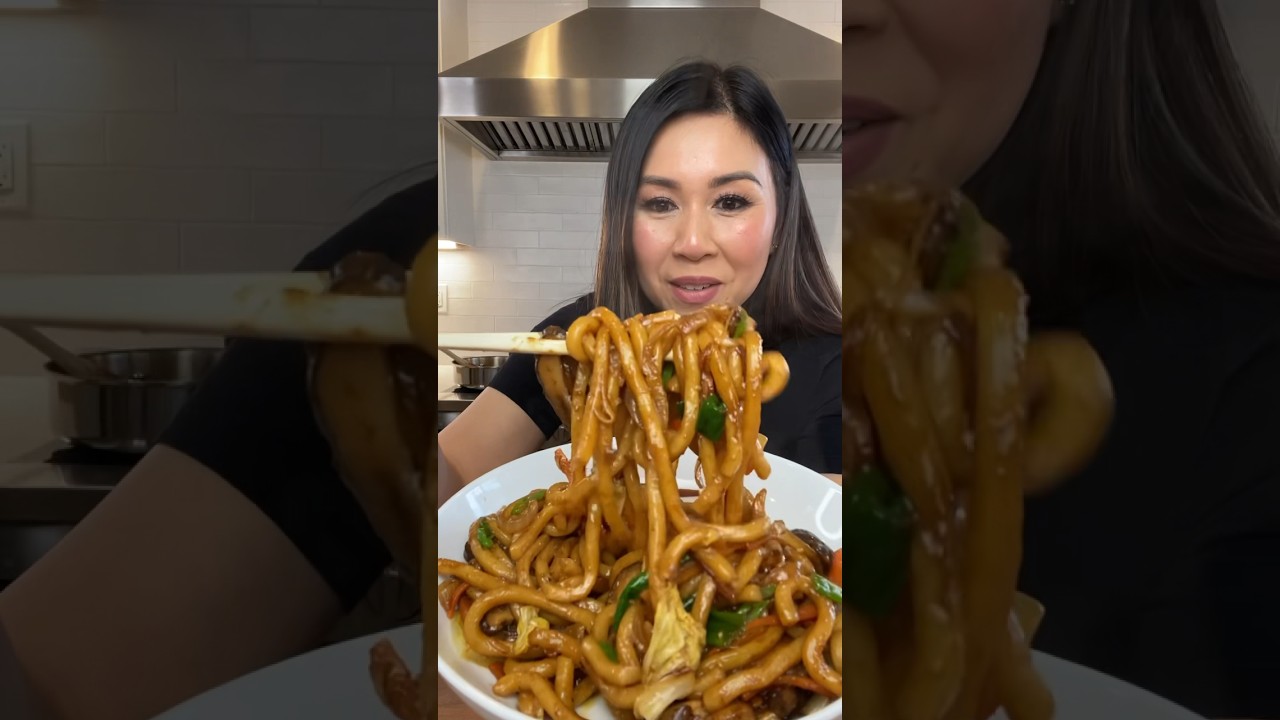
“Most people who try homemade udon once never go back to the dried packet. The difference is the noodle itself — hand-kneaded wheat dough has a springy, toothsome chew that nothing factory-extruded can replicate. The technique is not complicated. It just requires you to respect the dough's timeline: knead it fully, rest it completely, cut it evenly. Skip any of those steps and you get something closer to thick pasta than real udon.”
Why This Recipe Works
Udon is the simplest noodle in the Japanese canon. Three ingredients: flour, water, salt. No eggs. No alkaline solution. No specialty equipment. Just wheat, water, and your hands working together until something remarkable happens. The simplicity is deceptive — every variable matters more when there's nothing to hide behind.
The Dough Physics
Gluten is a protein network that forms when two wheat proteins — glutenin and gliadin — hydrate and bond under mechanical stress. More kneading means more bonding means more chew. Udon dough is mixed at lower hydration than most noodle doughs (roughly 43%) specifically to force those proteins into tight, dense alignment. The result is a noodle with a resistance that pushes back when you bite through it — that satisfying spring is structural, not accidental.
The whole wheat flour in this recipe introduces bran and germ particles that interrupt the gluten network slightly, which is why we cap it at one-third of the total flour weight. Beyond that ratio, the bran fragments create too many weak points in the gluten structure and the noodles become brittle under boiling water. At one-third, you get the nutritional benefit — more fiber, lower glycemic impact, more complex flavor — without sacrificing the chew that makes udon worth making.
The 30-minute rest is structural too. Freshly kneaded dough has tight, coiled gluten strands that resist extension. Resting allows those strands to uncoil and realign in a more relaxed configuration, which is why post-rest dough rolls out smoothly where pre-rest dough tears and springs back. This is not optional downtime. It is part of the technique.
Building the Broth
The broth in this bowl is doing more work than it looks like. A good heavy pot for the broth simmer matters — thin pots create hot spots that scorch the aromatics before they've had time to steep properly.
Ginger and garlic need 3-4 minutes of active heat to fully release their volatile compounds into the stock. At 1 minute, they contribute a bright, sharp top note. At 4 minutes, those sharp notes mellow and integrate, leaving behind a rounder, deeper warmth that runs through every spoonful. This is the difference between a broth that tastes assembled and one that tastes developed.
The soy-mirin-vinegar trifecta is a classic Japanese flavor architecture: soy provides salt and umami, mirin provides sweetness and a faint floral complexity, rice vinegar provides brightness that keeps the whole thing from reading as flat or heavy. Taste the broth before noodles go in. If it needs more salt, add soy sauce, not table salt — the fermented depth of soy does something sodium chloride alone cannot.
The Noodle-Broth Relationship
Udon is a structural noodle. Its thickness means it holds its shape against a heavy broth without going limp the way thinner noodles do. This is why the broth here leans rich and savory — the noodle has enough mass to match it. The same broth under somen or vermicelli would overwhelm the noodle completely.
The cold water rinse after boiling is not optional. Surface starch on freshly boiled udon is sticky enough to make the noodles clump into a single mass within 90 seconds of leaving the water. The rinse removes that surface layer and stops the cooking simultaneously. It also lowers the noodle temperature, which means when you ladle hot broth over them, the noodles come up to serving temperature gradually rather than continuing to cook in the bowl.
The Assembly
Nori strips, sesame seeds, sliced green onion, a sharp knife for cutting the soft-boiled egg cleanly — the toppings are not decoration. The nori adds oceanic umami and a papery contrast to the soft noodles. The sesame seeds add fat and a faint roast note. The egg yolk, when broken into the broth, emulsifies slightly and enriches every subsequent spoonful. The sesame oil drizzle at the very end is aroma delivery — added too early, heat drives it off. Added at service, it hits you in the first breath over the bowl.
That first breath is the point of the whole exercise.
Where Beginners Mess This Up
Before we start, read this. These are the 4 reasons your homemade udon noodles (thick, chewy, and worth every minute) will fail:
- 1
Under-kneading the dough: Eight minutes of kneading is not a suggestion. Gluten development is a mechanical process — the more you work the dough, the more the protein strands align and interlock, creating that signature udon chew. Pull the dough apart after 4 minutes and it will tear jaggedly. Pull it after 10 minutes and it stretches like slow-moving taffy. That stretch is what you're after.
- 2
Skipping the rest: Freshly kneaded dough is tight and elastic — it will fight the rolling pin and spring back constantly. The 30-minute rest allows the gluten network to relax so you can roll it to an even thickness without tearing. Impatient rolling produces noodles of wildly inconsistent width, which means half cook faster than the other half.
- 3
Overcooking the noodles: Udon should be tender but with a distinct resistance — what the Japanese call 'koshi.' At 6 minutes, fresh udon is usually right at the edge. At 9 minutes, the chew is gone and you have flour paste. Pull a noodle out at the 6-minute mark and bite through it. You're looking for uniform translucency with no white starchy center.
- 4
Flat broth: The broth backbone is soy sauce and mirin in a good stock, but without steeping the aromatics long enough, the liquid tastes thin and one-dimensional. Ginger and garlic need at least 3-4 minutes of active simmering to fully release into the broth. Taste it before you add the noodles — if it doesn't make you pause, simmer another 2 minutes.
The Video Reference Library
Want to see it in action? Here are the exact videos we analyzed and combined to build this foolproof recipe translation:
The definitive walkthrough on hand-kneading udon dough — essential for understanding what properly developed gluten looks and feels like before you attempt the roll.
🛠️ Core Equipment
- Large heavy potYou need enough volume to boil noodles without crowding. A [Dutch oven](/kitchen-gear/review/dutch-oven) handles both the noodle boil and the broth in separate batches without losing heat.
- Rolling pinEven pressure across the full width of the dough. A [French-style rolling pin](/kitchen-gear/review/rolling-pin) without handles gives you better tactile feedback for achieving uniform 1/4-inch thickness.
- Sharp chef's knifeNoodle width consistency determines even cooking. A dull knife drags and compresses the dough instead of cutting cleanly, producing uneven edges that fray in the boiling water.
- Fine-mesh sieveFor draining the boiled noodles quickly and rinsing them under cool water. The cold rinse stops the cooking immediately and removes surface starch that would make the noodles gummy in the broth.
Homemade Udon Noodles (Thick, Chewy, and Worth Every Minute)
🛒 Ingredients
- ✦2 cups all-purpose flour
- ✦1 cup whole wheat flour
- ✦3/4 cup water, plus more as needed
- ✦1 teaspoon sea salt
- ✦2 tablespoons cornstarch, for dusting
- ✦6 cups low-sodium vegetable or chicken broth
- ✦3 tablespoons low-sodium soy sauce
- ✦2 tablespoons mirin or honey
- ✦1 tablespoon rice vinegar
- ✦2-inch piece fresh ginger root, peeled and sliced
- ✦3 cloves garlic, minced
- ✦1 medium carrot, cut into thin matchsticks
- ✦2 cups fresh spinach leaves
- ✦4 green onions, thinly sliced
- ✦2 eggs, poached or soft-boiled
- ✦1 sheet nori seaweed, cut into strips
- ✦2 tablespoons sesame seeds
- ✦1 teaspoon sesame oil
👨🍳 Instructions
01Step 1
Combine all-purpose flour, whole wheat flour, and sea salt in a large mixing bowl.
02Step 2
Create a well in the center of the flour and gradually pour in 3/4 cup water while stirring with chopsticks or a fork.
03Step 3
Once a rough dough forms, knead by hand for 8-10 minutes until smooth and elastic, adding a splash more water only if the dough tears rather than stretches.
04Step 4
Shape into a ball, cover with a damp kitchen towel, and rest at room temperature for 30 minutes.
05Step 5
Dust your work surface generously with cornstarch and roll the rested dough out to approximately 1/4-inch thickness.
06Step 6
Fold the dough sheet loosely (like a letter) and cut into 1/4-inch wide strands. Unfold and dust lightly with cornstarch to prevent sticking.
07Step 7
Bring a large pot of salted water to a rolling boil. Add noodles in batches and stir immediately to prevent clumping.
08Step 8
Cook for 6-8 minutes until the noodles float and taste tender with a slight chew. Drain through a fine-mesh sieve and rinse under cool running water.
09Step 9
In a separate pot, bring the broth to a simmer over medium heat. Add ginger and garlic and steep for 3-4 minutes until fragrant.
10Step 10
Stir in soy sauce, mirin, and rice vinegar. Taste and adjust — it should be savory-forward with a gentle sweetness at the finish.
11Step 11
Add carrot matchsticks and spinach to the broth. Simmer 2-3 minutes until tender-crisp.
12Step 12
Divide noodles among four bowls. Ladle hot broth and vegetables over each portion.
13Step 13
Top each bowl with a poached or soft-boiled egg, sliced green onions, nori strips, and sesame seeds.
14Step 14
Finish with a few drops of sesame oil per bowl. Serve immediately.
Nutrition Per Serving
Estimates based on standard preparation. Adjustments alter macros.
🔄 Substitutions
Instead of All-purpose flour...
Use Buckwheat flour or spelt flour
Slightly nuttier flavor and lower glycemic impact. Texture will be less chewy — buckwheat udon behaves more like soba. Use a 1:3 buckwheat to all-purpose ratio to preserve the characteristic udon chew.
Instead of Regular soy sauce...
Use Low-sodium tamari or coconut aminos
Tamari is gluten-free and rounder in flavor. Coconut aminos adds subtle sweetness and reduces sodium by roughly 40%. Increase quantity slightly to compensate for the lighter body.
Instead of Mirin...
Use Raw honey or maple syrup
Eliminates refined sugar. Use slightly less than the mirin quantity — honey and maple are sweeter by volume. Honey adds floral notes; maple adds earthiness. Both work.
Instead of Eggs...
Use Grilled tofu or tempeh strips
Makes the bowl fully vegan. Press tofu dry before grilling to get browning. Tempeh adds a fermented, nutty depth that works surprisingly well against the clean broth.
🧊 Storage & Reheating
In the Fridge
Store cooked noodles and broth separately in airtight containers for up to 3 days. Toss noodles with a small amount of sesame oil before storing to prevent clumping.
In the Freezer
Fresh uncooked noodles freeze well for up to 1 month. Dust generously with cornstarch, portion into nests, freeze on a sheet tray first, then transfer to a bag. Cook from frozen — add 2 minutes to the boiling time.
Reheating Rules
Reheat broth separately over medium heat. Briefly dip cold noodles in boiling water for 30-60 seconds to warm through, then drain and add to the hot broth. Do not microwave noodles directly — they turn gummy.
❓ Frequently Asked Questions
Why is my udon dough so stiff and hard to knead?
Udon dough is intentionally stiffer than pasta dough — that firmness is what produces the characteristic chew. If it's tearing rather than stretching after 3-4 minutes of kneading, add water one teaspoon at a time. If it's just tough but cohesive, keep going. The dough softens significantly between the 5 and 8 minute mark as the gluten develops.
Can I use a stand mixer instead of hand-kneading?
Yes, with the dough hook on medium speed for 6-8 minutes. The result is slightly less developed than hand kneading because the machine can't apply the same folding pressure. If using a mixer, extend the rest time to 45 minutes to compensate.
My noodles fell apart in the boiling water. What happened?
Two likely causes: the dough was under-kneaded (gluten not developed enough to hold together) or the noodles were cut too thin. Udon should be cut at 1/4-inch width minimum. Anything thinner and the whole wheat fraction makes them fragile in boiling water.
Can I make the dough ahead of time?
Yes. After the 30-minute rest, wrap the dough tightly in plastic wrap and refrigerate for up to 24 hours. Cold dough will be even stiffer to roll — let it come to room temperature for 15 minutes before working with it.
Why does my broth taste flat even after adding soy sauce?
The base broth matters. Low-sodium vegetable broth from a carton is often watery and under-seasoned. Add a piece of kombu, a dried shiitake mushroom, or a splash of fish sauce to build the umami foundation before adding soy sauce and mirin. The soy-mirin combination seasons — it doesn't create depth on its own.
What's the difference between udon and other Japanese noodles?
Width, flour, and texture. Udon is thick (1/4-inch) wheat flour noodles with a firm, springy chew. Soba is thinner and made with buckwheat — earthier and more delicate. Ramen noodles are thin wheat noodles made with alkaline water (kansui), which gives them their yellow color and bouncy bite. Each noodle is engineered for a specific broth weight — udon's mass is designed for rich, heavy broths.
The Science of
Homemade Udon Noodles (Thick, Chewy, and Worth Every Minute)
We turned everything on this page into a beautiful, flour-proof PDF cheat sheet. Print it out, stick it to your fridge, and never mess up your homemade udon noodles (thick, chewy, and worth every minute) again.
*We'll email you the high-res PDF instantly. No spam, just perfectly cooked meals.
AlmostChefs Editorial Team
We translate the internet's most popular cooking videos into foolproof, beginner-friendly written recipes. We analyze multiple methods, test them in our kitchen, and engineer a single "Master Recipe" that gives you the best possible result with the least possible stress.