Crispy Korean Twigim (The Street Food Fry Secret Nobody Tells You)
Korean-style fried snacks — vegetables, seafood, and glass noodles coated in a thin, shatteringly crisp batter and fried golden. A staple of pojangmacha street stalls, twigim is the Korean answer to tempura, and the batter technique makes all the difference.

“Every Korean street market smells like this: hot oil, batter sizzling on contact, the crunch you can hear from three stalls away. Twigim is one of those foods that looks effortless and tastes like it required expertise — because it does, just not the kind you think. The batter is four ingredients. The filling is whatever you have. The variable that separates soggy twigim from the kind you get at a good pojangmacha is oil temperature — held steady, maintained ruthlessly, never compromised.”
Why This Recipe Works
Twigim is the original Korean street food philosophy in a single bite: cheap ingredients, extreme technique, instant gratification. Every pojangmacha cart in Seoul sells it. Most home attempts produce something closer to a wet sock than a crackle. The gap is not the filling. The filling is irrelevant. It is the batter and the oil.
The Batter Is a Precision Instrument
Four ingredients: flour, starch, baking powder, salt. That's it. The starch — potato or rice flour — is the critical variable. Where wheat flour builds gluten networks that trap moisture and create chew, starch does the opposite: it gelatinizes and shatters. A batter that is 33% starch by weight produces a coating that cracks audibly when bitten, rather than bending.
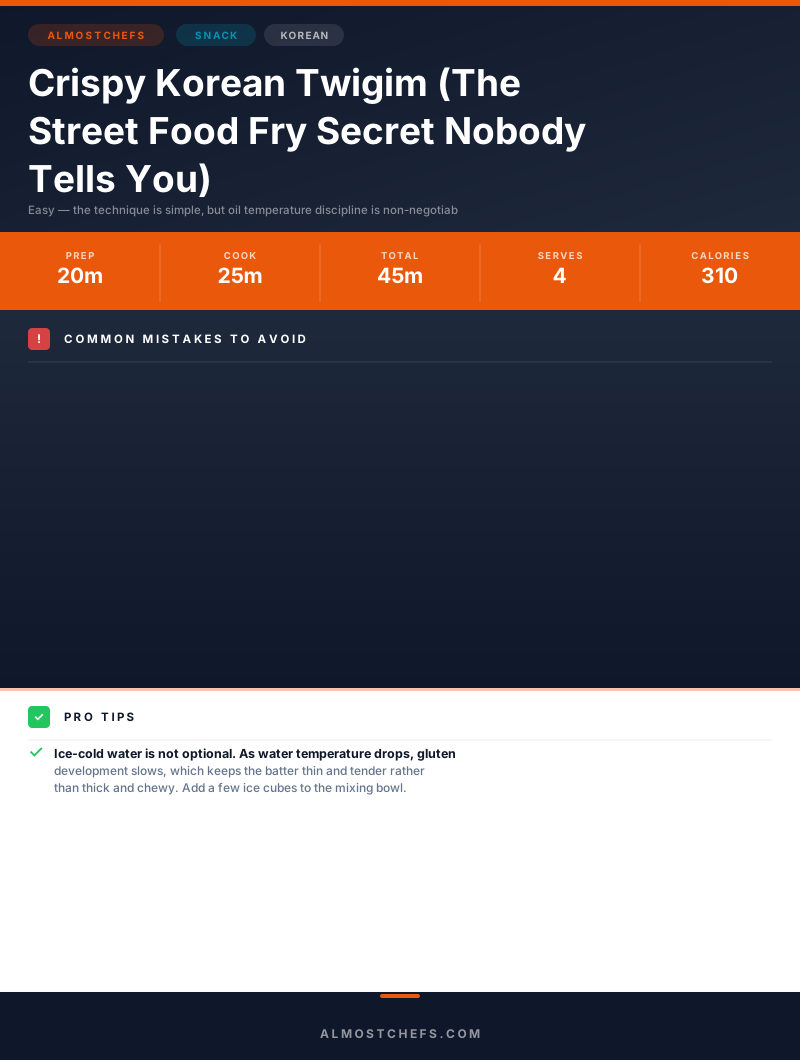
The ice-cold water is not aesthetic. Cold water suppresses gluten development throughout the frying process, keeping the coating thin and delicate. Mix the same batter with room-temperature water, and by the time you've fried your second batch, the gluten has developed enough to make the coating noticeably thicker and chewier. The solution is to set the batter bowl inside a larger bowl of ice and leave it there for the entire frying session.
The baking powder generates CO2 bubbles during frying, creating tiny pockets in the batter that make the crust lighter. This is the same principle behind Japanese tempura batter, and it works here for the same reason.
Oil Temperature Is the Only Variable That Matters
At 180°C, the surface moisture in the batter converts to steam instantly on contact. This steam pressure pushes outward from the coating and prevents the oil from penetrating inward — which is exactly what you want. The crust sets before it can absorb. The filling steams gently in the sealed environment. The result is light, grease-free twigim.
At 160°C, the reaction happens too slowly. Oil seeps in before the surface seals. The coating absorbs fat and turns heavy. This is the physics of a soggy fry, and no amount of draining fixes it after the fact. You needed the right temperature at the moment of contact.
A deep, heavy-bottomed pot holds temperature through the thermal mass of the oil. A thin pan crashes 15-20°C when you add cold battered items and takes 2-3 minutes to recover. During that recovery window, every piece in the pot is frying at the wrong temperature. This is why batch size discipline matters: small batches, full oil recovery between rounds, every single time.
The Double-Fry Is Not Optional
The first fry sets the structure. The second fry, at a higher temperature (190°C), drives off the residual moisture that causes softening within minutes. This technique, borrowed from the French double-fry method for pommes frites, is used across East Asian frying traditions for exactly this reason — it produces a crust that stays crisp well past the moment it leaves the oil.
A wire rack for draining is equally non-negotiable. Paper towels create a steam trap directly beneath the crust. The moisture has nowhere to go and immediately begins softening what you just worked to harden. Wire racks let air circulate on all sides. The physics are simple. The results are not subtle.
What You Fry Is Almost Beside the Point
Sweet potato holds up to the oil and sweetens slightly under heat. Zucchini retains moisture and creates a soft contrast against the crisp exterior. Onion rings become jammy inside their shell. Shrimp curls and sweetens. The batter treats all of them the same way — it doesn't care what's inside. This is why twigim scales effortlessly: the technique is fixed, the filling is whatever you have.
The finishing touch at the pojangmacha is gochujang tteokbokki sauce spooned directly over the pile. The heat of the fried pieces keeps the sauce warm. The sauce adds fermented depth against the neutral batter. It is not decoration. It is the point.
Where Beginners Mess This Up
Before we start, read this. These are the 4 reasons your crispy korean twigim (the street food fry secret nobody tells you) will fail:
- 1
Overmixing the batter: Twigim batter should be lumpy and barely combined. Overmixing activates gluten, which creates a chewy, bready coating instead of the thin, crisp shell you're after. Stir three or four times with chopsticks and stop. Lumps are correct.
- 2
Cold filling meeting cold batter: Wet vegetables steam inside the batter instead of frying, turning the coating soft before it can set. Pat everything dry with paper towels until aggressively dry. Moisture is the enemy of crunch.
- 3
Oil temperature drift: When you add cold battered items to the oil, the temperature drops immediately. If your starting temperature is only 165°C instead of 180°C, it crashes below the threshold for crisp frying and the coating absorbs oil instead of sealing. Use a thermometer. Fry in small batches. Let the oil recover between rounds.
- 4
Skipping the double-fry: One pass through the oil produces a crust that softens within minutes. A brief second fry at higher heat — 190°C for 60 seconds — drives off the residual moisture that causes the crust to go limp. It is the difference between twigim you eat immediately and twigim that stays crisp long enough to reach the table.
🛠️ Core Equipment
- Deep, heavy-bottomed pot or wokDeep sides prevent oil splatter. A heavy base holds temperature better when cold items hit the oil — thin pots crash and recover slowly, giving the batter time to become greasy instead of crisp.
- Instant-read thermometerGuessing oil temperature by look or feel is how you get inconsistent results. 180°C for the first fry, 190°C for the second. There is no substitute for knowing the actual number.
- Wire rack over a sheet panDraining twigim on paper towels traps steam beneath the crust and softens it. A wire rack lets air circulate on all sides, maintaining the crunch while the excess oil drips away.
- Chopsticks or spider strainerChopsticks let you turn each piece individually during frying without piercing the batter. A spider strainer removes multiple pieces at once and drains them efficiently.
Crispy Korean Twigim (The Street Food Fry Secret Nobody Tells You)
🛒 Ingredients
- ✦1 medium sweet potato, peeled and sliced 5mm thick
- ✦1 medium zucchini, sliced into 5mm rounds
- ✦1 medium onion, sliced into rings
- ✦8 medium shrimp, peeled and deveined
- ✦1 cup all-purpose flour
- ✦1/2 cup potato starch or cornstarch
- ✦1 teaspoon baking powder
- ✦1 teaspoon fine sea salt, plus more for seasoning
- ✦1 cup ice-cold water (keep ice in the bowl while mixing)
- ✦1 egg yolk
- ✦Neutral oil for frying (canola, sunflower, or rice bran), enough to fill pot 8cm deep
- ✦Tteokbokki sauce or soy-based dipping sauce, for serving
👨🍳 Instructions
01Step 1
Prep all fillings: peel and slice sweet potato and zucchini, separate onion into rings, pat shrimp dry. Lay everything on paper towels and press firmly to remove surface moisture. Let sit for 5 minutes.
02Step 2
Pour oil into a deep, heavy-bottomed pot to a depth of 8cm. Heat over medium-high to 180°C, measuring with a thermometer.
03Step 3
In a medium bowl, whisk together flour, potato starch, baking powder, and salt. Add the ice-cold water and egg yolk. Mix with chopsticks in 3-4 strokes only — the batter should be lumpy and streaky.
04Step 4
Working in batches of 4-5 pieces, dip each item into batter, let excess drip off for 2 seconds, then lower gently into the oil. Do not crowd the pot.
05Step 5
Fry for 2-3 minutes, turning once with chopsticks, until pale golden. Remove to a wire rack. Repeat with remaining batches, letting the oil recover to 180°C between each.
06Step 6
Once all pieces have had their first fry, raise the oil temperature to 190°C.
07Step 7
Return all pieces to the hot oil in batches for a second fry of 45-60 seconds each, until deep golden and audibly crisp. Drain on the wire rack.
08Step 8
Season lightly with fine sea salt immediately while hot. Serve with tteokbokki sauce or a simple dipping sauce of soy sauce, rice vinegar, and a pinch of sugar.
Nutrition Per Serving
Estimates based on standard preparation. Adjustments alter macros.
🔄 Substitutions
Instead of Sweet potato...
Use Kabocha squash or butternut squash
Similar starch density and sweetness. Slice to the same 5mm thickness for consistent cooking time.
Instead of Shrimp...
Use Squid rings or sliced fish cake (eomuk)
Squid cooks very fast — 90 seconds total across both fries. Fish cake is already cooked, so you are only crisping the batter, not cooking the filling.
Instead of Potato starch...
Use Rice flour
Rice flour produces an even crispier, more delicate crust and holds up well to the double-fry. If you have it, use it.
Instead of All-purpose flour...
Use Gluten-free 1:1 flour blend
Works reasonably well. The crust is slightly more fragile and browns faster, so watch the oil temperature carefully.
🧊 Storage & Reheating
In the Fridge
Store in an airtight container for up to 2 days. The crust softens significantly — re-fry or oven-crisp before serving.
In the Freezer
Freeze fully cooled twigim on a sheet pan in a single layer, then transfer to a bag. Keeps for up to 1 month.
Reheating Rules
Re-fry from room temperature at 180°C for 2 minutes, or bake at 220°C on a wire rack for 8-10 minutes. Never microwave — it turns the crust to rubber.
❓ Frequently Asked Questions
Why is my twigim batter thick and doughy?
You overmixed it. Twigim batter should be combined in 3-4 strokes with chopsticks — lumpy, barely incorporated. Overmixing develops gluten, which creates a thick, bready crust instead of the thin shell you want.
Can I make the batter ahead of time?
No. The batter deteriorates quickly as the starch absorbs water and gluten develops. Mix it immediately before frying and keep it over ice to slow the degradation. Even then, use it within 30 minutes.
Why is my twigim soggy after a few minutes?
Two causes. First, you skipped the double-fry, which drives off residual moisture. Second, you drained on paper towels instead of a wire rack, which traps steam. Both contribute. Fix both.
What is the right dipping sauce?
The street stall standard is tteokbokki gochujang sauce spooned directly over the twigim. For a lighter option, mix 3 tablespoons soy sauce, 1 tablespoon rice vinegar, 1 teaspoon sugar, and a few sesame seeds.
Can I air-fry twigim?
You can produce something edible, but it is not twigim. The batter requires full oil submersion to set correctly — air fryers blow the wet batter off the surface before it can seal. Use real oil.
How do I know the oil is ready without a thermometer?
Drop a tiny amount of batter into the oil. At 180°C it should sink about 1cm, then immediately rise and sizzle actively. If it floats immediately, the oil is too hot. If it sinks and sits, the oil is too cold. But buy a thermometer — guessing loses batches.
The Science of
Crispy Korean Twigim (The Street Food Fry Secret Nobody Tells You)
We turned everything on this page into a beautiful, flour-proof PDF cheat sheet. Print it out, stick it to your fridge, and never mess up your crispy korean twigim (the street food fry secret nobody tells you) again.
*We'll email you the high-res PDF instantly. No spam, just perfectly cooked meals.
AlmostChefs Editorial Team
We translate the internet's most popular cooking videos into foolproof, beginner-friendly written recipes. We analyze multiple methods, test them in our kitchen, and engineer a single "Master Recipe" that gives you the best possible result with the least possible stress.