Easy Twice Baked Potatoes (Maximum Crust, Zero Collapsing Shells)
Russet potatoes baked twice — once to cook through completely, once to build a golden, crackling crust. Greek yogurt and sharp cheddar replace the traditional sour cream and mild cheese for more tang and more flavor. Every failure mode mapped and explained.
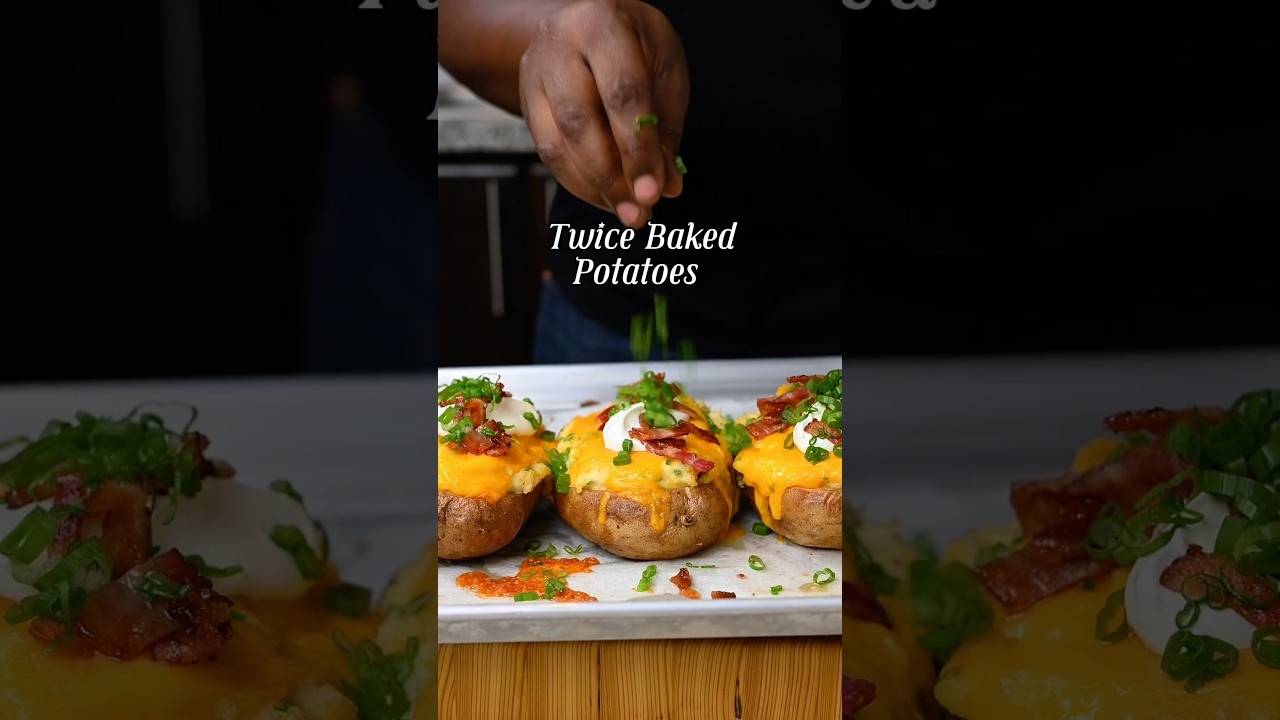
“Twice baked potatoes fail in one of two places: the shell collapses when you scoop it, or the second bake does nothing for the top. Both failures trace to the same root cause — the first bake wasn't finished. Once you understand what a fully cooked russet potato actually feels like, the rest of this recipe is just assembly.”
Why This Recipe Works
Twice baked potatoes are a structural engineering problem disguised as a side dish. The shell is load-bearing. The filling determines the texture of every bite. The second bake is a crust-formation event, not a cooking step. When any one of those three elements fails — shell too thin, filling made with cold dairy, second bake at too low a temperature — the dish falls apart, sometimes literally.
The First Bake Is the Recipe
Most twice baked potato failures begin before the filling is assembled, because the first bake is where cooks decide they're patient enough to wait 55 minutes or impatient enough to pull at 40. The difference between a potato that scoops cleanly and one whose flesh tears the shell is almost entirely determined by internal temperature and starch gelatinization.
Russet potato flesh is built from cells packed with starch granules and water. When those granules are fully hydrated and gelatinized — which requires sustained heat all the way to the center — the flesh releases cleanly from the skin in one cohesive mass. A partially cooked potato has partially gelatinized starch that adheres to the skin, resists the spoon, and shreds the walls when you force it. The skewer test is non-negotiable: insert it at the center of the potato, not the end. The center is always the last place to cook through.
The russet's high starch content is why it outperforms every other variety for this application. More starch means more gelatinization, which means fluffier filling with better structure. Yukon gold is creamier but produces thinner skin. Waxy varieties like red potatoes produce filling that never fully fluffs out. Russet is the right potato for this job and not by a small margin.
Shell Geometry and the Quarter-Inch Rule
A potato masher does the filling work. A sharp spoon and patience do the shell work. The goal is a uniform quarter-inch of flesh left against the skin — thick enough to hold weight, thin enough that you're not wasting material that should be in the filling.
The critical areas are the corners and ends, where the skin curves sharply and the spoon naturally wants to dig too deep. Work those areas last and work them slowly. Shell thickness also determines whether the second bake succeeds. A too-thin shell collapses inward under the weight of the filling and the force of the oven's heat. A properly thick shell holds its shape as a vessel and allows the filling to bake evenly from all sides without distortion.
An often-overlooked step is the 10-minute cooling period after the first bake. During those minutes, the flesh firms slightly as steam redistributes. The skin stabilizes enough to resist the spoon. The potato is still hot enough to melt the butter instantly on contact — nothing is lost by waiting, and control over the most delicate part of the process is gained.
The Filling Chemistry
Twice baked potato filling is essentially mashed potato filling — which means it follows all the same rules. Cold dairy causes starch granules to tighten and seize. Overmixing ruptures starch granules and releases sticky gel. Both failures produce the same result: gluey, dense filling that looks wrong in the shell and eats even worse.
The solution on the dairy side is direct: melt the butter, bring the Greek yogurt to room temperature. Hot potato flesh transfers heat rapidly — room temperature dairy absorbs that heat evenly, allowing the starch granules to stay relaxed as they absorb the fat. Cold dairy from the refrigerator creates a thermal shock that tightens everything in the bowl.
Greek yogurt is specified over sour cream for two distinct reasons. First, its higher protein content gives the filling more structural stability — it holds its shape in the shell rather than slumping. Second, its tanginess is more pronounced than sour cream, which cuts through the richness of the butter and cheese more effectively. Full-fat Greek yogurt is the only version worth using; low-fat versions add water to the filling and compromise the consistency.
The vegetable broth is the loosening agent. Potato starch absorbs liquid, and a filling that looks right in the bowl will bake slightly denser than expected. The broth adds flavor rather than the neutral dilution that plain water would introduce. A quarter cup is typically the right amount for four medium russets — but add it gradually and stop when the texture looks scoopable without being liquid.
Why 425°F for the Second Bake
The filling is already cooked. The second bake at 425°F has one job: dry and brown the cheese and breadcrumb topping through the Maillard reaction. At lower temperatures, the cheese melts but the surface stays moist — you get a golden pool rather than a crackling crust. At 425°F, surface moisture evaporates quickly and the Maillard reaction starts browning the proteins in the cheese within the first 10 minutes.
Smoked paprika amplifies this effect. It doesn't just add color — the compounds in smoked paprika darken through heat and produce a deeper reddish-brown crust that looks deliberate rather than incidental. The panko breadcrumbs, when used, add a textural layer independent of the cheese: as the cheese bubbles and browns, the panko absorbs a small amount of rendered fat and toasts to a separate crunch. It is a minor addition that makes the first bite dramatically more interesting.
The Patience Requirement
Twice baked potatoes are patient food. The first bake requires roughly 50 minutes of doing nothing. The cooling requires 10 minutes of doing nothing. The second bake requires 15–20 minutes of doing nothing. Between those waiting periods, the hands-on work totals about 12 minutes. That ratio — extensive passive time, minimal active time — is what makes this recipe more forgiving than it looks, and why impatience is the only real mechanism for failure.
The payoff for that patience is a dish with three distinct textural events: the crisp, seasoned skin that crackles when cut; the hot, creamy, herb-forward filling that holds its shape when scooped; and the golden, browned crust on top that provides textural contrast to everything underneath it. None of those outcomes happen by accident. Each one is the result of a specific technical decision made at a specific point in the process.
Where Beginners Mess This Up
Before we start, read this. These are the 5 reasons your easy twice baked potatoes (maximum crust, zero collapsing shells) will fail:
- 1
Pulling the potatoes before they're fully baked: A potato that's 85% cooked has flesh that resists scooping — it tears the shell instead of releasing cleanly. The starch hasn't fully gelatinized, so the filling stays dense instead of becoming fluffy. The first bake needs to go to complete doneness: a skewer should pass through with zero resistance anywhere in the potato. 45 minutes at 400°F for medium russets is the floor, not the target.
- 2
Leaving too little wall in the shell: The shell is structural. Scoop too aggressively and the walls become translucent and paper-thin — they buckle under the weight of the filling during the second bake or tear when you try to move them. Leave at least a quarter-inch of flesh against the skin on all sides. Err on the side of too thick.
- 3
Not cooling the potatoes before scooping: Scooping straight from the oven means working with soft, fragile, steam-filled flesh that tears at the slightest pressure. Ten minutes of cooling firms the flesh just enough to separate cleanly from the skin. The interior is still hot enough to melt the butter and cheese — you lose nothing by waiting.
- 4
Using cold dairy in the filling: Cold Greek yogurt and cold butter in hot potato flesh cause the starch granules to tighten and seize — the same mechanism as any mashed potato recipe. Bring the Greek yogurt to room temperature and melt the butter before they touch the potato.
- 5
Running the second bake at too low a temperature: The second bake at 425°F is about crust formation, not cooking. The filling is already cooked. High heat drives moisture out of the cheese topping fast, producing Maillard browning rather than steaming. At 375°F the top melts without crisping.
The Video Reference Library
Want to see it in action? Here are the exact videos we analyzed and combined to build this foolproof recipe translation:
The primary reference for this recipe. Covers the full technique from first bake through filling construction to second bake crust development.
🛠️ Core Equipment
- Rimmed baking sheetCatches drips from the potatoes during the first bake and provides a stable surface for the shells during the second. A flat sheet without a rim means potato drippings go directly onto the oven floor.
- Potato masher or ricerControls the texture of the filling. A [potato masher](/kitchen-gear/review/potato-masher) gives you creamy mash with body; a ricer produces a smoother result. Both are correct. A hand mixer is too aggressive — it ruptures starch granules and makes the filling gluey.
- Large mixing bowlThe filling needs room to be worked without spilling. A bowl large enough to hold all the scooped flesh plus the add-ins lets you mix and taste without scraping against the sides constantly.
- Sharp spoon or melon ballerA spoon with a sharp edge separates flesh from skin cleanly without tearing. A melon baller gives more control near the edges and corners of each half where shells most often split.
Easy Twice Baked Potatoes (Maximum Crust, Zero Collapsing Shells)
🛒 Ingredients
- ✦4 medium russet potatoes, scrubbed
- ✦3 tablespoons olive oil
- ✦1 cup sharp cheddar cheese, shredded (divided)
- ✦1/2 cup plain Greek yogurt, room temperature
- ✦3 tablespoons unsalted butter, melted
- ✦1/2 cup scallions, sliced thin
- ✦1/4 cup fresh chives, chopped
- ✦2 cloves garlic, minced
- ✦1/2 teaspoon smoked paprika
- ✦1/4 teaspoon cayenne pepper
- ✦3/4 teaspoon sea salt
- ✦1/4 teaspoon black pepper
- ✦2 tablespoons grated Parmesan
- ✦1 tablespoon fresh thyme leaves
- ✦1/4 cup vegetable broth
- ✦2 tablespoons panko breadcrumbs (optional, for topping)
👨🍳 Instructions
01Step 1
Preheat oven to 400°F. Rub potatoes all over with olive oil and place directly on a rimmed baking sheet.
02Step 2
Bake at 400°F for 45–55 minutes until completely soft throughout. Test by inserting a skewer into the center — it should pass through with zero resistance.
03Step 3
Remove from oven and let cool for 10 minutes. Raise oven temperature to 425°F.
04Step 4
Slice each potato in half lengthwise. Using a sharp spoon, scoop the flesh into a large bowl, leaving a 1/4-inch shell on all sides.
05Step 5
Add melted butter, Greek yogurt, three-quarters of the cheddar, garlic, scallions, smoked paprika, cayenne, salt, pepper, Parmesan, thyme, and vegetable broth to the bowl with the potato flesh.
06Step 6
Mash and mix until smooth but not overworked. Add the broth gradually and stop when the texture looks scoopable but not runny.
07Step 7
Spoon the filling back into the potato shells, mounding it slightly above the rim. Place on the baking sheet.
08Step 8
Top each half with the remaining shredded cheddar and panko breadcrumbs if using.
09Step 9
Bake at 425°F for 15–20 minutes until the tops are golden and the cheese is bubbling with brown edges.
10Step 10
Garnish with remaining fresh chives and serve immediately.
Nutrition Per Serving
Estimates based on standard preparation. Adjustments alter macros.
🔄 Substitutions
Instead of Greek yogurt...
Use Sour cream
Classic choice. Less protein and slightly less tang, but same consistency. Full-fat sour cream only — light versions add water to the filling and thin it out.
Instead of Sharp cheddar...
Use Gruyère or smoked Gouda
Gruyère melts more smoothly and adds a nutty, slightly sweet note. Smoked Gouda amplifies the paprika's smoke character. Both work well.
Instead of Vegetable broth...
Use Whole milk or heavy cream
Cream produces a richer filling. Milk is a neutral swap. Broth is used here to add flavor without adding fat — choose based on your dietary targets.
Instead of Panko breadcrumbs...
Use Crushed crackers or omit entirely
Panko adds a distinct crunch layer on top of the melted cheese. Without it, the topping is purely cheese-based. Crushed Ritz crackers add a buttery note.
🧊 Storage & Reheating
In the Fridge
Store assembled baked halves in an airtight container for up to 3 days. The skin softens slightly in storage but re-crisps in the oven.
In the Freezer
Freeze unbaked assembled halves on a baking sheet, then transfer to freezer bags for up to 1 month. Bake directly from frozen at 400°F for 25–30 minutes, then 425°F for 10 minutes to finish the top.
Reheating Rules
Reheat in a 375°F oven for 12–15 minutes uncovered. The microwave reheats the filling but turns the skin rubbery — use the oven whenever the texture of the shell matters.
❓ Frequently Asked Questions
Why did my potato shell collapse or tear?
Either the wall was too thin from over-aggressive scooping, or the potato wasn't fully baked and the flesh was still adhering to the skin. Leave more wall thickness — a quarter inch minimum — and make sure the first bake goes to complete doneness before you touch the potato.
Can I use Yukon gold potatoes instead of russets?
Yes, with trade-offs. Yukon gold produces a creamier, denser filling with a more buttery flavor. The skin is thinner and tears more easily during scooping. Work more carefully during the scooping step and expect a filling with less fluff and more richness.
The filling came out gluey — what went wrong?
Over-mixing and cold dairy are the two culprits. Starch granules rupture under prolonged mechanical force and release sticky gel. Cold Greek yogurt or butter shocks the starch and causes it to seize. Make sure your dairy is at room temperature, mix only until just combined.
Can I add bacon or other proteins to the filling?
Yes. Crispy bacon is the most common addition — fold it in with the cheese and scallions. Leftover pulled pork, shredded rotisserie chicken, and crumbled sausage all work. Keep the total filling volume manageable so the topping browns evenly.
How do I know the first bake is done?
The skin should look slightly wrinkled and the potato should feel completely soft when squeezed through a kitchen towel. The definitive test is a skewer through the center — zero resistance from skin to center. Any pushback means more time.
The Science of
Easy Twice Baked Potatoes (Maximum Crust, Zero Collapsing Shells)
We turned everything on this page into a beautiful, flour-proof PDF cheat sheet. Print it out, stick it to your fridge, and never mess up your easy twice baked potatoes (maximum crust, zero collapsing shells) again.
*We'll email you the high-res PDF instantly. No spam, just perfectly cooked meals.
AlmostChefs Editorial Team
We translate the internet's most popular cooking videos into foolproof, beginner-friendly written recipes. We analyze multiple methods, test them in our kitchen, and engineer a single "Master Recipe" that gives you the best possible result with the least possible stress.