Fluffy Japanese Soufflé Pancakes (Just 2 Eggs, Zero Guesswork)
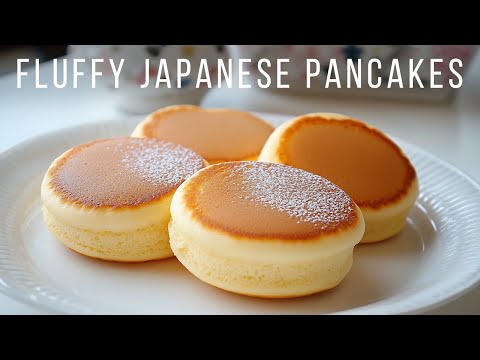
Cloud-like Japanese soufflé pancakes with a custardy interior and delicate caramelized edges — made with just 2 eggs and basic pantry staples. We broke down the technique into foolproof steps so you get tall, jiggly pancakes on the first try, not the fifth.

“Japanese soufflé pancakes look like a restaurant flex. They are not. The entire technique comes down to one skill: folding whipped egg whites without deflating them. Get that right and you get tall, jiggly, impossibly light pancakes every time. Get it wrong and you get a flat, eggy crepe. We mapped every failure point so your first batch is the one you photograph.”
Why This Recipe Works
Japanese soufflé pancakes are a structural engineering problem disguised as breakfast. The height, the jiggle, the custardy interior — none of it comes from special ingredients. It comes from one technique applied twice: trapping air in egg whites and then refusing to knock it out.
The Meringue Is the Recipe
Strip this dish down to its fundamentals and you have a meringue delivery system. The flour, yolk, and milk create a scaffolding that holds the whipped egg whites in suspension while heat sets the structure. Everything else — the vanilla, the honey, the cream of tartar — is supporting cast.
This means your entire outcome is determined before the pan gets warm. Underwhip the whites and you don't have enough air to generate lift. Overfold the batter and you've knocked out the air you built. Either way, you get a flat pancake that tastes fine but has none of the signature properties that make this dish worth making.
Stiff peaks are the standard. Not soft peaks, which curl at the tip and indicate the protein network is still loose. Not overwhipped whites, which look dry and granular and have begun to separate. Stiff peaks stand straight up when you pull the beater away and hold their shape without drooping. That's your target. Four minutes on high speed with an electric hand mixer gets you there consistently.
The Fold Is Where Most People Fail
Folding is a specific physical technique, not a synonym for stirring slowly. The motion is: cut the spatula straight down through the center of the bowl, sweep it along the bottom, and turn the batter over itself as you bring it back up. Rotate the bowl a quarter turn. Repeat. You are moving batter from bottom to top without shearing the air bubbles apart.
The critical variable is knowing when to stop. The batter is done when you can no longer see distinct white streaks — and not one fold later. Smooth, uniform, glossy batter is overworked batter. Accept visible texture. Accept slight streakiness if the alternative is another ten folds. The pancakes will look uniform once they hit the heat and steam sets them.
Adding the meringue in two stages makes this easier. The first third loosens the yolk mixture from a thick paste to a consistency that accepts the remaining whites without requiring aggressive mixing. The second addition folds in cleanly because the base is already close in density to the meringue.
Low Heat Is Non-Negotiable
Soufflé pancakes are about 3 inches tall. That center needs time to cook through before the exterior burns. Medium-low heat — not medium, not medium-low trending toward medium — gives the steam environment enough time to do its work.
A non-stick skillet with a glass lid is the right tool here. The glass lets you monitor progress without lifting the lid and releasing steam. After the flip, the lid creates a contained steam chamber that finishes the interior from above while the second side develops its golden crust. This is the same principle as dum cooking in biryani — sealed heat, patient timing, hands off the lid.
Butter should foam gently when it hits the pan. If it browns immediately, the pan is too hot. Wait, lower the heat, and start again with fresh butter. A burned first pancake is information, not failure.
The Serving Window Is Two Minutes
These pancakes deflate. That is not a malfunction — it is physics. The air inside the meringue structure escapes as the pancake cools, and the protein network that held it begins to relax. What you have immediately off the pan is extraordinary. What you have ten minutes later is a very good pancake. What you have the next morning is a memory.
Plate directly from pan. Have the maple syrup and berries ready before you start cooking. Brief anyone you're cooking for about the timeline. The reward for that coordination is a breakfast that genuinely looks and tastes unlike anything you can order in most cities outside Tokyo.
Where Beginners Mess This Up
Before we start, read this. These are the 4 reasons your fluffy japanese soufflé pancakes (just 2 eggs, zero guesswork) will fail:
- 1
Yolk contamination in the egg whites: A single drop of yolk in your whites will prevent them from whipping to stiff peaks. Fat molecules in yolk disrupt the protein network that gives meringue its structure. Separate eggs one at a time over a small bowl — never directly over the mixing bowl — so a broken yolk doesn't ruin the whole batch.
- 2
Overfolding the meringue: Folding is not stirring. Every extra fold deflates air bubbles you spent four minutes building. Stop folding the moment you can no longer see white streaks. The batter should look slightly lumpy and barely combined. Smooth, uniform batter is overworked batter.
- 3
Cooking on heat that's too high: Medium-low is not medium. Japanese soufflé pancakes are roughly 3 inches tall — the center needs time to set before the exterior burns. High heat gives you a dark crust and raw interior. Low, patient heat with a covered lid is the only way to cook the center through without destroying the exterior.
- 4
Skipping the lid: The glass lid creates a steam environment that cooks the top and center of the pancake from above while the bottom browns. Without it, you'd need to flip repeatedly — which collapses the structure every time. Cover the pan after flipping. Non-negotiable.
The Video Reference Library
Want to see it in action? Here are the exact videos we analyzed and combined to build this foolproof recipe translation:
🛠️ Core Equipment
- Non-stick skillet with glass lidThe glass lid lets you monitor the pancakes without lifting it and releasing steam. A tight-fitting lid is critical — steam is what cooks the interior. Non-stick prevents tearing on the delicate flip.
- Electric hand mixerWhipping egg whites to stiff peaks by hand takes 10-15 minutes of sustained whisking. An electric mixer does it in 3-4 minutes and gives you consistent, glossy peaks. Inconsistent peaks produce inconsistent pancakes.
- Rubber spatulaSilicone or rubber only — never a metal spoon or whisk for the folding step. The wide, flexible blade lets you cut down through the batter and scoop upward in one motion, preserving maximum air.
- Fine-mesh sieveSifting the flour and baking powder removes lumps that would require extra stirring to break up — stirring that deflates the meringue. Two seconds of sifting prevents two minutes of overworking.
Fluffy Japanese Soufflé Pancakes (Just 2 Eggs, Zero Guesswork)
🛒 Ingredients
- ✦2 large eggs, separated
- ✦3 tablespoons all-purpose flour
- ✦2 tablespoons whole-wheat flour
- ✦2 tablespoons whole milk
- ✦2 tablespoons unsalted butter, melted
- ✦2 tablespoons raw honey or coconut sugar
- ✦¼ teaspoon vanilla extract
- ✦¼ teaspoon baking powder
- ✦1 pinch sea salt
- ✦1 pinch cream of tartar
- ✦Butter or coconut oil for pan
- ✦2 tablespoons maple syrup for serving
- ✦Fresh berries for topping
- ✦Powdered sugar for dusting
👨🍳 Instructions
01Step 1
Separate the eggs carefully, ensuring no yolk traces remain in the whites. Separate each egg over a small bowl first, then transfer the white to your mixing bowl.
02Step 2
Whisk together the egg yolks, milk, melted butter, honey, and vanilla extract in a small bowl until smooth and well combined.
03Step 3
Sift the all-purpose flour, whole-wheat flour, baking powder, and sea salt together into a separate bowl.
04Step 4
Fold the sifted dry ingredients into the yolk mixture using a rubber spatula until just combined with no visible flour streaks.
05Step 5
Add the cream of tartar to the egg whites and whip with an electric hand mixer on high speed for 3-4 minutes until stiff, glossy peaks form. The peaks should hold their shape when you pull the beater away.
06Step 6
Fold one-third of the whipped egg whites into the yolk-flour mixture using a gentle cut-and-scoop motion. This first addition loosens the batter and makes the remaining whites easier to incorporate.
07Step 7
Add the remaining two-thirds of the egg whites and fold gently until just combined. Stop the moment white streaks disappear. The batter will look airy and slightly uneven — that is correct.
08Step 8
Heat a non-stick skillet over medium-low heat and add a small amount of butter. Let it melt and coat the surface evenly.
09Step 9
Scoop the batter onto the skillet in two portions, forming two separate rounds about 3 inches in diameter. Build them up tall — do not spread them.
10Step 10
Cook for 4-5 minutes on the first side without touching or pressing the pancakes. The bottoms should be light golden brown when you peek.
11Step 11
Carefully flip each pancake once using a wide spatula. Immediately cover the pan with a glass lid to trap steam.
12Step 12
Cook for another 4-5 minutes on the second side until a toothpick inserted into the center comes out clean.
13Step 13
Transfer immediately to a serving plate. Drizzle with maple syrup, top with fresh berries, and dust lightly with powdered sugar.
14Step 14
Serve and eat immediately — soufflé pancakes deflate within minutes of leaving the pan. This is not a dish you plate ahead of time.
Nutrition Per Serving
Estimates based on standard preparation. Adjustments alter macros.
🔄 Substitutions
Instead of All-purpose flour...
Use Whole-wheat flour (use 4 tablespoons total, skip the separate whole-wheat addition)
Slightly earthier flavor and marginally denser crumb. Increases fiber and lowers glycemic impact. Folding technique becomes even more important — whole-wheat absorbs liquid differently.
Instead of Whole milk...
Use Unsweetened almond milk or oat milk
Slightly lighter texture and less richness. Almond milk adds subtle nuttiness. Oat milk is the most neutral substitute and closest in consistency to whole milk.
Instead of Unsalted butter...
Use Ghee or coconut oil
Ghee enhances browning and adds a nutty richness. Coconut oil produces a slightly different mouthfeel with faint coconut undertones. Both work well for greasing the pan.
Instead of Raw honey...
Use Maple syrup or coconut sugar
Maple syrup adds woodsy depth. Coconut sugar is more neutral with a slight caramel note. Both have lower fructose content and more stable blood sugar effects than processed honey.
🧊 Storage & Reheating
In the Fridge
Store in an airtight container for up to 1 day. They will deflate and lose their signature texture — this is unavoidable. Reheat gently.
In the Freezer
Not recommended. The meringue structure does not survive freezing and thawing. Make fresh.
Reheating Rules
Place in a covered skillet over low heat for 2-3 minutes. Microwave makes them rubbery. Accept that reheated soufflé pancakes are a shadow of the fresh version — they are still edible, just humbled.
❓ Frequently Asked Questions
Why did my pancakes come out flat?
Either the egg whites weren't whipped to stiff peaks, the batter was overfolded, or the heat was too high and cooked the exterior before the interior could set and push upward. Stiff peaks and gentle folding are the two variables that control height.
Do I need cream of tartar?
It stabilizes the egg white foam, giving you a longer window between whipping and folding before the meringue starts to weep. If you don't have it, work faster — whip, fold, and cook with minimal delay. A few drops of white vinegar or lemon juice are a workable substitute.
Can I make the batter ahead of time?
No. The meringue begins deflating the moment it's whipped. You have maybe 5-10 minutes from folding to pan. This is a cook-to-order recipe — have your pan hot and your toppings ready before you start whipping.
Why do I need a lid over the pan?
The lid traps steam that cooks the interior of the pancake from above. Without it, the center stays raw while the exterior burns — or you'd have to flip multiple times, which collapses the structure. One flip, then lid on.
My batter keeps spreading on the pan. What's wrong?
Two likely causes: the pan is too hot (butter shouldn't brown immediately on contact) or the meringue was underwhipped and lacks the structural integrity to hold a tall shape. Medium-low heat and properly stiff peaks solve both problems.
Can I double the recipe?
Yes, but cook in batches. Overcrowding the pan means you can't flip cleanly, and the steam environment under the lid becomes uneven. Two pancakes per batch is the practical limit for a standard skillet.

The Science of
Fluffy Japanese Soufflé Pancakes (Just 2 Eggs, Zero Guesswork)
We turned everything on this page into a beautiful, flour-proof PDF cheat sheet. Print it out, stick it to your fridge, and never mess up your fluffy japanese soufflé pancakes (just 2 eggs, zero guesswork) again.
*We'll email you the high-res PDF instantly. No spam, just perfectly cooked meals.
AlmostChefs Editorial Team
We translate the internet's most popular cooking videos into foolproof, beginner-friendly written recipes. We analyze multiple methods, test them in our kitchen, and engineer a single "Master Recipe" that gives you the best possible result with the least possible stress.