Juicy Turkey Meatballs (No More Dry, Crumbly Disappointment)
Lean ground turkey meatballs seasoned with fresh herbs, Parmesan, and whole wheat breadcrumbs, browned until golden and finished in a light pan sauce. We broke down the exact technique that keeps turkey — the driest meat in your freezer — genuinely moist and tender every time.
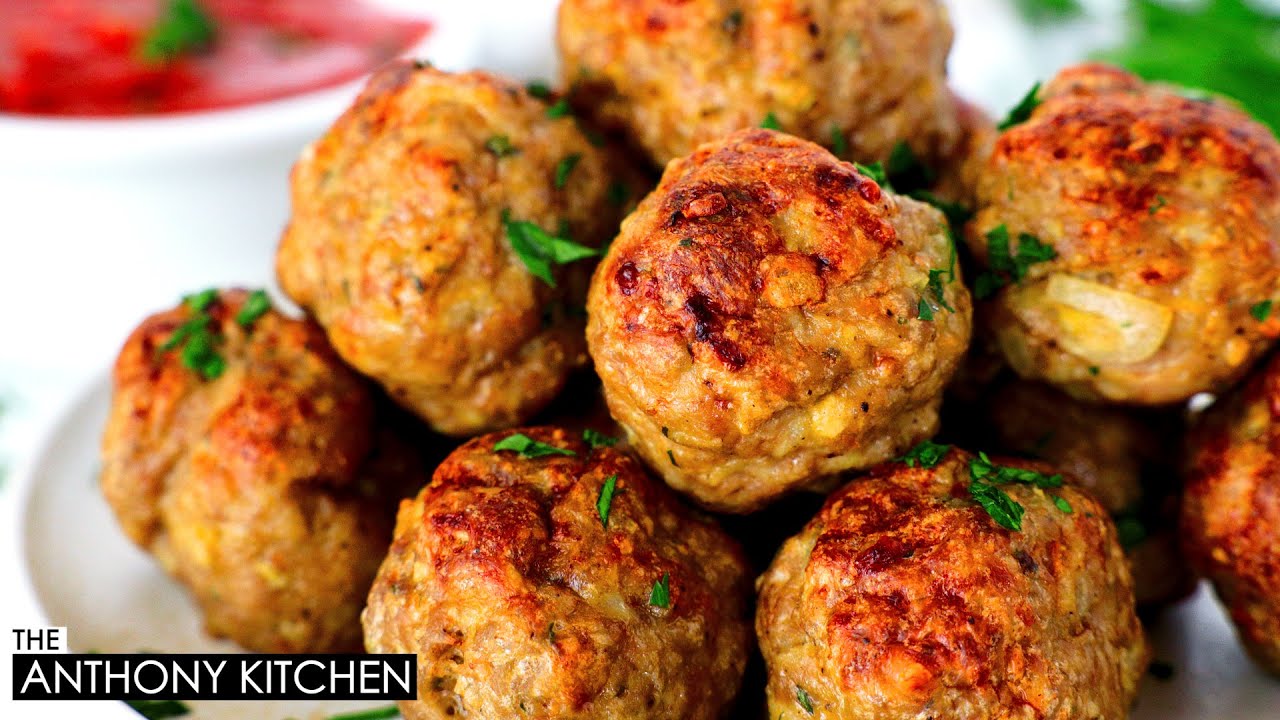
“Turkey meatballs have a reputation problem. Most of them are dense, dry, and flavorless — a punishment meal disguised as a healthy choice. The problem is never the turkey. It's the technique. Overworked meat, insufficient fat in the pan, and skipping the braise at the end are the three mistakes that turn a 30-minute weeknight win into something you'd feed to someone you dislike. Fix those three things and turkey becomes the best meatball meat you own.”
Why This Recipe Works
Turkey meatballs exist in a culinary purgatory between health food and real food, and most recipes deserve to be there. They're made with the leanest protein in the meat case, minimal fat, and often treated like a beef recipe with the protein swapped out. The result is predictably dry, bland, and forgettable. This recipe doesn't fight turkey's nature — it engineers around it.
The Lean Meat Problem
Ground turkey breast is roughly 1-3% fat by weight. Ground beef is typically 15-20%. That fat difference is not cosmetic — fat lubricates protein fibers during cooking, slows moisture loss, and carries flavor compounds that water-soluble proteins can't hold. When you remove the fat, you remove the buffer.
This means turkey meatballs are not beef meatballs made healthier. They are a different technical problem with different solutions. The breadcrumbs are not filler — they're a moisture reservoir, absorbing liquid during mixing and releasing it as steam during cooking. The egg is not just a binder — its fat and lecithin coat the protein fibers, slowing their contraction under heat. The Parmesan and broth are not garnish — they're fat and umami delivery systems in a protein that has almost none of its own.
Every ingredient is working. Which is why every technique decision matters more than it would with a fattier meat.
The Mixing Question
The single most destructive thing you can do to a turkey meatball is overwork the mixture. Lean ground meat forms tight protein bonds quickly under mechanical stress — your hands generate friction and heat that accelerates this process. Overworked ground turkey produces a meatball with the texture of a pencil eraser and the flavor of wet chalk.
The fix: mix until the last dry pocket of breadcrumb disappears, then stop. The mixture should look slightly shaggy and uneven. That's correct. A perfectly homogenous, smooth mixture means you've already gone too far.
Why the Braise Matters
The pan browning develops the heavy-bottomed skillet's Maillard crust — that golden exterior adds texture and seals the surface. But the interior of a turkey breast meatball cannot finish cooking on high heat alone without drying out. The answer is the partial braise: adding broth and partially covering the pan creates a controlled steam environment where the temperature stabilizes around 200°F instead of the 350-400°F of a dry sear. The interior finishes cooking gently, retaining moisture that high heat would drive out.
The lemon juice is not acidity for acidity's sake. It brightens the pan sauce and cuts through the slight richness of the Parmesan, keeping the flavors clean instead of heavy.
The Onion Foundation
Sautéing the onion in the oil before adding the meatballs serves two purposes. First, it softens the onion so it doesn't add raw pungency to the pan sauce. Second, it builds a fond — the brown bits that stick to the pan and dissolve into the broth during the braise, adding depth to the sauce without any additional effort.
Done right, this is a complete weeknight meal in a single pan. Done wrong, it's a health food punishment. The difference is knowing which rules to follow.
Where Beginners Mess This Up
Before we start, read this. These are the 4 reasons your juicy turkey meatballs (no more dry, crumbly disappointment) will fail:
- 1
Overmixing the meat mixture: Ground turkey is already lean — it has almost no fat buffer to protect the protein structure from heat. When you overwork it, the proteins seize up and the meatballs turn dense and rubbery before they even hit the pan. Mix until the ingredients are just combined and stop. Visible streaks of herb and breadcrumb are fine. Uniform gray paste is not.
- 2
Crowding the pan: When meatballs are packed together, the pan temperature drops immediately and the meat steams instead of sears. You lose the golden crust that seals in moisture and contributes flavor. Work in batches. Each meatball needs at least an inch of clearance on all sides to brown properly.
- 3
Skipping the braise step: Turkey breast is less forgiving than beef — it dries out fast at high heat. Adding broth and partially covering the pan creates a controlled steam environment that finishes cooking the interior without torching the exterior. Skip this step and you're gambling on whether the inside is done before the outside burns.
- 4
Not letting the meatballs set before rolling: If the mixture is warm from handling, the meatballs lose their shape and stick to your palms. Wet hands solve this immediately — keep a small bowl of water next to your work surface and dampen your palms between rolls.
The Video Reference Library
Want to see it in action? Here are the exact videos we analyzed and combined to build this foolproof recipe translation:
The primary reference video for this recipe. Covers the mixing technique, pan browning, and braise finish in clear detail. Watch especially for the moment they check the broth reduction.
🛠️ Core Equipment
- Large heavy-bottomed skilletEven heat distribution is critical for browning without burning. A thin pan creates hot spots that char the bottom of the meatball while leaving the sides pale. Cast iron or stainless steel are ideal.
- Large mixing bowlYou need room to fold the ingredients together without compressing them. A bowl that's too small forces you to press and mash rather than gently combine — which means overworking the meat.
- Instant-read thermometerTurkey must hit 165°F internally. Color alone is not reliable with turkey — it can look cooked while the center is still underdone. A thermometer removes all guesswork.
- Rimmed sheet pan (optional)If working in batches, transfer browned meatballs here while you sear the rest. Keeps them from steaming each other and holds the crust intact.
Juicy Turkey Meatballs (No More Dry, Crumbly Disappointment)
🛒 Ingredients
- ✦1 pound ground turkey breast
- ✦1/2 cup whole wheat breadcrumbs
- ✦1 large egg
- ✦3 cloves garlic, minced
- ✦1/3 cup fresh parsley, finely chopped
- ✦2 tablespoons grated Parmesan cheese
- ✦1 teaspoon dried oregano
- ✦1/2 teaspoon dried basil
- ✦1/4 teaspoon black pepper
- ✦1/2 teaspoon sea salt
- ✦2 tablespoons extra virgin olive oil
- ✦1 medium yellow onion, finely diced
- ✦1/4 cup low-sodium chicken broth
- ✦1 tablespoon fresh lemon juice
👨🍳 Instructions
01Step 1
Combine ground turkey breast, whole wheat breadcrumbs, egg, minced garlic, fresh parsley, Parmesan, oregano, basil, black pepper, and sea salt in a large mixing bowl.
02Step 2
Mix gently with your hands until just combined. Stop as soon as no dry pockets of breadcrumb remain.
03Step 3
With damp palms, roll the mixture into 16 meatballs of equal size, approximately 1.5 inches in diameter.
04Step 4
Heat olive oil in a large heavy-bottomed skillet over medium-high heat until shimmering, about 1 minute.
05Step 5
Add the diced yellow onion and sauté for 2-3 minutes until softened and fragrant.
06Step 6
Add the meatballs to the skillet in a single layer, working in batches if needed. Do not move them for the first 3-4 minutes.
07Step 7
Gently roll the meatballs to brown the remaining sides, another 3-4 minutes total.
08Step 8
Pour the chicken broth and lemon juice around (not over) the meatballs, keeping the crust intact.
09Step 9
Reduce heat to medium, partially cover the skillet, and simmer for 8-10 minutes until the internal temperature reaches 165°F.
10Step 10
Taste the pan sauce and adjust seasoning with salt and pepper.
11Step 11
Transfer to a serving platter, drizzle with pan sauce, and garnish with additional fresh parsley.
12Step 12
Serve over zucchini noodles, alongside marinara sauce, or in a grain bowl with roasted vegetables.
Nutrition Per Serving
Estimates based on standard preparation. Adjustments alter macros.
🔄 Substitutions
Instead of Whole wheat breadcrumbs...
Use Almond flour or finely ground oats
Almond flour produces a slightly denser, more tender crumb with a mild nuttiness. Oats are nearly neutral in flavor. Both reduce refined carbohydrates and add fiber.
Instead of Ground turkey breast...
Use Ground turkey thighs or grass-fed ground beef
Turkey thighs have more fat and are far more forgiving — recommended if you've had trouble with dry turkey meatballs before. Grass-fed beef adds deeper umami but changes the nutritional profile significantly.
Instead of Parmesan cheese...
Use Nutritional yeast or pecorino Romano
Nutritional yeast keeps it dairy-free and adds B vitamins with a convincing cheesy note. Pecorino is sharper and saltier — use slightly less to avoid over-salting.
Instead of Low-sodium chicken broth...
Use Bone broth or vegetable broth
Bone broth adds collagen and a richer, more gelatinous pan sauce. Vegetable broth is lighter and plant-based — works well but produces a thinner sauce.
🧊 Storage & Reheating
In the Fridge
Store in an airtight container for up to 4 days. Keep the pan sauce separate if possible to prevent the crust from softening.
In the Freezer
Freeze in a single layer on a sheet pan until solid, then transfer to a bag. Keeps for up to 3 months. Freeze without sauce for best texture on reheating.
Reheating Rules
Add a splash of broth to a covered skillet over medium-low heat for 6-8 minutes. Microwaving works but dries the exterior — cover with a damp paper towel and use 50% power.
❓ Frequently Asked Questions
Why are my turkey meatballs falling apart?
Either the mixture was too wet, the meatballs weren't chilled before cooking, or the pan wasn't hot enough when they went in. Make sure the oil is shimmering before the meatballs hit the pan — they need to sear immediately to hold their shape. If the mixture itself is too loose, add one tablespoon of breadcrumbs at a time until it holds a ball when rolled.
Can I bake these instead of pan-frying?
Yes. Arrange on a parchment-lined sheet pan and bake at 400°F for 18-20 minutes, flipping once at the halfway mark. You won't get the same depth of crust, but the result is still solid — particularly good for large batches where pan-frying multiple rounds is impractical.
How do I know they're fully cooked without cutting them open?
Use an instant-read thermometer inserted into the center of the largest meatball. 165°F is the safe internal temperature for poultry. If you don't have a thermometer, cut one open — the interior should be fully opaque with no pink.
Can I make these gluten-free?
Yes. Swap the whole wheat breadcrumbs for certified gluten-free breadcrumbs, almond flour, or finely ground rolled oats. The rest of the recipe is naturally gluten-free.
Can I make these ahead and freeze the raw mixture?
Yes — and it's actually the best meal prep move. Roll the raw meatballs, freeze on a sheet pan until solid, then bag them. Cook directly from frozen by adding 5-6 minutes to the braise time and checking the internal temperature.
Why does my turkey meatball taste bland?
Turkey breast is the leanest major ground meat available — it has almost no inherent fat flavor to carry seasoning. This means your seasoning needs to be aggressive relative to beef. Check that you're using enough salt (taste the raw mixture if you're comfortable doing so), and don't underestimate the garlic and Parmesan — they're doing heavy lifting here.
The Science of
Juicy Turkey Meatballs (No More Dry, Crumbly Disappointment)
We turned everything on this page into a beautiful, flour-proof PDF cheat sheet. Print it out, stick it to your fridge, and never mess up your juicy turkey meatballs (no more dry, crumbly disappointment) again.
*We'll email you the high-res PDF instantly. No spam, just perfectly cooked meals.
AlmostChefs Editorial Team
We translate the internet's most popular cooking videos into foolproof, beginner-friendly written recipes. We analyze multiple methods, test them in our kitchen, and engineer a single "Master Recipe" that gives you the best possible result with the least possible stress.