The Classic Turkey Club (Built Right, Every Layer)
A triple-decker sandwich with roasted turkey, crispy nitrate-free bacon, heirloom tomato, and a Greek yogurt-Dijon spread on toasted whole grain bread. We broke down every layer decision so you get maximum structure, flavor, and crunch in every bite — no soggy bread, no sliding layers.
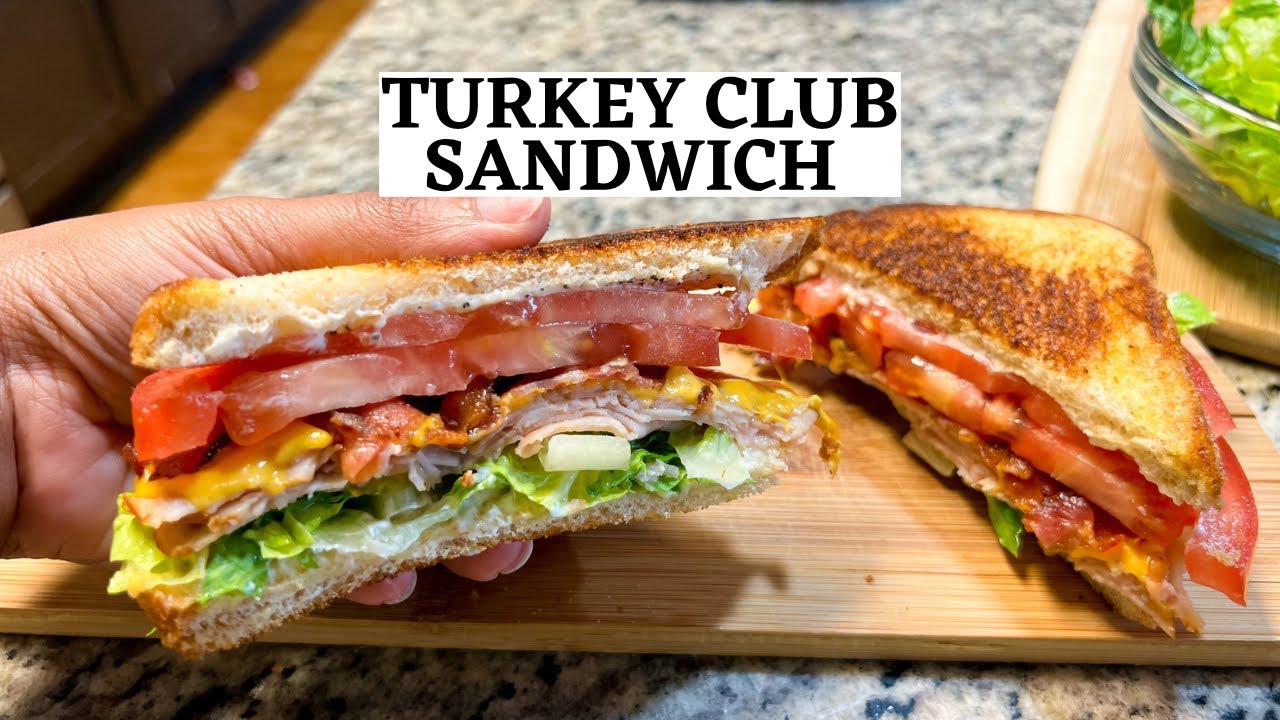
“The club sandwich is one of the most copied and most botched items in American lunch history. The failures are always the same: soggy bread, unseasoned spread, deli turkey that tastes like salt and cardboard, and layers that collapse the moment you lift the thing. Getting it right is not complicated — it just requires making four small decisions correctly, starting with the bread.”
Why This Recipe Works
The club sandwich has been on American menus since at least the 1890s, and in that time it has been executed correctly maybe forty percent of the time. The other sixty percent is soggy bread, sliding layers, and the kind of deli turkey that tastes primarily of sodium. None of this is inevitable. The club is a simple sandwich, and simple sandwiches fail for simple reasons.
The Bread Is Load-Bearing
A triple-decker sandwich is, structurally, a compression problem. The middle slice of bread carries weight from both the layer above and the layer below, and it does this while being flanked by moist turkey, wet tomato, and a spread on both faces. If that middle slice is not properly toasted — crisp enough to resist compression and moisture absorption for at least the duration of a meal — the whole assembly softens into a single homogeneous mass within minutes.
Toast all eight slices to the same level: light golden with an audible crunch when pressed. Not warm. Not slightly tan. Crunchy. The Maillard reaction that creates that crust also creates a partial moisture barrier, and that barrier is the only thing standing between a great club sandwich and a disappointing one.
The Spread Does the Work Mayo Used to Do
Traditional club sandwiches use mayonnaise, which works because of its fat content, emulsification, and flavor. The Greek yogurt-Dijon spread in this version has to be built with intention to match that performance. The lemon juice provides the acid brightness that mayo lacks. The Dijon provides sharpness and emulsifying mustard compounds that help the spread cling to the bread without sliding. The fresh basil adds a green, slightly sweet herbal note that lifts the entire flavor profile.
Whisk it until it's genuinely smooth. Unmixed pockets of plain yogurt on the bread taste thin and flat against the turkey. This spread is the seasoning for the entire sandwich — it needs to be assertive enough to be present in every bite.
Turkey Quality Is Not a Minor Detail
Conventional deli turkey can contain up to 1,400mg of sodium per serving. The version in this recipe targets 890mg for the entire sandwich — a reduction that comes primarily from using freshly roasted low-sodium turkey breast rather than heavily processed deli meat. Beyond the sodium, roasted turkey tastes like turkey: clean, mild, slightly sweet, with actual meat texture. Processed deli turkey tastes like salt and stabilizers in a turkey-adjacent shape.
If you don't have time to roast your own, choose a premium low-sodium deli turkey and accept the compromise. But if you have forty minutes on a Sunday, roast a breast, slice it thin, and you'll have lunch protein for most of the week.
The Diagonal Cut Is Not Decorative
Every diner in America cuts the club diagonally, and it is not because triangles look better on a plate (though they do). A diagonal cut creates two right triangles, each of which has a wide base and tapers to a point. This geometry means the layers are most compressed — and therefore most stable — at the center of each triangle, which is where you hold it. The point self-supports. A straight-cut rectangle has no such structural advantage; the corners are unsupported and the layers slide outward under their own weight.
Use a serrated bread knife and apply steady downward pressure rather than sawing from the top. Sawing drags the top layers sideways before the knife reaches the bottom. Straight down, firm pressure, let the serration do the work.
The Moisture Problem Is Solvable
Heirloom tomatoes are superior to standard slicing tomatoes in flavor and texture, but they carry more surface moisture. Two minutes on a paper towel after slicing removes enough surface liquid that the bread stays intact for the duration of a meal. The lettuce leaf between the tomato and the adjacent bread slice acts as a secondary moisture barrier. These are thirty-second interventions that change the sandwich's structural integrity from fragile to durable.
The club is not a difficult sandwich. It's a sandwich that rewards paying attention to the details that everyone skips.
Where Beginners Mess This Up
Before we start, read this. These are the 4 reasons your the classic turkey club (built right, every layer) will fail:
- 1
Not toasting the bread enough: The triple-decker format means the middle slice of bread carries weight from both directions. Under-toasted bread turns soft within two minutes of assembly from the tomato moisture and spread. Toast to light golden with actual crunch — not just warm. The toast is load-bearing.
- 2
Using wet tomatoes straight from the knife: Heirloom tomatoes are high in water content. Sliced and stacked immediately, they release liquid directly into the bread. Slice them first, lay them on a paper towel for 2-3 minutes before assembly, and the soggy factor drops dramatically.
- 3
Spreading condiment all the way to the edges: Spread right to the edge and every bite from the perimeter squeezes the yogurt-Dijon out the sides and down your hands. Leave a quarter-inch border. The slight compression from pressing and cutting the sandwich pulls the spread to the edge naturally.
- 4
Cutting straight down instead of diagonal: A straight cut destabilizes the layers because it creates two identical rectangles with no structural reinforcement at the corners. A diagonal cut gives you four contact points that hold the stack together and makes each triangle self-supporting. This is why every diner does it this way.
The Video Reference Library
Want to see it in action? Here are the exact videos we analyzed and combined to build this foolproof recipe translation:
The foundational technique video — covers bacon rendering, spread ratios, and the layering sequence that keeps the triple-decker from collapsing mid-bite.
🛠️ Core Equipment
- Large skilletFor rendering the bacon evenly without crowding. Crowded bacon steams rather than crisps. You want full surface contact with the pan for every strip.
- Toaster or toaster ovenConsistent, even toasting across all 8 slices simultaneously. A toaster oven lets you do all slices in one batch — important for serving all four sandwiches while the bread is still warm.
- Serrated bread knifeA straight blade compresses and drags through toasted whole grain bread, collapsing the layers. A serrated knife cuts cleanly without disturbing the stack.
- Small mixing bowlThe yogurt-Dijon spread needs to be whisked thoroughly before use. Unmixed patches of plain yogurt on the bread taste flat and thin against the turkey.
The Classic Turkey Club (Built Right, Every Layer)
🛒 Ingredients
- ✦8 slices whole grain or sprouted grain bread
- ✦1 pound sliced roasted turkey breast, preferably low-sodium
- ✦8 slices nitrate-free bacon
- ✦4 leaves fresh green leaf or butter lettuce
- ✦2 medium heirloom tomatoes, sliced into 8 slices total
- ✦4 tablespoons plain Greek yogurt
- ✦2 tablespoons Dijon mustard
- ✦1 tablespoon extra virgin olive oil
- ✦2 tablespoons fresh basil, finely chopped
- ✦1 teaspoon fresh lemon juice
- ✦Sea salt and freshly cracked black pepper to taste
- ✦4 large slices aged cheddar or Swiss cheese (optional)
👨🍳 Instructions
01Step 1
Cook the bacon strips in a large skillet over medium-high heat for 6-8 minutes until crispy. Transfer to a paper towel-lined plate to drain.
02Step 2
Slice the heirloom tomatoes and lay them flat on a paper towel. Let them rest for 2-3 minutes to draw out excess moisture.
03Step 3
Whisk together the Greek yogurt, Dijon mustard, fresh basil, lemon juice, olive oil, and a pinch of sea salt in a small bowl until smooth and fully combined.
04Step 4
Toast all 8 slices of whole grain bread until light golden with a firm crunch, about 3-4 minutes. All slices should be toasted at the same level.
05Step 5
Lay out 4 slices of toasted bread on a clean work surface. Spread approximately 1 tablespoon of the yogurt-Dijon mixture onto each slice, stopping just short of the edges.
06Step 6
Arrange half the turkey evenly across the 4 prepared slices. Add a cheese slice to each if using.
07Step 7
Place the 4 remaining bread slices spread-side up on top of the turkey layer. Spread the remaining yogurt-Dijon mixture on the exposed top faces of these middle slices.
08Step 8
Layer the remaining turkey across all 4 sandwiches, then distribute the crispy bacon evenly.
09Step 9
Add one full lettuce leaf to each sandwich, then place 2 tomato slices on top of the lettuce.
10Step 10
Press each sandwich down gently but firmly. Use a sharp serrated knife to cut each sandwich diagonally into two triangles.
11Step 11
Secure each triangle with a toothpick through the center. Serve immediately while the bread is still warm and the bacon is still crisp.
Nutrition Per Serving
Estimates based on standard preparation. Adjustments alter macros.
🔄 Substitutions
Instead of Greek yogurt + Dijon spread...
Use Traditional mayonnaise
Higher in saturated fat but more familiar flavor. If you go this route, add a small squeeze of lemon and a pinch of salt to the mayo — straight mayo is flat.
Instead of Whole grain bread...
Use Sourdough or white sandwich bread
Sourdough adds tang that works well with turkey. White bread toasts to a better crunch but loses the fiber and satiety benefit. Either works structurally.
Instead of Roasted turkey breast...
Use Quality low-sodium deli turkey
Acceptable if you're short on time. Look for deli turkey with under 400mg sodium per serving. Boar's Head and similar premium brands are a reasonable middle ground.
Instead of Nitrate-free bacon...
Use Turkey bacon
Lower fat, lighter smoke flavor. Crisps up similarly if you cook it long enough — turkey bacon requires the same attention as pork bacon, maybe slightly longer.
🧊 Storage & Reheating
In the Fridge
Store components separately in airtight containers for up to 3 days. Assembled sandwiches should be eaten immediately — they do not hold well.
In the Freezer
Not recommended for assembled sandwiches. Cooked bacon can be frozen for up to 1 month and reheated in a dry skillet.
Reheating Rules
If you have leftover assembled sandwich, remove the tomato and lettuce before wrapping. Reheat the bread and meat layers in a toaster oven at 350°F for 5 minutes. Re-add fresh lettuce and tomato before serving.
❓ Frequently Asked Questions
Why does my club sandwich always fall apart when I try to eat it?
Two likely causes: under-toasted bread that softens under the weight and moisture, or too much spread applied all the way to the edges. Toast aggressively, leave a border on the spread, and cut diagonally — the triangular form is self-reinforcing in a way that rectangles aren't.
Can I make this without bacon?
Yes. The sandwich loses its smoky element, but it still works. Compensate with a thin smear of smoked paprika mixed into the yogurt spread, or add sliced avocado for richness. The structural integrity doesn't depend on the bacon.
What's the difference between a club and a regular turkey sandwich?
A club is a triple-decker — three slices of bread, two layers of filling. A turkey sandwich is two slices, one layer. The triple format exists to handle a larger volume of fillings without the whole thing becoming unmanageable. The middle bread slice is the engineering solution.
How do I keep the tomatoes from making the bread soggy?
Slice them and rest them on a paper towel for 2-3 minutes before assembly. This draws out the surface moisture. Also, layer the lettuce between the tomato and the bread — the lettuce acts as a moisture barrier.
Is roasting my own turkey breast actually worth the effort for a sandwich?
For weeknight sandwiches, probably not. For a weekend lunch or entertaining, yes — the flavor difference is significant and the sodium difference is dramatic. Roast a breast on Sunday, slice it, and use it for 3-4 days of lunches.
Can I prep the yogurt-Dijon spread ahead of time?
Yes. It keeps well in the fridge for up to 4 days in a sealed container. The flavors actually meld and improve after a few hours. Make it the night before for a noticeably better result.
The Science of
The Classic Turkey Club (Built Right, Every Layer)
We turned everything on this page into a beautiful, flour-proof PDF cheat sheet. Print it out, stick it to your fridge, and never mess up your the classic turkey club (built right, every layer) again.
*We'll email you the high-res PDF instantly. No spam, just perfectly cooked meals.
AlmostChefs Editorial Team
We translate the internet's most popular cooking videos into foolproof, beginner-friendly written recipes. We analyze multiple methods, test them in our kitchen, and engineer a single "Master Recipe" that gives you the best possible result with the least possible stress.