High-Protein Tuna & Avocado Salad (38g Protein, 12 Minutes)
Flaky albacore tuna meets creamy avocado and Greek yogurt in a 12-minute lunch that delivers 38g of protein per serving without a single compromise on flavor. We broke down exactly why Greek yogurt outperforms mayo here — and what most people get wrong about avocado timing.

“Most tuna salad recipes are just mayonnaise delivery vehicles with a little fish floating in them. This one swaps the mayo for Greek yogurt, adds hard-boiled eggs, and lands at 38g of protein per serving — without tasting like a protein supplement. The difference is in how you build the base and when you add the avocado. Get those two things right and you have a lunch that actually keeps you full.”
Why This Recipe Works
Tuna salad has a bad reputation because most versions are really just mayo with fish-flavored lumps. The fat does all the work, the seasoning is an afterthought, and the result is something you eat because it's fast, not because it's good. This version inverts that logic. The protein does the heavy lifting — 38 grams per serving — and the fat (from avocado, egg yolk, and a small amount of saturated fat in the yogurt) exists to carry flavor rather than substitute for it.
The Greek Yogurt Swap Is Not a Compromise
Every "healthy tuna salad" article on the internet tells you to replace mayo with Greek yogurt as though it's a sacrifice you make in exchange for being virtuous. It isn't. Greek yogurt has a sharper, more complex flavor profile than mayonnaise — which is essentially an emulsified fat — and it interacts with the lemon and Dijon in ways that mayo cannot. Where mayo coats, yogurt lifts. The finished salad tastes brighter and cleaner, and the seasoning reads more clearly against a lower-fat base.
The protein math is also just better. One cup of mayo has roughly 1.5g of protein. One cup of nonfat Greek yogurt has 20g. Swapping them here is not a diet move — it's an engineering upgrade.
Avocado Timing Is Everything
Avocado is the most volatile ingredient on this list. Cut and exposed to air, it begins oxidizing within 20 minutes. Folded into an acidic mixture, that window extends slightly — but not by much. The lemon juice buys you time by creating a low-pH environment that slows the enzymatic browning reaction, but it doesn't stop it.
The correct workflow: build the tuna base completely, taste and season it, and then add diced avocado only if you're eating within the next 30 minutes. For meal prep, avocado lives in a separate container and joins the party right before you eat. This is not optional — it's the difference between a bowl that looks like you made it today and one that looks like it's been sitting in a fridge since Tuesday.
The Fold Is a Technique, Not a Suggestion
A flexible silicone spatula is the correct tool here for the same reason a pastry chef uses it for egg whites: it folds without shearing. A spoon moves ingredients through the mixture; a spatula lifts and turns the entire mass, preserving structure throughout.
Tuna salad that's been stirred aggressively becomes paste. You lose the texture gradient between the flaked fish, the chopped egg, and the diced celery that makes each bite slightly different from the last. Ten slow folds with a spatula beats thirty fast ones with a spoon, every time.
Celery and Red Onion Earn Their Place
These aren't filler ingredients. Celery adds crunch and a clean, slightly bitter note that cuts through the richness of the avocado and egg yolk. Red onion adds sharpness and color — but raw red onion is aggressive. If yours is particularly pungent, a five-minute cold water soak dissolves the sulfur compounds responsible for the bite. The flavor stays; the harshness leaves.
Together, these two ingredients give the salad textural range. Without them, you have a creamy uniform mixture that gets monotonous after three bites. With them, you have a salad that stays interesting.
The 12-Minute Number Is Real
No cooking. No resting. No special equipment beyond a bowl, a spatula, and something to drain tuna into. The entire recipe is assembly. That speed is only possible because every ingredient was engineered to work cold and raw — the yogurt base needs no heat to emulsify, the avocado needs no cooking to be at its peak, and the tuna comes out of the can ready to eat.
The only time tax is the hard-boiled eggs, and those can be cooked in a batch on Sunday and refrigerated for the week. With pre-boiled eggs on hand, 12 minutes is a ceiling, not a floor.
Where Beginners Mess This Up
Before we start, read this. These are the 4 reasons your high-protein tuna & avocado salad (38g protein, 12 minutes) will fail:
- 1
Over-mixing the tuna into paste: Tuna salad turns gluey when you stir it too aggressively. The goal is flaked tuna with distinct texture, not a uniform spread. Fold with a spatula in slow, deliberate strokes. If you can't see individual tuna flakes in the finished bowl, you've gone too far.
- 2
Adding avocado too early: Avocado breaks down within 20 minutes of being cut and folded into an acidic mixture. If you're making this ahead, keep the avocado separate and fold it in right before serving. Pre-mixed avocado salad that's been sitting for two hours is a brown, watery disappointment.
- 3
Not draining the tuna properly: Excess water from the can dilutes the yogurt base, makes the mixture loose, and mutes all the flavors you're trying to build. Drain thoroughly, then press gently with a fork or the back of a spoon. The can should feel almost dry before the tuna goes into the bowl.
- 4
Under-seasoning and calling it done: Greek yogurt is tangier and less fatty than mayo, which means it needs more seasoning to carry the same weight. Taste after every addition. The lemon juice, salt, and Dijon should all be assertive — not background noise.
The Video Reference Library
Want to see it in action? Here are the exact videos we analyzed and combined to build this foolproof recipe translation:
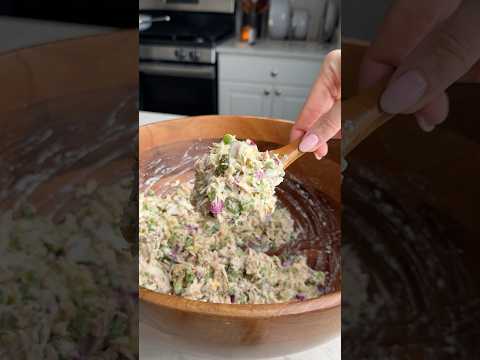
The source video for this recipe. Covers the Greek yogurt base, proper fold technique, and how to portion for meal prep without the avocado going brown.
2. Why Greek Yogurt Beats Mayo Every Time
Deep dive into using Greek yogurt as a mayo substitute across multiple applications. Useful context for understanding why the texture works here.
3. Meal Prep Lunch Bowls for the WeekBatch assembly techniques for high-protein lunches. Good reference for scaling this recipe and managing avocado oxidation across a week of prep.
🛠️ Core Equipment
- Large mixing bowl ↗You need room to fold without the ingredients climbing out of the bowl. A cramped bowl forces you to stir instead of fold, which destroys the texture.
- Fine-mesh sieve or colander ↗For draining the tuna fast and completely. A fork works, but a sieve lets you press out water evenly without turning the fish into shreds.
- Flexible silicone spatula ↗The right tool for folding. A spoon cuts through ingredients and overworks the mixture. A spatula lifts and turns, preserving texture throughout the assembly.
- Sharp chef's knife ↗For clean avocado cuts. A dull knife crushes avocado flesh instead of slicing it, which accelerates browning and gives you uneven chunks that disappear into the salad.
High-Protein Tuna & Avocado Salad (38g Protein, 12 Minutes)
🛒 Ingredients
- ✦2 cans (5 oz each) albacore tuna in water, drained and flaked
- ✦1/2 cup plain nonfat Greek yogurt
- ✦1 ripe avocado, pitted and diced
- ✦1/4 cup diced red onion
- ✦2 tablespoons fresh lemon juice
- ✦2 tablespoons finely chopped fresh dill
- ✦1 tablespoon Dijon mustard
- ✦1/4 cup diced celery
- ✦2 tablespoons chopped fresh chives
- ✦1/4 teaspoon garlic powder
- ✦1/4 teaspoon sea salt
- ✦1/8 teaspoon black pepper
- ✦2 hard-boiled eggs, chopped
- ✦1 cup mixed greens (optional, for serving)
- ✦12 whole grain crackers per serving
👨🍳 Instructions
01Step 1
Drain both cans of tuna thoroughly, pressing gently with a fork to remove excess water and maximize texture.
02Step 2
Whisk together the Greek yogurt, Dijon mustard, lemon juice, and garlic powder in a large mixing bowl until smooth and well combined.
03Step 3
Fold the flaked tuna into the yogurt mixture using a spatula, stirring gently to maintain some texture rather than creating a paste.
04Step 4
Add the diced red onion, chopped celery, fresh dill, and chives to the tuna mixture, folding carefully to distribute evenly.
05Step 5
Gently fold in the chopped hard-boiled eggs, being careful to keep the pieces visible rather than breaking them down.
06Step 6
Season with sea salt and black pepper to taste, adjusting lemon juice if needed for brightness.
07Step 7
If serving immediately, fold in the diced avocado now. If meal prepping, keep avocado separate and add right before eating.
08Step 8
Divide the tuna salad among four serving bowls or plates, allowing about 3/4 cup per serving.
09Step 9
Arrange 12 whole grain crackers alongside each portion, or serve the salad over a bed of mixed greens for a lower-carb option.
Nutrition Per Serving
Estimates based on standard preparation. Adjustments alter macros.
🔄 Substitutions
Instead of Plain nonfat Greek yogurt...
Use 2% Greek yogurt or full-fat cottage cheese
Richer mouthfeel with the same protein content or higher. Cottage cheese adds a faint milky sweetness that works well against the lemon and dill.
Instead of Canned tuna in water...
Use Canned wild salmon or fresh-cooked tuna loin
Salmon adds omega-3s and a more robust flavor. Fresh tuna loin gives superior texture but requires cooking — sear 2 minutes per side and let it cool before flaking.
Instead of Whole grain crackers...
Use Sliced whole grain bread, crispy chickpea crackers, or cucumber slices
Bread makes it heartier and more filling. Chickpea crackers add 2-3g extra plant protein per serving. Cucumber keeps it lighter and significantly lower-carb.
Instead of Hard-boiled eggs...
Use 3 tablespoons hemp seeds mixed into the salad
10g complete plant protein per serving. Slightly nutty flavor, different texture. Good option for anyone avoiding eggs while keeping the protein count close.
🧊 Storage & Reheating
In the Fridge
Store without avocado in an airtight container for up to 2 days. The flavors deepen overnight. Add fresh avocado right before serving.
In the Freezer
Not recommended — the yogurt base breaks down and avocado turns completely after freezing. This is a fresh or fridge-only recipe.
Reheating Rules
No reheating needed or recommended. Serve cold or at room temperature. If the mixture has thickened in the fridge, stir in a small splash of lemon juice to loosen it.
❓ Frequently Asked Questions
Why Greek yogurt instead of mayonnaise?
Greek yogurt delivers the same creamy, binding function as mayo but with roughly 10x the protein and a fraction of the fat. It's also tangier, which means less added acid is needed to balance the dish. The tradeoff is a slightly thicker texture and a more pronounced tang — both of which work in this recipe's favor.
How do I keep the avocado from browning?
Keep it separate until serving. If you must mix ahead, toss the diced avocado in extra lemon juice before folding in, then press plastic wrap directly against the surface of the salad in the container to minimize air contact. It will still start to brown within a few hours — this is a serve-fresh ingredient.
Can I make this without hard-boiled eggs?
Yes, but your protein count drops from 38g to roughly 26-28g per serving. The eggs also add creaminess and body to the salad. If you omit them, consider adding hemp seeds or an extra half can of tuna to compensate.
Is this good for meal prep?
Yes, with one rule: store everything separately. The tuna-yogurt mixture holds for 2 days in the fridge. Crackers go in a separate bag. Avocado gets cut fresh. Assembly takes 60 seconds per container when the base is already made.
What kind of tuna should I buy?
Albacore in water, not oil. Oil-packed tuna is richer and great for pasta, but the excess oil here would break the yogurt base and make the salad greasy. Albacore has a firmer, milder flesh than skipjack that holds up to folding without turning to mush.
Can I use canned salmon instead?
Yes. Canned wild salmon is an excellent swap — more omega-3s, slightly stronger flavor, and the same flaky texture. Use the same quantity (two 5-oz cans, drained well) and follow the exact same method.
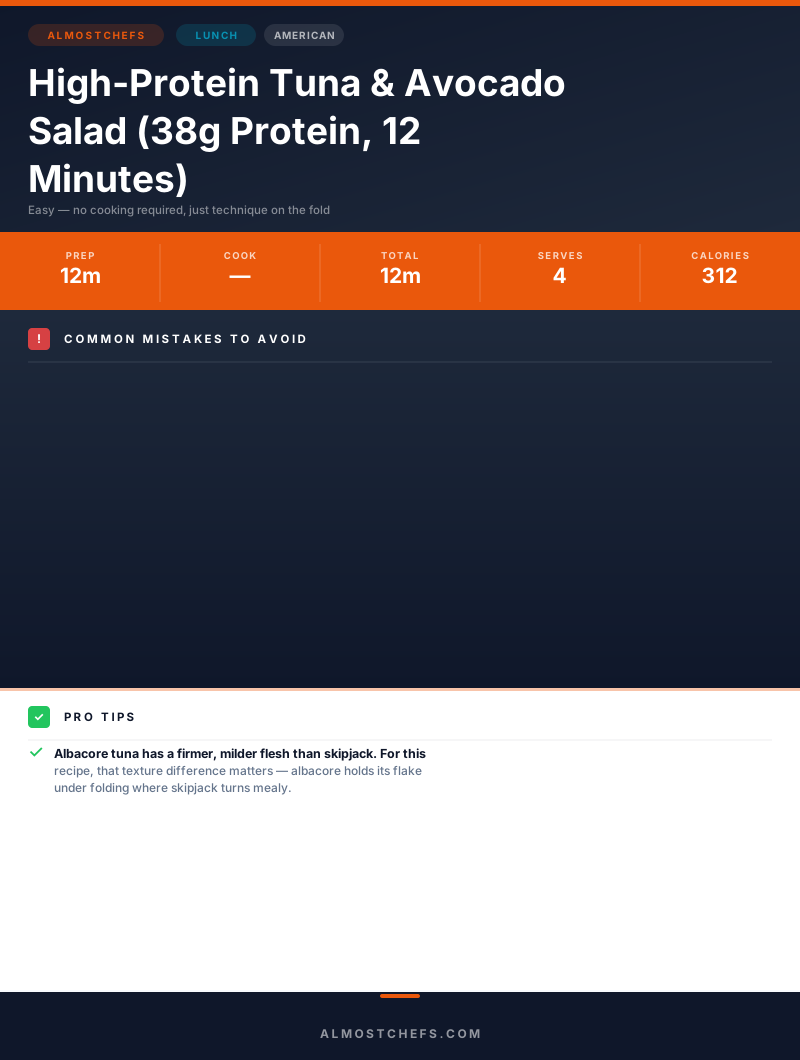
The Science of
High-Protein Tuna & Avocado Salad (38g Protein, 12 Minutes)
We turned everything on this page into a beautiful, flour-proof PDF cheat sheet. Print it out, stick it to your fridge, and never mess up your high-protein tuna & avocado salad (38g protein, 12 minutes) again.
*We'll email you the high-res PDF instantly. No spam, just perfectly cooked meals.
AlmostChefs Editorial Team
We translate the internet's most popular cooking videos into foolproof, beginner-friendly written recipes. We analyze multiple methods, test them in our kitchen, and engineer a single "Master Recipe" that gives you the best possible result with the least possible stress.