Tuna-Stuffed Sweet Potatoes (The 42g-Protein Lunch You'll Make Every Sunday)
High-protein tuna sweet potato bowls built for meal prep: flaky albacore tuna folded into a Greek yogurt and cottage cheese dressing, loaded into roasted sweet potato halves for 42g of protein per serving. We broke down what makes the classic version underperform and rebuilt it with a dual-protein approach that actually keeps you full.
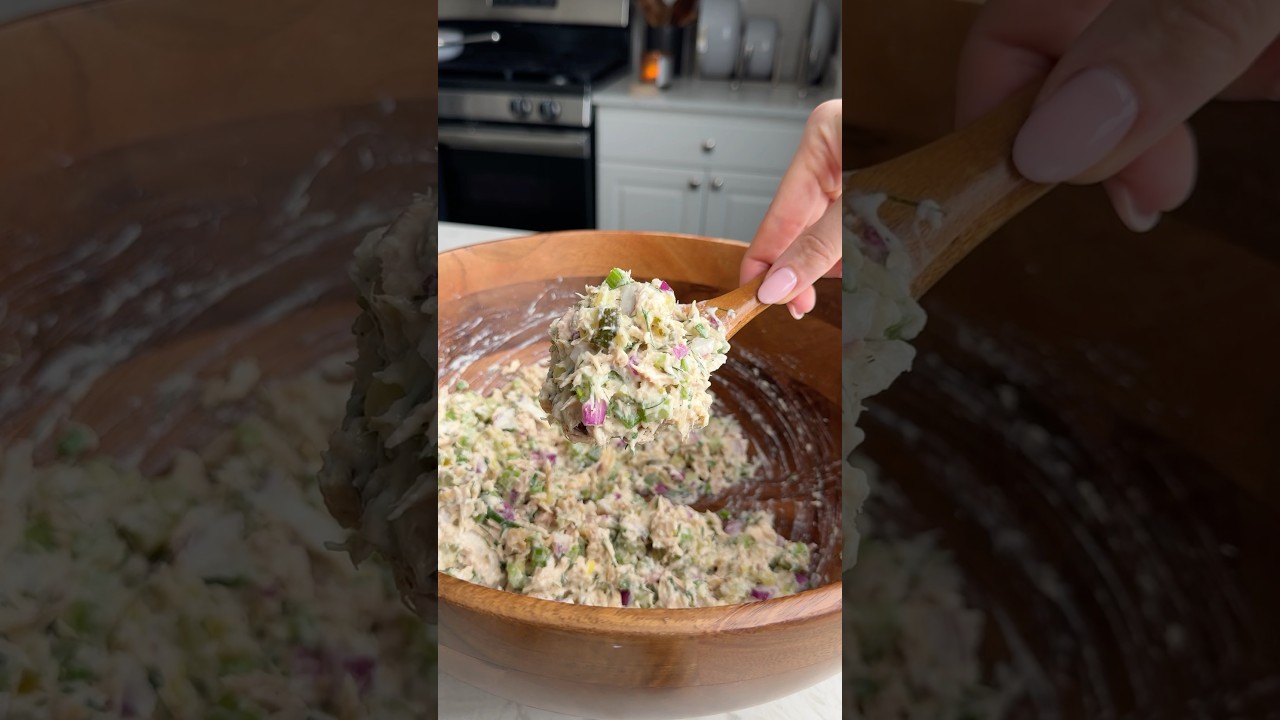
“Most tuna-stuffed sweet potato recipes top out around 22g of protein and leave you hungry two hours later. The fix is not more tuna — it's the dressing. Swapping mayo for a blended Greek yogurt and cottage cheese base doubles the protein in the sauce itself, bringing the total to 42g per serving without changing the texture people actually want. This is the version worth batch-cooking on Sunday.”
Why This Recipe Works
Tuna salad and sweet potato is not a new idea. It's the kind of lunch that appeared in every meal prep influencer's Sunday grid circa 2018, got photographed in pastel containers, and quietly disappeared because people made it once, found it mediocre, and went back to sandwiches. The original version — tuna, mayo, some vegetables, baked potato — produces about 22 grams of protein and a dressing that slides off the potato flesh the moment it hits temperature. It's not bad. It's just not interesting enough to repeat.
The rebuild is simple: the dressing does the work.
The Dual-Protein Principle
Standard tuna salad puts all its protein in the tuna. This recipe distributes protein across every component, with the biggest structural change happening in the dressing base. Greek yogurt and cottage cheese, whisked smooth, replace the mayo entirely. The result isn't just fewer calories — it's 20 additional grams of protein before a single can of tuna opens.
The whisking step is non-negotiable. Cottage cheese folded straight from the container looks like something that curdled. Whisked aggressively with Greek yogurt for 60 seconds, it becomes a genuinely creamy emulsion — one that coats the tuna evenly rather than pooling at the bottom of the potato. This is the step that separates a recipe that looks good in photos from one that eats well on a Tuesday.
Why the Sweet Potato Matters
Baked sweet potato brings three things to this combination: natural sweetness that contrasts the tangy Dijon-lemon dressing, complex carbohydrates that provide steady energy rather than a glucose spike, and structural integrity — a firm-walled vessel that holds a generously mounded filling without collapsing. White potatoes work, but they lack the sweetness that makes the contrast with the savory, herbaceous tuna filling actually interesting.
The baking temperature (400°F, direct rack placement) matters more than most recipes acknowledge. At this heat, the natural sugars in the sweet potato caramelize at the skin level while the interior steams itself to a fluffy, uniform texture. Lower temperatures produce a potato that's technically cooked but bland — the Maillard chemistry never gets going. The foil-lined sheet below catches the caramelized sugar drips; without it, you're cleaning your oven for an hour.
The doneness test: zero resistance from a paring knife inserted at the thickest point. Any drag means five more minutes. This isn't about being finicky — an underdone sweet potato has a starchy, dense flesh that doesn't fluff into a proper well and fights the creamy dressing rather than complementing it.
The Flavor Architecture
Dijon mustard is doing more work than most people realize. It acts as an emulsifier that helps the Greek yogurt and cottage cheese stay cohesive when mixed with the liquid from the tuna, but it also provides a sharp, fermented backbone that prevents the dressing from tasting like a smoothie. The cayenne adds background heat that builds slowly — it doesn't announce itself immediately, but by the third bite you feel it working. Together they prevent the sweetness of the potato from making the whole dish taste like a dessert.
Fresh dill versus dried is one of the few herb decisions in savory cooking where the difference is genuinely significant. Dried dill delivers a faint, dusty herb signal. Fresh dill delivers a bright, grassy, slightly anise-forward note that makes this taste like something from a café and not a meal prep container. If you don't have fresh, use more dried — but know what you're giving up.
The red bell pepper and cucumber aren't garnish. They provide the textural contrast that keeps each bite from being monotonously creamy. The pepper adds snap; the cucumber adds cool crunch and a subtle bitterness that punctuates the richness of the protein. Together they make the filling interesting to eat rather than simply nutritious.
The Meal Prep Reality
Store the components separately. This is the single most important operational note in this recipe. Assembled sweet potato bowls stored overnight become waterlogged — the dressing migrates into the potato flesh, the texture softens, and by day three you have something that eats like warm mush. Bake the potatoes, cool them completely, and keep them in one airtight container. Store the tuna mixture in a second container. Two minutes of assembly at lunch, four days of genuinely good food.
Forty-two grams of protein. Five grams of fiber. Under 320 calories. These are the numbers that make this recipe worth repeating every week — not as a sacrifice, but as the lunch you actually look forward to.
Where Beginners Mess This Up
Before we start, read this. These are the 4 reasons your tuna-stuffed sweet potatoes (the 42g-protein lunch you'll make every sunday) will fail:
- 1
Underbaking the sweet potato: A sweet potato that's 80% done feels passable when you pierce it with a knife, but the flesh won't fluff properly and the natural sugars haven't fully caramelized. The knife should slide through with zero resistance — any drag means you need 5-10 more minutes. An underdone potato becomes starchy and dense against a creamy filling.
- 2
Not whisking the cottage cheese smooth: Cottage cheese folded in as-is creates a lumpy, visually unappealing dressing that people will assume is spoiled. Whisk it together with the Greek yogurt before adding anything else — 60 seconds of whisking transforms the texture from grainy to genuinely creamy. Skip this step and the entire dressing falls apart texturally.
- 3
Adding the dressing to hot tuna: If you fold the tuna mixture together while the potato is still steaming and hot, the heat denatures the yogurt proteins and turns the dressing watery. Let the potatoes cool 2-3 minutes before assembly. The tuna mixture should be at room temperature or cold. Temperature control here is the difference between a creamy dressing and a puddle.
- 4
Over-seasoning before tasting: Canned tuna already carries significant sodium, and the Dijon adds more. Build the dressing, fold in the tuna, then taste before reaching for the salt shaker. More often than not, it needs nothing. The lemon juice and cayenne do more heavy lifting than salt in this recipe anyway.
The Video Reference Library
Want to see it in action? Here are the exact videos we analyzed and combined to build this foolproof recipe translation:
The source video for this recipe. Clear technique on building the Greek yogurt dressing and showing the correct consistency before folding in the tuna.
🛠️ Core Equipment
- Rimmed baking sheet with foil linerSweet potatoes weep caramelized juices at 400°F. Without a foil-lined tray below, those sugars carbonize on your oven floor and smoke for the next two weeks.
- Medium mixing bowl and whiskThe Greek yogurt and cottage cheese need to be actively whisked — not stirred — until fully smooth before the tuna goes in. A fork won't break down the cottage cheese curds completely.
- Sharp chef's knifeSlicing a baked sweet potato cleanly without collapsing it requires a sharp blade and confidence. A dull knife drags through the flesh and tears the skin, destroying the structural integrity you need for a loaded half.
- Airtight meal prep containersStore the tuna mixture and the potatoes separately until serving day. Combined in advance, the dressing saturates the potato flesh and turns it soggy. Separate storage keeps both components at their best for the full four days.
Tuna-Stuffed Sweet Potatoes (The 42g-Protein Lunch You'll Make Every Sunday)
🛒 Ingredients
- ✦4 medium sweet potatoes (about 8 oz each)
- ✦2 cans (5 oz each) albacore tuna in water, drained
- ✦1 cup plain nonfat Greek yogurt
- ✦1/2 cup low-fat cottage cheese
- ✦1 medium red bell pepper, finely diced
- ✦1/2 cup diced English cucumber
- ✦1/4 cup sliced green onions
- ✦2 tablespoons fresh lemon juice
- ✦1 tablespoon Dijon mustard
- ✦1 tablespoon fresh dill (or 1 teaspoon dried)
- ✦1/2 teaspoon garlic powder
- ✦1/4 teaspoon cayenne pepper
- ✦Salt and black pepper to taste
- ✦2 cups mixed greens, optional for serving
- ✦2 tablespoons sliced almonds, for garnish
👨🍳 Instructions
01Step 1
Preheat oven to 400°F. Line a baking sheet with aluminum foil and position it on the rack below where the potatoes will sit.
02Step 2
Scrub the sweet potatoes under cold water, then prick each one 8-10 times all over with a fork.
03Step 3
Bake for 40-45 minutes until a knife slides through the center with zero resistance. There should be no drag at all.
04Step 4
While the potatoes roast, combine the Greek yogurt and cottage cheese in a medium bowl. Whisk vigorously for 60 seconds until completely smooth with no visible curds.
05Step 5
Add the lemon juice, Dijon mustard, fresh dill, garlic powder, and cayenne to the yogurt mixture. Whisk to combine. Taste and adjust with salt and pepper.
06Step 6
Drain the tuna thoroughly — press it against the can lid to remove excess water. Fold the tuna, diced red bell pepper, cucumber, and green onions into the yogurt dressing until evenly coated.
07Step 7
Remove the sweet potatoes from the oven and let them rest 2-3 minutes. Carefully cut each one in half lengthwise.
08Step 8
Use a spoon to gently fluff the flesh of each half, pressing the edges inward slightly to create a shallow well. Do not break through the skin.
09Step 9
Divide the tuna salad mixture evenly among the eight potato halves, mounding it generously. Scatter sliced almonds over the top.
10Step 10
Serve immediately while the potatoes are warm, or cool completely before storing for meal prep.
Nutrition Per Serving
Estimates based on standard preparation. Adjustments alter macros.
🔄 Substitutions
Instead of Plain nonfat Greek yogurt...
Use Nonfat Icelandic skyr or plain kefir
Skyr provides similar protein density (20g per cup) with a slightly tangier profile and added probiotics. Kefir makes the dressing thinner — reduce to 3/4 cup and whisk thoroughly.
Instead of Low-fat cottage cheese...
Use Silken tofu, blended smooth
Dairy-free option that delivers a silkier mouthfeel with about 10g protein per half-cup. Flavor becomes slightly more neutral — increase Dijon and lemon juice by half to compensate.
Instead of Canned albacore tuna in water...
Use Canned wild salmon or fresh grilled salmon, flaked
Salmon brings richer, more buttery flavor with higher omega-3 content. Canned salmon includes soft edible bones that add calcium. Protein is comparable. Flavor profile shifts from neutral to distinctly savory — reduce the Dijon by half.
Instead of Fresh dill...
Use Fresh tarragon or fresh chives
Tarragon adds a subtle anise note that pairs exceptionally well with tuna and mustard. Chives deliver mild onion flavor without the sharpness of raw scallions. Either works — tarragon is the more sophisticated choice.
🧊 Storage & Reheating
In the Fridge
Store the tuna salad mixture and baked potato halves in separate airtight containers for up to 4 days. Combined portions last 2 days before the potato absorbs too much moisture from the dressing.
In the Freezer
Not recommended. Baked sweet potatoes change texture after freezing, becoming grainy. Greek yogurt-based dressings separate upon thawing.
Reheating Rules
Reheat the potato halves in the oven at 350°F for 8-10 minutes or microwave for 90 seconds. Add the cold tuna mixture after reheating — never microwave the assembled bowl, as it turns the dressing hot and watery.
❓ Frequently Asked Questions
Can I use light canned tuna instead of albacore?
Technically yes, but albacore is significantly better here. Chunk light tuna has a softer, more fragmented texture that turns mushy when folded into a dressing. Albacore holds its structure and contributes visible flakes that give the filling visual and textural interest. The flavor is also cleaner and less fishy.
Why cottage cheese? Can't I just use more Greek yogurt?
You can, but the combination outperforms either alone. Cottage cheese contributes a richer mouthfeel and a slightly savory, milky flavor that pure Greek yogurt lacks. More importantly, the blended cottage cheese creates a creamier, more stable emulsion — the kind that clings to the tuna rather than pooling at the bottom of the potato.
My dressing came out watery. What went wrong?
Two likely causes. First, the tuna wasn't drained thoroughly enough — press it hard against the can lid and drain twice. Second, the dressing was assembled while components were warm. Greek yogurt weeps moisture when heated. Build the dressing cold, fold in the tuna cold, and serve immediately or refrigerate before serving.
How do I know when the sweet potato is actually done?
The knife test is the only reliable method. Insert a paring knife or skewer into the thickest part of the potato. It should slide through with zero resistance — no drag, no catch, nothing. If you feel any pushback at all, give it another 8 minutes. Visual cues (skin wrinkling, slight oozing of sugars) are helpful secondary signals but not definitive.
Is this actually filling enough for lunch?
Yes — the combination of complex carbohydrates from the sweet potato, 42g of protein from the dual-protein dressing, and 5g of fiber creates a sustained satiety that simple carb-based lunches don't achieve. The protein takes longer to digest, and the fiber slows glucose absorption from the potato. Most people report being genuinely full for 4-5 hours.
Can I make the tuna salad the night before?
Yes, and it's actually better that way. The flavors in the dressing meld overnight — the dill, mustard, and lemon integrate rather than sitting as separate notes. Keep it refrigerated and tightly sealed. Bake the potatoes fresh day-of, or reheat previously baked ones. Just keep the two components separate until serving.
The Science of
Tuna-Stuffed Sweet Potatoes (The 42g-Protein Lunch You'll Make Every Sunday)
We turned everything on this page into a beautiful, flour-proof PDF cheat sheet. Print it out, stick it to your fridge, and never mess up your tuna-stuffed sweet potatoes (the 42g-protein lunch you'll make every sunday) again.
*We'll email you the high-res PDF instantly. No spam, just perfectly cooked meals.
AlmostChefs Editorial Team
We translate the internet's most popular cooking videos into foolproof, beginner-friendly written recipes. We analyze multiple methods, test them in our kitchen, and engineer a single "Master Recipe" that gives you the best possible result with the least possible stress.