Classic Tuna Casserole (The From-Scratch Fix)
A revived American comfort classic built on canned tuna, whole wheat noodles, and a from-scratch cream sauce made with Greek yogurt instead of canned soup. We broke down the pantry shortcut version and rebuilt it properly — same 40-minute window, dramatically better result.
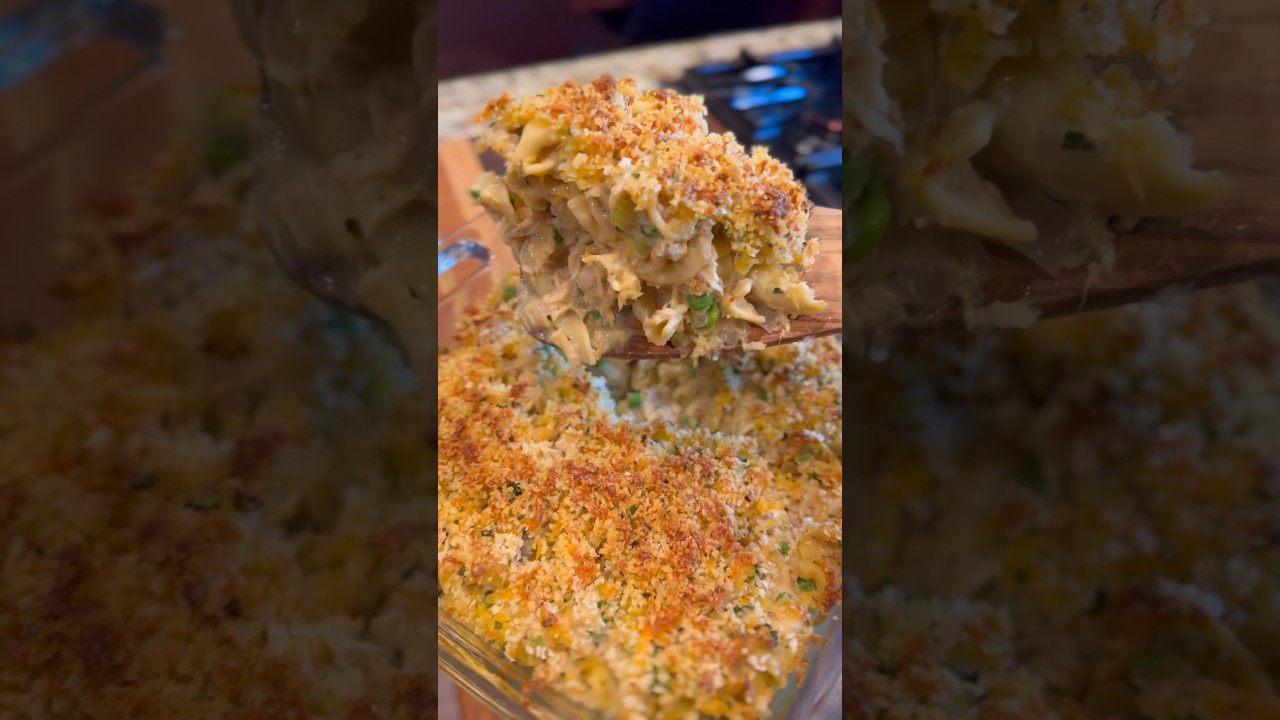
“Tuna casserole has a reputation problem. It earned that reputation from the canned-soup version — where the filling tastes like dissolved cardboard and the noodles turn to paste. The from-scratch version takes the same amount of time, uses ingredients you actually recognize, and produces a dish people ask for twice. The only thing separating them is a roux and twelve minutes of sautéing.”
Why This Recipe Works
Tuna casserole is the dish that made a generation of Americans distrust casseroles. The version that did the damage is built on a can of condensed cream of mushroom soup — a product that contributes sodium, starch paste, and the faint taste of institutional cooking. Combine it with overboiled noodles and a topping that steams instead of crisps, and you have a dish that survives on nostalgia alone.
The from-scratch version takes the same 40 minutes and uses the same pantry architecture. The difference is understanding what each component is actually doing.
The Roux Is Not Optional
The canned-soup shortcut exists because making a cream sauce feels like a commitment. It isn't. A butter-and-flour roux takes 4 minutes — 2 to build it, 2 to cook out the raw flour taste. After that, you add broth and whisk for 2 more minutes. That's a 6-minute investment for a sauce you control completely: the thickness, the seasoning, the flavor base.
The mushrooms are not filler. They're the umami backbone of the entire dish. Eight ounces, cooked properly — which means undisturbed on high heat until they brown at the edges — produces concentrated, savory depth that no condensed soup has ever approximated. The key word is undisturbed. Every time you stir a mushroom before it's had time to develop color, you interrupt the Maillard reaction and redirect the cooking back toward steaming. Leave them alone for 2-minute intervals. Wait for the brown.
The Yogurt Problem (and Solution)
Greek yogurt as a cream sauce replacement is a legitimately good idea — it adds protein, cuts saturated fat, and contributes a subtle tang that lifts the richness of the Gruyère. The problem is that Greek yogurt is essentially a heat-sensitive colloid. Above a certain temperature, the proteins denature and break apart, turning your smooth sauce into a grainy, curdled mess.
The solution is mechanical, not chemical: remove the pan from the heat before the yogurt goes in. The residual heat from the roux and broth is enough to melt the cheese and combine everything into a velvety sauce. The pan never touches the burner again. This is not extra caution — it is the only way this works.
Noodle Timing Is Everything
A baking dish full of casserole is an oven. Whatever goes into it continues cooking for 18-22 minutes at 375°F. Noodles that enter fully cooked exit as paste. Al dente means firm at the center when you bite through — that 8-minute window on whole wheat pasta is not a suggestion, it's a countdown. The oven finishes the job.
The pasta water reserve matters here too. Whole wheat noodles absorb sauce aggressively as they sit. If the filling looks too thick when you combine everything before baking, a splash of starchy pasta water loosens it without diluting flavor.
The Breadcrumb Architecture
Panko over Parmesan works because each material does a different job. The Parmesan provides salt and savory crust. The panko provides air — its open, flaky structure traps heat and browns through convection rather than steaming. Together they create a topping that stays crisp from edge to center instead of going soft in the middle while the edges burn.
Rack position matters as much as the breadcrumbs. The upper third of the oven puts the topping close to the top heating element, which delivers direct radiant heat. Middle-rack placement means the topping sits in ambient oven heat — it dries out without coloring. This is a two-minute decision that determines whether your casserole looks finished or looks forgotten.
The five-minute rest after the oven is carryover cooking doing its job. The sauce is still active at 375°F when the dish comes out. Give it time to set and you get clean, cohesive spoonfuls. Skip it and you're ladling soup.
Where Beginners Mess This Up
Before we start, read this. These are the 4 reasons your classic tuna casserole (the from-scratch fix) will fail:
- 1
Cooking the noodles past al dente: The noodles continue cooking in the oven for 18-22 minutes. If you boil them to fully soft before baking, they come out of the oven as mush. Pull them at al dente — firm at the center — and let the oven finish the job.
- 2
Adding Greek yogurt over direct heat: Greek yogurt breaks when it hits high heat, curdling into grainy clumps instead of a smooth sauce. Always remove the pan from the burner before whisking it in. The residual heat is enough to melt the cheese and combine everything without destroying the texture.
- 3
Under-seasoning the sauce: Tuna is mild. Noodles are neutral. Without assertive seasoning — salt in the pasta water, Dijon for sharpness, cayenne for heat, thyme for herbal depth — the whole dish tastes flat regardless of technique. Season every layer.
- 4
Skipping the resting time: The casserole comes out of the oven with a loose, bubbling filling. Give it five minutes. The sauce firms up and the layers set, which means you get clean spoonfuls instead of a liquid pool. This is not optional rest — it's carryover cooking.
The Video Reference Library
Want to see it in action? Here are the exact videos we analyzed and combined to build this foolproof recipe translation:
The source video that informed this technique — covers the roux method and demonstrates why the from-scratch approach produces a fundamentally different result than the canned soup shortcut.
🛠️ Core Equipment
- 9-by-13-inch baking dishThe right surface area ensures the filling layer is deep enough to stay moist while the breadcrumb topping browns evenly. A smaller dish creates a thick, undercooked center.
- Large saucepanYou need enough surface area to properly brown the mushrooms without crowding them. Crowded mushrooms steam instead of sear — you get watery, pale mushrooms that dilute the sauce.
- WhiskNon-negotiable for building a lump-free roux. Switching to a spoon mid-sauce gives you lumps. Start with a whisk, finish with a whisk.
- Fine-mesh colanderDrains the noodles quickly and completely. Wet noodles dilute the sauce and prevent the breadcrumb topping from crisping properly.
Classic Tuna Casserole (The From-Scratch Fix)
🛒 Ingredients
- ✦8 ounces whole wheat egg noodles or pasta
- ✦2 cans (5 ounces each) albacore tuna in water, drained
- ✦3 tablespoons unsalted butter
- ✦1 medium yellow onion, finely diced
- ✦8 ounces button mushrooms, thinly sliced
- ✦3 cloves garlic, minced
- ✦3 tablespoons all-purpose flour
- ✦1 cup low-sodium chicken broth
- ✦3/4 cup plain Greek yogurt
- ✦1/2 cup grated Gruyère cheese
- ✦1 cup fresh peas (frozen acceptable)
- ✦1/2 teaspoon Dijon mustard
- ✦1/4 teaspoon cayenne pepper
- ✦1 teaspoon fresh thyme leaves
- ✦Salt and black pepper to taste
- ✦1/3 cup panko breadcrumbs
- ✦2 tablespoons grated Parmesan cheese
- ✦1 tablespoon fresh parsley, chopped
👨🍳 Instructions
01Step 1
Preheat oven to 375°F and position the rack in the upper third.
02Step 2
Bring a large pot of heavily salted water to a boil. Cook the whole wheat noodles until al dente per package directions, about 8 minutes. Drain, reserving 1/4 cup of pasta water.
03Step 3
Melt butter in a large saucepan over medium-high heat. Sauté the diced onion for 3-4 minutes until translucent.
04Step 4
Add the sliced mushrooms and cook for 5-6 minutes until they release their moisture and begin to brown at the edges.
05Step 5
Stir in the minced garlic and cook for 60 seconds until fragrant.
06Step 6
Sprinkle the flour over the vegetables and stir continuously for 2 minutes to form a light golden roux.
07Step 7
Pour in the chicken broth slowly while whisking constantly. Bring to a gentle simmer and cook for 2 minutes until thickened.
08Step 8
Remove the pan from heat. Whisk in the Greek yogurt, Dijon mustard, and Gruyère until smooth.
09Step 9
Fold in the drained tuna, cooked noodles, peas, thyme, cayenne, salt, and black pepper until evenly combined.
10Step 10
Transfer the mixture to a 9-by-13-inch baking dish and spread into an even layer.
11Step 11
Combine panko breadcrumbs and Parmesan in a small bowl. Sprinkle evenly over the top.
12Step 12
Bake for 18-22 minutes until the top is golden brown and the edges are bubbling.
13Step 13
Rest for 5 minutes before serving. Garnish with fresh parsley.
Nutrition Per Serving
Estimates based on standard preparation. Adjustments alter macros.
🔄 Substitutions
Instead of Whole wheat egg noodles...
Use Chickpea or lentil pasta
Nuttier flavor and significantly more protein and fiber. Cook to al dente precisely — legume pasta goes from perfect to mushy faster than wheat pasta.
Instead of Plain Greek yogurt...
Use Cashew cream (soaked cashews blended with vegetable broth)
Dairy-free and richer in texture. Use the same quantity. Does not curdle under heat the same way yogurt does — you have more flexibility when adding it.
Instead of Butter and flour roux...
Use Olive oil and cornstarch slurry
Mix 2 tablespoons olive oil with 2 tablespoons cornstarch. Add directly to the broth instead of building a roux. Lighter result with less saturated fat — slightly thinner sauce.
Instead of Panko breadcrumbs...
Use Crushed walnuts mixed with rolled oats
Add omega-3s and eliminate refined grain. Toast briefly in a dry pan before topping to get the same crunch as panko. Ratio: 3 tablespoons walnuts to 2 tablespoons oats.
🧊 Storage & Reheating
In the Fridge
Store covered in the baking dish or transfer to an airtight container for up to 3 days. The filling thickens considerably when cold.
In the Freezer
Freeze before baking for best results — assemble through step 10, wrap tightly, freeze for up to 2 months. Bake from frozen at 375°F for 35-40 minutes.
Reheating Rules
Add 2 tablespoons of chicken broth or water over the top, cover with foil, and reheat at 325°F for 15-20 minutes. Microwave dries the noodles out — avoid it if the oven is an option.
❓ Frequently Asked Questions
Can I use canned cream of mushroom soup instead of making the sauce from scratch?
You can, but you lose control over sodium, texture, and flavor. Condensed soup delivers a one-dimensional paste that masks every other ingredient. The from-scratch roux takes 10 minutes and tastes like an entirely different dish.
Why did my sauce turn grainy or curdled?
You added the Greek yogurt while the pan was still on direct heat. Greek yogurt breaks above 160°F. Always remove the pan from the burner completely before whisking in the yogurt. The residual heat from the pan does the job without curdling.
Can I make this ahead of time?
Yes — assemble the filling and transfer to the baking dish up to 24 hours ahead. Refrigerate uncovered or loosely wrapped. Add the breadcrumb topping just before baking. Cold filling may need 5 extra minutes in the oven.
My breadcrumb topping came out pale and soft. What went wrong?
Two likely causes: the rack was in the middle or lower third of the oven instead of the upper third, or the topping was added too early and absorbed moisture from the filling. Always add the Parmesan-panko mixture immediately before the dish goes into the oven, and use the upper rack.
Can I make this without mushrooms?
Yes. Omit the mushrooms and add an extra 1/2 cup of peas, or substitute 1 cup of frozen corn or diced celery. The mushrooms contribute depth and umami — if skipping them, add a teaspoon of soy sauce or Worcestershire to the sauce to compensate.
Is this recipe gluten-free adaptable?
Use gluten-free pasta and substitute the flour in the roux with a cornstarch slurry (2 tablespoons cornstarch whisked with 2 tablespoons cold water, added directly to the broth). Replace panko with gluten-free breadcrumbs or the crushed walnut-oat topping. The result is nearly identical.
The Science of
Classic Tuna Casserole (The From-Scratch Fix)
We turned everything on this page into a beautiful, flour-proof PDF cheat sheet. Print it out, stick it to your fridge, and never mess up your classic tuna casserole (the from-scratch fix) again.
*We'll email you the high-res PDF instantly. No spam, just perfectly cooked meals.
AlmostChefs Editorial Team
We translate the internet's most popular cooking videos into foolproof, beginner-friendly written recipes. We analyze multiple methods, test them in our kitchen, and engineer a single "Master Recipe" that gives you the best possible result with the least possible stress.