The Protein-Packed Tuna & White Bean Pasta Salad (No-Cook Lunch That Actually Fills You Up)
A high-protein no-cook lunch that combines canned tuna, creamy white beans, and whole wheat pasta in a Greek yogurt vinaigrette. 38g of protein per serving, meal-prep ready in 35 minutes, and better than anything you'd pull from a deli counter.

“Most pasta salads are either calorie bombs drowning in mayo or sad diet food that leaves you hungry an hour later. This one is neither. Canned tuna, cannellini beans, and Greek yogurt combine to deliver 38 grams of protein per serving — from ingredients that cost less than a protein bar. The trick is a yogurt-based dressing that gives you the creaminess of mayo without the fat penalty, and a 30-minute chill that turns a pile of ingredients into something that actually tastes intentional.”
Why This Recipe Works
Tuna pasta salad has a bad reputation because most versions deserve it. A can of tuna, some overcooked pasta, a scoop of mayo, and whatever's wilting in the crisper drawer — the result is a beige sludge that tastes like a convenience store thought about Mediterranean food and gave up halfway through. This version is a different thing entirely, and the difference is structural, not cosmetic.
The Protein Case
The original version of this dish — pasta, mayo, a single can of tuna — delivers around 12 grams of protein per serving. Fine for a side dish. Insufficient for a meal. This version stacks tuna against cannellini beans and Greek yogurt dressing to hit 38 grams per serving, which puts it in the same range as a chicken breast while remaining a cold, no-reheat, no-planning lunch you can pull from the fridge at noon.
The tuna and white bean pairing isn't arbitrary. They're complementary proteins: tuna provides complete animal protein high in leucine (the amino acid most directly responsible for muscle protein synthesis), while cannellini beans contribute plant protein with a different amino acid profile plus 7 grams of fiber that slows glucose absorption and extends satiety. The result isn't just a higher protein number — it's a more complete nutritional profile from a dish that costs roughly $4 per serving and requires no cooking beyond boiling pasta.
The Dressing Equation
Greek yogurt replacing mayo is the foundational swap, and it works because thick strained yogurt has roughly the same texture and cling as mayo while contributing protein instead of empty fat. The key is emulsification: yogurt and olive oil don't combine without effort. Whisk the olive oil in slowly while the yogurt acts as the emulsifying base, and you get a smooth, cohesive coating. Add the oil all at once and you get oily patches and yogurt lumps.
Dijon mustard plays double duty here. It contributes sharp, complex flavor, and its lecithin content helps stabilize the emulsion between the yogurt and oil. One teaspoon is enough — more and the mustard takes over. The red wine vinegar adds acidity distinct from the lemon juice: brighter and more angular where lemon is round and floral. Together they create a layered acid structure that keeps the dressing from tasting flat.
The Pasta Variable
Cold pasta behaves differently than hot pasta, and this is where most pasta salads fail at the structural level. Pasta continues cooking from residual heat after you drain it, and in a hot dish that's fine — the sauce finishes the job. In a cold dish, that carryover cooking turns al dente pasta into mush before the first bite. The brief cold water rinse stops carryover cooking and cools the pasta fast enough that it holds its texture through 4 days of meal prep.
A large mixing bowl is non-negotiable for this step. You need room to toss without compressing the ingredients, and you need to fold gently enough to keep the white beans intact. Broken beans don't just look bad — they release their starchy interior into the dressing and turn it cloudy and gluey.
The Chill Principle
Thirty minutes of refrigeration isn't about food safety — the dish is perfectly safe to eat immediately. It's about flavor chemistry. Raw garlic is sharp and aggressive at room temperature; acid mellows it over time. The yogurt dressing needs time to hydrate the pasta surface and penetrate the beans. The parsley wilts slightly and releases chlorophyll compounds that round out the herbaceous notes. All of this happens quietly in the fridge while you do something else.
The practical implication: this is a meal prep dish, not a last-minute lunch. Make it Sunday night and it's better Monday, better Tuesday, and still solid Thursday. The flavors compound over time in a way that rewards planning. Eat it immediately and you're eating the raw materials. Eat it the next day and you're eating the finished dish.
Where Beginners Mess This Up
Before we start, read this. These are the 4 reasons your the protein-packed tuna & white bean pasta salad (no-cook lunch that actually fills you up) will fail:
- 1
Overcooking the pasta: Pasta salad needs to hold its structure through chilling, tossing, and multiple rounds of meal-prep servings. Cook it to al dente — firm with a slight bite — not the soft texture you'd want in a hot dish. Overcooked pasta turns into a gummy mess once it hits the cold dressing.
- 2
Skipping the chill time: Thirty minutes in the fridge is not optional. The yogurt dressing needs time to penetrate the pasta and beans. Served immediately, it tastes flat and underdressed. After chilling, the flavors meld and the dressing clings to every surface. The difference is significant.
- 3
Draining hot pasta without rinsing: Unlike hot pasta dishes where you want starchy pasta water, here you want cooled, non-sticky pasta. A brief rinse with cold water stops the cooking and prevents clumping. Skip this step and your pasta salad becomes one solid mass within 20 minutes.
- 4
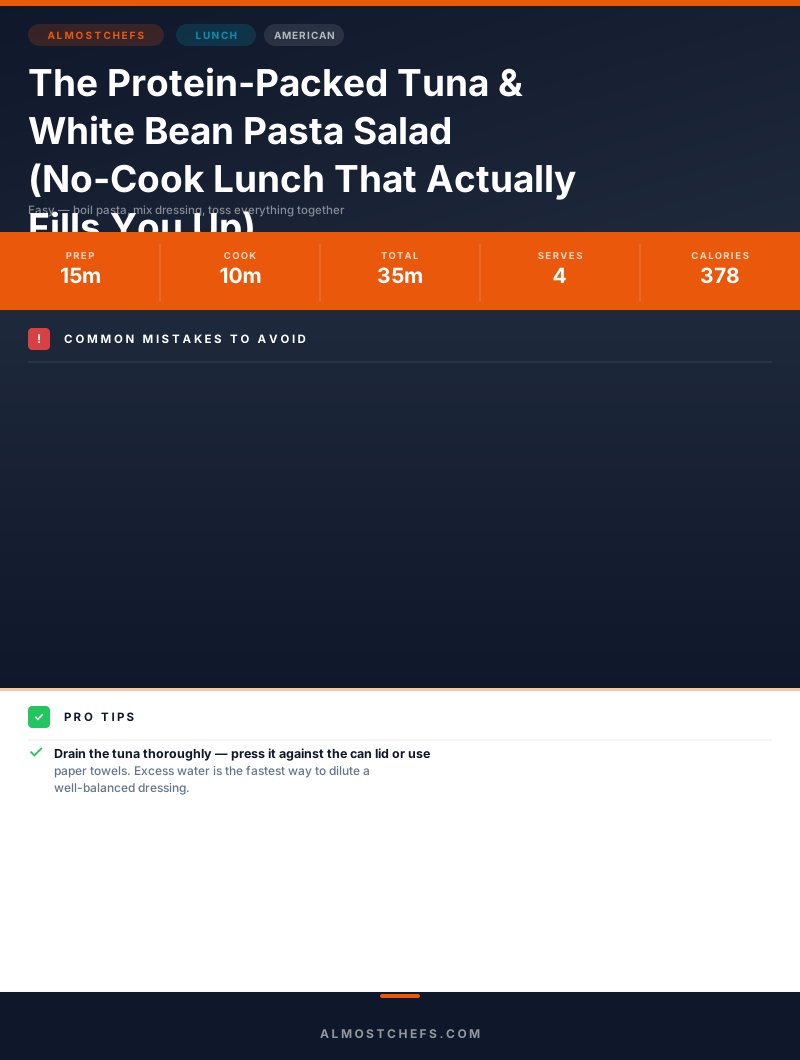
Using tuna packed in oil: Tuna in oil adds extra fat and competes with the olive oil in the dressing, creating a greasy mouthfeel. Albacore tuna in water gives clean, mild flavor that lets the dressing do its job. Drain it well — excess liquid dilutes the dressing.
The Video Reference Library
Want to see it in action? Here are the exact videos we analyzed and combined to build this foolproof recipe translation:

Step-by-step technique for building the yogurt dressing and getting the al dente pasta texture right for a cold application.
2. Meal Prep Pasta Salads for the WeekHow to portion and store high-protein pasta salads for 4-day meal prep without the pasta drying out or the dressing separating.
3. The Smartest No-Cook Lunch ProteinsWhy canned tuna and white beans are the most efficient protein pairing in the pantry — cost, amino acid profile, and shelf stability.
🛠️ Core Equipment
- Large mixing bowl ↗You need room to toss without launching pasta onto the counter. A bowl that feels too large is exactly right. Cramped tossing leads to uneven coating and crushed beans.
- Fine-mesh colander ↗For draining and rinsing the pasta quickly and evenly. A large-hole colander lets pasta slip through or stick in clumps. You want fast, even drainage.
- Whisk ↗Greek yogurt and olive oil don't combine willingly. A whisk emulsifies the dressing into a smooth, cohesive coating. A fork leaves streaks of yogurt that clump around specific pasta pieces.
- Airtight containers ↗This salad is built for meal prep. Portioned into airtight containers, it holds for 4 days in the fridge. Without a proper seal, the pasta dries out and the top layer oxidizes.
The Protein-Packed Tuna & White Bean Pasta Salad (No-Cook Lunch That Actually Fills You Up)
🛒 Ingredients
- ✦8 oz whole wheat pasta (rotini or penne)
- ✦2 cans (5 oz each) albacore tuna in water, drained
- ✦1 can (15 oz) white beans (cannellini), drained and rinsed
- ✦1/2 cup plain nonfat Greek yogurt
- ✦3 tablespoons extra virgin olive oil
- ✦2 tablespoons fresh lemon juice
- ✦1 tablespoon red wine vinegar
- ✦2 medium celery stalks, finely diced
- ✦1 medium red bell pepper, diced
- ✦1/4 cup fresh flat-leaf parsley, chopped
- ✦3 green onions, sliced thin
- ✦2 cloves garlic, minced
- ✦1 teaspoon Dijon mustard
- ✦1/2 teaspoon kosher salt
- ✦1/4 teaspoon black pepper
- ✦1/4 teaspoon red pepper flakes (optional)
- ✦2 tablespoons diced red onion
👨🍳 Instructions
01Step 1
Bring a large pot of generously salted water to a rolling boil over high heat.
02Step 2
Add pasta and cook according to package directions until al dente, about 9-11 minutes. Taste a piece 2 minutes before the package time — it should have a distinct bite.
03Step 3
Drain the pasta in a colander and rinse briefly with cold water to stop the cooking process and cool the pasta down.
04Step 4
In a large mixing bowl, whisk together the Greek yogurt, olive oil, lemon juice, red wine vinegar, Dijon mustard, minced garlic, salt, and black pepper until completely smooth and emulsified.
05Step 5
Add the cooled pasta, drained tuna, white beans, celery, red bell pepper, red onion, green onions, and fresh parsley to the dressing.
06Step 6
Gently toss all ingredients together until the pasta and vegetables are evenly coated, about 2-3 minutes. Use two large spoons or a rubber spatula — not tongs, which crush the beans.
07Step 7
Taste and adjust seasoning with additional salt, pepper, or lemon juice as needed.
08Step 8
Sprinkle red pepper flakes over the top if using.
09Step 9
Refrigerate for at least 30 minutes before serving to allow the flavors to meld.
10Step 10
Before serving, stir gently and add a splash of lemon juice or a teaspoon of olive oil if the salad looks dry after chilling — pasta absorbs dressing as it sits.
Nutrition Per Serving
Estimates based on standard preparation. Adjustments alter macros.
🔄 Substitutions
Instead of Plain nonfat Greek yogurt...
Use 2% or full-fat Greek yogurt
Richer, more indulgent mouthfeel with marginally more calories. Protein stays at 38g per serving. Worth it if you find nonfat yogurt too thin.
Instead of Canned albacore tuna in water...
Use Canned wild salmon or fresh grilled tuna
Salmon delivers more omega-3s and a more robust flavor. Fresh grilled tuna elevates this from pantry meal to restaurant-quality. Protein increases to approximately 40g per serving.
Instead of White beans (cannellini)...
Use Chickpeas or a 50/50 mix of white beans and edamame
Chickpeas add a nuttier flavor and firmer texture. Edamame boosts complete protein and pushes the per-serving total higher. Both hold up better to multi-day storage than cannellini.
Instead of Whole wheat pasta...
Use Chickpea pasta or lentil-based pasta
Legume-based pastas nearly double the protein content and provide a lower glycemic response. Slightly earthier flavor and firmer texture. Protein can reach 44g per serving with chickpea pasta.
🧊 Storage & Reheating
In the Fridge
Store in airtight containers for up to 4 days. The salad actually improves on days 2 and 3 as the flavors meld. Stir before serving and add a small splash of lemon juice if it looks dry.
In the Freezer
Not recommended. The Greek yogurt dressing separates upon thawing, and the pasta texture becomes unpleasant. This is a fridge-only meal prep.
Reheating Rules
Serve cold or at room temperature — this is not a dish that benefits from reheating. If the salad has been refrigerated, let it sit at room temperature for 10 minutes before eating to take the chill off.
❓ Frequently Asked Questions
Can I use regular yogurt instead of Greek yogurt?
No. Regular yogurt contains too much liquid and will make the dressing watery and thin. Greek yogurt is strained, which gives it the thick, creamy consistency needed to coat the pasta. If you only have regular yogurt, strain it through a cheesecloth for 30 minutes before using.
Why does my pasta salad taste bland after chilling?
Cold mutes flavor perception. Season more aggressively than you think necessary before refrigerating — add an extra pinch of salt and a squeeze of lemon. Taste again right before serving and adjust. The salad needs more seasoning than a hot dish.
Can I make this ahead and freeze it?
No. The Greek yogurt dressing breaks when frozen and thawed, separating into watery liquid and grainy solids. The pasta also loses its texture. Make it fresh and store in the fridge for up to 4 days.
Is this actually high-protein compared to a regular pasta salad?
Substantially. A traditional mayo-dressed pasta salad delivers roughly 8-12g of protein per serving. This version delivers 38g — a function of using two protein sources (tuna and white beans) and replacing mayo with Greek yogurt, which contributes protein instead of just fat.
Can I serve this warm?
You can toss it immediately after mixing without chilling, but the flavors won't be as developed and the dressing will feel thinner. The 30-minute chill is what transforms it from assembled ingredients to a cohesive dish. Warm is acceptable; chilled is correct.
What pasta shape works best?
Rotini or penne are ideal because their ridges and tubes trap dressing. Smooth pasta like spaghetti or fettuccine doesn't hold the yogurt coating as well. Avoid anything too small like orzo — it gets lost among the beans and tuna.
The Science of
The Protein-Packed Tuna & White Bean Pasta Salad (No-Cook Lunch That Actually Fills You Up)
We turned everything on this page into a beautiful, flour-proof PDF cheat sheet. Print it out, stick it to your fridge, and never mess up your the protein-packed tuna & white bean pasta salad (no-cook lunch that actually fills you up) again.
*We'll email you the high-res PDF instantly. No spam, just perfectly cooked meals.
AlmostChefs Editorial Team
We translate the internet's most popular cooking videos into foolproof, beginner-friendly written recipes. We analyze multiple methods, test them in our kitchen, and engineer a single "Master Recipe" that gives you the best possible result with the least possible stress.