Crispy Korean Short Rib Patties (Tteok Galbi Done Right)
Tteok galbi are Korean short rib patties — seasoned, hand-pressed ground rib meat glazed and caramelized over high heat until the outside is lacquered and the inside stays impossibly juicy. We broke down the royal court technique to build a foolproof home method that nails the crust without drying out the center.

“Most people have never heard of tteok galbi. That's a mistake. Originally served in Joseon-era royal courts, these short rib patties take everything magnificent about galbi — the soy-sesame marinade, the caramelized sugars, the deep beefy richness — and concentrate it into a seared patty with a lacquered crust that cracks when you bite into it. The technique is forgiving. The result is not.”
Why This Recipe Works
Tteok galbi exists because a Joseon-era royal court chef had a problem: the king could not eat galbi bones. Short ribs were a delicacy, but bone-in galbi requires a certain aggressiveness — gnawing, tearing — that was considered undignified for royalty. The solution was to strip the meat from the bones, season it the same way, shape it back around the bone like a clean cylinder, and cook it at high heat until the glaze caramelized. Centuries later, the bones are optional. The technique is not.
What You're Actually Making
This is not a Korean burger. The comparison is lazy and misleading. A burger patty uses standard grind, salt, and heat. Tteok galbi is seasoned with soy, sesame, mirin, and grated pear, then cooked with a staged glaze that builds a lacquered exterior through successive caramelization cycles. The flavor profile — sweet, savory, faintly bitter from the charred glaze edges, deeply umami from the soy reduction — has no Western analogue. Calling it a Korean burger is like calling biryani a rice casserole.
The Meat Physics
Short rib is the correct cut because it has the right fat-to-muscle ratio. The intramuscular fat in short rib meat melts during cooking and bastes the patty from within, keeping the center juicy while the exterior sears and lacquers. Lean ground beef lacks this internal fat reservoir. Even with sesame oil added to compensate, the texture is drier and the flavor shallower.
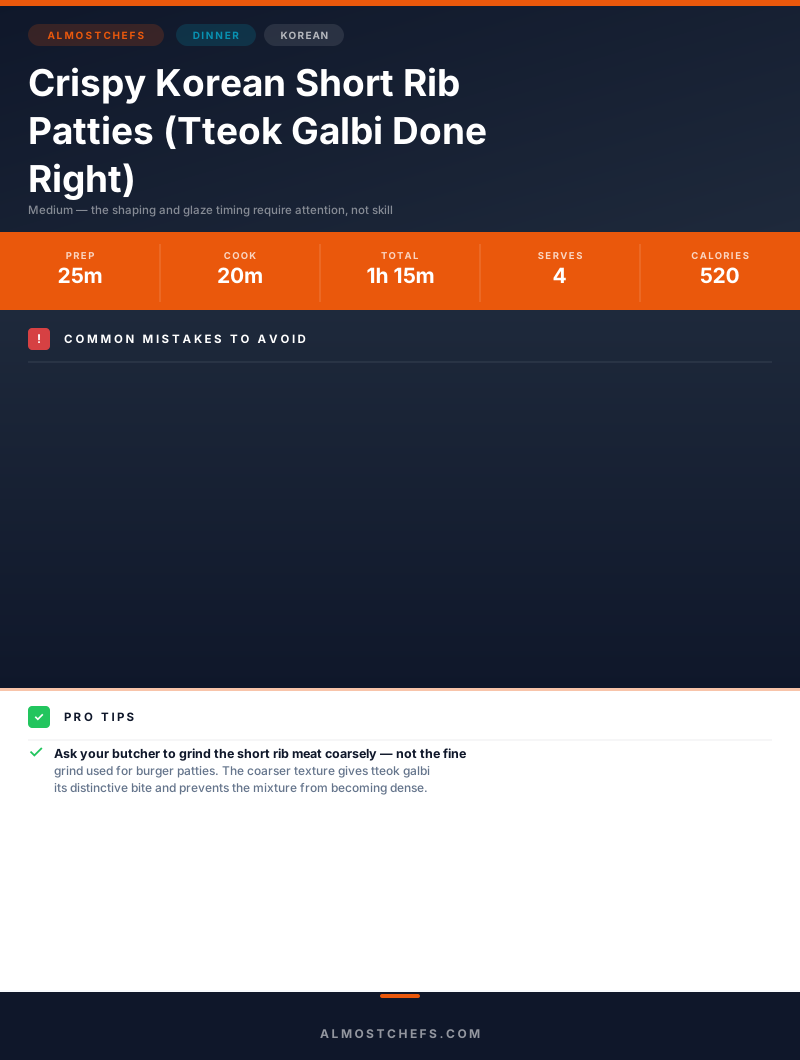
The grind texture matters as much as the cut. Fine-ground meat — the standard burger grind — produces a dense, homogeneous patty that chews more like a meatball than a galbi. Coarse grind preserves distinct pieces of muscle and fat that give each bite textural variation. If you're using a food processor, pulse in short 1-second bursts and stop the moment the mixture comes together. Smooth is wrong.
The Glaze Mechanics
The marinade is pulling double duty. Applied before cooking, it seasons the meat and begins tenderizing the surface proteins through the enzymatic action of grated pear. Applied as a glaze during cooking, it undergoes Maillard reactions and caramelization simultaneously — the sugars from the mirin and brown sugar convert into hundreds of complex flavor compounds while the soy proteins contribute their own browning. The result is a crust that is sweet, savory, and faintly bitter in perfect tension.
The staged application is essential. One coat applied at the beginning burns off before the crust can form. By reserving a portion of the marinade and brushing it on midway through cooking — after the bottom crust is already set — you give the glaze something structural to adhere to. It reduces and concentrates rather than sliding off into the pan.
The Heat Equation
A cast iron skillet is not optional, it's structural. Tteok galbi's glaze contains enough sugar to burn at temperatures that are still insufficient to properly cook through the center. You need a pan that can deliver intense, even heat that sears the surface fast enough to caramelize rather than burn, while retaining enough thermal mass to stay hot when the cold meat hits the surface. Thin stainless steel drops temperature on contact and recovers slowly — you lose the initial sear window entirely.
The two-stage heat approach — medium-high to establish the crust, medium to finish — mirrors the logic of the staged glaze. You're giving each phase its own optimal conditions instead of trying to find one compromised middle temperature that does both jobs poorly.
Why the Rest Matters
Tteok galbi's glaze is still actively caramelizing as you pull the patties off the heat. The residual heat in the crust continues cooking the outermost layer for another minute after plating. Cutting immediately releases the interior juices before they've redistributed — the center goes dry, the plate goes wet, and you've wasted everything. Three minutes on a wire rack (not a flat plate, which traps steam and softens the crust) lets the structure stabilize. It is the least demanding step in the recipe and the one most people skip.
Where Beginners Mess This Up
Before we start, read this. These are the 4 reasons your crispy korean short rib patties (tteok galbi done right) will fail:
- 1
Using lean ground beef instead of rib meat: Tteok galbi is made from short rib meat with its natural fat marbling intact. Standard lean ground beef produces a dry, dense puck with none of the richness. If you can't grind short ribs yourself, ask your butcher — or use an 80/20 blend with a tablespoon of sesame oil worked into the mix.
- 2
Overworking the meat mixture: Mixing the seasoned meat too aggressively develops the myosin proteins, binding everything into a tough, rubbery patty. Fold the seasoning in gently until just combined. The mixture should feel loosely cohesive, not smooth like a paste.
- 3
Cooking on insufficient heat: Tteok galbi needs high, sustained heat to caramelize the sugars in the marinade and form the signature lacquered crust. Medium heat produces steaming instead of searing — you get a gray, moist exterior instead of the crackling dark crust that defines the dish.
- 4
Skipping the second glaze pass: The deep flavor comes from brushing additional marinade onto the patty midway through cooking and letting it reduce and char slightly at the edges. One coat applied only at the start burns off before the crust can form. Two coats, applied in stages, build real depth.
🛠️ Core Equipment
- Cast iron skillet or heavy grill panTteok galbi needs even, intense heat retention to caramelize the sugars without burning spots. A thin stainless pan creates hot spots that scorch the glaze before the center cooks through. Cast iron solves this by distributing heat evenly across the entire surface.
- Meat grinder or food processorShort rib meat ideally gets ground fresh rather than bought pre-ground. A food processor pulsed in short bursts produces the right coarse texture — not a paste. Over-processing emulsifies the fat and ruins the texture.
- Silicone basting brushFor applying the glaze in stages without disturbing the crust. Natural bristle brushes hold too much liquid and flood the pan. Silicone brushes deposit a thin, controlled coat exactly where you want it.
- Instant-read thermometerThe patties need to reach 160°F internal temperature without overcooking. Because the glaze darkens quickly, visual cues are unreliable — the outside looks done before the center is. A thermometer removes all guesswork.
Crispy Korean Short Rib Patties (Tteok Galbi Done Right)
🛒 Ingredients
- ✦1.75 pounds boneless short rib meat, coarsely ground (or 80/20 ground beef as substitute)
- ✦1/4 pound ground pork (optional, for added richness)
- ✦4 tablespoons soy sauce
- ✦2 tablespoons mirin
- ✦1.5 tablespoons dark brown sugar
- ✦1 tablespoon toasted sesame oil
- ✦1 tablespoon sake or dry sherry
- ✦1.5 tablespoons ginger-garlic paste
- ✦2 scallions, finely minced
- ✦1/2 Asian pear or 1/4 kiwi, grated (for tenderizing)
- ✦1 teaspoon black pepper, freshly ground
- ✦1/2 teaspoon fine sea salt
- ✦1 tablespoon toasted sesame seeds, for finishing
- ✦2 teaspoons neutral oil, for the pan
👨🍳 Instructions
01Step 1
Combine soy sauce, mirin, brown sugar, sesame oil, sake, ginger-garlic paste, and black pepper in a bowl. Whisk until the sugar fully dissolves. Reserve 3 tablespoons of this mixture separately — this is your basting glaze.
02Step 2
In a large bowl, combine the ground short rib meat, ground pork if using, minced scallions, grated pear, and salt. Add the marinade (not the reserved glaze). Using your hands, fold gently until just combined — 20-30 seconds maximum.
03Step 3
Divide the mixture into 8 equal portions (roughly 3.5 oz each). Shape each into an oval patty about 3/4 inch thick. Press gently to compact without squeezing.
04Step 4
Heat a [cast iron skillet](/kitchen-gear/review/cast-iron-skillet) over medium-high heat until a drop of water skitters across the surface. Add the neutral oil and swirl to coat.
05Step 5
Add the patties without crowding — cook in two batches if needed. Sear for 3-4 minutes undisturbed until the bottom is deeply caramelized and releases cleanly from the pan.
06Step 6
Flip the patties. Brush the cooked side with the reserved glaze. Cook for another 3 minutes.
07Step 7
Brush the second side with glaze. Reduce heat to medium. Cook 2-3 more minutes, flipping once, until an [instant-read thermometer](/kitchen-gear/review/instant-read-thermometer) reads 160°F internal temperature.
08Step 8
Transfer to a wire rack and rest for 3 minutes. Scatter toasted sesame seeds over the top before serving.
Nutrition Per Serving
Estimates based on standard preparation. Adjustments alter macros.
🔄 Substitutions
Instead of Short rib meat...
Use 80/20 ground beef plus 1 tablespoon sesame oil
The fat ratio is the critical variable. The sesame oil partially compensates for the missing marbling, though the depth of flavor will be noticeably lighter.
Instead of Mirin...
Use Dry sake with 1 teaspoon sugar
Mirin's sweetness comes from fermented rice starch, not added sugar — the flavor is rounder. The sake-sugar substitute works but produces a slightly sharper glaze.
Instead of Asian pear...
Use Grated kiwi (half the quantity)
Kiwi's bromelain is more aggressive than pear's actinidin. Use half the amount and do not extend the marinating time — kiwi can turn the meat texture mushy in under an hour.
Instead of Dark brown sugar...
Use Honey or rice syrup
Rice syrup (mulyeot) is the traditional Korean sweetener and produces a cleaner, less molasses-forward glaze. Honey caramelizes faster, so watch the heat more carefully.
🧊 Storage & Reheating
In the Fridge
Store cooked patties in an airtight container for up to 3 days. Flavor deepens overnight as the glaze sets.
In the Freezer
Freeze cooked patties individually wrapped for up to 2 months. Thaw overnight in the refrigerator before reheating.
Reheating Rules
Reheat in a covered skillet with 2 tablespoons of water over medium-low heat for 4-5 minutes. Avoid microwaving — it makes the crust rubbery and steams out the caramelized exterior.
❓ Frequently Asked Questions
What does 'tteok galbi' actually mean?
The name translates loosely as 'rice cake ribs' — not because the dish contains rice cakes, but because the shaped patties resemble the cylindrical tteok (rice cakes) common in Korean cuisine. The galbi refers to the short rib cut the meat traditionally comes from.
Can I use a grill instead of a skillet?
Yes, but with modifications. Tteok galbi is prone to falling through grill grates because the mixture is softer than a standard burger patty. Use a well-oiled grill basket or cast iron grill pan, and make sure the grates are extremely hot before placing the patties — they need to sear instantly to hold their shape.
Why does my glaze burn before the patty cooks through?
The heat is too high. The brown sugar in the marinade caramelizes and burns well below the temperature needed to cook through 3/4-inch meat. Start at medium-high to sear the crust, then reduce to medium for the finishing phase. The reserved glaze should go on during the medium-heat stage, not at the start.
Is the ground pork necessary?
No. Traditional recipes use only short rib beef. The pork addition — popular in some regional Damyang-style versions — adds richness and helps the patties hold together if you're working with leaner beef. Skip it for a cleaner, beefier flavor.
How do I know the texture is right before shaping?
The seasoned mixture should hold its shape when pressed but feel slightly sticky, not smooth. If it feels like soft paste, the meat was overworked or the marinade time was too long. If it crumbles, add a teaspoon of sesame oil and fold gently to bind.
Can I make these ahead for a dinner party?
Yes — and they actually benefit from it. Shape and marinate the raw patties up to 24 hours ahead and refrigerate uncovered on a parchment-lined sheet. The cold rest firms them up and helps them hold their shape on the heat. Remove from the fridge 20 minutes before cooking.
The Science of
Crispy Korean Short Rib Patties (Tteok Galbi Done Right)
We turned everything on this page into a beautiful, flour-proof PDF cheat sheet. Print it out, stick it to your fridge, and never mess up your crispy korean short rib patties (tteok galbi done right) again.
*We'll email you the high-res PDF instantly. No spam, just perfectly cooked meals.
AlmostChefs Editorial Team
We translate the internet's most popular cooking videos into foolproof, beginner-friendly written recipes. We analyze multiple methods, test them in our kitchen, and engineer a single "Master Recipe" that gives you the best possible result with the least possible stress.