Classic British Trifle (The Make-Ahead Dessert That Actually Impresses)
A showstopping layered British dessert of sherry-soaked sponge cake, macerated berries, silky vanilla custard, and whipped cream assembled in a glass bowl. We mapped every failure point in the classic technique so yours sets perfectly and holds its layers at the table.
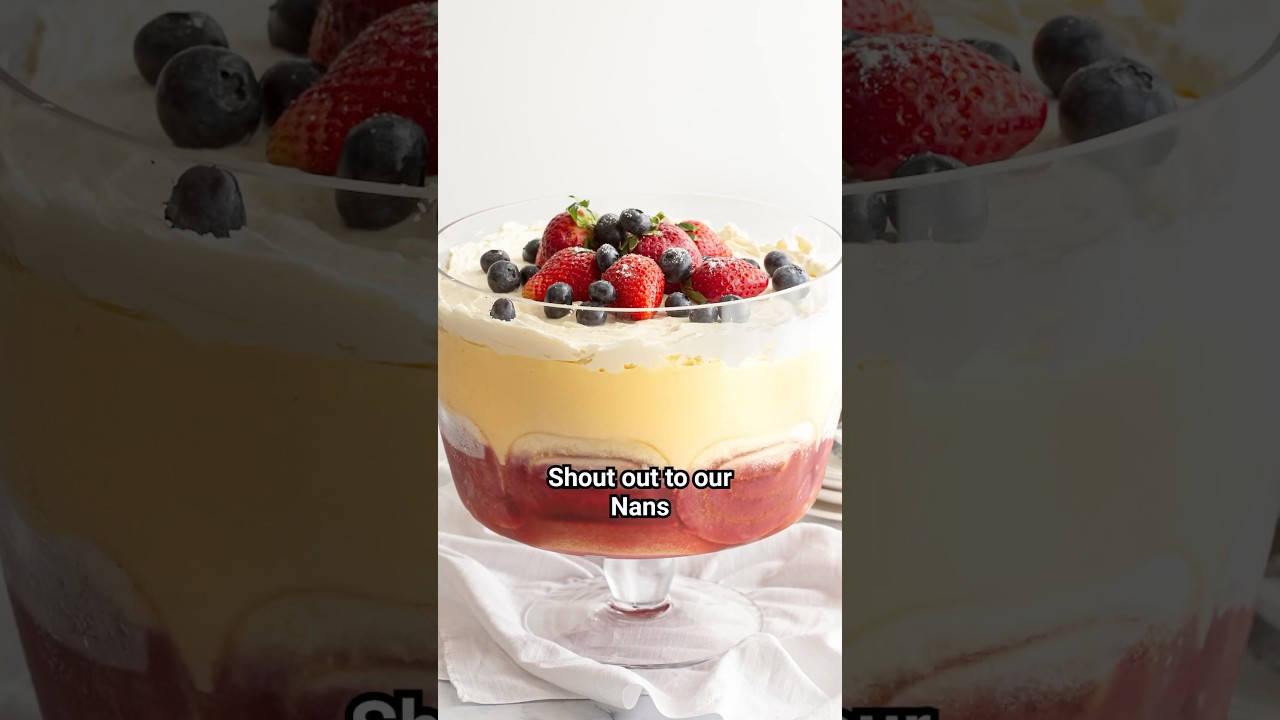
“Trifle has a reputation problem. People see 'British dessert' and picture something soggy, institutional, and beige. What they're picturing is a trifle that was rushed — assembled and served the same hour. A properly made trifle, rested overnight in the fridge, is one of the most texturally complex desserts in the Western canon: sponge cake that's soaked but not disintegrated, cold custard that's just thick enough to hold a spoon mark, and berries that have softened into a concentrated syrup. The technique isn't hard. The timeline is everything.”
Why This Recipe Works
Trifle is deceptively simple. Cake, fruit, custard, cream — stacked in a bowl. How complicated can it be? Turns out, complicated enough that most home versions are quietly forgettable: soggy at the bottom, structurally unstable at the top, and served approximately ninety minutes before it needed to be. The technique isn't hard. But it requires respecting a timeline that most recipes mention briefly and everyone ignores.
The Architecture Problem
A trifle is not a sundae. The layers are not decorative — they're functional. The cake base absorbs liquid from the berries above it and the sherry below it, becoming a dense, flavor-saturated foundation. The berry layer creates a natural drainage point where juice migrates both down into the cake and up into the custard. The custard layer acts as structural insulation between the wet fruit zone and the whipped cream above. The cream seals everything and protects the lower layers from drying out during refrigeration.
Disrupt the order and the physics fail. Custard under berries turns watery. Whipped cream between the cake and fruit turns the fruit juice into a slurry. The sequence matters.
The Cold Chain
This is the step everyone skips. Your pudding-yogurt mixture must be cold before it touches anything else. Instant pudding sets at room temperature but remains pourable. Mix in the Greek yogurt and refrigerate until you feel actual resistance when you drag a spoon through it. Assemble with warm custard and it will melt the whipped cream on contact, and you'll have a dessert that looks like a failed science experiment.
Same principle applies to the whipped cream. Whip it cold, fold it cold, keep it in the fridge until the exact moment it goes on. Heavy cream at room temperature does not whip — it churns. Bowl and beaters in the freezer for 10 minutes if your kitchen is warm. This is basic, but it's the difference between a trifle that holds its layers for three days and one that weeps by dinnertime.
The Maceration Window
Berries tossed with honey and lemon zest and immediately layered are just fruit. Berries that have sat for 5-10 minutes are something else entirely — the cell walls have softened, the honey has pulled liquid out through osmosis, and you now have berries swimming in a lightly sweetened, brightly flavored syrup. That syrup is what soaks down through the sherry-treated cake and turns it from dry sponge to something that tastes like it's been infused with concentrated berry essence. Don't skip the waiting.
The Chill Requirement
Two hours is the floor. Overnight is the goal. During the refrigeration period, the sherry finishes its work on the cake, the berry juice migrates through the lower half of the bowl, and the custard firms into a layer that holds a clean spoon mark. A trifle served at two hours is structurally adequate. A trifle served the next day has become a different dessert — the flavors have merged and deepened in a way that no amount of additional layering technique can replicate in real time.
This is what makes trifle genuinely perfect for entertaining. Everything happens in the fridge while you do something else. The dessert improves with time instead of degrading. A trifle bowl with straight sides shows off the work to every guest before you serve a single spoonful. You don't have to be present for the interesting part.
The garnish — toasted almonds, nutmeg, whole raspberries — is the only thing you do at service. Everything else was done last night. That's the trifle principle: patience front-loaded so the actual moment is effortless.
Where Beginners Mess This Up
Before we start, read this. These are the 4 reasons your classic british trifle (the make-ahead dessert that actually impresses) will fail:
- 1
Serving it too soon: Trifle needs at least 2 hours in the fridge — and overnight is meaningfully better. The soak time allows the sherry to penetrate the cake fully, the berry juices to bleed into the custard layer, and the whole structure to set into something you can actually spoon cleanly. Serve it at two hours and it's a loose pile. Serve it the next day and it's a dessert.
- 2
Using warm custard: If your pudding mixture is even slightly warm when it goes on top of the berries, it will liquefy the whipped cream above it and collapse the layers. The pudding-yogurt mixture must be fully cold and thickened before assembly. Make it first, refrigerate it, assemble last.
- 3
Not macerating the fruit long enough: Tossing berries with honey and lemon zest and immediately layering them skips the whole point. The maceration releases the berry juice, which is what soaks down through the cake and creates the distinctive stained, jewel-colored base layer. Give it at least 5 minutes — 10 is better.
- 4
Over-soaking the cake: The sherry or juice should be drizzled, not poured. The cake cubes want to be moist and flavor-saturated, not waterlogged. A tablespoon per layer is enough. More than that and the cake loses its structural integrity and the whole thing slides.
The Video Reference Library
Want to see it in action? Here are the exact videos we analyzed and combined to build this foolproof recipe translation:
The source video for this recipe. Covers the layering sequence, proper custard consistency, and why the chill time transforms the dish.
🛠️ Core Equipment
- Large trifle bowl or deep glass bowlThe transparency is the point — you need guests to see the distinct layers. A deep ceramic bowl defeats the entire visual purpose of the dish. A [trifle bowl](/kitchen-gear/review/trifle-bowl) with straight sides makes layering and serving cleaner.
- Electric hand mixerWhipping cream to stiff peaks by hand is possible, but an [electric hand mixer](/kitchen-gear/review/hand-mixer) gives you consistent results in 2-3 minutes and prevents under-whipping, which causes the top layer to weep and lose structure during the chill.
- Offset spatulaSpreading custard and whipped cream over a berry layer without disturbing what's below is nearly impossible with a regular spoon. An offset spatula lets you float each layer on without pressing down and mixing the layers together.
- Large mixing bowlsYou're running three separate prep operations — fruit maceration, pudding mixing, cream whipping — simultaneously. Having three [mixing bowls](/kitchen-gear/review/mixing-bowls) staged and ready is the difference between smooth assembly and chaos.
Classic British Trifle (The Make-Ahead Dessert That Actually Impresses)
🛒 Ingredients
- ✦1 store-bought pound cake (10-12 ounces), cut into 1-inch cubes
- ✦3 tablespoons sweet sherry or fruit juice
- ✦2 cups fresh raspberries
- ✦1 cup fresh blueberries
- ✦2 tablespoons honey or agave nectar
- ✦1 package (3.4 ounces) instant vanilla pudding mix
- ✦1.5 cups whole milk
- ✦1 cup plain Greek yogurt (non-fat or low-fat)
- ✦1 cup heavy whipping cream
- ✦2 tablespoons powdered sugar
- ✦1 teaspoon vanilla extract
- ✦1 teaspoon fresh lemon zest
- ✦Pinch of ground nutmeg
- ✦2 tablespoons sliced almonds, lightly toasted
- ✦12 whole raspberries for garnish
👨🍳 Instructions
01Step 1
Combine raspberries and blueberries in a large bowl. Drizzle with honey and lemon zest, fold gently until the fruit is coated and juice begins releasing, about 2 minutes. Set aside to macerate.
02Step 2
Whisk the vanilla pudding mix and whole milk in a separate bowl until smooth and thickened, about 3-4 minutes. Stir in the Greek yogurt until fully incorporated. Refrigerate until fully cold.
03Step 3
Beat heavy whipping cream with powdered sugar and vanilla extract using an electric mixer on medium-high until stiff peaks form, about 2-3 minutes. Refrigerate until needed.
04Step 4
Arrange pound cake cubes in the base of a large trifle bowl or divide among 4-6 individual glasses, creating an even layer.
05Step 5
Drizzle sherry or fruit juice evenly over the cake cubes. Let absorb for 1 minute.
06Step 6
Spoon half the macerated berries and their accumulated juice over the soaked cake, distributing evenly.
07Step 7
Spread half the cold pudding-yogurt mixture over the berry layer using an offset spatula, smoothing gently to create an even surface without disturbing the layers below.
08Step 8
Layer half the whipped cream over the pudding, distributing carefully with the spatula.
09Step 9
Repeat the sequence: remaining cake cubes, remaining berries with juice, remaining pudding mixture, remaining whipped cream.
10Step 10
Sprinkle toasted almonds and a pinch of nutmeg across the top layer.
11Step 11
Arrange 12 whole raspberries decoratively across the surface.
12Step 12
Cover loosely with plastic wrap and refrigerate for at least 2 hours. Overnight is significantly better.
Nutrition Per Serving
Estimates based on standard preparation. Adjustments alter macros.
🔄 Substitutions
Instead of Heavy whipping cream...
Use Plain Greek yogurt or whipped coconut cream
Greek yogurt gives a slightly tangy, denser top layer with significantly more protein. Coconut cream must be refrigerated overnight before whipping — use only the solid portion.
Instead of Instant vanilla pudding mix...
Use Homemade custard (2 egg yolks, 1 cup whole milk, 1 tablespoon cornstarch, 1 teaspoon vanilla)
Deeper vanilla flavor, smoother texture, and no artificial additives. Requires cooking and full cooling before use. Worth the effort if you have 20 extra minutes.
Instead of Store-bought pound cake...
Use Homemade almond flour cake or whole wheat sponge cake
Denser crumb with nuttier flavor. Absorbs liquid slightly slower than pound cake — increase soak time to 2 minutes and drizzle a touch more liquid.
Instead of Sweet sherry...
Use Fresh orange juice or raspberry juice
Brighter fruit flavor, zero alcohol, and equally effective at soaking the cake. Adds vitamin C without changing the texture of the finished dessert.
🧊 Storage & Reheating
In the Fridge
Store covered for up to 3 days. The layers meld further over time — day two is often better than day one. The whipped cream may weep slightly on day three but the flavor holds.
In the Freezer
Not recommended. Whipped cream and custard do not freeze well — both turn grainy and watery on thaw. Make fresh.
Reheating Rules
Serve cold, directly from the fridge. This is not a dish that gets reheated.
❓ Frequently Asked Questions
Why are my layers mixing together?
Two causes: warm custard or insufficient chill time. The pudding-yogurt mixture must be fully cold before assembly — warm custard melts whipped cream on contact. Also, assemble gently. The offset spatula technique of floating layers rather than pressing down is what keeps them distinct.
Can I make this the night before?
Yes, and you should. Overnight is the ideal chill window. Assemble completely, cover loosely with plastic, and refrigerate. The cake soaks fully, the berry juice migrates beautifully through the lower layers, and everything firms into a cohesive structure. Same-day trifle is technically correct. Next-day trifle is noticeably better.
What if I can't find sweet sherry?
Orange juice, raspberry juice, or even a tablespoon of jam thinned with warm water all work. The goal is a flavorful liquid that soaks into the cake without making it structurally collapse. Avoid anything too acidic — it can curdle the yogurt if they come into direct contact.
Can I use frozen berries?
You can, but thaw them completely first and drain the excess liquid before macerating. Frozen berries release significantly more liquid than fresh — if you skip the draining step, the bottom layer of cake becomes waterlogged and the whole structure loses integrity.
Why is my whipped cream flat after chilling?
It was under-whipped before assembly. Cream should be at stiff peaks — firm enough to hold a sharp point when you lift the beater. Soft peaks collapse under their own weight during refrigeration. Also make sure your cream and bowl are cold before whipping; warm cream won't achieve stiff peaks.
Do I have to use a glass bowl?
No, but the visual impact of a trifle comes almost entirely from seeing the layers through the side. A ceramic bowl produces identical flavor but loses the presentation that makes trifle worth making over simpler desserts. If you're serving it anyway, use glass.

The Science of
Classic British Trifle (The Make-Ahead Dessert That Actually Impresses)
We turned everything on this page into a beautiful, flour-proof PDF cheat sheet. Print it out, stick it to your fridge, and never mess up your classic british trifle (the make-ahead dessert that actually impresses) again.
*We'll email you the high-res PDF instantly. No spam, just perfectly cooked meals.
AlmostChefs Editorial Team
We translate the internet's most popular cooking videos into foolproof, beginner-friendly written recipes. We analyze multiple methods, test them in our kitchen, and engineer a single "Master Recipe" that gives you the best possible result with the least possible stress.