Traditional Kimchi (Tongbaechu-kimchi)
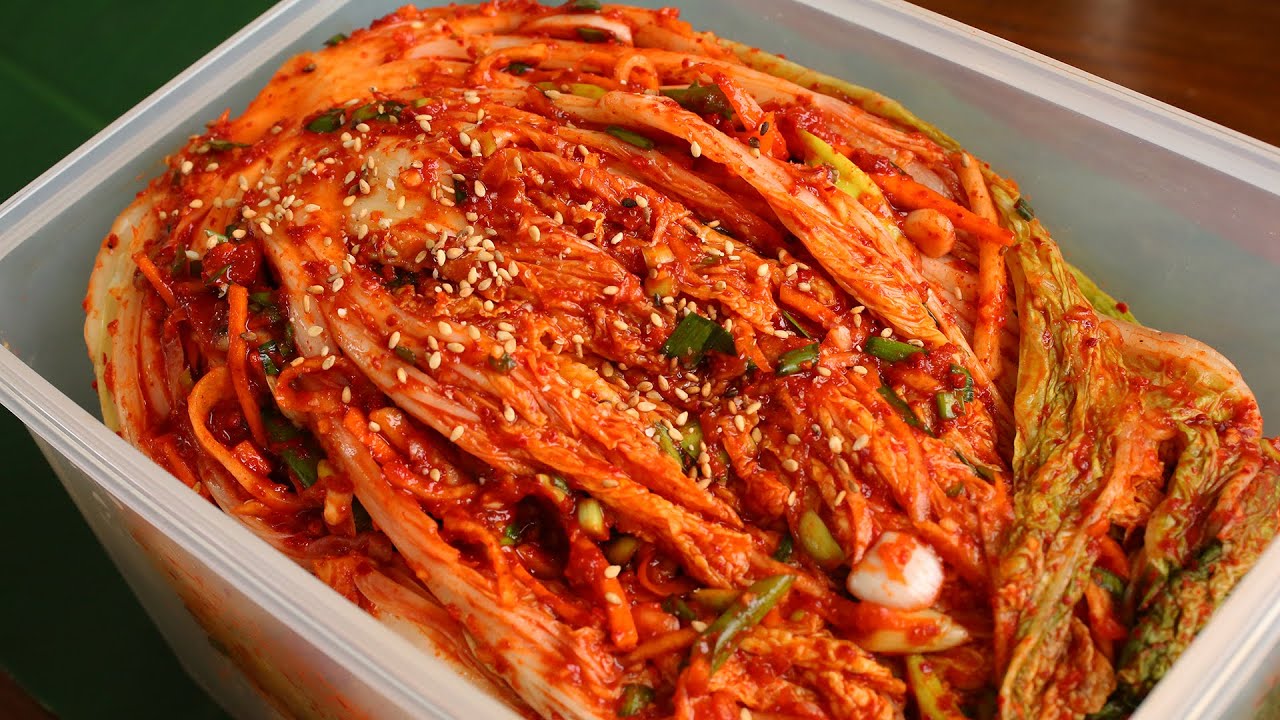
Maangchi's definitive whole-cabbage kimchi recipe — napa cabbage salted, stuffed with a spicy radish filling, and fermented. Over 31 million views for a reason.
Why This Recipe Works
Let's be honest about something most recipe sites won't tell you: the majority of kimchi failures happen before the first clove of garlic is peeled. They happen at the salt step — rushed, misunderstood, and treated as a formality rather than the entire structural foundation of what you're about to make. Fix that one variable and you're already ahead of ninety percent of the internet.
Maangchi's tongbaechu-kimchi has accumulated over 31 million views not because it is charming or accessible, though it is both. It has accumulated 31 million views because it is correct. The proportions are calibrated. The sequencing is deliberate. The science is sound. What follows is a methodical breakdown of why each step exists, and why deviating from it produces inferior results.
The Salting Phase: Osmosis Is Not Optional
Coarse sea salt — specifically Korean solar salt (cheon-il-yeom) — draws water out of the cabbage cells through osmosis. This is not a preference. It is basic cell biology. The large, irregular crystals of solar salt apply pressure slowly and evenly across the leaf surface, allowing the cellular walls to release moisture without rupturing. Fine table salt or iodized salt acts too aggressively, collapsing the cells outright and producing a limp, waterlogged cabbage that ferments into mush rather than crunching into something alive.
Six hours is the minimum. Eight is better. Overnight is not excessive. During this time, the cabbage loses roughly 30-40% of its water weight. What remains is a pliable, concentrated structure capable of absorbing the seasoning paste and surviving weeks of fermentation without disintegrating. The test: a thick white spine should bend without snapping. If it snaps, you are not done. Put it back.
The Rice Flour Paste: Fermentation Fuel, Not Filler
Step two requires you to heat one tablespoon of sweet rice flour with one cup of water in a small saucepan over medium heat, stirring constantly until it thickens to a porridge consistency. This is not a thickening agent for texture. This is fermentation infrastructure.
The gelatinized starch in the paste is a direct food source for Lactobacillus bacteria — specifically L. mesenteroides and L. plantarum, the two dominant strains in properly fermented kimchi. These bacteria metabolize the sugars in the paste, producing lactic acid as a byproduct. Lactic acid lowers the pH of the environment below the threshold where harmful bacteria can survive, while the beneficial strains continue to thrive. This is why kimchi is simultaneously preserved and actively alive. The rice paste accelerates this process and creates a more hospitable microclimate for the bacteria you want.
It also acts as a physical binder. The seasoning paste — mixed together in a large mixing bowl with the radish, green onions, gochugaru, fish sauce, salted shrimp, garlic, and ginger — needs to adhere to wet cabbage leaves. Without the gelatinized starch, the seasoning slides off. With it, the paste coats every surface and stays put through fermentation, fridge storage, and repeated jarring and unjarring.
The Umami Architecture: Two Layers, Not One
Fish sauce and salted shrimp (saeujeot) are not interchangeable, and using only one is a compromise. Fish sauce delivers sharp, immediate glutamate-forward umami — the kind that registers instantly on the palate. Saeujeot delivers something deeper and slower: nucleotide-based umami compounds that amplify the fish sauce's effect through a phenomenon called umami synergy. When glutamates (fish sauce) and nucleotides (shrimp paste) are combined, the perceived savory intensity is not additive — it is multiplicative. Studies on this interaction suggest the combination can be four to eight times more intensely savory than either compound alone.
The gochugaru contributes capsaicin, which is antimicrobial. The garlic and ginger contribute allicin and gingerols respectively, both of which selectively inhibit pathogenic bacteria while leaving Lactobacillus strains intact. This is not coincidence. These seasoning choices have been refined over centuries of empirical fermentation practice in Korean kitchens, long before anyone named the compounds doing the work.
The Pack: Anaerobic Conditions Are the Point
After the filling is spread between every leaf of each cabbage quarter — more on the large outer leaves, less on the smaller inner ones — each quarter is wrapped tight and packed into a large glass jar or traditional Korean onggi crock. The packing is not cosmetic. Pressing each bundle firmly down removes air pockets and pushes the contents below the brine line.
Fermentation requires anaerobic conditions. Oxygen allows mold and oxidative bacteria to compete with your lactobacillus. Submerged, airless kimchi ferments cleanly. Surface-exposed kimchi grows white film (kahm yeast, usually harmless but unpleasant) or worse. Pack it tight. Press it down. Seal the lid.
Room Temperature Before Refrigeration: The Activation Window
One to two days at room temperature is not resting. It is activation. The ambient warmth — ideally 65–75°F — brings the dormant lactobacillus cultures up to metabolic speed. You will see small bubbles forming within 24 hours. This is CO₂, the gaseous byproduct of bacterial fermentation, and it is your indicator that the process is working. In a hot summer kitchen, one day may be sufficient. In winter, push to two full days.
Once refrigerated, fermentation does not stop — it slows to a crawl. Young kimchi at one to two weeks is bright, crunchy, and fresh. At one month it deepens. At three months the sourness becomes complex and layered, ideal for kimchi jjigae. The bacteria are still active. The jar is still alive. Most foods degrade in the refrigerator. Kimchi improves.
That is the deal you make when you commit to making this correctly. It takes time. It takes cold salt and hot paste and patience. But the payoff is a fermented food that no commercial product — no matter how authentically labeled — can replicate.
Traditional Kimchi (Tongbaechu-kimchi)
🛒 Ingredients
- ✦1 large napa cabbage (about 4 lbs)
- ✦1/2 cup coarse sea salt (Korean solar salt preferred)
- ✦1 cup Korean radish (mu), julienned
- ✦4 green onions, cut into 1-inch pieces
- ✦1/3 cup gochugaru (Korean red pepper flakes)
- ✦3 tablespoons fish sauce
- ✦2 tablespoons salted shrimp (saeujeot), minced
- ✦1 tablespoon sugar
- ✦5 cloves garlic, minced
- ✦1 teaspoon fresh ginger, grated
- ✦2 tablespoons sweet rice flour paste (made from 1 tbsp sweet rice flour + 1 cup water)
👨🍳 Instructions
01Step 1
Quarter the napa cabbage lengthwise. Salt each leaf by lifting and sprinkling coarse sea salt between every layer, using more salt on the thick white parts. Let sit for 6-8 hours (or overnight), turning once halfway through.
02Step 2
Make sweet rice flour paste: combine 1 tablespoon sweet rice flour with 1 cup water in a small pot. Cook over medium heat, stirring constantly, until it thickens to a porridge consistency. Cool completely.
03Step 3
Rinse the salted cabbage 3 times in cold water. Squeeze out excess water and set aside to drain for 30 minutes.
04Step 4
Combine julienned radish, green onions, gochugaru, fish sauce, salted shrimp, sugar, garlic, ginger, and the cooled rice flour paste in a large bowl. Mix thoroughly with gloved hands.
05Step 5
Spread the filling mixture between every leaf of each cabbage quarter, working from the outer leaves inward. Use more filling on the larger outer leaves.
06Step 6
Wrap the outer leaf around each stuffed quarter to form a compact bundle. Pack tightly into a large glass jar or Korean onggi, pressing down to remove air pockets.
07Step 7
Leave at room temperature for 1-2 days to start fermentation (you'll see small bubbles forming), then transfer to the refrigerator.
Nutrition Per Serving
Estimates based on standard preparation. Adjustments alter macros.
🔄 Substitutions
Instead of Salted shrimp (saeujeot)...
Use Extra fish sauce (1 tablespoon)
Slightly less complex umami but still excellent
Instead of Korean radish (mu)...
Use Daikon radish
Daikon is less crunchy but works well. Cut slightly thicker
Instead of Fish sauce + salted shrimp...
Use Soy sauce + miso paste
For a vegan version — use 3 tablespoons soy sauce + 1 tablespoon white miso
🧊 Storage & Reheating
In the Fridge
Keeps for months in the refrigerator. Flavor deepens and gets more sour over time. Best consumed within 3-6 months.
In the Freezer
Can be frozen for up to 6 months. Texture changes slightly but flavor holds well. Great for cooking applications.
Reheating Rules
Kimchi is eaten cold or at room temperature. For cooking (jjigae, fried rice), use directly from the jar.
❓ Frequently Asked Questions
How do I know when my kimchi is ready?
After 1-2 days at room temperature, taste it. It should be slightly tangy with a pleasant fizz. If you like it less fermented, refrigerate sooner. If you want it more sour, leave it out another day. Once refrigerated, fermentation slows dramatically.
Why does my kimchi taste bitter?
Common causes: (1) Not enough rinsing after salting — residual salt concentrate tastes bitter. (2) Too much garlic or ginger. (3) The cabbage wasn't fresh. Always rinse 3 times and taste a leaf before seasoning.
Can I make kimchi without fish sauce or shrimp paste?
Yes! Vegan kimchi is delicious. Replace fish sauce with soy sauce and salted shrimp with white miso paste. Some people add kelp broth for extra umami. The fermentation process is identical.

The Science of
Traditional Kimchi (Tongbaechu-kimchi)
We turned everything on this page into a beautiful, flour-proof PDF cheat sheet. Print it out, stick it to your fridge, and never mess up your traditional kimchi (tongbaechu-kimchi) again.
*We'll email you the high-res PDF instantly. No spam, just perfectly cooked meals.
AlmostChefs Editorial Team
We translate the internet's most popular cooking videos into foolproof, beginner-friendly written recipes. We analyze multiple methods, test them in our kitchen, and engineer a single "Master Recipe" that gives you the best possible result with the least possible stress.