Traditional Kimchi (Tongbaechu-kimchi)
Learn how to make traditional Korean Kimchi, a staple in Korean cuisine known for its unique blend of spicy, sour, and umami flavors. This recipe will guide you through creating a delicious and authentic Kimchi that can be used in a variety of Korean dishes.
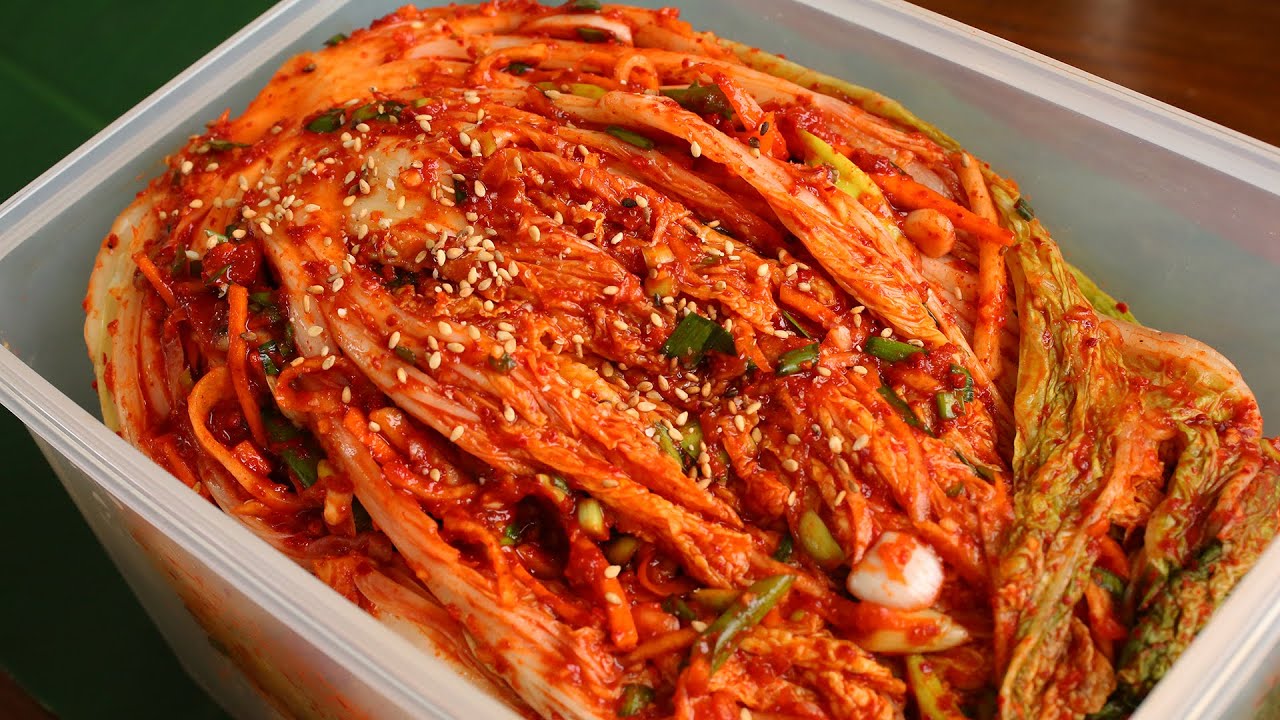
Why This Recipe Works
Let's dispense with the romantic mythology first. Kimchi is not magic. It is not ancient wisdom distilled into a clay pot. It is applied microbiology, executed with precision, and the reason it tastes the way it does has nothing to do with a grandmother's intuition and everything to do with controlled anaerobic fermentation, osmotic pressure, and the metabolic output of Lactobacillus bacteria doing exactly what they evolved to do. Understanding that is the difference between kimchi that tastes like fermented genius and kimchi that tastes like a failed science experiment.
The Salt Step Is Not Optional. It Is Foundational.
The recipe begins with a two-hour salting of napa cabbage, and if you rush this, you have already lost. Kosher salt draws moisture out of the cabbage through osmosis, collapsing its cellular structure and dropping the water activity of the substrate. Lower water activity is hostile to pathogenic bacteria. It is hospitable to Lactobacillus plantarum and Leuconostoc mesenteroides, which are salt-tolerant and which will dominate the fermentation environment if you have done your job correctly. The salt concentration here is not arbitrary — it sits in the range where spoilage organisms die and lactic acid bacteria thrive. You are not flavoring the cabbage. You are selecting the microbial population that will govern the next 24 to 72 hours of biochemical transformation.
Turn the cabbage every 30 minutes. This is not a suggestion. It ensures even salt distribution and prevents localized over-salting near the stem, which is denser and slower to brine. Uneven salting produces uneven fermentation, which produces uneven flavor. You have been warned.
The Rice Flour Porridge: Adhesion Engineering
The sweet rice flour porridge exists for one reason: it is a viscous carbohydrate matrix that makes the seasoning paste stick to the cabbage leaves instead of sliding off into the bottom of your fermentation jar. The starches in the glutinous rice flour gelatinize when cooked, producing a paste with significantly higher surface tension than a loose slurry. That surface tension means your gochugaru, your fish sauce, your fermented shrimp — all of it — clings to the leaf surface uniformly rather than pooling.
The brown sugar added to the cooled porridge is not sweetness for sweetness's sake. It is a secondary fermentation substrate. The bacteria will consume those simple sugars early in the fermentation process, producing lactic acid and CO₂ rapidly, which drives the pH down and accelerates the transition into an acidic environment hostile to everything except the organisms you want. The saucepan you use to cook this porridge needs to be heavy-bottomed enough to prevent scorching — burned starch produces bitter off-notes that no amount of gochugaru will mask.
Gochugaru: The Variable That Determines Everything
Two cups of gochugaru is not a joke quantity. It is also not reckless. Korean hot pepper flakes operate differently from generic red pepper flakes because they are ground from a specific variety of chili with a moderate capsaicin load and a high concentration of carotenoids, which produce that deeply saturated red color. The color is not cosmetic. The carotenoids — specifically capsanthin and capsorubin — are fat-soluble antioxidants that interact with the lipid components of the fish sauce and fermented shrimp during fermentation, contributing to flavor complexity through lipid oxidation chemistry. Substitute Western red pepper flakes and you will get heat without depth. You will know the difference immediately.
Adjust the quantity to your tolerance, but understand you are not just calibrating spice. You are calibrating the flavor architecture of the entire batch.
Fish Sauce and Saeujeot: Umami as Infrastructure
The combination of fish sauce and fermented salted shrimp (saeujeot) is not redundancy. They are two distinct umami vectors. Fish sauce is a liquid fermented protein hydrolysate, rich in free glutamates that deliver immediate, front-palate umami. Saeujeot is a chunky, paste-forward fermented product with a more complex amino acid profile and a stronger marine aromatic character. Together they create a layered umami foundation that no single ingredient replicates. If you substitute anchovy paste for saeujeot, you will get something technically acceptable and deeply mediocre. If that distinction doesn't matter to you, ask yourself why you are making traditional kimchi instead of opening a can of sauerkraut.
Packing the Jar: Anaerobic Commitment
When you pack the finished kimchi into your fermentation jar, press it down firmly. Every air pocket is an aerobic microenvironment where yeast and mold outcompete your lactic acid bacteria. The goal is full submersion in the liquid the salted cabbage has already released, topped by the brine from the seasoning paste. If you are using a wide-mouth mason jar, a smaller jar filled with water placed on top of the kimchi functions as a weight. Leave a minimum of one inch of headspace because CO₂ production during active fermentation will expand the contents. A sealed jar with no headspace will pressurize. Pressurized jars open dramatically and with enthusiasm.
Ferment at room temperature for 24 hours minimum. Then refrigerate. The cold does not stop fermentation — it slows it to a crawl, allowing gradual acidification over weeks and months. Day-one kimchi is bright and crunchy. Week-three kimchi is deeply sour, funky, and structurally softened. Both are correct. They are different products at different stages of the same biological process.
Serving Suggestions
Serve fresh kimchi as banchan alongside steamed white rice and grilled proteins. The acidity cuts fat. The heat elevates bland. Aged kimchi past two weeks belongs in kimchi jjigae, kimchi fried rice, or braised pork belly applications where the sourness is the point, not a side effect.
Make Ahead & Storage
Pack into an airtight fermentation jar and refrigerate after the initial 24-hour room-temperature fermentation. Kimchi keeps for three to six months under refrigeration. Ensure the vegetables remain submerged in their brine. Exposure to air produces surface blooms of kahm yeast — technically harmless, aesthetically unacceptable, and entirely avoidable if you pack and weight your jar correctly the first time.
Traditional Kimchi (Tongbaechu-kimchi)
🛒 Ingredients
- ✦6 pounds napa cabbage
- ✦1/2 cup kosher salt
- ✦2 cups Korean radish, julienned
- ✦2 cups hot pepper flakes (gochugaru)
- ✦1/2 cup fish sauce
- ✦1/4 cup fermented salted shrimp (saeujeot)
- ✦1/2 cup garlic, minced
- ✦2 teaspoons ginger, minced
- ✦1 cup onion, minced
- ✦2 tablespoons sweet rice flour
- ✦2 tablespoons brown sugar
- ✦2 cups water
- ✦2 cups green onions, chopped
- ✦1 cup Asian chives (buchu), chopped
👨🍳 Instructions
01Step 1
Cut the napa cabbage in half and soak in cold water. Sprinkle kosher salt between the leaves, focusing on the stem. Let it sit for 2 hours, turning every 30 minutes.
02Step 2
Make a porridge by mixing 2 cups of water with 2 tablespoons of sweet rice flour. Cook until it thickens, then add 2 tablespoons of brown sugar. Let it cool.
03Step 3
Prepare the seasoning paste by blending garlic, ginger, and onion into a puree. Mix with fish sauce, fermented shrimp, and hot pepper flakes.
04Step 4
Combine the cabbage with the seasoning paste, radish, green onions, and chives. Ensure each leaf is coated. Store in a jar, pressing down to remove air.
Nutrition Per Serving
Estimates based on standard preparation. Adjustments alter macros.

The Science of
Traditional Kimchi (Tongbaechu-kimchi)
We turned everything on this page into a beautiful, flour-proof PDF cheat sheet. Print it out, stick it to your fridge, and never mess up your traditional kimchi (tongbaechu-kimchi) again.
*We'll email you the high-res PDF instantly. No spam, just perfectly cooked meals.
AlmostChefs Editorial Team
We translate the internet's most popular cooking videos into foolproof, beginner-friendly written recipes. We analyze multiple methods, test them in our kitchen, and engineer a single "Master Recipe" that gives you the best possible result with the least possible stress.