The Definitive Tossed Green Salad (Stop Drowning It in Dressing)
A crisp, layered green salad built on proper technique — dry greens, seasoned acid, emulsified dressing, and tossing that coats without crushing. We analyzed the most-watched YouTube salad methods to isolate exactly what separates a restaurant-quality bowl from a soggy, underdressed disappointment.
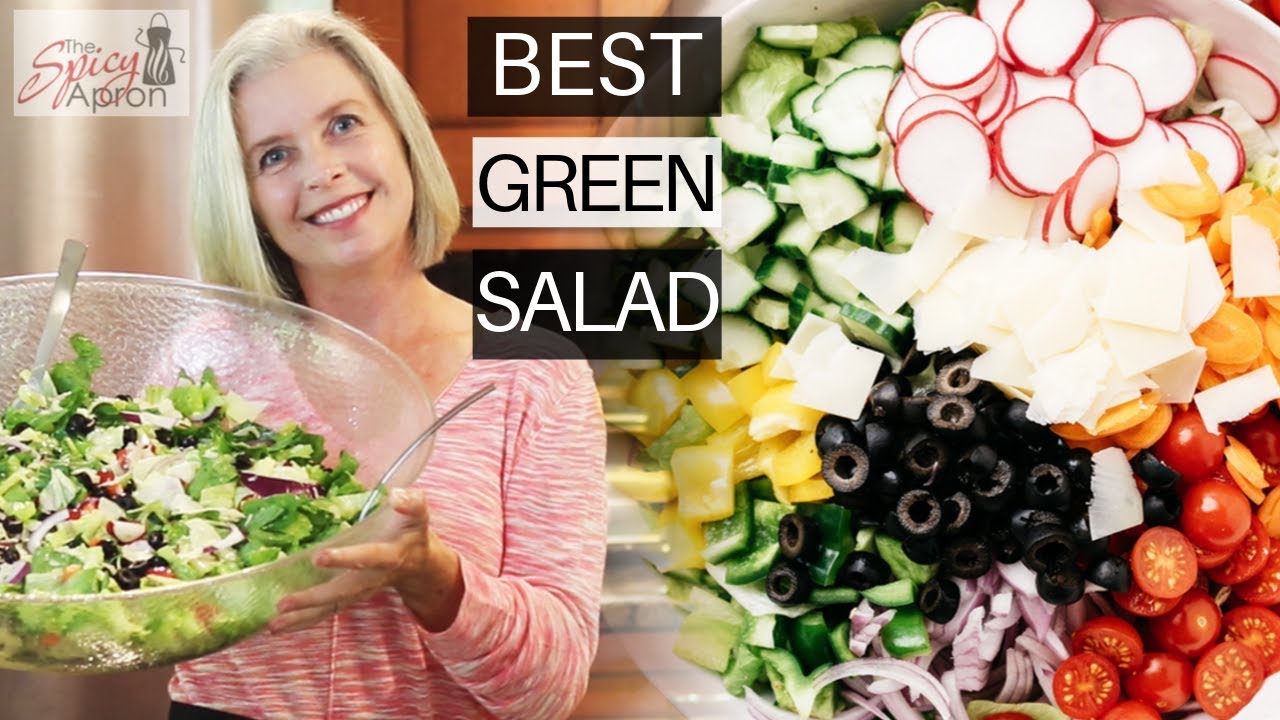
“A tossed green salad sounds like the simplest thing in the kitchen. It isn't. Most home versions produce the same result: waterlogged lettuce, dressing pooled at the bottom, and greens that wilt before they hit the table. The fix isn't a better recipe — it's understanding three things you've been skipping: drying the greens completely, seasoning the acid separately, and tossing in the right order. Get those right and you'll never make a bad salad again.”
Why This Recipe Works
A tossed green salad sits at the bottom of the culinary prestige ladder, which is exactly why nobody learns to make it correctly. It gets treated as filler — something to assemble while the main course finishes. This is a mistake. A properly built tossed green salad is a study in surface chemistry, timing, and restraint, and the margin between a forgettable bowl and a genuinely compelling one is almost entirely technical.
The Moisture Problem Is a Physics Problem
Water and oil do not mix. This is not a preference — it's molecular reality. Hydrophilic water molecules and hydrophobic oil molecules actively repel each other, which means any surface moisture on your greens creates a film that oil-based dressing cannot penetrate or adhere to. When you add dressing to wet lettuce, it doesn't coat the leaf — it beads up and falls to the bottom of the bowl. You end up with underdressed greens and a puddle of dressing that you'll either pour out or leave behind.
A salad spinner is not optional equipment. It's the single most important tool in the process. Centrifugal force removes water that towels alone can't reach — from the interior curl of butter lettuce leaves, from the ribbed surface of romaine, from the dense canopy of baby spinach. Spin the greens twice, then spread them briefly on a clean towel and pat gently. You're not just making the dressing work better; you're buying time before the greens start to wilt at the table.
Emulsification Is Why Restaurant Dressing Tastes Different
The vinaigrette in this recipe uses Dijon mustard as an emulsifier, not as a flavor ingredient — though it contributes both. Mustard contains mucilage compounds that act as surfactants: molecules with a water-loving end and an oil-loving end that physically bridge the gap between the vinegar and olive oil. When you shake the jar, you're creating millions of tiny oil droplets suspended in the acid. The mustard holds them there long enough to coat the greens evenly before separating again.
This is why restaurant dressing clings to every surface of every leaf in a way that shaken-bottle dressing never does: it's freshly emulsified. A jar with a tight-fitting lid is all you need to replicate it at home. Shake the vinegar, mustard, garlic, and honey first to dissolve the salt and integrate the alliums. Add the oil last, seal, and shake hard for 20 seconds. Use it within five minutes while the emulsion is still active.
The Seasoning Architecture
Most home cooks salt the salad directly — a pinch over the top after it's dressed. This approach guarantees uneven seasoning. Salt is hygroscopic: it draws moisture out of whatever it touches. Scattered on dressed greens, it pulls liquid from the leaves and disrupts the dressing adhesion you just built. More fundamentally, dry salt crystals dissolve inconsistently, meaning some bites are properly seasoned and others are bland.
The correct method dissolves the salt in the acid before any oil is added. Acid is a water-based medium; salt dissolves completely in it within seconds. When the vinaigrette is emulsified and applied to the greens, the seasoning is already fully distributed throughout every droplet of dressing. Every leaf gets the same seasoning. There is no other way to achieve this result.
Tossing Technique and the Order of Addition
A large, wide mixing bowl with at least twice the volume of your finished salad is non-negotiable. Tossing in a cramped bowl doesn't coat the greens — it crushes them. You need air. The motion is lift-and-fold from the bottom, not stir: slide the tongs under the lowest greens, lift them up and over the top, rotate the bowl 45 degrees, and repeat. This cycling action coats all surfaces without bruising.
Add cheese and croutons last. Croutons placed in the bowl before tossing shatter under the weight of dressing-soaked greens and turn soft within 90 seconds. Cheese crumbles compact into clumps if mixed aggressively. Both go in at the end, after the greens are fully coated, with a single gentle fold to distribute them. The goal is texture contrast: silky coated greens against crunchy croutons against the sharp tang of cheese. You built it. Protect it.
Where Beginners Mess This Up
Before we start, read this. These are the 4 reasons your the definitive tossed green salad (stop drowning it in dressing) will fail:
- 1
Wet greens: Water on the surface of lettuce repels oil-based dressing. Even a thin film of moisture creates a barrier that keeps dressing from adhering to the leaf. The result is dressing that slides off and pools at the bottom while the greens stay bland and under-seasoned. Spin your greens, then pat them dry with a clean towel. This single step separates every good salad from every forgettable one.
- 2
Adding dressing too early: Acid breaks down the cell walls of leafy greens through a process called osmosis. Salt accelerates it. Dress the salad more than five minutes before serving and you've committed to a wilted, weeping bowl of regret. Dress it at the last possible moment — ideally right as you're about to carry it to the table.
- 3
Overdressing: More dressing does not mean more flavor. It means wet, heavy greens that clump together and slide off the fork. The correct ratio is roughly one tablespoon of dressing per two large handfuls of greens. When you toss the salad, every leaf should glisten — not drip. If there's dressing at the bottom of the bowl, you've used too much.
- 4
Skipping the seasoning layer: Salt added to the finished bowl of dressed greens clumps, doesn't distribute, and lands in random mouthfuls. Instead, season your vinaigrette directly — salt and pepper dissolved into the acid before the oil goes in. The acid carries seasoning into every crevice of every leaf in a way that sprinkled salt never can.
The Video Reference Library
Want to see it in action? Here are the exact videos we analyzed and combined to build this foolproof recipe translation:
The clearest breakdown of the dry-greens-first technique, with a close-up demonstration of what properly coated lettuce looks like versus overdressed. Essential watch before your first attempt.
A focused tutorial on the jar-shake method for building a stable emulsion without any special equipment. Covers the oil-to-acid ratio and how salt changes the texture of the final dressing.
Behind-the-line perspective on how line cooks approach mise en place for salads — pre-dried greens, pre-made vinaigrette, and the toss order that keeps everything crisp under service pressure.
🛠️ Core Equipment
- Salad spinnerThe only tool that removes enough surface moisture to allow dressing adhesion. Towel-drying alone leaves too much water. If you make salad more than once a week, a good salad spinner is non-negotiable.
- Large wide mixing bowlYou need at least twice the volume of your finished salad to toss properly. A cramped bowl means crushed greens, uneven coating, and broken croutons. The toss requires air and room to move.
- Small jar with a tight lidFor emulsifying the vinaigrette. Shaking oil and acid together in a sealed jar creates a temporary emulsion far more stable than whisking in a bowl. Drizzle over the salad immediately after shaking for maximum coating.
- Sharp chef's knifeTorn greens bruise less than cut greens, but if you're cutting tomatoes, cucumbers, or any hard vegetable, a sharp knife prevents crushing. A dull knife drags and smashes, releasing juice that dilutes your dressing.
The Definitive Tossed Green Salad (Stop Drowning It in Dressing)
🛒 Ingredients
- ✦8 cups mixed salad greens (romaine, butter lettuce, baby spinach)
- ✦1 cup cherry tomatoes, halved
- ✦1 English cucumber, thinly sliced into half-moons
- ✦1/2 small red onion, very thinly sliced
- ✦1/2 cup shaved Parmesan or crumbled feta cheese
- ✦1/2 cup croutons (store-bought or homemade)
- ✦1/4 cup Kalamata olives, pitted and halved (optional)
- ✦3 tablespoons extra-virgin olive oil
- ✦1.5 tablespoons red wine vinegar
- ✦1 teaspoon Dijon mustard
- ✦1 small garlic clove, finely minced or grated
- ✦1/2 teaspoon honey
- ✦1/2 teaspoon fine sea salt
- ✦1/4 teaspoon freshly ground black pepper
👨🍳 Instructions
01Step 1
Wash the greens thoroughly in cold water, then spin them in a salad spinner until completely dry. Spread on a clean kitchen towel and pat gently to remove any remaining moisture.
02Step 2
Make the vinaigrette: add the red wine vinegar, Dijon mustard, minced garlic, honey, salt, and pepper to a small jar. Seal and shake for 10 seconds until salt dissolves. Add the olive oil, reseal, and shake vigorously for 20 seconds until emulsified.
03Step 3
Slice the cherry tomatoes in half. Cut the cucumber into thin half-moons. Slice the red onion as thin as possible — a mandoline works best, but a steady hand with a sharp knife achieves the same result.
04Step 4
Place the dry greens into a large wide mixing bowl. Add the tomatoes, cucumber, and red onion on top. Do not add the cheese or croutons yet — they go in last to prevent the croutons from softening and the cheese from clumping.
05Step 5
Shake the vinaigrette jar one more time to re-emulsify. Drizzle approximately two-thirds of the dressing over the greens in a slow, circular motion across the entire surface.
06Step 6
Using two large spoons or salad tongs, toss the greens by lifting from the bottom and folding over the top — rotating the bowl as you go. Toss for 30-45 seconds until every leaf glistens with dressing. Taste one leaf; if it needs more dressing, add the remainder in small increments.
07Step 7
Add the croutons, shaved Parmesan or crumbled feta, and olives if using. Toss gently once or twice — just enough to distribute without crushing.
08Step 8
Serve immediately on chilled plates.
Nutrition Per Serving
Estimates based on standard preparation. Adjustments alter macros.
🔄 Substitutions
Instead of Red wine vinegar...
Use Lemon juice or white wine vinegar
Lemon juice gives a brighter, more citrus-forward flavor. White wine vinegar is mellower and works especially well with butter lettuce. Both emulsify identically with the Dijon.
Instead of Extra-virgin olive oil...
Use Avocado oil
Neutral flavor that lets the vinegar and garlic dominate. Good choice if your olive oil has a strong, grassy taste that competes with the other ingredients.
Instead of Parmesan or feta...
Use Nutritional yeast or omit entirely
Nutritional yeast adds a savory, umami note for dairy-free versions. Use about 2 tablespoons scattered over the finished salad.
Instead of Croutons...
Use Toasted pumpkin seeds or sunflower seeds
Gluten-free crunch option that also adds protein. Toast in a dry pan over medium heat for 3-4 minutes until golden. Season with salt immediately after removing from heat.
🧊 Storage & Reheating
In the Fridge
Undressed greens keep in an airtight container lined with a paper towel for up to 4 days. The paper towel absorbs excess moisture and prevents sliminess. Do not store dressed salad — it will wilt within 30 minutes.
In the Freezer
Not applicable. Greens do not freeze.
Reheating Rules
Not applicable. Serve cold and fresh only.
❓ Frequently Asked Questions
Why does my salad always get watery at the bottom?
Two causes: wet greens and salt drawing moisture out of the vegetables. Dry your greens completely after washing, and don't salt the salad separately — put the salt in the vinaigrette instead. Also, dress immediately before serving, never in advance.
How do I keep lettuce from wilting before I serve it?
Dry greens thoroughly, chill them in the fridge after washing, and dress at the absolute last second. If you're entertaining, pre-dress the plates individually rather than the whole bowl — each plate can go out as soon as it's tossed.
Can I make the vinaigrette in advance?
Yes — it keeps in a sealed jar in the fridge for up to 7 days. The emulsion will break as it sits; just shake the jar vigorously for 15 seconds before using. The garlic will mellow and integrate more fully after 24 hours, which is actually preferable.
What's the difference between a tossed salad and a composed salad?
A tossed salad mixes everything together before serving, coating all components in dressing. A composed salad arranges components separately on a plate — think Niçoise or Cobb — where each element is dressed or seasoned individually. Tossed salads prioritize uniform flavor; composed salads prioritize visual structure and distinct flavor zones.
My dressing always separates. What am I doing wrong?
You need more emulsifier. Dijon mustard contains lecithin compounds that bind oil and water molecules together. Make sure you're adding at least a full teaspoon per 3 tablespoons of oil. Also, always add oil last — dissolve the acid and seasonings together first, then pour the oil in while shaking continuously.
Can I use pre-washed bagged salad greens?
You can, but they still need to be spun dry. Pre-washed doesn't mean dry — most bagged greens are quite wet from the packaging atmosphere. Spin them regardless, and check for any slimy or browning leaves before tossing.

The Science of
The Definitive Tossed Green Salad (Stop Drowning It in Dressing)
We turned everything on this page into a beautiful, flour-proof PDF cheat sheet. Print it out, stick it to your fridge, and never mess up your the definitive tossed green salad (stop drowning it in dressing) again.
*We'll email you the high-res PDF instantly. No spam, just perfectly cooked meals.
AlmostChefs Editorial Team
We translate the internet's most popular cooking videos into foolproof, beginner-friendly written recipes. We analyze multiple methods, test them in our kitchen, and engineer a single "Master Recipe" that gives you the best possible result with the least possible stress.