Real Tonkotsu Ramen at Home (The 24-Hour Broth Method)
A deeply creamy, milky pork bone broth built over 12-16 hours, layered with tender chashu pork belly, soft-boiled marinated eggs, and fresh toppings. We broke down the most popular YouTube techniques to give you one foolproof method that delivers restaurant-grade tonkotsu without specialized equipment.
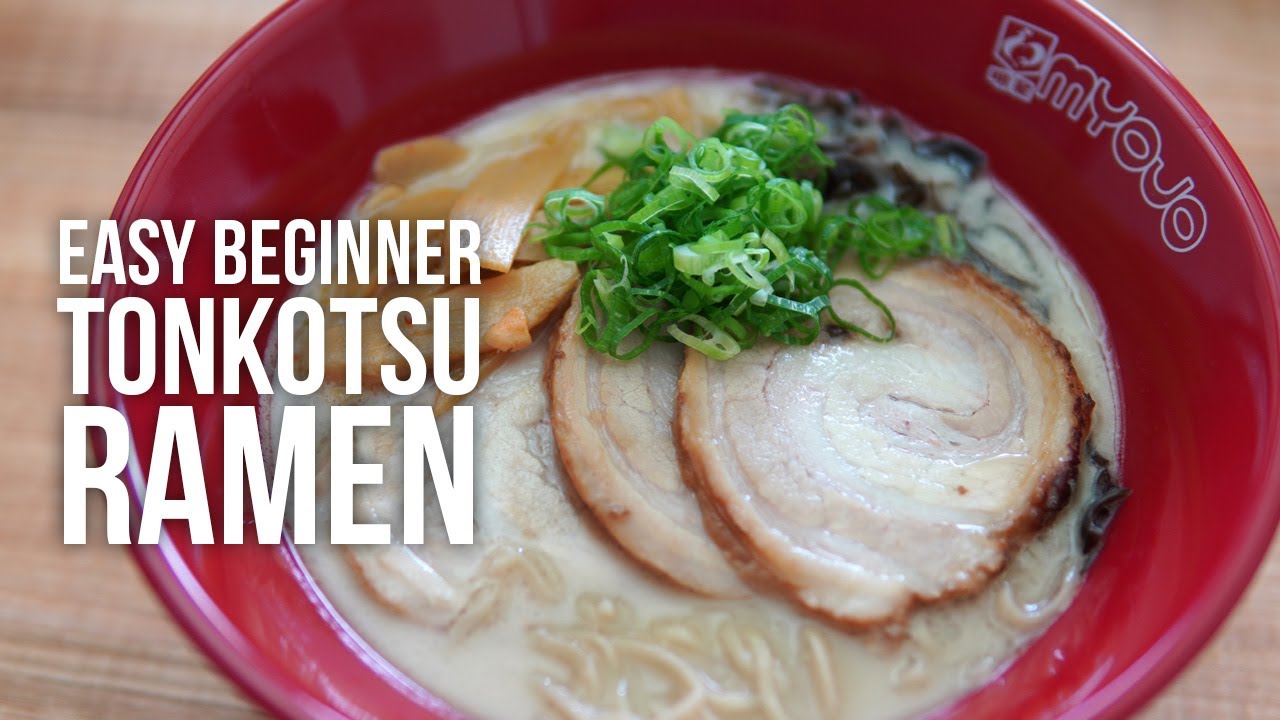
“Tonkotsu broth looks like magic. Bones go in, and after enough time and heat, something that started as water turns opaque, silky, and impossibly rich. The trick is that it's not magic — it's collagen. Most home cooks fail because they either skip the blanching step, pull the broth too early, or simmer at the wrong temperature. Get those three things right and your kitchen will smell better than any ramen shop on the block.”
Why This Recipe Works
Tonkotsu ramen is a broth problem. The noodles, the toppings, the eggs — those are finishing work. The broth is the architecture, and getting it right means understanding one chemical process: collagen hydrolysis. Bones contain dense connective tissue loaded with collagen. Given enough heat and time, that collagen breaks down into gelatin, which disperses through the cooking liquid and creates the opaque, silky emulsion that defines authentic tonkotsu. Everything in this recipe is designed to maximize that process.
The Blanch First, Always
Raw bones go into cold water, come to a boil, cook for four minutes, then get drained and rinsed. This step strips out blood proteins, marrow impurities, and the particular off-flavor that makes untreated pork broth smell like a locker room. Most home cooks skip it because it feels redundant. It is not. Those impurities don't skim off — they bind to the surface of the bones and require direct rinsing to remove. Skip this step and no amount of skimming during the long simmer will give you a clean-tasting broth.
The Heat Question
Tonkotsu has a reputation for being a gentle, low-and-slow process. It's not. The milky white color that distinguishes tonkotsu from every other ramen style is the direct result of high-heat agitation forcing emulsified collagen into suspension. A gentle simmer produces a golden, relatively clear stock. A vigorous, rolling simmer — the surface constantly trembling with small bubbles — produces the opaque, creamy broth you're after. This is deliberate and correct. The surface should look active for most of the cook. If it's still, increase the heat.
The heavy-bottomed stockpot matters here. You need even heat distribution across the entire base to maintain that vigorous simmer without creating scorching hot spots. Thin pots concentrate heat in the center and either scorch the bottom or require you to constantly adjust flame. Thick stainless steel or enameled cast iron holds a steady, even simmer with minimal babysitting.
Reading the Broth
After 4 hours, your broth looks like pale soup. After 8 hours, it starts going opaque. After 12-16 hours, it's tonkotsu — white, slightly viscous, coating. The way to test it: ladle a small amount onto a plate and let it cool for 30 seconds. Tilt the plate. The broth should move slowly, leaving a thin film behind. If it runs off clean like water, keep simmering. There is no shortcut to this — the collagen takes the time it takes.
The aromatics — kombu, shiitake, ginger, garlic, onion, leek — go in at the 4-hour mark, not the beginning. Added too early, they break down completely and turn the broth slightly bitter. Added at hour four, they have 8-12 hours to contribute flavor without degrading. This timing is precise for a reason.
The Chashu Architecture
Pork belly chashu is not just a topping. It's a fat delivery mechanism. The rendered fat from the sliced pork disperses into the hot broth the moment it hits the bowl, enriching each spoonful with additional richness. This is why you slice the chashu thin and lay it directly on the surface rather than submerging it — you want controlled melting, not dissolution.
Searing the pork belly before braising in a heavy skillet develops a Maillard crust that contributes roasted, caramelized notes to the braise liquid. That braising liquid then becomes the marinade for your soft-boiled eggs, which means every element of the bowl is built from the same flavor foundation. Nothing is wasted. Nothing is arbitrary.
Bowl Assembly Is Not Optional
The order of operations when building the bowl matters. Hot broth goes in first. Noodles second, submerged. Toppings arranged on the surface last so they don't immediately sink and lose their visual distinction. The garlic oil drizzle goes on at the very end — it floats on the broth surface and delivers an aromatic hit with every spoonful before it melts in. Sesame seeds add texture. Scallions add brightness. Nori adds brine.
Ramen is a system. Treat it like one.
Where Beginners Mess This Up
Before we start, read this. These are the 4 reasons your real tonkotsu ramen at home (the 24-hour broth method) will fail:
- 1
Skipping the blanching step: Raw pork and chicken bones release blood proteins, marrow impurities, and off-flavors into the broth that no amount of skimming can fully remove. A 3-4 minute boil in fresh water followed by a thorough rinse purges all of that. Skip this step and your broth will taste muddy instead of clean and rich.
- 2
Simmering at the wrong temperature: The milky white color of tonkotsu is not a sign of overcooking — it's the point. Emulsified collagen creates that opaque, creamy appearance, and it only happens at a vigorous simmer, not a lazy low heat. The surface should tremble constantly with small bubbles. Too gentle and the broth stays clear and thin. Too aggressive and it boils off too fast.
- 3
Pulling the broth too early: Collagen conversion takes time. At the 4-hour mark your broth is soup. At the 12-hour mark it's tonkotsu. The difference is measurable — the broth should coat the back of a spoon and leave a faint milky film. If it runs off like water, keep going.
- 4
Overcooking the soft-boiled eggs: Six to seven minutes in boiling water, straight to an ice bath. The window for a properly jammy yolk — set on the edges, flowing in the center — is about 90 seconds wide. Set a timer. Don't eyeball it.
The Video Reference Library
Want to see it in action? Here are the exact videos we analyzed and combined to build this foolproof recipe translation:
The source video for this recipe's core technique. Covers the blanching step, the rolling boil phase, and how to read broth color and consistency to know when the collagen has fully emulsified.
🛠️ Core Equipment
- Large heavy-bottomed stockpot (10-12 quart)You need volume for 5 quarts of water plus bones. A thin pot will create hot spots that scorch the bottom and unevenly extract collagen. Thick stainless steel or enameled cast iron holds a steady simmer.
- Fine-mesh sieve lined with cheeseclothTonkotsu broth contains tiny bone particles and spent aromatics that need to be completely removed before serving. Cheesecloth traps what a sieve alone misses, giving you a clean, restaurant-smooth result.
- Heavy skillet or cast iron panGetting a deep golden sear on the pork belly requires sustained high, even heat. A thin pan drops temperature the moment the meat hits it. A heavy pan maintains the crust-forming heat you need.
- Ice bath bowlSoft-boiled eggs must stop cooking immediately when pulled from the water. An ice bath arrests cooking within seconds. A cold water rinse is not the same — it's too slow and you'll overcook the yolk.
Real Tonkotsu Ramen at Home (The 24-Hour Broth Method)
🛒 Ingredients
- ✦2.5 pounds pork neck bones or leg bones
- ✦1.5 pounds chicken bones or carcass
- ✦5 quarts water, plus extra for blanching
- ✦1 piece kombu seaweed, 4-6 inches long
- ✦4 dried shiitake mushrooms
- ✦3-inch piece fresh ginger, smashed
- ✦5 garlic cloves, peeled and crushed
- ✦1 medium yellow onion, halved
- ✦2 leek whites, cut into 2-inch sections
- ✦3 tablespoons soy sauce
- ✦2 tablespoons mirin
- ✦2 tablespoons sake
- ✦1 teaspoon sea salt
- ✦12 ounces pork belly, in one piece
- ✦16 ounces fresh or dried ramen noodles
- ✦4 large eggs
- ✦2 nori seaweed sheets
- ✦1 cup bamboo shoots (menma)
- ✦4 scallions, green parts only, thinly sliced
- ✦2 teaspoons sesame seeds
- ✦2 teaspoons garlic-infused oil
👨🍳 Instructions
01Step 1
Place all pork and chicken bones in a large pot, cover with cold water, and bring to a boil over high heat. Boil for 3-4 minutes until the water turns gray and foamy.
02Step 2
Drain the bones in a colander and rinse each piece thoroughly under cold running water for 2-3 minutes until no gray residue remains.
03Step 3
Return the cleaned bones to the pot and add 5 quarts of fresh cold water. Place the lid on slightly ajar.
04Step 4
Bring to a vigorous boil over medium-high heat, then reduce to a steady medium-low simmer where the surface trembles continuously with small bubbles.
05Step 5
Simmer for 4 hours, skimming any gray impurities that rise during the first hour.
06Step 6
Add the kombu, dried shiitake mushrooms, smashed ginger, crushed garlic, halved onion, and leek whites. Continue simmering for another 8-12 hours until the broth is opaque and milky white.
07Step 7
While the broth simmers, prepare the chashu pork. Pat the pork belly dry and sear skin-side down in a hot heavy skillet over medium-high heat for 5-6 minutes until deeply golden.
08Step 8
Transfer the seared pork belly to a separate smaller pot. Cover with a mixture of soy sauce, mirin, sake, and water in a 1:1:1:2 ratio. Simmer gently for 2-3 hours until fork-tender.
09Step 9
Soft-boil the eggs by lowering them into boiling water and cooking for exactly 6-7 minutes. Transfer immediately to an ice bath and cool completely before peeling.
10Step 10
Strain the finished broth through a fine-mesh sieve lined with cheesecloth. Discard all solids. Season with soy sauce, mirin, sake, and salt to taste.
11Step 11
Cook the ramen noodles in salted boiling water according to package directions — 3-4 minutes for fresh, 4-5 minutes for dried. Drain and divide among four bowls.
12Step 12
Ladle hot tonkotsu broth into each bowl. Arrange one halved soft-boiled egg, sliced chashu pork, bamboo shoots, torn nori, and sliced scallions on top.
13Step 13
Sprinkle sesame seeds over each bowl and finish with a drizzle of garlic oil. Serve immediately while steaming hot.
Nutrition Per Serving
Estimates based on standard preparation. Adjustments alter macros.
🔄 Substitutions
Instead of Pork and chicken bones...
Use Rotisserie chicken carcass plus 1 pound pork shoulder cut into chunks
Broth will be slightly less rich but still creamy. Develops full flavor in 8-10 hours instead of 12-16. More accessible for cooks without butcher connections.
Instead of Mirin and sake...
Use 2 tablespoons honey or agave nectar plus 2 tablespoons dry white wine
Less traditional but slightly cleaner flavor. Reduces alcohol content while maintaining subtle sweetness and depth in both the broth and the chashu braise.
Instead of Pork belly chashu...
Use Chicken thighs braised in the same liquid mixture
Lighter pairing with the broth. Equally tender at 1.5 hours braising time. Lower in saturated fat and more budget-friendly without sacrificing umami.
Instead of Kombu and dried shiitake mushrooms...
Use 2 additional handfuls fresh spinach or 1 cup vegetable scraps (carrot tops, celery leaves)
Broth gains vegetable sweetness and maintains savory character through glutamates. Slightly lighter body than the original. Works if kombu is unavailable.
🧊 Storage & Reheating
In the Fridge
Store broth and toppings separately in airtight containers for up to 4 days. The broth will gel completely when cold — this is correct and means it's rich in collagen.
In the Freezer
Broth freezes beautifully for up to 3 months. Portion into quart containers. Toppings do not freeze well — make fresh when reheating stored broth.
Reheating Rules
Reheat broth in a saucepan over medium heat, whisking occasionally to re-emulsify. Do not microwave — it heats unevenly and breaks the emulsion. Cook fresh noodles when serving from stored broth.
❓ Frequently Asked Questions
Why is my tonkotsu broth clear instead of milky white?
The simmer temperature is too low. Milky tonkotsu broth requires vigorous heat that agitates the liquid constantly — this is what forces the collagen into suspension and creates the emulsion. Raise the heat until the surface trembles with steady small bubbles and maintain it for the full cook time.
Do I really need to simmer for 12-16 hours?
For true tonkotsu, yes. Collagen from pork bones takes this long to fully convert and emulsify into the broth. You can use a pressure cooker to reduce this to 3-4 hours at high pressure, but the broth character is slightly different — thicker but less complex.
Can I make the broth ahead of time?
It's actually better made ahead. The broth improves overnight as flavors meld and impurities settle. Refrigerate for up to 4 days or freeze for 3 months. The gelled cold broth re-emulsifies perfectly when reheated over medium heat.
What's the difference between tonkotsu and other ramen broths?
Tonkotsu is made entirely from pork and chicken bones simmered at high heat until the collagen emulsifies into a creamy, opaque broth. Shoyu ramen uses a clear chicken broth seasoned with soy sauce. Miso ramen blends a lighter stock with fermented miso paste. Tonkotsu is the most labor-intensive but the richest.
Why did my soft-boiled egg yolk come out fully cooked?
The boiling time exceeded 7 minutes, or the eggs went into cold water instead of boiling water. Always lower eggs into already-boiling water and start the timer immediately. The ice bath is non-negotiable — it halts carryover cooking within seconds.
Can I use instant ramen noodles?
The noodles, yes. Discard the flavor packet — your tonkotsu broth is the seasoning. Dried ramen noodles from Asian grocery stores are a significant upgrade in texture and worth seeking out.
The Science of
Real Tonkotsu Ramen at Home (The 24-Hour Broth Method)
We turned everything on this page into a beautiful, flour-proof PDF cheat sheet. Print it out, stick it to your fridge, and never mess up your real tonkotsu ramen at home (the 24-hour broth method) again.
*We'll email you the high-res PDF instantly. No spam, just perfectly cooked meals.
AlmostChefs Editorial Team
We translate the internet's most popular cooking videos into foolproof, beginner-friendly written recipes. We analyze multiple methods, test them in our kitchen, and engineer a single "Master Recipe" that gives you the best possible result with the least possible stress.