Easy Tonkatsu (Japanese Pork Cutlet with Shattering Panko Crust)
Tonkatsu built on the three variables that separate a shattering, grease-free crust from a dense, oil-soaked slab: even pork thickness, precise oil temperature at 350°F, and a mandatory rest after breading so the panko adhesion sets before it hits the oil.
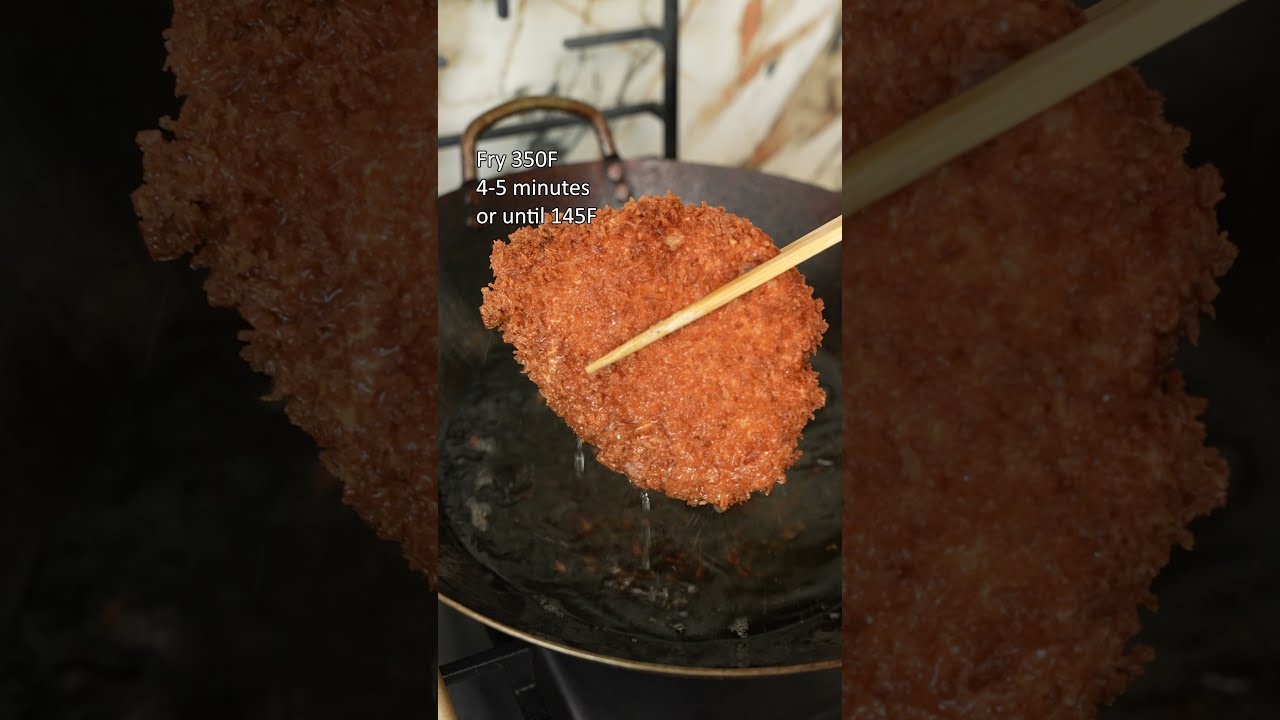
“Tonkatsu looks like a solved problem. Breaded pork, hot oil, done. And yet most home versions produce a dense, greasy slab with a crust that either slides off or turns to mush within two minutes of leaving the pan. The failure is almost always one of three things: uneven pork thickness, wrong oil temperature, or skipping the post-breading rest that makes the panko adhere before frying. Get all three right and you get a crust that audibly cracks when you cut through it.”
Why This Recipe Works
Tonkatsu is a dish that rewards understanding its physics before you start cooking. It looks like a simple fried pork cutlet because it is one. The complexity is not in the ingredients — flour, egg, panko, oil — but in the sequence of decisions that determine whether the crust shatters or sogs, whether the pork is silky or chalky, whether the plate looks like a restaurant or like a mistake.
The Thickness Problem Is Actually Two Problems
Pork loin arrives from the butcher with meaningful thickness variation across a single cutlet — sometimes a 1/4-inch difference between the thick center and the tapering edge. In the pan, this variation translates directly into uneven cooking: the thin edge overcooks to chalky dryness before the thick center reaches 145°F internal. The solution is pounding to uniform 1/2-inch thickness, but the benefit is not just even cooking.
Pork loin is a lean, relatively tough cut with dense, straight muscle fibers. The mechanical action of a meat mallet physically breaks those fibers apart — a process called mechanical tenderization — that produces an interior texture qualitatively different from an unworked cutlet. The pounded pork becomes almost silky in the finished dish: a texture that has no logical relationship to pork loin as you encounter it raw. This is why tonkatsu at a serious Japanese restaurant bears no resemblance to a pork chop, despite being the same animal and the same cut.
Oil Temperature Governs Crust Behavior
Panko breadcrumbs are not regular breadcrumbs with a different name. They are processed into large, irregular flakes with a surface-area-to-mass ratio significantly higher than fine breadcrumbs. Each flake contains air. That air is what creates the structure that shatters when you cut through a proper tonkatsu — and it is destroyed by pressing too hard during breading (which crushes the flakes) or by frying at the wrong temperature (which either saturates the flakes with oil or burns them before the pork cooks through).
At 350°F, the moisture on the surface of the cutlet vaporizes almost instantaneously when it contacts the hot oil, creating a steam barrier at the interface. This barrier prevents oil from penetrating the crust while the exterior browns. Below 325°F, that moisture evaporates slowly, the barrier never fully forms, and the panko wicks oil like a sponge. The resulting crust is heavy, greasy, and dense — the structural opposite of what you want. A cast iron skillet or heavy stainless pan is essential precisely because of thermal mass: when a cold cutlet drops into the oil, a thin pan loses 40–60°F immediately. A heavy pan loses 15–20°F and recovers within 90 seconds.
The Adhesion Architecture
The three-stage breading — seasoned flour, egg wash, panko — is not ceremony. Each layer has a specific mechanical job, and they work sequentially, not interchangeably.
The flour layer dries the surface of the pork and creates texture for the egg to grip. Skipping the flour or applying it unevenly means the egg wash beads and runs rather than adhering uniformly. The egg wash then bridges the flour-coated meat surface to the dry panko, providing the protein glue that survives the thermal shock of hitting hot oil. The panko is the final layer — the crust itself — and it bonds to the egg layer during the critical five-minute rest period after breading.
That rest is the step most home recipes omit. While the cutlet sits on the wire rack, the egg wash partially dries, drawing the flour and panko layers into tighter contact with the meat surface. The bond that forms in those five minutes is what keeps the crust attached when the pork begins releasing moisture during frying. Skip the rest and you will watch your beautifully constructed breading detach and float in the oil while bare pork remains in the pan.
Why the Slaw Belongs on the Plate
Japanese tonkatsu is always served with shredded cabbage. This is not tradition for tradition's sake — it is a designed flavor system. Fried pork is fatty, rich, and hot. Raw cabbage dressed with rice vinegar is acidic, cool, and light. The contrast is functional: the acid cuts through the fat, the cool temperature offsets the heat, and the crunch of raw vegetable provides a textural reset between bites of fried meat.
Tonkatsu sauce — thick, sweet-savory, with fermented complexity — bridges the two components. It is the third element of the plate, not an afterthought. Each bite of pork should include slaw and a drag through sauce. The ratio matters. Do not reduce the slaw.
Where Beginners Mess This Up
Before we start, read this. These are the 4 reasons your easy tonkatsu (japanese pork cutlet with shattering panko crust) will fail:
- 1
Uneven cooking — edges overcooked, center undercooked: Pork loin comes out of the package with significant thickness variation. Without pounding to an even 1/2 inch, the thin edges reach 145°F while the thick center is still at 120°F. Pound each cutlet to uniform thickness before breading — this is also what tenderizes the muscle fibers and produces the silky interior texture of proper tonkatsu.
- 2
Soggy, greasy crust: Oil temperature was below 350°F when the cutlet entered. Below that threshold, the panko absorbs oil before it can form a crust. The steam barrier that repels oil only forms when moisture on the cutlet surface vaporizes immediately on contact with hot oil. Use a thermometer. Guess the temperature and you get a greasy result every time.
- 3
Crust separated from the pork during frying: The rest period after breading was skipped. Five minutes on a wire rack lets the egg wash and flour layers dry and tighten, bonding the panko to the meat surface. Without this bond, the moisture releasing from the pork during frying immediately loosens the crust and it floats off into the oil.
- 4
Dense, non-shattering crust: Panko was pressed too firmly during breading. Panko's crispiness comes from its irregular, airy flake structure. Crushing it flat against the cutlet collapses those air pockets and produces a dense coating that fries like regular breadcrumbs. Press just firmly enough to adhere — not enough to flatten.
The Video Reference Library
Want to see it in action? Here are the exact videos we analyzed and combined to build this foolproof recipe translation:
The primary reference for this recipe. Clear demonstration of the breading station setup, oil temperature management, and the golden-brown color to target before flipping.
Detailed walkthrough of the pounding technique and why panko flake structure is different from regular breadcrumbs. Explains how crust thickness affects fry time.
Focuses on the supporting elements — cabbage slaw acidity balance and homemade tonkatsu sauce construction. Good companion reference for completing the plate.
🛠️ Core Equipment
- Meat malletNon-negotiable for achieving even 1/2-inch thickness across the cutlet. The textured side tenderizes muscle fibers; the flat side evens the surface. Rolling pins work in a pinch but lack the tenderizing action.
- Instant-read thermometerFor monitoring oil temperature and confirming pork doneness at 145°F internal. Oil temperature is the single most controllable variable in this recipe. Guessing produces inconsistent results.
- Heavy-bottomed skillet or cast ironThermal mass is what keeps oil temperature stable when a cold cutlet drops in. A thin nonstick pan loses 40–60°F immediately and cannot recover fast enough. A cast iron skillet or heavy stainless pan buffers that temperature swing.
- Wire rack over a sheet panUsed at two stages: after breading to let the coating set, and after frying to drain without steaming. Paper towels trap steam against the crust and undo the crispiness. A wire rack lets air circulate on all sides.
Easy Tonkatsu (Japanese Pork Cutlet with Shattering Panko Crust)
🛒 Ingredients
- ✦4 boneless pork loin cutlets, approximately 1/2 inch thick
- ✦1 cup all-purpose flour
- ✦2 large eggs
- ✦1.5 cups panko breadcrumbs
- ✦1 teaspoon kosher salt
- ✦1/2 teaspoon black pepper
- ✦1/4 teaspoon garlic powder
- ✦1/4 teaspoon paprika
- ✦3/4 cup vegetable oil
- ✦4 cups fresh green cabbage, finely shredded
- ✦2 medium carrots, julienned
- ✦3 tablespoons rice vinegar
- ✦1 tablespoon honey
- ✦1/2 cup tonkatsu sauce, or Worcestershire sauce as substitute
- ✦Lime wedges, for serving
- ✦Sesame seeds, for garnish
- ✦2 green onions, sliced, for garnish
👨🍳 Instructions
01Step 1
Remove pork cutlets from the refrigerator 10 minutes before cooking to take the edge off the cold. Cold pork in hot oil drops the oil temperature significantly and cooks unevenly.
02Step 2
Place each cutlet between two sheets of plastic wrap or parchment paper. Pound with a meat mallet to an even 1/2-inch thickness, working from the center outward. Season both sides with salt and pepper.
03Step 3
Set up three shallow dishes in order: seasoned flour (flour mixed with garlic powder and paprika) in the first, two beaten eggs in the second, panko breadcrumbs in the third.
04Step 4
Coat each cutlet in the seasoned flour, pressing to cover every surface and shaking off all excess. Dip into the egg wash, covering both sides completely. Transfer to the panko and press gently — just enough contact to adhere without crushing the flake structure.
05Step 5
Set the breaded cutlets on a wire rack and rest for 5 minutes while the oil heats. This is when the coating bonds to the meat surface.
06Step 6
Heat the vegetable oil in a large heavy-bottomed skillet over medium-high heat to 350°F. Use a thermometer. The bread-test is directionally useful but not precise enough for consistent results.
07Step 7
Lower the first cutlet carefully into the oil. Fry undisturbed for 3–4 minutes until the bottom is deep golden brown.
08Step 8
Flip once with tongs and fry the second side for another 3–4 minutes until golden brown. Check internal temperature — pork is done at 145°F. A faint pink blush at center is correct at this temperature.
09Step 9
Transfer to a wire rack over a sheet pan to drain. Keep finished cutlets in a 200°F oven on the rack while frying remaining batches. Allow oil to return to 350°F between each cutlet.
10Step 10
Combine shredded cabbage, julienned carrots, rice vinegar, and honey in a bowl. Toss until evenly coated.
11Step 11
Slice the tonkatsu against the grain into strips. Serve over a generous pile of slaw with tonkatsu sauce drizzled over the pork and lime wedges on the side. Garnish with sesame seeds and green onions.
Nutrition Per Serving
Estimates based on standard preparation. Adjustments alter macros.
🔄 Substitutions
Instead of Vegetable oil...
Use Avocado oil
Higher smoke point handles temperature spikes without degrading. Minimal flavor difference. Worth the slight cost increase for consistent results.
Instead of All-purpose flour...
Use Brown rice flour
Works at the same ratio. Produces a slightly nuttier flavor and marginally crisper crust due to lower moisture absorption. Gluten-free.
Instead of Panko breadcrumbs...
Use Whole wheat panko
Earthier flavor, marginally denser crust, but maintains crispiness effectively. The most structurally similar substitution.
Instead of Prepared tonkatsu sauce...
Use Equal parts soy sauce, rice vinegar, and honey plus 1 teaspoon grated ginger
Brighter and more complex than bottled versions with less sweetness and significantly less sodium. Takes 90 seconds to mix.
🧊 Storage & Reheating
In the Fridge
Airtight container for up to 3 days. The crust will soften — reheat in the oven to restore crispiness.
In the Freezer
Freeze breaded, uncooked cutlets on a sheet pan until solid, then transfer to a freezer bag for up to 2 months. Fry directly from frozen at 325°F for 6–7 minutes per side.
Reheating Rules
Reheat in a 375°F oven on a wire rack for 8–10 minutes. Microwave turns the panko into wet cardboard — avoid entirely.
❓ Frequently Asked Questions
Why is my tonkatsu crust soggy?
Oil temperature was too low when the cutlet entered the pan. Below 350°F, panko absorbs oil before the crust can form. Use a thermometer and verify the oil is at temperature before adding any meat. Also confirm you rested the breaded cutlets for 5 minutes — skipping the rest causes crust separation and oil absorption.
Can I air-fry tonkatsu instead of pan-frying?
Yes. Air-fry at 400°F for 8–10 minutes, flipping halfway. The crust will not shatter quite as dramatically as pan-fried, but it is genuinely crispy and reduces fat by roughly 20 grams per serving. Spray both sides lightly with oil before air-frying.
What cut of pork is best for tonkatsu?
Pork loin is traditional and what this recipe uses. Pork tenderloin is more tender but narrower, producing smaller cutlets. Pork shoulder has more fat and flavor but takes longer to cook through. Loin is the standard for the classic presentation.
Why does my breading fall off during frying?
Two likely causes: the rest period after breading was skipped, or excess flour was not removed before the egg wash step. Excess flour clumps in the egg wash and prevents adhesion. The sequence — thin flour coat, full egg coverage, gentle panko press, 5-minute rest — exists to prevent exactly this failure.
What should tonkatsu sauce taste like?
Savory, tangy, and slightly sweet — somewhere between Worcestershire sauce and a thick teriyaki. Bulldog brand is the standard bottled reference. The homemade version in the substitutions section is brighter and less sweet, which pairs better with the richness of the fried pork.
How do I know the pork is done without cutting into it?
Use an instant-read thermometer inserted into the thickest part. 145°F is the USDA safe minimum for pork and produces a faint pink blush — that is correct and safe. If you cook to 165°F to eliminate the blush, you will have dry, chalky pork loin.
The Science of
Easy Tonkatsu (Japanese Pork Cutlet with Shattering Panko Crust)
We turned everything on this page into a beautiful, flour-proof PDF cheat sheet. Print it out, stick it to your fridge, and never mess up your easy tonkatsu (japanese pork cutlet with shattering panko crust) again.
*We'll email you the high-res PDF instantly. No spam, just perfectly cooked meals.
AlmostChefs Editorial Team
We translate the internet's most popular cooking videos into foolproof, beginner-friendly written recipes. We analyze multiple methods, test them in our kitchen, and engineer a single "Master Recipe" that gives you the best possible result with the least possible stress.