Classic Tomato Spaghetti (The Only Sauce Recipe You Need)
A deceptively simple Italian pasta dish built on a slow-cooked tomato sauce with garlic, olive oil, and fresh basil. We stripped every shortcut method down to find the technique that delivers deep, complex flavor from a handful of pantry ingredients — no meat, no cream, no compromise.
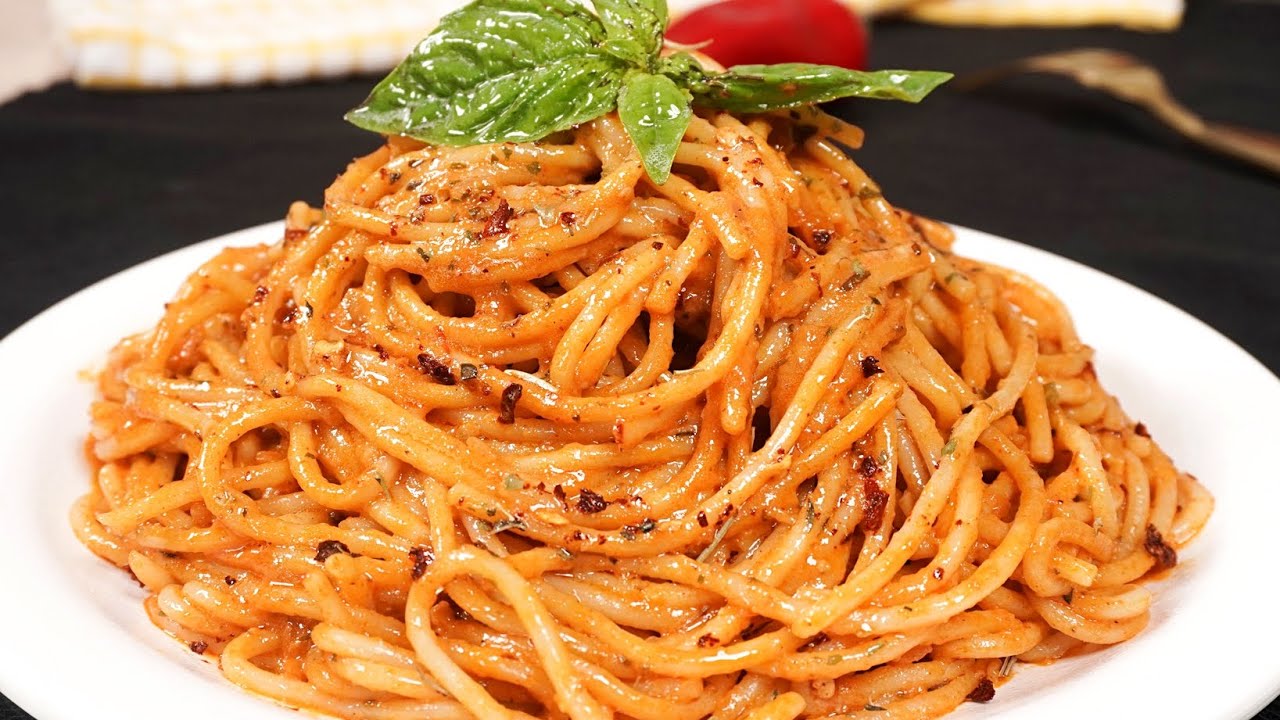
“Tomato spaghetti is the dish that exposes every cook. There is nowhere to hide. No cream to round out the edges, no meat to carry the weight, no complexity to mask your mistakes. Just tomatoes, garlic, olive oil, and pasta — and yet most people consistently produce something flat, acidic, and forgettable. The difference between a mediocre bowl and one that tastes like a trattoria in Naples is three things: the quality of your tomatoes, how long you let the sauce cook down, and how much pasta water you actually use. Everything else is noise.”
Why This Recipe Works
Tomato spaghetti is the lie that Italian cooking tells you. It looks like a dish anyone can make — six ingredients, one pan, thirty minutes. And then you make it and it tastes like it came from a jar. The problem is not the recipe. The problem is that simplicity is not the same as easy, and most people apply casual attention to a dish that demands precise technique.
Tomatoes Are Not Created Equal
The foundation of this dish is a single ingredient doing almost all the heavy lifting, which means the tomato selection is not a casual decision. San Marzano tomatoes — grown in the volcanic soil of the Sarno River valley south of Naples under DOP certification — have a chemical profile that is distinct from every other canned tomato on the market. Lower acidity. Higher natural sugar content. Thick, meaty flesh with fewer seeds. When you cook them down, they produce a sauce with complexity that generic diced tomatoes cannot approach regardless of cook time.
This is not snobbery. It is chemistry. The volcanic soil at the foot of Mount Vesuvius produces tomatoes with a specific balance of organic acids and sugars that translates directly to flavor in the pan. When quality is the entire point of a dish, sourcing the best available ingredient is not optional — it is the technique.
Garlic at Low Heat
The single most misunderstood step in this recipe is the garlic. Every instinct in home cooking says "medium-high heat, get it moving." The correct answer here is the opposite. You want the garlic sliced thin and cooked at medium-low in a generous pool of extra-virgin olive oil for three to four minutes, moving slowly from raw to translucent to barely golden at the edges.
What you are doing is infusing the fat. Oil is a solvent for aromatic compounds, and at low heat, the fat-soluble flavor molecules in the garlic migrate into the olive oil over time rather than burning off as volatile gases. When the tomatoes hit that infused oil, they absorb several minutes of cumulative garlic flavor instantly. High heat rushes this process, scorches the sugars in the garlic, and produces bitterness that no amount of acid-correction will undo.
The Reduction Window
Twenty-five minutes of uncovered simmering is where this sauce transforms. In the first ten minutes, the tomatoes break down and the sauce looks and tastes roughly like improved canned tomatoes. In minutes ten through fifteen, the excess water begins evaporating in earnest and the sauce tightens. Between minutes fifteen and twenty-five, something shifts — the sugars concentrate, the color deepens from bright red to a darker, more complex crimson, and the acidity softens into something round and almost sweet.
This concentration cannot be rushed. A wide, straight-sided sauté pan is the critical tool because its surface area accelerates evaporation compared to a deep saucepan. More surface area equals faster water loss equals faster flavor concentration. This is why the same sauce cooked in a narrow pot for thirty minutes tastes thinner than sauce cooked in a wide pan for twenty. The vessel is part of the recipe.
Pasta Water as the Binding Agent
The step most home cooks either forget entirely or treat as a vague suggestion is the pasta water. This is not a finishing trick. It is the mechanism that turns spaghetti with tomato sauce into a unified dish rather than two components sharing a bowl. The starch released by the pasta into the cooking water acts as an emulsifier — it bonds the water-soluble tomato compounds to the fat-soluble olive oil molecules, creating a sauce that is simultaneously glossy, clingy, and silky rather than greasy or watery.
The tossing motion matters as much as the water itself. Vigorous movement in the pan forces the emulsification to happen quickly and evenly. Thirty seconds of active tossing with a large pair of tongs does more work than two minutes of passive stirring. The pasta should look glossy and coated when you stop — not swimming in thin liquid, not clumped with thick paste, but draped in a sauce that clings to every strand like it belongs there.
Why Fresh Basil Goes in Last
Basil contains linalool and eugenol — volatile aromatic compounds that are responsible for its characteristic floral, slightly spicy fragrance. These compounds evaporate at temperatures above 150°F (65°C). Adding basil to a simmering sauce at any point during cooking means spending three minutes watching your most expensive aromatic element disappear into the exhaust fan. Tearing it directly over the pan after the heat is off and folding it in gently preserves those compounds in the finished dish where they belong — in your mouth, not the atmosphere.
This dish is not simple. It is disciplined. The ingredients list is short because every variable that usually provides cover — cream, meat, complexity — has been removed. What remains is pure technique, and technique is either right or it is not.
Where Beginners Mess This Up
Before we start, read this. These are the 4 reasons your classic tomato spaghetti (the only sauce recipe you need) will fail:
- 1
Using fresh tomatoes out of season: Out-of-season fresh tomatoes are watery, pale, and barely sweet. They produce a thin, acidic sauce that no amount of simmering can fix because there is no sugar or umami to build on. San Marzano or high-quality canned whole tomatoes, harvested and packed at peak ripeness, will consistently outperform a January Roma tomato from the supermarket. Save fresh tomatoes for August.
- 2
Undercooking the sauce: A 10-minute sauce tastes like canned tomatoes with garlic. A 25-minute sauce tastes like something entirely different — rounder, deeper, with that slightly jammy quality that defines good Italian cooking. The water in the tomatoes needs to evaporate and concentrate the sugars. Every minute of simmering collapses the acidity and builds the sweetness. Don't pull it off early.
- 3
Skipping the pasta water: Pasta water is not a garnish. It is the emulsifying agent that binds the sauce to the spaghetti, transforming two separate components into a unified dish. The starch in the water thickens the sauce slightly and helps it cling to every strand. If your sauce looks too thick before you add the pasta, you need pasta water — not more olive oil, not a splash from the tap.
- 4
Rinsing the pasta: Rinsing cooked pasta strips the surface starch that allows sauce to adhere. It also drops the pasta temperature so it stops cooking, which means it stops absorbing flavor. Drain and immediately transfer to the sauce. Never rinse.
The Video Reference Library
Want to see it in action? Here are the exact videos we analyzed and combined to build this foolproof recipe translation:
The definitive breakdown of spaghetti al pomodoro technique, covering tomato selection, garlic behavior at different heat levels, and the pasta water emulsification step most home cooks skip entirely.
A deep dive into the chemistry of tomato reduction and why cook time is the single biggest variable separating flat sauce from complex, restaurant-quality results.
Stripped-back technique from an Italian home cook who has been making this dish for 50 years. No shortcuts, no tricks — just the fundamentals executed with total confidence.
🛠️ Core Equipment
- Large straight-sided sauté panWide surface area allows water to evaporate from the sauce quickly and evenly. A deep saucepan traps steam and keeps the sauce thin. Surface area is the variable that controls sauce concentration.
- Large pot for boiling pastaSpaghetti needs room to move in aggressively boiling, heavily salted water. A cramped pot drops the water temperature when pasta is added and produces gummy, unevenly cooked noodles.
- Wooden spoon or silicone spatulaFor breaking down the tomatoes as they cook. Metal utensils can nick non-stick surfaces and react with the acidity of the tomatoes over prolonged contact.
- Ladle or heatproof measuring cupFor reserving pasta water before draining. You need at least one full cup available. Forgetting to pull it before draining is one of the most common kitchen mistakes — set the reminder now.
Classic Tomato Spaghetti (The Only Sauce Recipe You Need)
🛒 Ingredients
- ✦400g (14 oz) dry spaghetti
- ✦2 cans (28 oz each) whole San Marzano tomatoes
- ✦6 cloves garlic, thinly sliced
- ✦1/3 cup extra-virgin olive oil, plus more for finishing
- ✦1/2 teaspoon crushed red pepper flakes
- ✦1 teaspoon granulated sugar (only if needed)
- ✦1 large handful fresh basil leaves, torn
- ✦1 cup reserved pasta water
- ✦Kosher salt
- ✦Freshly ground black pepper
- ✦Freshly grated Parmigiano-Reggiano, for serving
👨🍳 Instructions
01Step 1
Bring a large pot of water to a rolling boil. Season aggressively with kosher salt — it should taste like mild seawater. Add the spaghetti and cook according to package directions, subtracting 2 minutes for al dente.
02Step 2
While the water heats, pour the canned tomatoes into a bowl and crush them thoroughly by hand, breaking up any large pieces. You want rough, irregular chunks — not a smooth purée.
03Step 3
Heat the olive oil in a large straight-sided sauté pan over medium-low heat. Add the sliced garlic and red pepper flakes. Cook gently for 3-4 minutes, stirring occasionally, until the garlic is soft, fragrant, and just barely golden at the edges.
04Step 4
Increase heat to medium. Add the crushed tomatoes with all their juices to the pan. Season with a generous pinch of salt and black pepper. Stir to combine.
05Step 5
Simmer uncovered for 20-25 minutes, stirring occasionally and breaking down larger tomato pieces with the back of your spoon, until the sauce has thickened noticeably and the color has deepened from bright red to a darker, jammy crimson.
06Step 6
About 2 minutes before the pasta finishes cooking, ladle out at least 1 full cup of the starchy pasta water and set it aside. This step is non-negotiable — do not forget it.
07Step 7
Drain the spaghetti. Do not rinse it. Transfer immediately to the pan with the tomato sauce over medium heat.
08Step 8
Add 1/2 cup of the reserved pasta water to the pan. Toss the pasta vigorously with tongs for 1-2 minutes, allowing the sauce to coat every strand and the starch to emulsify the mixture into a glossy, cohesive sauce. Add more pasta water a splash at a time if the sauce looks tight.
09Step 9
Remove from heat. Tear the basil leaves directly over the pan and fold them in gently. Finish with a drizzle of fresh extra-virgin olive oil.
10Step 10
Serve immediately in warmed bowls with freshly grated Parmigiano-Reggiano.
Nutrition Per Serving
Estimates based on standard preparation. Adjustments alter macros.
🔄 Substitutions
Instead of San Marzano canned tomatoes...
Use Fresh ripe plum tomatoes in peak season
Score, blanch, peel, and seed before using. Doubles the prep time but delivers unmatched freshness in August. Out of season, always default back to canned.
Instead of Spaghetti...
Use Linguine or bucatini
Both work well with this sauce. Bucatini's hollow center traps extra sauce. Linguine's flat surface carries slightly less sauce per strand than round spaghetti.
Instead of Extra-virgin olive oil...
Use Avocado oil for cooking, EVOO for finishing
Avocado oil has a higher smoke point and is neutral enough for the initial garlic step. Always finish with real extra-virgin olive oil — the raw oil flavor added at the end is a distinct and important component.
Instead of Parmigiano-Reggiano...
Use Pecorino Romano
Sharper and saltier. Use about 30% less than you would Parmigiano. For a vegan version, nutritional yeast with a pinch of salt and garlic powder approximates the umami function without the dairy.
🧊 Storage & Reheating
In the Fridge
Store the sauce separately from the cooked pasta for best results. Sauce keeps for up to 5 days in an airtight container. Mixed pasta and sauce keeps for 3 days but will absorb the sauce and dry out slightly.
In the Freezer
The tomato sauce freezes exceptionally well for up to 3 months. Freeze in individual portions. Cooked pasta does not freeze well — make fresh pasta when reheating from frozen sauce.
Reheating Rules
Reheat sauce in a small saucepan over low heat with a splash of water, stirring until hot. Cook fresh pasta to order. Never microwave spaghetti — it dries the outer strands and leaves the center cold.
❓ Frequently Asked Questions
Why does my tomato sauce taste acidic and sharp?
The sauce hasn't cooked long enough. Tomatoes are naturally high in acids like citric and malic acid, which mellow and sweeten with prolonged heat. Simmer uncovered for at least 20-25 minutes. If it's still sharp, add a small pinch of sugar and cook for another 5 minutes before reaching for more salt.
Do I need San Marzano tomatoes specifically?
San Marzanos have a naturally lower seed count, thicker flesh, and higher sugar content than most canned tomatoes, which means better flavor with less cook time. They are worth the slight price premium. If unavailable, look for whole peeled tomatoes from Italy — the DOP label is a reliable quality indicator.
Can I make this sauce ahead of time?
Yes, and it's often better the next day. The flavors continue to develop as the sauce rests. Make a double batch, cool completely, and refrigerate. Reheat gently before tossing with freshly cooked pasta.
Why is my pasta gluey and clumped?
You either used too small a pot, didn't use enough water, or let the pasta sit after draining before adding it to the sauce. Transfer the pasta directly from the pot to the sauce with tongs — residual water helps the sauce emulsify. Move fast after draining.
When do I add the basil?
Off the heat, right at the end. Basil is extremely heat-sensitive — the aromatic volatile compounds that make it taste like basil evaporate at high temperatures. Adding it too early gives you bitter, dark-green cooked herb rather than the fresh, bright flavor the dish depends on.
Is this the same as marinara?
Very close, but not identical. Marinara traditionally includes oregano and is cooked faster. Spaghetti al pomodoro relies entirely on the long reduction of tomatoes, garlic, olive oil, and basil without additional dried herbs. The distinction is subtle but real — this version is cleaner and more focused on tomato flavor.

The Science of
Classic Tomato Spaghetti (The Only Sauce Recipe You Need)
We turned everything on this page into a beautiful, flour-proof PDF cheat sheet. Print it out, stick it to your fridge, and never mess up your classic tomato spaghetti (the only sauce recipe you need) again.
*We'll email you the high-res PDF instantly. No spam, just perfectly cooked meals.
AlmostChefs Editorial Team
We translate the internet's most popular cooking videos into foolproof, beginner-friendly written recipes. We analyze multiple methods, test them in our kitchen, and engineer a single "Master Recipe" that gives you the best possible result with the least possible stress.