Restaurant-Style Tomato Soup (Silkier Than the Real Thing)
A velvety Indian-style tomato soup with bloomed whole spices, caramelized aromatics, and a cream finish that rivals anything you'd order out. We broke down the restaurant technique — the straining step, the spice sequence, the fat bloom — so you can nail the silky texture every single time.
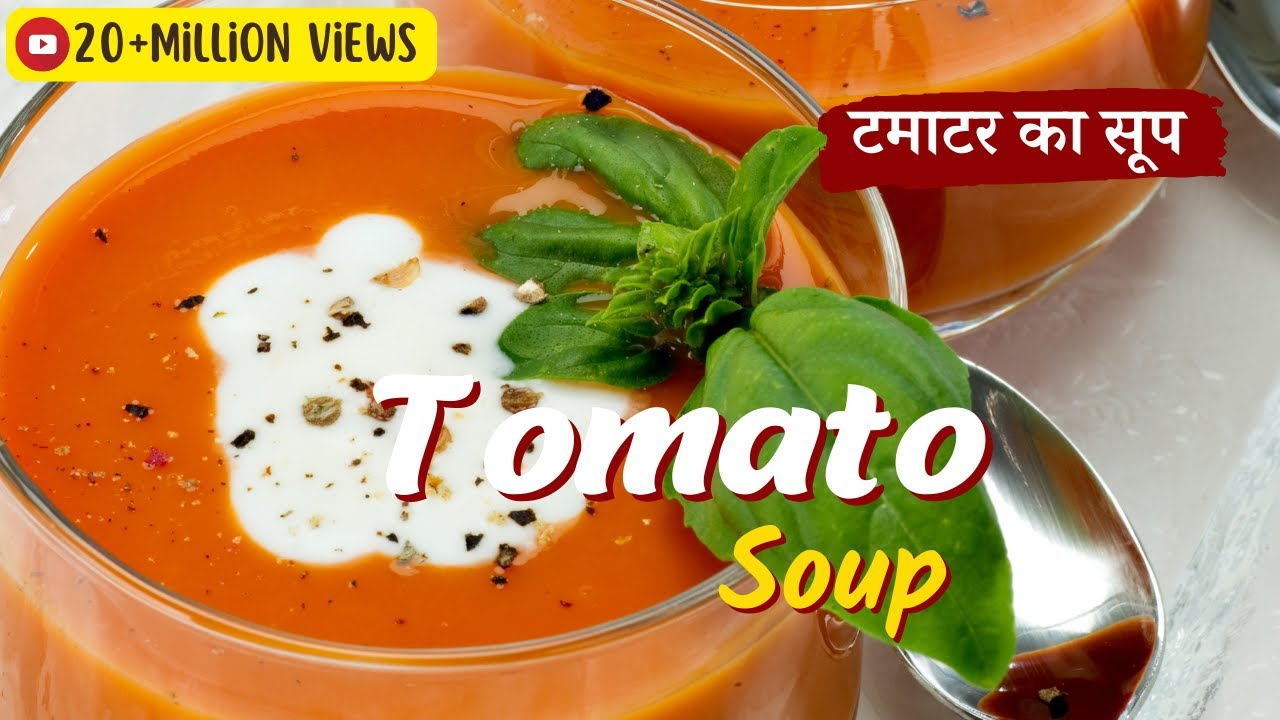
“Most homemade tomato soup tastes like warmed-up canned tomatoes. Restaurant tomato soup tastes like something entirely different — richer, rounder, with a depth that makes you wonder what they put in there. The answer isn't a secret ingredient. It's sequence. Blooming spices in hot butter, caramelizing the tomato paste before adding liquid, and straining the blended soup through a fine-mesh sieve — these three steps alone transform humble tomatoes into something that reads as luxurious. This recipe builds each one deliberately.”
Why This Recipe Works
Tomato soup sits in an unusual category of dishes where the technique matters more than the ingredients. The tomatoes are the tomatoes. What separates a bowl that tastes like school cafeteria from one that makes you lean in for a second spoonful is sequence — specifically, the order in which fat, heat, aromatics, and acid interact before the tomato even enters the pot.
The Fat Bloom Is Not Optional
Indian-style tomato soup starts where every good Indian dish starts: in hot fat with whole spices. Cumin seeds dropped into properly heated butter don't just flavor the soup — they undergo a rapid chemical transformation. The heat fractures the seed's outer cell walls, releasing cumin aldehyde, the compound responsible for cumin's distinctive earthy, warm character. This happens in 30 seconds at the right temperature. It doesn't happen at all if the fat is merely warm.
Most home cooks miss this because they're in a hurry and the butter looks liquid enough. Liquid butter and hot butter are not the same. You want foam. You want a nutty smell. Then and only then do the seeds go in.
Why Tomato Paste Gets Its Own Moment
The second technique most home cooks skip is caramelizing the tomato paste before adding liquid. Tomato paste is already concentrated — roughly double the solid content of fresh tomatoes — and it contains natural sugars that respond beautifully to direct dry heat. Spreading it across the bottom of a hot pan for 90 seconds turns those sugars through the Maillard reaction, deepening the color from bright brick red to a darker, more complex rust. The flavor shifts from sharp and raw to sweet, roasted, and round.
Adding stock immediately after adding paste — as most recipes instruct — interrupts this reaction before it can develop. Those two minutes of patience before the liquid goes in are worth more than any spice you could add.
The Simmer That Actually Matters
Twenty-five minutes at a proper medium-low simmer is not interchangeable with 10 minutes at a hard boil. High heat drives off water quickly but doesn't give the tomato's pectin structure time to break down completely. You end up with a soup that's reduced but still slightly fibrous, with tomato pieces that blended poorly and a body that feels thin despite the concentration.
A gentle simmer — small bubbles breaking the surface every few seconds — gives the tomatoes time to collapse fully. Their cells rupture, releasing pectin into the stock and creating natural body without adding any thickener. This is why restaurant tomato soup has weight. Not cream — the tomatoes themselves, properly cooked, thicken the base.
The Straining Step
Blend the soup and it tastes good. Strain it through a fine-mesh sieve and it tastes like something you paid for. Tomato skins and seed casings have an almost indestructible fibrous structure that even high-powered blenders cannot fully break down. They contribute a slightly gritty, catching texture that you feel more than taste — a persistent roughness that signals home kitchen rather than restaurant kitchen. The sieve removes them in four minutes and costs you nothing but the effort.
Press firmly with the back of a ladle. Work in batches. The liquid that comes through is the soup. What stays in the sieve is compost.
Finishing With Cream — and Why It Can Still Go Wrong
Cream doesn't just add richness. It tames the acidity of the tomatoes, rounds the sharpest spice edges, and gives the soup a coating quality that makes each spoonful feel substantial. But it's also the step most likely to go wrong. Cream added to aggressively boiling soup breaks — the proteins denature and the fat separates, leaving greasy white flecks throughout. The rule is simple: reduce heat to medium-low, add cream slowly, stir constantly, and never let it boil again. Simmer gently for two to three minutes to meld. Remove from heat. Serve.
Kasuri methi — dried fenugreek leaf — goes in just before the cream. It's the ingredient people can't identify when they ask what makes this taste like a restaurant. It adds a faint, pleasantly bitter herbal note that bridges the sweetness of the tomatoes and the richness of the cream. It doesn't taste like fenugreek. It just tastes like depth. That's the point.
Where Beginners Mess This Up
Before we start, read this. These are the 4 reasons your restaurant-style tomato soup (silkier than the real thing) will fail:
- 1
Adding spices to cold or warm fat: Cumin seeds need screaming-hot butter to crack and release their volatile oils. If you add them to fat that hasn't fully heated, they sit there and steam instead of bloom. You get a faint cumin note instead of that deep, toasty aroma that defines the dish. Wait until the butter foams and smells nutty — then add the seeds.
- 2
Skipping the fine-mesh straining step: Blending alone doesn't give you restaurant texture. Tomato skins and seed casings survive even a high-powered blender, leaving a slightly gritty finish. Straining through a fine-mesh sieve removes every trace of fiber and seeds, producing the completely smooth, velvety mouthfeel that makes the soup feel expensive.
- 3
Boiling the cream: Cream added to a boiling soup breaks — the fat separates and you get greasy white flecks floating in your tomato base. Add cream off direct high heat, at medium, stirring constantly. The soup should be hot enough to absorb it without separation. Never let it return to a full boil after the cream goes in.
- 4
Under-simmering the tomatoes: Twenty minutes at a lazy simmer is not the same as 20 minutes at a proper medium-low simmer. The tomatoes need to completely collapse and surrender — skins bursting, flesh disintegrating into the stock. If any pieces still hold their shape when you go to blend, add 5 more minutes. The breakdown is what creates body.
The Video Reference Library
Want to see it in action? Here are the exact videos we analyzed and combined to build this foolproof recipe translation:
The source video that inspired this recipe. Covers the spice blooming sequence, the simmer timing, and the straining technique that delivers the restaurant texture.
🛠️ Core Equipment
- Heavy-bottomed potEven heat distribution is critical for caramelizing onions and tomato paste without scorching. A thin pot creates hot spots that burn the aromatics before they can develop flavor. A [Dutch oven](/kitchen-gear/review/dutch-oven) or thick stainless stockpot is ideal.
- Immersion blenderBlending hot soup in a stand blender is dangerous — steam builds pressure and the lid can blow. An [immersion blender](/kitchen-gear/review/immersion-blender) lets you blend directly in the pot with no transfers and no risk.
- Fine-mesh sieveThe non-negotiable step. Pressing the blended soup through a fine-mesh sieve removes tomato skins, seeds, and fiber, producing the silky restaurant texture that blending alone cannot achieve.
- LadleFor pressing the blended soup through the strainer efficiently. Use the back of the ladle in circular motions to extract maximum liquid without forcing solids through.
Restaurant-Style Tomato Soup (Silkier Than the Real Thing)
🛒 Ingredients
- ✦2 kg fresh ripe tomatoes, quartered (or 800g canned crushed tomatoes plus 1 kg fresh)
- ✦3 tablespoons unsalted butter
- ✦1 medium yellow onion, finely diced
- ✦5 cloves garlic, minced
- ✦1 tablespoon fresh ginger, minced
- ✦4.5 cups vegetable or chicken stock
- ✦2 tablespoons tomato paste
- ✦1/2 teaspoon cumin seeds (jeera)
- ✦1/2 teaspoon ground coriander (dhania)
- ✦1/4 teaspoon red chili powder
- ✦1/4 teaspoon garam masala
- ✦1/2 cup heavy cream or whole milk
- ✦2 teaspoons sugar, adjusted to taste
- ✦Salt and freshly cracked black pepper to taste
- ✦2 tablespoons fresh cilantro leaves, chopped
- ✦1 pinch kasuri methi (dried fenugreek leaves)
- ✦Water for consistency adjustment if needed
👨🍳 Instructions
01Step 1
Rinse and quarter all fresh tomatoes, removing the cores. If using a combination of fresh and canned, measure both out and set aside.
02Step 2
Heat butter in a heavy-bottomed pot over medium-high heat until it foams and begins to smell nutty, about 2 minutes.
03Step 3
Add the cumin seeds to the hot butter and let them crackle and pop for approximately 30 seconds until deeply fragrant.
04Step 4
Add the diced onion and sauté, stirring frequently, until translucent and beginning to caramelize at the edges, about 5-7 minutes.
05Step 5
Add the minced garlic and ginger. Cook, stirring constantly, until the raw smell disappears and the mixture is fragrant, about 2-3 minutes.
06Step 6
Sprinkle in the ground coriander and red chili powder. Stir continuously for 1 minute to bloom the spices in the hot fat.
07Step 7
Add the tomato paste and stir it into the aromatics, spreading it across the bottom of the pot. Let it caramelize for 1-2 minutes, stirring occasionally.
08Step 8
Add all the tomatoes and pour in the vegetable or chicken stock. Stir well to combine.
09Step 9
Bring to a gentle boil, then reduce heat to medium-low and simmer uncovered for 20-25 minutes until the tomatoes are completely broken down and soft.
10Step 10
Remove from heat and cool for 5 minutes. Blend with an immersion blender until completely smooth, working in steady passes across the entire pot.
11Step 11
Pass the blended soup through a fine-mesh sieve into a clean pot, pressing firmly with the back of a ladle to extract all liquid. Discard the solids.
12Step 12
Return the strained soup to medium heat. Stir in the garam masala and kasuri methi. Taste and adjust salt and black pepper.
13Step 13
Add sugar in small increments, tasting after each addition, until the acidity of the tomatoes is balanced without tasting overtly sweet.
14Step 14
Reduce heat to medium-low. Pour in the cream slowly while stirring constantly. Do not allow the soup to boil after this point.
15Step 15
Simmer gently for 2-3 minutes to meld the flavors. Ladle into bowls, garnish with fresh cilantro, and serve immediately with naan or crusty bread.
Nutrition Per Serving
Estimates based on standard preparation. Adjustments alter macros.
🔄 Substitutions
Instead of Heavy cream...
Use Greek yogurt or coconut milk
Whisk Greek yogurt well before adding and keep heat low — it splits at high temperature like cream does. Coconut milk adds a subtle sweetness that pairs well with the spice profile. Both maintain a silky texture.
Instead of Butter...
Use Ghee or extra virgin olive oil
Ghee runs hotter without burning and adds a nutty depth that amplifies the bloomed spices. Olive oil creates a lighter, more herbaceous base. Either works — ghee is the closer analog to the original restaurant style.
Instead of Sugar...
Use Honey or maple syrup
Use about 30% less by volume — both are sweeter than granulated sugar. Honey adds a floral note; maple adds subtle earthiness. Add at the same stage, tasting carefully.
Instead of Vegetable stock...
Use Homemade bone broth or mushroom stock
Bone broth adds protein and a rounder body. Mushroom stock adds umami that reinforces the savory depth. Either significantly upgrades the flavor base over commercial vegetable stock.
🧊 Storage & Reheating
In the Fridge
Store in an airtight container for up to 4 days. The flavors deepen overnight — this soup is genuinely better on day two.
In the Freezer
Freeze before adding cream for best results. Store in portions for up to 3 months. Thaw overnight in the fridge and add fresh cream when reheating.
Reheating Rules
Reheat gently on the stovetop over medium-low heat, stirring occasionally. Add a splash of stock or water if the soup has thickened. Avoid microwaving — uneven heat can cause the cream to separate.
❓ Frequently Asked Questions
Why does my tomato soup taste acidic and flat?
Two separate problems. Flat means you need more salt or a touch of cream to round the flavor. Acidic means the sugar balance is off — add sugar in half-teaspoon increments, tasting each time, until the sharpness recedes without the soup tasting sweet. A pinch of kasuri methi also helps bridge the gap between acid and savory.
Can I use only canned tomatoes?
Yes, and in winter it's often the better call. Use 1.5 kg (about two 800g cans) of good-quality crushed or whole peeled tomatoes. Reduce simmer time to 15 minutes since canned tomatoes are already cooked. San Marzano or Muir Glen varieties have lower acidity and don't need as much sugar adjustment.
Do I have to strain the soup?
Technically no. Practically yes, if you want restaurant texture. Tomato skins and seed casings survive blending and leave a slightly coarse mouthfeel. The straining step takes four minutes and is the single biggest quality upgrade in the entire recipe.
My cream curdled — what happened?
The soup was too hot when you added it. Cream proteins seize and separate above a vigorous simmer. Next time, reduce heat to medium-low and let the simmer settle before adding the cream. If it's already broken, whisk vigorously and add a tablespoon of cold butter — the fresh fat can sometimes re-emulsify a lightly broken cream.
What is kasuri methi and can I skip it?
Kasuri methi is dried fenugreek leaf — a staple of North Indian restaurant cooking that adds a slightly bitter, herby note that rounds out rich, cream-finished dishes. You can skip it and the soup will still be very good. But it's the ingredient people can't identify when they ask 'what's in this?' — that indefinable restaurant quality. Find it at any South Asian grocery store.
Can I make this vegan?
Yes. Replace butter with coconut oil or vegan butter, use coconut milk in place of heavy cream, and stick with vegetable stock. The spice profile holds up perfectly without the dairy. The texture will be slightly thinner — compensate by simmering an extra 5 minutes before blending to reduce and concentrate.
The Science of
Restaurant-Style Tomato Soup (Silkier Than the Real Thing)
We turned everything on this page into a beautiful, flour-proof PDF cheat sheet. Print it out, stick it to your fridge, and never mess up your restaurant-style tomato soup (silkier than the real thing) again.
*We'll email you the high-res PDF instantly. No spam, just perfectly cooked meals.
AlmostChefs Editorial Team
We translate the internet's most popular cooking videos into foolproof, beginner-friendly written recipes. We analyze multiple methods, test them in our kitchen, and engineer a single "Master Recipe" that gives you the best possible result with the least possible stress.