Perfect Tomato Bisque (The Silky Restaurant Version at Home)
A deeply concentrated, velvety tomato bisque built on roasted tomatoes, a proper mirepoix base, and a finish of heavy cream that turns a humble soup into something genuinely luxurious. We broke down the most-watched YouTube methods to identify the three decisions that separate thin, acidic tomato soup from a bisque worth making twice.
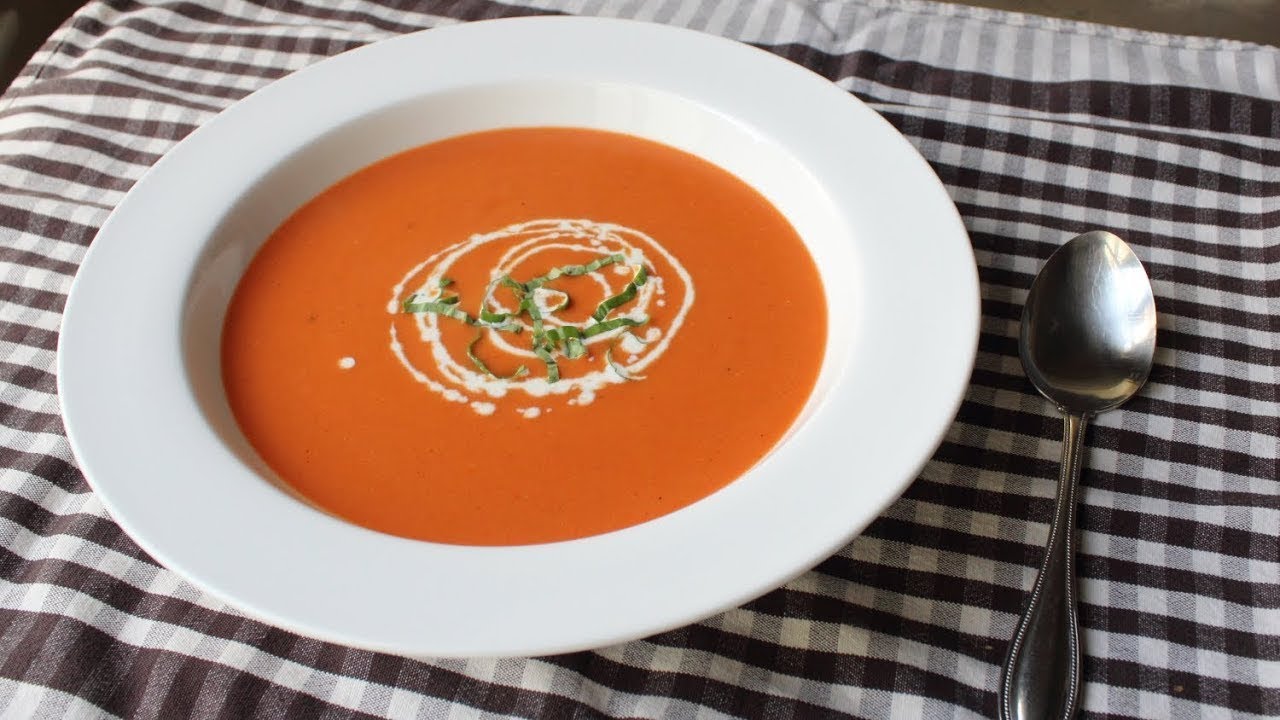
“Most tomato soup is just acidic liquid with a cream swirl. Bisque is something else entirely — a concentrated, silky emulsion that coats a spoon and holds its body through the entire bowl. The difference between the two comes down to three decisions: whether you roast the tomatoes first, how long you cook down the base, and whether you temper the cream before adding it. Get those three things right and you have a bisque that tastes like it came from a serious kitchen.”
Why This Recipe Works
Tomato bisque sits in a strange culinary purgatory. Everyone has had a version — usually from a can, usually served next to a grilled cheese at a diner — and most people think they know what it is. They're wrong. A real bisque is a precision reduction, a carefully managed emulsion, and a study in how to transform a vegetable with 95% water content into something thick enough to coat a spoon without a single gram of flour or starch. This recipe explains the architecture.
The Roasting Argument
Raw tomatoes are roughly 95% water, and most of that water carries no flavor. It just dilutes everything around it. Roasting at high heat — 425°F, cut-side up, 25-30 minutes minimum — drives off a significant fraction of that water through evaporation while simultaneously triggering the Maillard reaction on the exposed surfaces. The cut face of a Roma tomato, pressed against a hot rimmed baking sheet, develops deep red-brown caramelization that adds an entirely new flavor register to the soup: savory, slightly smoky, with a jammy sweetness that no amount of simmering raw tomatoes can replicate.
The juice that pools on the baking sheet during roasting is not an accident — it's concentrated tomato essence. Scrape every drop into your Dutch oven. That liquid is worth more flavor-per-ounce than almost anything else you'll add to the pot.
The Base Is the Foundation
French classical cooking has a name for what happens in the first 10 minutes of this recipe: the mirepoix. Onion, carrot, and celery cooked slowly in fat until their cell structure collapses and their sugars release. This isn't optional prep work — it's half the flavor infrastructure of the final soup. Onions contain roughly 5 grams of natural sugar per medium bulb. Celery contributes aromatic phthalides. Carrots add body and sweetness. Together, sweated properly in butter, they create a savory-sweet foundation that makes the tomato flavor register as round and complex rather than sharp and one-dimensional.
The tomato paste added after the mirepoix is equally important. Cooked for two minutes directly in the butter, it undergoes its own version of the Maillard reaction — the paste deepens from bright red to brick red, loses its raw metallic edge, and adds concentrated umami that makes the final bisque taste like it simmered for hours longer than it did.
The Reduction Phase
After all the tomatoes and broth are in the pot, you need to reduce. This is where most home cooks lose patience and stop too early. A 20-25 minute uncovered simmer drives off additional water and concentrates the tomato solids, which increases viscosity naturally without any thickeners. The color shifts from bright orange-red to a deeper, richer crimson. If you blend the soup before this reduction is complete, you get a thin bisque that cream can't rescue — adding fat to a watery base just produces a watery, fatty bisque.
The practical test: the soup should have reduced in volume by roughly a quarter. The bubbles at the surface should move slowly, not rapidly. The surface should hold a slight skin for a second when you lift the ladle and let it drip back. That's when you're ready to blend.
The Blending Architecture
Soup texture lives or dies in the blender. An immersion blender is a compromise at best — it can't generate the centrifugal speed needed to fully break down tomato skins and seeds, leaving a faintly grainy texture that whispers "made at home" in all the wrong ways. A high-powered countertop blender running at full speed for 60-90 seconds per batch does something different: it creates a true emulsion, dispersing the fat molecules from the butter and cream into such fine droplets that the entire mixture becomes a stable, glossy, opaque liquid.
Passing that blended soup through a fine-mesh sieve afterward is technically optional. In practice, it's the step that makes the bisque feel professional. The 30 seconds it takes to press the soup through the mesh removes the last traces of skin and seed, producing the glass-smooth surface that defines a serious bowl of bisque.
The Cream Equation
Cream is the final variable, and it's the one most often botched. Cold cream poured into boiling soup creates a temperature differential that can break the emulsion and produce curdled streaks in your carefully built bisque. The fix is tempering — a technique borrowed directly from egg cookery. Ladle a half-cup of hot bisque into your cream, whisk to equalize temperatures, then pour the combined mixture back into the pot over low heat. The cream integrates smoothly, evenly, and permanently.
After the cream goes in, the bisque does not boil again. You heat it gently, stir, taste, and adjust. The sugar is your final calibration tool — not to make the soup sweet, but to bring the tomato acidity into balance. A properly seasoned bisque should taste like tomato amplified, not tomato fighting cream for dominance.
Where Beginners Mess This Up
Before we start, read this. These are the 4 reasons your perfect tomato bisque (the silky restaurant version at home) will fail:
- 1
Skipping the roast: Raw tomatoes blended into a pot of sautéed aromatics taste bright but thin — all acid, no depth. Roasting at high heat for 25-30 minutes collapses the cell walls, drives off excess water, and triggers the Maillard reaction on the cut surfaces. You lose volume but gain concentration. The difference in flavor is not subtle.
- 2
Under-cooking the mirepoix: Onion, carrot, and celery need at least 10 minutes of low-heat sweating before the tomatoes go in. Rushing this step leaves raw vegetal sharpness in the final soup that no amount of cream can fix. They should be completely soft, translucent, and sweet-smelling before anything else enters the pot.
- 3
Adding cold cream to hot soup: Cold heavy cream poured directly into a near-boiling bisque can break the emulsion or curdle from thermal shock. Temper it first — ladle a small amount of hot soup into the cream, stir to equalize the temperatures, then add the mixture back to the pot off the heat. This one step is what gives restaurant bisque its uniform, glossy body.
- 4
Under-seasoning at every stage: Tomatoes need salt at multiple points — when roasting, when the base is cooking, and as a final adjustment after blending. Adding all the salt at the end can't correct a flat base. Season in layers and the soup builds flavor from the bottom up.
The Video Reference Library
Want to see it in action? Here are the exact videos we analyzed and combined to build this foolproof recipe translation:
A detailed walkthrough covering the roasting technique and cream tempering method. Best video for understanding the exact color and consistency you're targeting at each stage of the cook.
Covers the mirepoix sweating technique in detail and explains the science behind why cold cream breaks a hot bisque. Clear visual cues for when the base has reduced enough before blending.
Excellent resource for understanding how to adjust seasoning after blending without losing the balance between acid, fat, and sweetness. Includes a side-by-side comparison of roasted versus unroasted tomato flavor.
🛠️ Core Equipment
- High-powered blenderAn immersion blender will work in a pinch but will never achieve the perfectly smooth, aerated texture of a countertop blender. Bisque is defined by its silky body — a blender that can run at full speed for 60+ seconds is non-negotiable for the right result.
- Heavy-bottomed Dutch ovenEven heat distribution during the long base reduction prevents scorching. A thin pot will hot-spot along the bottom, burning the tomato solids before the liquid has time to reduce. A good Dutch oven holds heat steadily at a low simmer without requiring constant attention.
- Rimmed baking sheetFor roasting the tomatoes. The rim contains the juice that releases during roasting — that liquid is concentrated flavor you want to scrape into the pot. A flat sheet loses half your best ingredient to the oven floor.
- Fine-mesh sieveOptional but recommended. Passing the blended bisque through a sieve once removes any remaining skin fragments or seed remnants and produces the gloss-smooth texture that distinguishes a serious bisque from a blended vegetable soup.
Perfect Tomato Bisque (The Silky Restaurant Version at Home)
🛒 Ingredients
- ✦2.5 pounds Roma tomatoes, halved lengthwise
- ✦1 can (28 ounces) whole peeled San Marzano tomatoes with juice
- ✦1 large yellow onion, roughly chopped
- ✦2 medium carrots, roughly chopped
- ✦3 stalks celery, roughly chopped
- ✦5 cloves garlic, smashed
- ✦3 tablespoons unsalted butter
- ✦2 tablespoons olive oil, divided
- ✦3 cups low-sodium chicken or vegetable broth
- ✦1 cup heavy cream
- ✦2 tablespoons tomato paste
- ✦1 teaspoon fresh thyme leaves
- ✦1 bay leaf
- ✦1 teaspoon white sugar
- ✦1/2 teaspoon smoked paprika
- ✦Pinch of cayenne pepper
- ✦Sea salt and freshly ground black pepper to taste
- ✦Fresh basil leaves for garnish
- ✦Crème fraîche or heavy cream swirl for serving
👨🍳 Instructions
01Step 1
Preheat oven to 425°F. Arrange the halved Roma tomatoes cut-side up on a rimmed baking sheet. Drizzle with 1 tablespoon olive oil and season generously with salt and black pepper.
02Step 2
Roast the tomatoes for 25-30 minutes until the edges are caramelized, the skins are blistered, and the cut surfaces have deepened to a dark red. Reserve all the juice on the pan.
03Step 3
While tomatoes roast, melt butter with remaining 1 tablespoon olive oil in a heavy-bottomed Dutch oven over medium-low heat. Add the onion, carrots, and celery with a pinch of salt. Sweat for 10-12 minutes, stirring occasionally, until completely soft and translucent.
04Step 4
Add the smashed garlic and tomato paste to the pot. Stir and cook for 2 minutes until the paste darkens slightly and smells sweet.
05Step 5
Add the roasted tomatoes with all their pan juices, the canned San Marzano tomatoes with their liquid, broth, thyme, bay leaf, smoked paprika, and cayenne. Stir to combine.
06Step 6
Bring to a boil, then reduce heat to a steady simmer. Cook uncovered for 20-25 minutes until the volume has reduced by about a quarter and the color has deepened.
07Step 7
Remove the bay leaf. Add the sugar and stir. Working in batches, transfer the soup to a high-powered blender and blend at full speed for 60-90 seconds per batch until completely smooth.
08Step 8
For an ultra-smooth bisque, pass the blended soup through a fine-mesh sieve back into the pot, pressing with a ladle to extract every drop.
09Step 9
Reduce heat to low. In a separate bowl, ladle about 1/2 cup of the hot bisque into the heavy cream and whisk to combine. Pour the tempered cream mixture back into the pot and stir gently.
10Step 10
Heat the bisque gently over low heat for 3-5 minutes. Do not boil after the cream is added. Taste and adjust salt, pepper, and sugar until the flavor is balanced between acid, fat, and sweetness.
11Step 11
Serve in warmed bowls with a swirl of crème fraîche, a few fresh basil leaves, cracked black pepper, and good bread or a grilled cheese sandwich on the side.
Nutrition Per Serving
Estimates based on standard preparation. Adjustments alter macros.
🔄 Substitutions
Instead of Heavy cream...
Use Full-fat coconut cream
Works well in a dairy-free version and adds a subtle sweetness that complements the tomato acidity. Use the same tempering method. The flavor profile shifts slightly tropical but remains rich and satisfying.
Instead of Unsalted butter...
Use Olive oil
Loses the nutty richness but keeps the recipe vegan. Increase the olive oil by half a tablespoon to compensate for the reduction in fat volume.
Instead of Roma tomatoes...
Use Cherry tomatoes or vine-ripened tomatoes
Cherry tomatoes roast faster (18-20 minutes) and are sweeter, producing a more jammy result. Vine tomatoes are closer in behavior to Roma but may need slightly longer roasting time.
Instead of Chicken broth...
Use Vegetable broth or water with a parmesan rind
Vegetable broth produces a cleaner, brighter soup. Water with a parmesan rind is the restaurant technique for building depth without a strong broth flavor competing with the tomatoes.
🧊 Storage & Reheating
In the Fridge
Store in an airtight container for up to 4 days. The flavor deepens noticeably on day two. Reheat gently over low heat, stirring to prevent separation.
In the Freezer
Freeze the base (before cream) for up to 3 months. Thaw overnight in the fridge, reheat, then stir in fresh cream before serving. Pre-creamed bisque can be frozen but may require re-blending after thawing.
Reheating Rules
Reheat in a saucepan over low heat, stirring frequently. Do not microwave on high — it breaks the cream emulsion and creates an uneven texture. Add a small splash of broth if the soup has thickened in the fridge.
❓ Frequently Asked Questions
What's the difference between tomato soup and tomato bisque?
Technically, a bisque is a cream-enriched, smooth-blended soup — historically made from shellfish. In modern American cooking, tomato bisque refers to a tomato soup finished with heavy cream that produces a richer, silkier body than standard tomato soup. The roasting step and cream tempering are what distinguish bisque from a can of Campbell's.
Can I use all canned tomatoes instead of roasting fresh ones?
Yes, and many restaurants do. Use two 28-ounce cans of whole peeled San Marzano tomatoes in place of the fresh Roma tomatoes. Skip the roasting step. The flavor will be slightly less complex but still excellent — and the cook time drops significantly.
Why did my cream curdle when I added it?
You added cold cream directly to boiling soup. Always temper the cream first by whisking it with a ladle of hot soup before adding it back to the pot. Also, never boil the bisque after adding cream — heat it gently over low flame only.
My bisque tastes too acidic. How do I fix it?
Add sugar in quarter-teaspoon increments, tasting after each addition. A small amount of butter stirred in off the heat also rounds out acidity by adding fat. In extreme cases, a pinch of baking soda neutralizes acid chemically — but use it carefully, as too much creates a metallic taste.
Can I make this bisque ahead of time for a dinner party?
This is actually one of the best make-ahead soups. Cook the entire base and blend it up to two days in advance. Store without the cream. Thirty minutes before serving, reheat the base, temper and add the cream, and adjust seasoning. The flavor will be better than if you made it day-of.
Do I need a high-powered blender, or will an immersion blender work?
An immersion blender will produce an acceptable bisque but not a silky one. The bisque will have a slightly grainy texture from incompletely broken-down tomato skin and cell walls. For the defining smooth, glossy body of a real bisque, transfer to a countertop blender in batches and run it at full speed for at least 60 seconds per batch.

The Science of
Perfect Tomato Bisque (The Silky Restaurant Version at Home)
We turned everything on this page into a beautiful, flour-proof PDF cheat sheet. Print it out, stick it to your fridge, and never mess up your perfect tomato bisque (the silky restaurant version at home) again.
*We'll email you the high-res PDF instantly. No spam, just perfectly cooked meals.
AlmostChefs Editorial Team
We translate the internet's most popular cooking videos into foolproof, beginner-friendly written recipes. We analyze multiple methods, test them in our kitchen, and engineer a single "Master Recipe" that gives you the best possible result with the least possible stress.