Silky Tom Kha Gai (The Coconut Soup You'll Make Every Week)
A fragrant Thai coconut chicken soup with lemongrass, galangal, and kaffir lime leaves that balances creamy richness against sharp citrus heat. We analyzed the most popular techniques to build one foolproof method that nails the broth depth every time — in under 45 minutes.
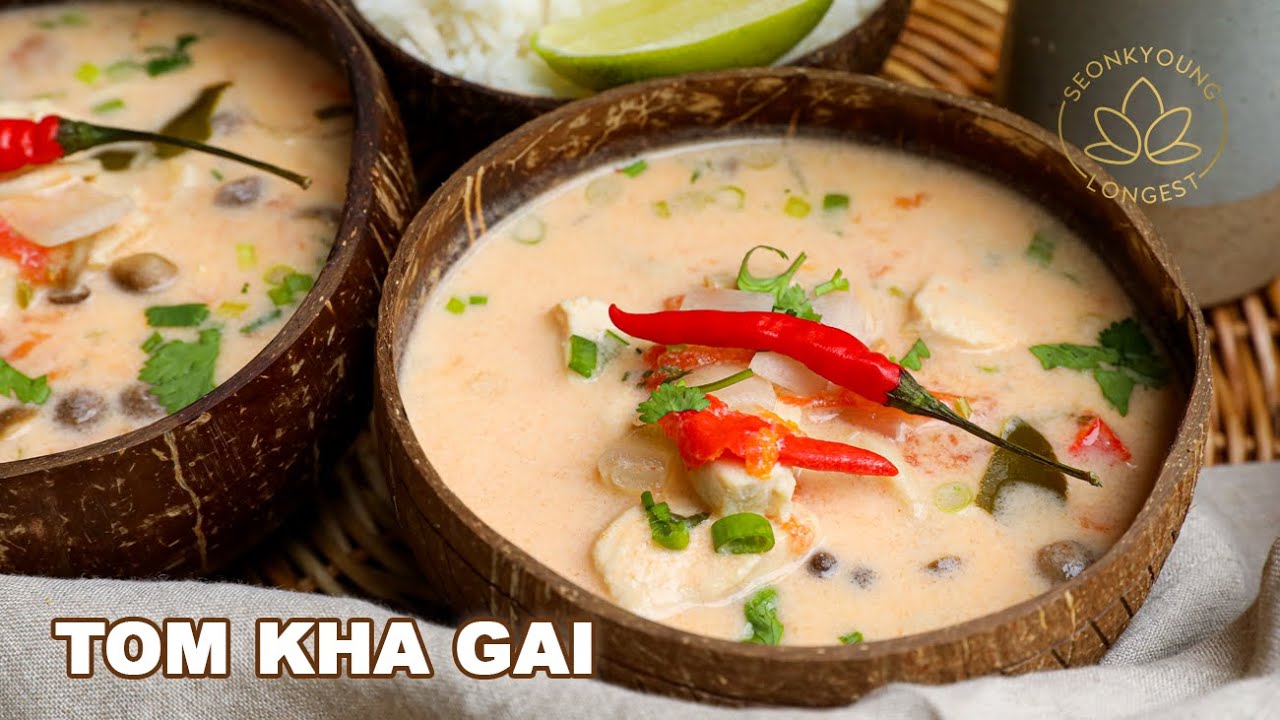
“Most Tom Kha Gai fails in one of two ways: the coconut milk breaks into greasy puddles, or the broth tastes thin and one-dimensional because nobody toasted the curry paste first. The difference between a bowl that tastes like a Bangkok street stall and one that tastes like canned soup is three minutes of active heat on a tablespoon of red curry paste. We tested the method to prove it.”
Why This Recipe Works
Tom Kha Gai is not a mild soup. The name translates loosely to "chicken galangal," and galangal — not ginger, not lemongrass, not chili — is the ingredient doing the real work. It has a sharp, piney, almost medicinal quality that cuts through the fat of the coconut milk and keeps 400 calories of rich broth from feeling heavy. Most Western recipes either omit it or substitute ginger. That substitution is why most Western Tom Kha tastes like a pleasant coconut soup rather than the specific, arresting thing it's supposed to be.
The Paste Bloom
The recipe starts with a move most home cooks skip: toasting Thai red curry paste in hot oil before any liquid touches the pan. This is not optional. Red curry paste is a compressed block of fat-soluble aromatics — dried chilies, galangal, lemongrass, shrimp paste, garlic — whose flavor compounds only fully activate in fat at heat. Add paste directly to liquid and you get a flat, slightly raw, one-dimensional broth. Toast it in oil for 2-3 minutes and the volatile compounds bloom into something exponentially more complex.
Watch for the paste to darken slightly and become intensely fragrant — almost sharp at close range. That's the Maillard reaction at work on the shrimp paste and dried chilies. You're building the flavor foundation of the entire dish in those two minutes. Don't rush it.
The Emulsion Problem
Coconut milk is fat suspended in water by naturally occurring proteins. It's a stable emulsion at room temperature, but sustained heat above a bare simmer breaks that emulsion and the fat separates out permanently. You end up with a greasy, thin, visually unpleasant broth that no amount of stirring will fix.
The solution is simple but requires attention: the moment coconut milk enters the pot, reduce heat to low and maintain a bare simmer — small lazy bubbles breaking the surface every 3-4 seconds, not a rolling boil — for the remainder of the cook. Use a heavy-bottomed pot to distribute heat evenly and prevent hot spots that could accidentally push a section of the broth above temperature.
The Aromatic Architecture
Lemongrass, galangal, kaffir lime leaves, and Thai chilies are all flavor vehicles rather than food. They're bruised, sliced, or torn to maximize surface area for oil release, simmered long enough to transfer their compounds to the broth, and then removed before serving. The bruising step matters: pressing lemongrass firmly with the flat of a knife cracks the outer fibrous layers and exposes the essential oil-rich interior. Unbruised lemongrass releases a fraction of its flavor.
Kaffir lime leaves are the quietly essential ingredient. They contribute a floral, slightly bitter citrus note that's completely distinct from lime juice — you can't substitute one for the other and get the same result. If fresh leaves are unavailable, frozen ones work identically. Lime zest is a compromise that adds citrus aromatics but misses the particular floral quality of the leaf.
The Timing of Acid
Lime juice is the last thing that goes into this soup, added off heat immediately before serving. Heat destroys the volatile aromatic compounds that give fresh lime its lift — what remains after cooking is flat, dull acidity without the brightness. This is true of all fresh citrus in hot applications. The fish sauce and palm sugar go in at the same moment, creating the classic Thai flavor balance — savory, sour, sweet, hot — that defines the dish.
Taste at this stage with intention. Adjust one variable at a time: more fish sauce if it tastes flat, more lime if it tastes heavy, a touch more palm sugar if the sour note is too sharp. The broth should hit all four notes simultaneously. When it does, the soup is done.
Where Beginners Mess This Up
Before we start, read this. These are the 4 reasons your silky tom kha gai (the coconut soup you'll make every week) will fail:
- 1
Boiling the coconut milk: Full-fat coconut milk is an emulsion — fat suspended in liquid by proteins. Hard boiling breaks that emulsion permanently, producing a greasy, separated broth. Maintain a bare simmer (small lazy bubbles, not a rolling boil) from the moment the coconut milk enters the pot. There is no fixing a broken broth.
- 2
Skipping the curry paste toast: Thai red curry paste contains fat-soluble aromatic compounds — galangal, lemongrass, shrimp paste, dried chilies — that only fully activate when cooked directly in hot oil. Adding paste to liquid without this step produces a flat, bitter broth that no amount of lime juice will rescue. Two minutes in hot oil transforms the paste from raw to bloomed.
- 3
Overcooking the chicken: Chicken breast is unforgiving in soup. It goes from perfectly tender to chalky and dry in about 90 seconds past done. Simmer gently at medium-low — not medium — and pull the pot off heat the moment a cube shows no pink inside. Residual heat carries it the rest of the way.
- 4
Adding lime juice too early: Heat destroys the volatile citrus compounds that make fresh lime bright and aromatic. Always add lime juice off heat, just before serving. If you squeeze it into a simmering pot, you get flat sourness instead of the sharp lift that defines the dish.
The Video Reference Library
Want to see it in action? Here are the exact videos we analyzed and combined to build this foolproof recipe translation:
The foundational walkthrough for this recipe — covers the curry paste bloom technique and explains why the order of ingredient additions matters for broth depth.
🛠️ Core Equipment
- Heavy-bottomed pot or Dutch ovenEven heat distribution prevents hot spots that scorch the curry paste during the toasting step. A thin saucepan will burn the paste before it blooms. A [Dutch oven](/kitchen-gear/review/dutch-oven) is the right tool here.
- Fine-mesh sieve or slotted spoonFor fishing out the large aromatics — lemongrass, galangal, whole chilies, lime leaves — before serving. These pieces are flavor vehicles, not food. Nobody wants to bite into a two-inch stalk of lemongrass.
- Microplane or box graterIf fresh galangal is unavailable, a microplane reduces dried galangal to a fine paste that disperses evenly through the broth. Minced chunks don't release flavor the same way.
Silky Tom Kha Gai (The Coconut Soup You'll Make Every Week)
🛒 Ingredients
- ✦3 tablespoons neutral oil
- ✦2 tablespoons Thai red curry paste
- ✦2 stalks fresh lemongrass, bruised and cut into 2-inch pieces
- ✦3 slices fresh galangal (or 1.5 tablespoons minced)
- ✦3 cloves garlic, minced
- ✦4 cups chicken broth
- ✦1 can (14 oz) full-fat coconut milk
- ✦1.25 pounds boneless, skinless chicken breast, cut into bite-sized cubes
- ✦2 cups cremini mushrooms, sliced
- ✦1 medium yellow onion, thinly sliced
- ✦4 kaffir lime leaves (or 2 tablespoons lime zest)
- ✦2 Thai red chilies, whole or sliced
- ✦2 tablespoons fish sauce
- ✦2 tablespoons fresh lime juice
- ✦1.5 teaspoons palm sugar or coconut sugar
- ✦3 tablespoons fresh cilantro, chopped
- ✦Salt and white pepper to taste
👨🍳 Instructions
01Step 1
Warm the neutral oil in a large heavy-bottomed pot over medium heat until shimmering, about 1 minute.
02Step 2
Add the Thai red curry paste directly to the hot oil and stir constantly for 2-3 minutes to toast the spices and deepen their aromatic qualities.
03Step 3
Pour in the chicken broth gradually while stirring to blend the curry paste smoothly into the liquid without lumps.
04Step 4
Add the bruised lemongrass pieces, galangal slices, minced garlic, and Thai chilies to the simmering broth.
05Step 5
Bring to a gentle simmer and infuse for 5-7 minutes, allowing the aromatics to release their essential oils into the liquid.
06Step 6
Add the cubed chicken pieces to the simmering broth, ensuring they're fully submerged.
07Step 7
Simmer gently for 8-10 minutes, stirring occasionally, until the chicken is just cooked through and no longer pink inside.
08Step 8
Pour in the full-fat coconut milk while stirring gently to incorporate it evenly. Reduce heat to low immediately.
09Step 9
Add the sliced mushrooms and onion to the pot, stirring to distribute throughout the broth.
10Step 10
Tear the kaffir lime leaves gently and add to the soup. Continue simmering for 3-4 minutes until vegetables soften slightly.
11Step 11
Remove the pot from heat. Stir in the fish sauce, fresh lime juice, and palm sugar. Taste and adjust seasoning.
12Step 12
Let the soup rest off heat for 1-2 minutes so the flavors settle and meld.
13Step 13
Strain out the lemongrass, galangal, whole chilies, and lime leaves using a fine-mesh sieve or slotted spoon if desired.
14Step 14
Ladle into bowls, garnish generously with fresh cilantro and additional sliced Thai chilies. Serve immediately with lime wedges.
Nutrition Per Serving
Estimates based on standard preparation. Adjustments alter macros.
🔄 Substitutions
Instead of Full-fat coconut milk...
Use Light coconut milk mixed with 1/2 cup heavy cream
Reduces saturated fat. Slightly less rich mouthfeel but maintains the creamy texture the soup requires. The heavy cream stabilizes the emulsion similarly to coconut fat.
Instead of Chicken breast...
Use Skinless chicken thighs, cut into bite-sized pieces
More forgiving — thighs stay tender even if you accidentally overcook them by 2-3 minutes. Better flavor payoff. Higher fat content is minimal in context of the full dish.
Instead of Fish sauce...
Use Tamari or soy sauce in equal quantity
Maintains the umami depth for those avoiding fish products. The flavor profile shifts slightly earthier and less pungent, but the savory balance holds.
Instead of Palm sugar...
Use Small drizzle of honey or monk fruit sweetener
Honey adds subtle floral notes that actually complement the lemongrass. Use half the quantity and taste — honey reads sweeter than palm sugar.
🧊 Storage & Reheating
In the Fridge
Store in an airtight container for up to 3 days. Remove the lemongrass and galangal pieces before storing — they continue releasing flavor and can make the reheated soup taste medicinal.
In the Freezer
Freeze for up to 2 months. The coconut milk may separate slightly upon thawing — reheat gently while whisking and it will re-emulsify.
Reheating Rules
Reheat on the stovetop over low heat, never boiling. Add a splash of chicken broth if the soup has thickened in the fridge. Squeeze fresh lime juice over each bowl before serving reheated portions.
❓ Frequently Asked Questions
Why did my coconut milk separate and turn oily?
The broth got too hot after the coconut milk was added. Full-fat coconut milk is a fat-in-water emulsion stabilized by proteins. Hard boiling breaks the emulsion permanently and cannot be fixed. Keep the heat at a bare simmer — small bubbles, not a rolling boil — from the moment the coconut milk enters the pot.
Can I use dried lemongrass instead of fresh?
You can, but the aromatic payoff drops significantly. Dried lemongrass has lost most of its volatile citrus compounds. If using dried, double the quantity and extend the infusion time to 12-15 minutes. Fresh is worth seeking out — most Asian grocery stores carry it year-round, and it freezes well.
What's the difference between Tom Kha Gai and Tom Yum?
Tom Yum is a clear, intensely sour-spicy broth — no coconut milk. Tom Kha Gai is the coconut milk version, which softens the heat and adds rich creaminess. Same aromatic base (lemongrass, galangal, kaffir lime), completely different texture and flavor balance. 'Kha' refers to galangal, which is the botanical star of this soup.
I can't find galangal. Can I use ginger?
Yes, as a last resort. Use the same quantity. The soup will taste noticeably different — ginger is warm and spicy, galangal is piney and citrusy — but the broth will still be good. Don't let galangal availability stop you from making this. Dried galangal powder is an acceptable middle ground and is widely available online.
How do I make this vegetarian?
Replace the chicken with firm tofu (press it first to remove moisture) or extra mushrooms. Swap fish sauce for tamari. Use vegetable broth. The aromatic base — lemongrass, galangal, kaffir lime, red curry paste — carries the dish. Note that most Thai red curry pastes contain shrimp paste; look for a vegan-labeled version if strict vegetarian is required.
The broth tastes flat even though I followed the recipe. What went wrong?
Three likely culprits: you didn't toast the curry paste long enough in oil (it needs the full 2-3 minutes), you added the lime juice while the soup was still hot (it kills the bright citrus note), or the broth lacked enough fish sauce (umami is the foundation that makes every other flavor pop). Adjust fish sauce one teaspoon at a time — it changes everything.
The Science of
Silky Tom Kha Gai (The Coconut Soup You'll Make Every Week)
We turned everything on this page into a beautiful, flour-proof PDF cheat sheet. Print it out, stick it to your fridge, and never mess up your silky tom kha gai (the coconut soup you'll make every week) again.
*We'll email you the high-res PDF instantly. No spam, just perfectly cooked meals.
AlmostChefs Editorial Team
We translate the internet's most popular cooking videos into foolproof, beginner-friendly written recipes. We analyze multiple methods, test them in our kitchen, and engineer a single "Master Recipe" that gives you the best possible result with the least possible stress.