Classic Homemade Tiramisu (The No-Bake Italian Masterclass)
Layers of espresso-soaked ladyfingers and silky mascarpone custard, finished with cocoa dust and chilled overnight until the whole thing sets into something that tastes like it came from a Roman trattoria. We broke down every major technique failure so yours comes out right the first time.
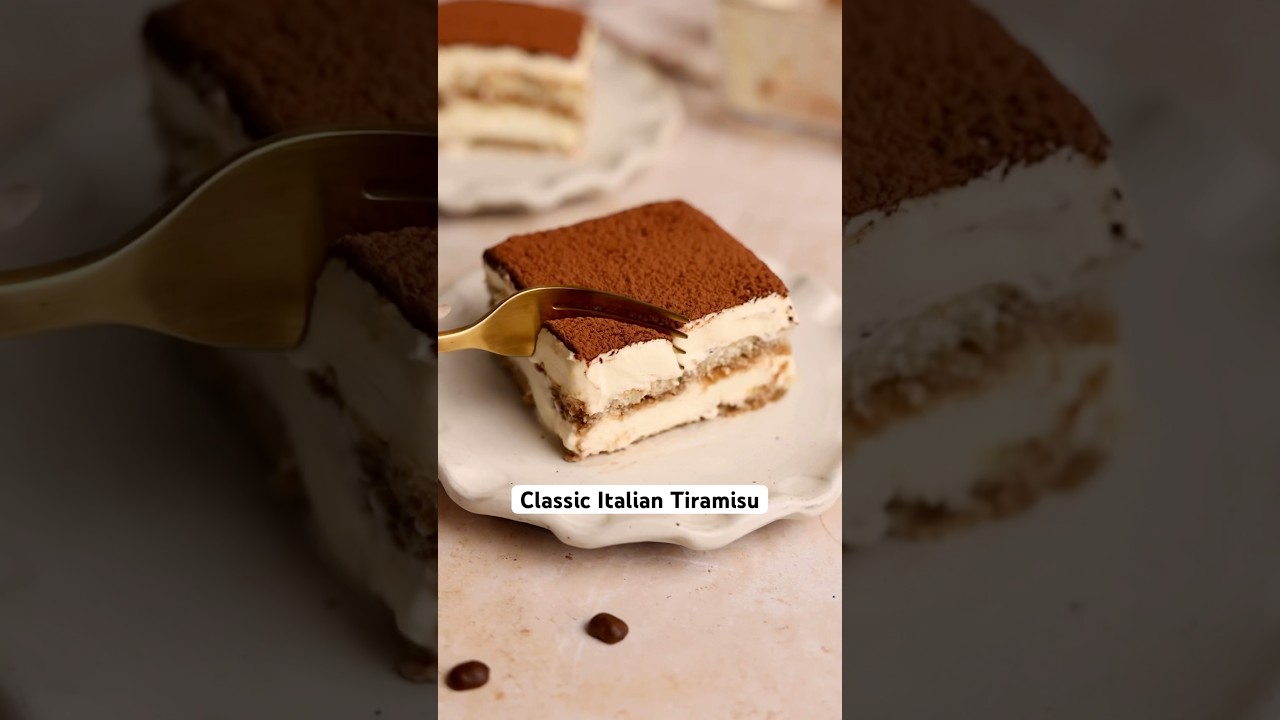
“Most tiramisu failures happen before the dish even hits the fridge. Over-soaked ladyfingers that dissolve into mush. Custard that never sets because the eggs weren't tempered properly. Cream that deflates because someone rushed the fold. Tiramisu looks forgiving — it's not. The overnight chill isn't optional; it's the entire mechanism. Get the custard right, respect the dip time, and this dessert takes care of itself.”
Why This Recipe Works
Tiramisu is not a complicated dessert. It is a precise one. The difference matters because precision errors look identical to recipe failures — and most people blame the recipe.
The Custard Is the Foundation
Everything in tiramisu sits on the egg yolk custard, which means if the custard fails, the dessert fails regardless of how good everything else is. The custard is made via a double boiler — yolks and sugar whisked over gentle indirect heat until the mixture reaches 160°F and transforms from thin liquid to a thick, pale, ribbon-stage base.
What's actually happening: heat denatures the egg proteins, which create a web of molecules that trap and hold the fat molecules in the mascarpone. This is the structural matrix of the filling. Undercooked custard means incomplete protein denaturation, which means a loose matrix that weeps liquid instead of holding its shape. This is the most common reason tiramisu doesn't set.
The instant-read thermometer is not optional. "Pale and thick" is a description, not a measurement. The thermometer tells you when the proteins have actually done their job.
Mascarpone Is Not Cream Cheese
Use it at room temperature. Cold mascarpone is dense and resistant — it won't fully incorporate into the warm custard and leaves lumps that no amount of stirring will smooth out. Pull it from the fridge at least an hour before you start. It should yield easily to a spatula with almost no resistance. When it folds into the 160°F custard, it melts into a seamless, silky base that sets perfectly during the chill.
The Fold Is a Technique, Not a Step
Whipped egg whites are mostly air. The foam structure that makes them light is made of thin protein films stretched around millions of tiny bubbles. Every unnecessary stir you take pops those bubbles. Once they're gone, they don't come back — you can't re-whip egg whites once they're folded into something heavier.
Fold from the bottom of the bowl with a silicone spatula, lifting the heavy custard up and over the whites. Rotate the bowl a quarter turn after each stroke. Two additions makes this easier — the first loosens the custard just enough that the second folds in cleanly without resistance. Stop the moment the whites are incorporated. Streaks of white are fine. A deflated, homogenous cream is not.
The Dip Is the Most Dangerous Step
Ladyfingers are engineered to absorb. They have a dry, porous crumb structure specifically designed to soak up liquid — which makes them ideal for tiramisu and catastrophically easy to over-soak. One to two seconds per side. Pull them out and immediately lay them in the dish. They will keep absorbing after they leave the bowl, so what feels underdone at the dip stage will be perfectly saturated after layering.
Cold espresso is essential here. Hot coffee accelerates absorption dramatically and softens the ladyfinger structure before it even gets into the dish. Brew your espresso ahead of time and let it come to room temperature, or make it the day before and refrigerate it.
The Overnight Is Non-Negotiable
At four hours, tiramisu is a soft, unmoldable mousse. At eight hours, the custard proteins have fully set and the layers hold their shape when sliced. At twenty-four hours, something else happens entirely — the espresso, mascarpone, cocoa, and vanilla stop being distinct flavors and become one cohesive thing.
The refrigerator does work that no technique can replicate. Make the tiramisu the night before you need it. Dust the cocoa immediately before serving, not before chilling — cocoa absorbs moisture from the cream and turns from a dry, elegant dusting into a wet, dark paste if it sits in the fridge overnight.
This is a dessert that rewards planning and punishes impatience. Plan accordingly.
Where Beginners Mess This Up
Before we start, read this. These are the 4 reasons your classic homemade tiramisu (the no-bake italian masterclass) will fail:
- 1
Over-soaking the ladyfingers: One to two seconds per side. That is it. Ladyfingers are designed to absorb — they will continue pulling liquid after they leave the bowl. Anything beyond two seconds and you have espresso-logged biscuits that dissolve under the weight of the cream, turning the bottom layer into soggy pudding instead of a structured base.
- 2
Skipping the double boiler for the custard: Raw yolks whisked directly with sugar and mascarpone is not a custard — it's a raw egg mixture that will weep liquid and never set. The double boiler brings the yolks to 160°F, which denatures the proteins and creates the thick, stable base the mascarpone needs to cling to. This step is also what makes the dish safe to eat.
- 3
Deflating the egg whites during folding: The whipped egg whites are the entire structure of the filling. If you stir them in, you knock out every air bubble and end up with a dense, heavy cream that tastes fine but has none of the cloud-like texture that makes tiramisu worth making. Fold in two additions with broad, sweeping strokes from the bottom of the bowl. Streaks of white are fine — overmixing is not.
- 4
Cutting into it before it's fully chilled: Eight hours is the minimum. Overnight is the target. The chill time isn't about food safety — it's about the mascarpone cream setting into sliceable, distinct layers. At four hours, you have a soft, loose mousse. At eight-plus hours, you have tiramisu. The difference is structural, not cosmetic.
The Video Reference Library
Want to see it in action? Here are the exact videos we analyzed and combined to build this foolproof recipe translation:
The primary reference for this recipe. Clear demonstration of the double boiler custard technique, the correct ladyfinger dip time, and the folding method that preserves the egg white structure.
🛠️ Core Equipment
- Heatproof mixing bowl and saucepan (double boiler setup)The egg yolk custard must be cooked gently over indirect heat to reach 160°F without scrambling. Direct heat turns the yolks into sweet scrambled eggs. The bowl should sit above — not in — the simmering water.
- Instant-read thermometerThe custard is done when it hits 160°F. Visual cues alone — 'pale and thick' — are subjective and unreliable. A thermometer removes the guesswork and ensures the eggs are safe and the custard is properly set.
- Offset spatulaFor smoothing the mascarpone cream layers evenly without dragging or disturbing the ladyfinger layer below. A regular spoon drags and creates uneven thickness. The offset angle gives you control.
- Fine-mesh sieveFor dusting the cocoa powder. Shaking cocoa directly from the tin produces uneven clumps. A sieve gives you an even, elegant layer that looks professional and distributes flavor uniformly.
Classic Homemade Tiramisu (The No-Bake Italian Masterclass)
🛒 Ingredients
- ✦6 large eggs, separated into yolks and whites
- ✦1 cup granulated sugar, divided
- ✦1.25 pounds mascarpone cheese, at room temperature
- ✦2 cups strong espresso or cooled coffee
- ✦3 tablespoons coffee liqueur or Kahlúa
- ✦2 teaspoons vanilla extract
- ✦44 ladyfinger biscuits (Savoiardi style)
- ✦3 tablespoons unsweetened cocoa powder for dusting
- ✦1/4 teaspoon fine sea salt
- ✦1/2 cup heavy whipping cream, chilled
- ✦Dark chocolate shavings for garnish (optional)
👨🍳 Instructions
01Step 1
Set up a double boiler: fill a saucepan with 2 inches of water and bring to a gentle simmer. Combine the 6 egg yolks with 3/4 cup sugar in a heatproof bowl and set it over the simmering water.
02Step 2
Whisk the yolk mixture continuously for 8-10 minutes until pale, thick, and ribbony, and an instant-read thermometer reads 160°F.
03Step 3
Remove the bowl from heat. Cool for 5 minutes, then fold in the room-temperature mascarpone until fully incorporated with no lumps.
04Step 4
Stir the vanilla extract and salt into the mascarpone mixture. Set aside.
05Step 5
Combine the cooled espresso and coffee liqueur in a shallow bowl wide enough to dip a ladyfinger horizontally. Set aside.
06Step 6
Chill a clean mixing bowl and beaters in the freezer for 5 minutes. Add the 6 egg whites and whip on high speed until stiff peaks form, about 3-4 minutes.
07Step 7
Add the remaining 1/4 cup sugar gradually while continuing to beat, until the whites are glossy and hold stiff, firm peaks, about 2-3 more minutes.
08Step 8
In a separate chilled bowl, whip the heavy cream until soft peaks form.
09Step 9
Fold the whipped cream into the mascarpone custard with broad, sweeping strokes until just combined.
10Step 10
Add the whipped egg whites in two additions, folding gently each time. Stop when no large white streaks remain. Do not overmix.
11Step 11
Working quickly, dip each ladyfinger into the espresso mixture for 1-2 seconds per side. Do not linger.
12Step 12
Arrange 22 dipped ladyfingers in a single layer across the bottom of a 9x13-inch dish.
13Step 13
Spread half the mascarpone cream evenly over the ladyfinger layer using an offset spatula.
14Step 14
Arrange the remaining 22 dipped ladyfingers in a second layer, perpendicular to the first for structural support.
15Step 15
Spread the remaining mascarpone cream over the top, smoothing it into an even, flat surface.
16Step 16
Cover tightly with plastic wrap and refrigerate for at least 8 hours, or overnight.
17Step 17
Just before serving, dust generously with cocoa powder through a fine-mesh sieve. Add dark chocolate shavings if desired. Slice and serve cold.
Nutrition Per Serving
Estimates based on standard preparation. Adjustments alter macros.
🔄 Substitutions
Instead of Raw eggs (yolks and whites)...
Use 1.5 cups pasteurized liquid egg product
Eliminates food safety concerns around raw egg consumption while maintaining the custard texture. Slight reduction in richness that is virtually undetectable in the finished dish.
Instead of Coffee liqueur...
Use 3 tablespoons coffee extract, or 2 tablespoons cooled espresso plus 1 teaspoon vanilla
Removes the alcohol entirely while preserving the coffee depth. The boozy warmth is gone, but the flavor profile holds. Good option for non-drinkers or when serving to mixed crowds.
Instead of Mascarpone cheese...
Use 1 pound mascarpone plus 1/4 pound crème fraîche or full-fat Greek yogurt
Slightly lighter mouthfeel with a subtle tang. Creaminess is preserved. The Greek yogurt version adds a faint probiotic note that some people prefer. Do not use low-fat versions of either — the fat is structural.
Instead of Standard Savoiardi ladyfingers...
Use Almond flour ladyfingers or whole wheat ladyfinger biscuits
Firmer crumb structure may require a slightly shorter dip time — 1 second per side instead of 2. Nuttier flavor profile that complements the espresso well. Available at most specialty grocery stores.
🧊 Storage & Reheating
In the Fridge
Cover tightly and refrigerate for up to 3 days. The texture and flavor are best between 8 and 24 hours after assembly. After day 3, the ladyfingers begin to over-saturate and the layers lose definition.
In the Freezer
Tiramisu freezes surprisingly well. Cover tightly with plastic wrap and then foil and freeze for up to 2 months. Thaw overnight in the refrigerator — do not thaw at room temperature, which causes condensation and a watery cream layer.
Reheating Rules
Tiramisu is served cold. Do not reheat. If serving from frozen, thaw in the fridge for 12 hours and dust with fresh cocoa powder immediately before serving.
❓ Frequently Asked Questions
Why is my tiramisu runny and not setting?
Two likely causes. First, the custard wasn't cooked to 160°F — undercooked yolks don't provide enough structure for the mascarpone to cling to. Second, it didn't chill long enough. Eight hours minimum, overnight preferred. At four hours, the cream is still loose. At eight-plus hours, the gelatin-like proteins in the egg custard fully set and give you sliceable layers.
Do I really need to use a double boiler, or can I just mix raw yolks with the mascarpone?
You can, and many recipes call for it. But raw yolk tiramisu has two problems: food safety (raw eggs at room temperature for hours) and structure (uncooled yolks don't bind the mascarpone as firmly). The double boiler adds 10 minutes and solves both problems. It's worth it.
My ladyfingers are completely soggy. What went wrong?
They soaked too long. One to two seconds per side is the target. Ladyfingers are highly porous and continue absorbing liquid after you pull them from the bowl. If your espresso is also warm rather than cooled, that accelerates the absorption further. Use cold or room-temperature coffee and move quickly.
Can I make tiramisu without alcohol?
Yes. Replace the coffee liqueur with an equal amount of cooled strong espresso, or use coffee-flavored extract. The boozy warmth disappears, but the coffee flavor is fully intact. The texture and structure are unaffected.
Why fold the egg whites in two additions instead of all at once?
Adding all the whites at once creates too much volume difference between the heavy custard base and the light whites, making even folding nearly impossible without deflating everything. The first addition loosens the custard slightly, making the second addition much easier to incorporate without losing volume.
Can I use regular coffee instead of espresso?
Yes, but brew it strong — at least double strength. Regular drip coffee doesn't have enough bitterness to cut through the sweetness of the mascarpone cream. If the coffee flavor is too weak, the whole dessert tastes cloyingly sweet. Cold brew concentrate works well as a substitute.

The Science of
Classic Homemade Tiramisu (The No-Bake Italian Masterclass)
We turned everything on this page into a beautiful, flour-proof PDF cheat sheet. Print it out, stick it to your fridge, and never mess up your classic homemade tiramisu (the no-bake italian masterclass) again.
*We'll email you the high-res PDF instantly. No spam, just perfectly cooked meals.
AlmostChefs Editorial Team
We translate the internet's most popular cooking videos into foolproof, beginner-friendly written recipes. We analyze multiple methods, test them in our kitchen, and engineer a single "Master Recipe" that gives you the best possible result with the least possible stress.