47g Protein Asian Chicken Meal Prep (Rivals Takeout, Costs Less)
Tender seared chicken with ginger-garlic sauce, crisp vegetables, and brown rice portioned into four ready-to-eat containers. We analyzed what makes takeout taste better than home cooking and built this recipe to close that gap — lower sodium, more protein, same satisfaction.

“Most meal prep tastes like punishment. Dry chicken, sad vegetables, sauce that evaporated somewhere between Sunday and Wednesday. The reason takeout tastes better isn't the ingredients — it's technique. Specifically: searing in batches so the chicken actually browns instead of steaming, building the sauce in the same pan to capture every bit of flavor that sticks to the bottom, and adding vegetables late so they stay crisp through four days in the fridge. This recipe does all three.”
Why This Recipe Works
The problem with most high-protein meal prep isn't the macros — it's the food. Dry chicken, underseasoned vegetables, sauce that looks like it evaporated sometime Tuesday. The reason takeout tastes better than home-cooked batch food isn't magic or MSG (though MSG is genuinely excellent). It's technique. Specifically, it's heat management, and almost every meal prep recipe ignores it entirely.
The Sear Is Not Optional
Two pounds of cold chicken going into one pan drops the surface temperature by 50 degrees or more. The pan recovers, but by then the chicken has released its moisture into the pan as steam and you've boiled the outside instead of searing it. The result is that pale gray chicken that meal prep has become infamous for.
The fix is simple and non-negotiable: two batches. Hot, shimmering oil. Single layer. Don't touch it for two minutes. The crust you're building here isn't aesthetic — it's the Maillard reaction, the same set of chemical reactions responsible for why seared steak tastes fundamentally different from boiled steak. The caramelized surface proteins and sugars create hundreds of flavor compounds that don't exist in raw or steamed chicken. Sacrifice this step and nothing else in the recipe can compensate.
A 12-inch cast iron skillet holds heat through a cold-protein batch better than any other pan in the kitchen. Stainless works. Nonstick does not — it runs too cool and can't handle the temperature swings.
The Sauce Architecture
This sauce is built in a specific order for a reason. The aromatics — ginger and garlic — go into the residual fat from the seared chicken, not a clean pan. Every browned bit stuck to the pan (the fond) dissolves when the broth hits and becomes part of the sauce. Wiping the pan or starting fresh means throwing away the most flavorful part of the entire cook.
The four sauce components — low-sodium soy, rice vinegar, honey, sesame oil — work in balance. Soy provides the salt and umami base. Vinegar provides brightness and cuts through the fat. Honey provides just enough sweetness to round the sharp edges. Sesame oil provides the aromatic finish that reads as "Chinese takeout" to most palates. Change one ratio significantly and the balance collapses. The recipe is calibrated — trust it before you improvise.
The cornstarch slurry goes in last. It thickens fast, and if you add it before the vegetables are fully in the pan, it seizes around them unevenly. Stir continuously for the full 2-3 minutes. The sauce is ready when it coats the back of a spoon and holds that coat when you run your finger through it.
Vegetables That Survive the Week
Broccoli and snap peas are load-bearing structural members of this meal prep. By day four, they still need to have crunch. This means two things: add them late in the cook so they're barely done when you pack them, and let everything cool for 10 full minutes before sealing the containers. Hot food sealed immediately creates condensation, which accelerates the softening of every vegetable in the container. The 10-minute rest is not optional.
Bell peppers are more forgiving — they can go in earlier. But broccoli should go in when the liquid hits the pan, and snap peas should go in with the sauce. They finish in the residual heat, which is exactly what you want.
Portioning for the Week You'll Actually Have
This recipe makes four identical containers, which is either exactly right or slightly optimistic depending on your week. The solution: freeze two, refrigerate two. The sauce reactivates cleanly after a slow fridge thaw, and the broccoli survives better than you'd expect. An instant-read thermometer helps you reheat to exactly 165°F without overcooking — the difference between moist and dry chicken on reheated meal prep is about 10 degrees.
The protein number — 47g per serving — assumes accurate portioning of the raw chicken and quinoa. Weigh the raw chicken, divide into four equal portions, and build the containers from there. Eyeballing two pounds across four containers is how 47g becomes 38g by Wednesday.
Where Beginners Mess This Up
Before we start, read this. These are the 4 reasons your 47g protein asian chicken meal prep (rivals takeout, costs less) will fail:
- 1
Crowding the pan during the sear: If you dump all two pounds of chicken into the skillet at once, the temperature drops and the chicken steams instead of sears. You get gray, rubbery cubes with no crust and no flavor. Work in two batches with a hot, shimmering pan. The golden-brown exterior is not cosmetic — it's the Maillard reaction, and it's where most of the flavor lives.
- 2
Adding the cornstarch slurry too early: The slurry thickens fast and can seize around uncooked vegetables if you add it before everything is in the pan. Add it last, after all vegetables and sauce liquids are in, and stir continuously for the full 2-3 minutes. Stop stirring and it lumps.
- 3
Skipping the cooling period before portioning: Hot food packed directly into sealed containers traps condensation, which turns your crisp broccoli into soft mush by Tuesday. The 10-minute rest before portioning matters. It also prevents your containers from warping.
- 4
Overcooking the vegetables: Broccoli and snap peas should still have bite on day four. If they're soft when you pack them, they'll be disintegrating by midweek. Add them to the pan late, keep the simmer gentle, and pull everything off heat the moment the sauce coats.
The Video Reference Library
Want to see it in action? Here are the exact videos we analyzed and combined to build this foolproof recipe translation:
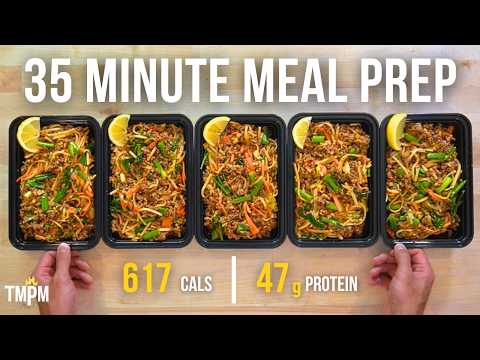
The source video demonstrating the full batch-cook technique, sauce ratios, and container portioning method. Clear close-ups of the sear color you're aiming for and the sauce consistency before and after the cornstarch slurry.
2. How to Meal Prep Like a Pro
Covers fundamental batch-cooking principles including pan temperature management, cooling protocols, and container selection. Useful companion for understanding why the technique choices in this recipe matter.
3. The Science of a Better Stir Fry SauceBreaks down the balance of salty, acidic, sweet, and umami in Asian-inspired sauces. Explains why low-sodium soy sauce plus rice vinegar produces a cleaner flavor than full-sodium soy alone.
🛠️ Core Equipment
- Large stainless steel or cast iron skillet ↗You need a pan that holds high heat through two batches of cold chicken without temperature-dropping. Nonstick pans run cooler and won't give you the same sear. A [12-inch skillet](/kitchen-gear/review/cast-iron-skillet) is the minimum size to avoid overcrowding.
- Four airtight meal prep containers ↗Glass containers maintain flavor better than plastic over four days and don't absorb the sesame-soy sauce smell. They're also microwave-safe, which matters at lunch. Look for ones with secure locking lids to prevent the sauce from migrating.
- Small mixing bowl and whisk ↗The sauce components — soy, vinegar, honey, sesame oil — need to be combined before hitting the hot pan. Adding them separately risks the honey caramelizing on contact before the other flavors integrate.
- Instant-read thermometer ↗Chicken breasts are done at 165°F internal temperature. Cutting into a piece to check doneness releases the juices you want to stay inside. A [thermometer](/kitchen-gear/review/instant-read-thermometer) tells you exactly when to pull without guessing.
47g Protein Asian Chicken Meal Prep (Rivals Takeout, Costs Less)
🛒 Ingredients
- ✦2 pounds boneless, skinless chicken breasts, cut into bite-sized cubes
- ✦3 cups broccoli florets, cut into small pieces
- ✦2 medium red bell peppers, diced into 1-inch pieces
- ✦1 cup snap peas, halved on the bias
- ✦1 small yellow onion, finely diced
- ✦3 tablespoons fresh ginger, minced
- ✦4 cloves garlic, minced
- ✦3 tablespoons low-sodium soy sauce
- ✦2 tablespoons rice vinegar
- ✦1 tablespoon honey
- ✦1 teaspoon sesame oil
- ✦2 tablespoons avocado oil
- ✦2 cups cooked brown rice or quinoa
- ✦2 green onions, sliced thin
- ✦1 tablespoon sesame seeds
- ✦1/2 teaspoon red pepper flakes
- ✦1 cup low-sodium chicken broth
- ✦2 teaspoons cornstarch mixed with 3 tablespoons water
👨🍳 Instructions
01Step 1
Heat avocado oil in a large skillet over medium-high heat until shimmering, about 2 minutes.
02Step 2
Working in two batches to avoid overcrowding, add chicken cubes in a single layer and sear until golden brown on all sides, approximately 6-7 minutes per batch. Transfer to a clean plate and set aside.
03Step 3
Reduce heat to medium. Add the diced yellow onion to the same skillet and stir frequently until softened and translucent, about 3 minutes.
04Step 4
Add minced garlic and fresh ginger. Stir constantly for 1 minute until fragrant.
05Step 5
Return the seared chicken to the skillet along with the bell peppers, broccoli florets, and snap peas. Toss to combine.
06Step 6
Pour in the chicken broth and bring to a gentle simmer over medium heat.
07Step 7
Whisk together soy sauce, rice vinegar, honey, and sesame oil in a small bowl. Pour into the skillet and stir to distribute.
08Step 8
Add red pepper flakes and stir well.
09Step 9
Add the cornstarch slurry, stirring continuously until the sauce thickens and coats the chicken and vegetables, about 2-3 minutes.
10Step 10
Taste and adjust — more soy sauce for saltiness, more rice vinegar for brightness.
11Step 11
Remove from heat and let cool for 10 minutes before portioning.
12Step 12
Divide cooked brown rice or quinoa equally among four containers, filling each about one-third full.
13Step 13
Top each container with equal portions of the chicken and vegetable mixture, distributing the sauce evenly.
14Step 14
Garnish with sliced green onions and sesame seeds. Cover and refrigerate.
Nutrition Per Serving
Estimates based on standard preparation. Adjustments alter macros.
🔄 Substitutions
Instead of Boneless, skinless chicken breasts...
Use Firm tofu, pressed and cubed, or tempeh
Tofu sears well if it's been pressed for at least 30 minutes. The protein count stays near the 47g target when paired with quinoa. Tempeh has a nuttier flavor that takes the ginger-garlic sauce well.
Instead of Brown rice...
Use Cauliflower rice mixed with white quinoa (50/50 blend)
Cuts carbs by roughly 40% while adding fiber and protein from the quinoa. The texture is lighter and less filling — which works for a lunch that doesn't slow you down in the afternoon.
Instead of Low-sodium soy sauce...
Use Tamari or coconut aminos
Tamari is gluten-free and nearly identical in flavor. Coconut aminos cuts sodium further but is noticeably sweeter — reduce the honey by half if you swap to coconut aminos.
Instead of Honey...
Use Pure maple syrup or coconut sugar
Maple syrup integrates smoothly into the sauce without adjusting quantities. Coconut sugar needs to dissolve in the broth before adding to avoid graininess.
🧊 Storage & Reheating
In the Fridge
Store in airtight containers for up to 4 days. Flavors develop and deepen from day two onward.
In the Freezer
Freeze in individual portions for up to 3 months. Thaw overnight in the refrigerator — do not microwave from frozen or the vegetables turn to mush.
Reheating Rules
Add 1-2 tablespoons of water or chicken broth to the container before reheating. Microwave on 70% power for 2 minutes, stir, then 1 minute more. The added liquid reactivates the sauce and prevents the chicken from drying out.
❓ Frequently Asked Questions
Why does my chicken come out dry by day three?
Two likely causes: you overcooked the chicken during the initial sear, or you're reheating on full microwave power. Pull the chicken at 165°F internal temperature — it carries over to 170°F on the plate, which is the edge of dry. Reheat at 70% power with a splash of liquid.
Can I use chicken thighs instead of breasts?
Yes, and they're arguably better for meal prep. Thighs have higher fat content, which keeps them moist through four days of refrigeration. The calorie count goes up by roughly 30-40 calories per serving. Cut them into the same bite-sized cubes and use the same cook time.
How do I hit 47g of protein per serving?
The calculation assumes 2 pounds of chicken breasts across 4 servings (roughly 8oz of raw chicken per container) plus 1/2 cup of quinoa. If you use brown rice instead of quinoa, you drop to about 43g. If your chicken portions are lighter, the number falls further. Weigh the raw chicken and divide evenly.
Can I add more vegetables?
Yes — mushrooms, bok choy, zucchini, and edamame all work well. Add denser vegetables (mushrooms, zucchini) with the bell peppers. Add leafy or delicate vegetables (bok choy, edamame) in the last 2 minutes before the cornstarch slurry. Don't exceed about 6 cups total or the sauce won't coat everything evenly.
Why use avocado oil and not sesame oil for cooking?
Sesame oil has a low smoke point and a strong flavor that turns bitter at high heat. It's a finishing oil — added to the sauce at the end. Avocado oil has a smoke point above 500°F, which is exactly what you need for the initial high-heat sear.
Is this actually lower sodium than takeout?
Yes, significantly. A comparable portion from a Chinese takeout restaurant typically runs 900-1,400mg of sodium per serving. This recipe comes in at 480mg using low-sodium soy sauce and broth. Swap to coconut aminos and you drop below 350mg.
The Science of
47g Protein Asian Chicken Meal Prep (Rivals Takeout, Costs Less)
We turned everything on this page into a beautiful, flour-proof PDF cheat sheet. Print it out, stick it to your fridge, and never mess up your 47g protein asian chicken meal prep (rivals takeout, costs less) again.
*We'll email you the high-res PDF instantly. No spam, just perfectly cooked meals.
AlmostChefs Editorial Team
We translate the internet's most popular cooking videos into foolproof, beginner-friendly written recipes. We analyze multiple methods, test them in our kitchen, and engineer a single "Master Recipe" that gives you the best possible result with the least possible stress.