Fresh Spring Rolls That Actually Keep (The Meal Prep Method That Works)
Vietnamese-inspired fresh spring rolls built for the whole week — crisp vegetables, protein, and a savory peanut sauce wrapped in rice paper. We broke down the assembly into a component-first system so you can roll fresh in under 3 minutes any day of the week without soggy wrappers or sad herbs.

“Most people make spring rolls once, decide it's too fussy, and never do it again. The wrapper tears. The herbs go brown by day two. The sauce separates. None of this is a recipe problem — it's a prep system problem. When you treat spring rolls like a component meal instead of a dish, everything changes. You stop rolling in bulk and start assembling fresh in under three minutes. Here's the system.”
Why This Recipe Works
Fresh spring rolls have a reputation problem. They're associated with restaurant labor — someone patient, practiced, and willing to stand over a bowl of warm water for thirty minutes. The reality is that the technique takes about four rolls to learn and approximately zero skill to execute correctly once you understand what the rice paper is actually doing. The problem was never the rolling. The problem was treating spring rolls as a dish instead of a system.
The Component Logic
Every meal prep failure has the same root cause: trying to preserve the finished product instead of preserving the components. With spring rolls, pre-rolling four days of lunches on Sunday afternoon sounds efficient right up until Wednesday, when your once-crisp wrappers have turned leathery, the herbs inside have gone grey, and the cabbage has shed moisture into the grain layer. What you have is not a meal prep win. It's a container of regret.
The correct approach: prep every component separately, store them in airtight containers, and assemble fresh in under three minutes per day. The grain takes the longest — cook it Sunday, spread it on a sheet pan, refrigerate until cold. The protein takes fifteen minutes. The vegetables take ten. The sauce takes four. You do this once and spend the rest of the week doing a thirty-second assembly that produces a roll with the same texture as one made to order.
The Rice Paper Window
Rice paper is hydrophilic — it wants to absorb water aggressively, and it will keep absorbing until it turns into a translucent, non-structural membrane that tears if you look at it sideways. Your entire rolling technique should be built around outsmarting this property.
The soaking window is three to four seconds in warm water, pulled while the wrapper still feels slightly firm. Not pliable. Not soft. Firm with a little give. Lay it flat on your work surface and it will continue softening over the next fifteen to twenty seconds as you arrange your filling. By the time you start the fold, it will be perfectly pliable — elastic enough to stretch around the filling without cracking, structured enough not to tear under tension.
Pull it too early and it cracks during the roll. Leave it in the water ten seconds too long and it becomes an unfoldable wet tissue. The window is narrow, but after two or three wrappers, your hands will know it instinctively.
Filling Architecture
The filling sequence matters for structural reasons, not aesthetic ones. Grain goes down first because it provides a stable base layer. Protein goes on top of the grain because it's the densest element and needs to sit flat. Vegetables go on top of the protein in small amounts — not piled high, but distributed. Herbs go in last, against the wrapper, where they stay protected during the roll.
The total filling should form a compact log about the diameter of a large thumb. This is less filling than you think you need. If the wrapper is bulging before you start the fold, you have already overfilled it. The fold compresses the filling further — you need room for that compression.
A sharp chef's knife matters here more than it does in most recipes. Julienned carrots and thinly sliced bell pepper need to be uniform — thick uneven pieces create lumps that push against the wrapper during rolling and create weak points that tear. Thin, even cuts distribute evenly and disappear into the roll.
The Peanut Sauce
The sauce in most Vietnamese restaurants is built on hoisin, peanut butter, and sugar — which is why it tastes sweet and slightly cloying when you eat more than two rolls. This version cuts the added sugar and leans on tamari, rice vinegar, and lime juice for the complexity you want: savory, sour, funky, barely sweet, with the slow burn of ginger and red pepper behind it.
Whisk it slightly thinner than your target consistency. It thickens significantly in the refrigerator and needs to be pourable to work as a dipping sauce when cold. Store it in the smallest container that will hold it — exposure to air dulls the lime and ginger notes over time.
The Four-Day Reality
This system works for four days. Day five, the cabbage starts releasing water and the protein begins to lose its texture. Build your prep accordingly — four days of components, eaten Monday through Thursday, with Friday being whatever you feel like by then. This is not a limitation of the recipe. It is the honest ceiling of fresh vegetable storage, and building your prep around reality rather than optimism is what makes meal prep actually work.
Where Beginners Mess This Up
Before we start, read this. These are the 4 reasons your fresh spring rolls that actually keep (the meal prep method that works) will fail:
- 1
Soaking the rice paper too long: Three to four seconds in warm water is all you need. The wrapper will still feel slightly firm when you lay it down — that's correct. It continues softening as you fill it. If you wait until it's fully pliable in the water, it will be a soggy, tear-prone mess by the time you try to roll. Pull it early, always.
- 2
Refrigerating assembled rolls uncovered: Rice paper dries and turns leathery within an hour at refrigerator temperature. If you pre-roll, each roll must be individually wrapped in plastic wrap or stored in a container lined with a damp paper towel. Skipping this step turns your meal prep into a batch of inedible crackers.
- 3
Storing herbs inside pre-rolled rolls: Fresh mint and cilantro oxidize and turn black faster than any other component. Store them separately, dry, wrapped in a barely damp paper towel inside a sealed bag. Add them at assembly time, not before. Herbs in a pre-made roll will look grey by day two.
- 4
Overfilling the wrapper: The most common rolling failure. You want a horizontal line of filling no wider than your thumb across the center third of the wrapper. Overcrowded rolls burst through the seam when you fold the sides in. Half the filling you think you need is actually the right amount.
The Video Reference Library
Want to see it in action? Here are the exact videos we analyzed and combined to build this foolproof recipe translation:
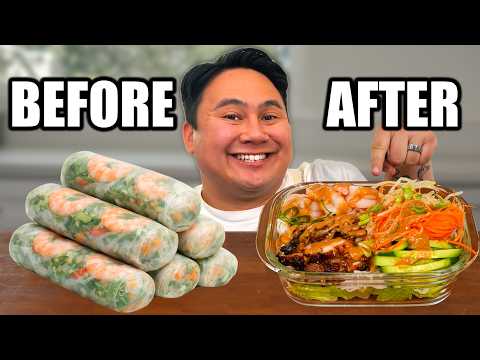
The source video for this recipe. Clear demonstration of the component-prep system, rice paper soaking technique, and rolling method. Watch the wrist motion during the fold — it's the step most written instructions fail to convey.
2. How to Roll Spring Rolls Without Tearing
Focused breakdown of the rice paper soaking window and fold sequence. Useful for first-timers who need to see the 'slightly firm' stage before wrapping.
3. 5-Day Fresh Spring Roll Meal PrepCovers component storage strategy in detail — which vegetables hold up best, how to keep herbs green, and which proteins stay best over four days.
🛠️ Core Equipment
- Shallow wide-bottomed bowl or pie dish ↗For soaking rice paper wrappers. The wrapper needs to lie flat and be fully submerged. A regular bowl makes this awkward and leads to uneven softening.
- Airtight meal prep containers ↗Component storage is the entire strategy here. You need containers that seal completely — rice paper wrappers dry out and herbs wilt without an airtight environment.
- Parchment paper ↗Place between layers of pre-rolled spring rolls to prevent them from sticking and tearing when separated. Plastic wrap works per-roll for individual wrapping.
- Sharp chef's knife or mandoline ↗Julienned carrots and thinly sliced bell pepper need uniform cuts. Uneven vegetables create lumpy rolls that tear at the thick spots. A [chef's knife](/kitchen-gear/review/chefs-knife) with a steady hand or a [mandoline](/kitchen-gear/review/mandoline) does this fastest.
Fresh Spring Rolls That Actually Keep (The Meal Prep Method That Works)
🛒 Ingredients
- ✦12 brown rice paper wrappers
- ✦2 cups shredded green cabbage
- ✦1 large carrot, julienned into thin matchsticks
- ✦1 cup fresh mint leaves, roughly chopped
- ✦1 cup fresh cilantro leaves, roughly chopped
- ✦4 green onions, cut into 2-inch lengths
- ✦1 cup cooked shrimp or 1 cup cubed baked tofu
- ✦2 cups cooked quinoa or brown rice, cooled
- ✦1 red bell pepper, thinly sliced into strips
- ✦2 tablespoons natural peanut butter, unsalted
- ✦2 tablespoons low-sodium tamari or coconut aminos
- ✦1 tablespoon rice vinegar
- ✦1 tablespoon fresh lime juice
- ✦1 teaspoon minced fresh ginger
- ✦1 clove garlic, minced
- ✦1 teaspoon sesame oil
- ✦1 tablespoon water
- ✦Pinch of crushed red pepper flakes
👨🍳 Instructions
01Step 1
Wash, dry, and prep all vegetables. Shred the cabbage, julienne the carrot, slice the bell pepper, and trim the green onions. Store each in a separate airtight container.
02Step 2
Cook quinoa or brown rice according to package directions. Spread on a baking sheet and refrigerate until completely cool before storing.
03Step 3
If using shrimp, boil or steam for 2-3 minutes until pink and cooked through, then chill completely. If using tofu, press between paper towels to remove excess moisture, cube, and bake at 400°F for 20 minutes until lightly golden.
04Step 4
Whisk together peanut butter, tamari, rice vinegar, lime juice, minced ginger, garlic, sesame oil, water, and red pepper flakes until smooth and pourable. Thin with additional water one teaspoon at a time if needed.
05Step 5
When ready to assemble, fill a shallow wide dish with warm water. Dip one rice paper wrapper for 3-4 seconds until just pliable but still slightly firm. Lay flat on a clean surface.
06Step 6
Arrange fillings in a horizontal line across the center of the wrapper: a spoonful of grain, then protein, then a small amount of each vegetable. Do not overfill.
07Step 7
Fold the left and right sides of the wrapper inward over the filling, then roll away from you firmly, keeping tension on the filling as you go.
08Step 8
Place finished rolls seam-side down on a parchment-lined plate. Cover with a damp kitchen towel while you continue rolling the remainder.
09Step 9
For meal prep storage: wrap each finished roll individually in plastic wrap, or layer in airtight containers with parchment paper between each roll. Refrigerate.
10Step 10
Store the dipping sauce in small sealed containers separately from the rolls. Add just before eating — sauce contact softens the wrapper over time.
11Step 11
To serve, remove rolls from refrigerator, unwrap, and eat within 30 minutes of removing from storage for best texture. Pair with sauce for dipping.
Nutrition Per Serving
Estimates based on standard preparation. Adjustments alter macros.
🔄 Substitutions
Instead of White rice paper...
Use Brown rice paper or whole wheat rice paper
Slightly nuttier flavor and firmer texture. Less delicate but more nutritious — higher fiber and less prone to tearing for beginners.
Instead of Shrimp...
Use Tempeh or marinated baked tofu
Comparable protein with earthier, nuttier flavor. Fermented tempeh adds gut-health benefits. Press and bake tofu the same way described in the instructions.
Instead of White rice...
Use Quinoa or farro
Quinoa is a complete protein with all nine amino acids. Farro adds chewiness and sustained satiety. Both provide better blood sugar stability than refined white rice.
Instead of Traditional peanut sauce with added sugar...
Use Natural peanut butter with tamari and lime juice
Cleaner, more savory flavor without cloying sweetness. Eliminates added sugars and refined oils while keeping the healthy monounsaturated fat from peanuts.
🧊 Storage & Reheating
In the Fridge
Pre-rolled and individually wrapped rolls keep for up to 4 days. Prepped components (vegetables, grain, protein) stored separately keep for up to 5 days. Always store sauce separately.
In the Freezer
Rice paper rolls do not freeze well — the wrapper becomes brittle and tears when thawed. Freeze cooked protein and grain components individually if needed.
Reheating Rules
Fresh spring rolls are served cold or at room temperature. Do not microwave — the wrapper becomes rubbery and the herbs turn grey. Remove from refrigerator 15 minutes before eating for best texture.
❓ Frequently Asked Questions
Why does my rice paper keep tearing?
Either you soaked it too long or you overfilled it. Pull the wrapper from the water when it's still slightly firm — it will finish softening on the work surface. And keep the filling to a small, compact line across the center third of the wrapper. Overfilling is the primary tear cause.
Can I make these the night before?
Yes, but wrap each roll individually in plastic wrap immediately after rolling. Do not let them sit unwrapped in a container overnight — the exposed wrapper will dry into a leathery shell by morning.
How do I keep the herbs from turning black?
Store mint and cilantro separately from rolled rolls. Wrap them in a barely damp paper towel, place inside a zip bag, and refrigerate. Add herbs during assembly, not before. Herbs sealed inside a roll overnight oxidize and turn grey-brown by the next day.
Is there a way to make these without peanut butter for allergies?
Sunflower seed butter is the closest substitute — similar fat content and consistency. Tahini works for a more neutral, sesame-forward sauce. Both blend with tamari, lime, and ginger the same way peanut butter does.
Can I use regular white rice paper instead of brown?
Yes — white rice paper is more widely available, slightly more delicate, and more translucent when finished. Brown rice paper is firmer and slightly more forgiving to work with. Both function identically in this recipe.
My peanut sauce is too thick. How do I fix it?
Add warm water one teaspoon at a time and whisk until you reach a pourable consistency. Cold water works too but warm water incorporates faster. The sauce also thickens considerably in the refrigerator, so make it slightly thinner than you want the final result.
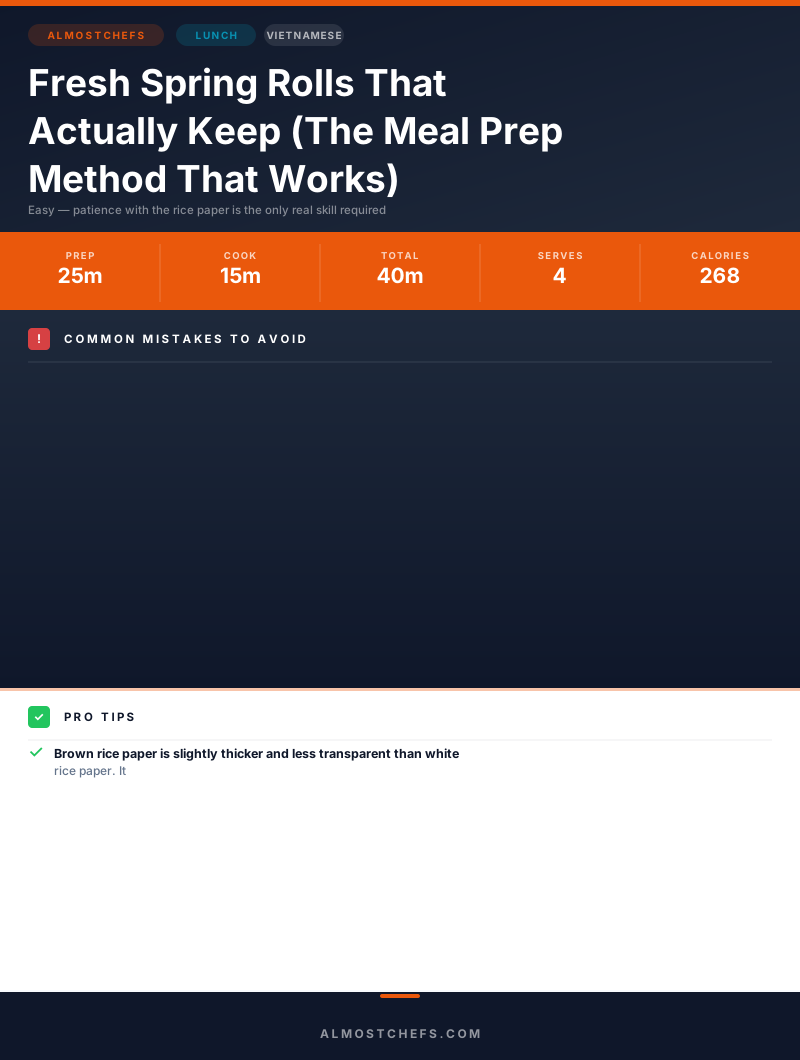
The Science of
Fresh Spring Rolls That Actually Keep (The Meal Prep Method That Works)
We turned everything on this page into a beautiful, flour-proof PDF cheat sheet. Print it out, stick it to your fridge, and never mess up your fresh spring rolls that actually keep (the meal prep method that works) again.
*We'll email you the high-res PDF instantly. No spam, just perfectly cooked meals.
AlmostChefs Editorial Team
We translate the internet's most popular cooking videos into foolproof, beginner-friendly written recipes. We analyze multiple methods, test them in our kitchen, and engineer a single "Master Recipe" that gives you the best possible result with the least possible stress.