Creamy Scalloped Potatoes (The One That Actually Sets)
Thinly sliced russet potatoes layered with a roux-based cream sauce, sharp cheddar, and caramelized onion, baked under foil then finished uncovered for a golden crust. We broke down the most-watched YouTube methods to find the one technique that produces tender layers without a watery, broken sauce.

“Scalloped potatoes should be the easiest thing in the world. They are not. The internet is full of recipes that produce watery sauce, crunchy potato centers, and greasy cheese puddles. The difference between a dish that holds together and one that collapses into soup comes down to three things: parboiling the potatoes, building a proper roux, and resisting the urge to rush the final uncovered bake. We tested the most-watched YouTube methods so you don't have to.”
Why This Recipe Works
Scalloped potatoes are the dish home cooks chronically underestimate. They look simple — potatoes, cream, cheese, oven — and that apparent simplicity is exactly why so many versions fail. The margin for error is narrow: too much moisture and you get soup, too little heat and you get crunch, too much heat and you get dry edges with a raw center. The technique in this recipe is not complicated, but every step exists to solve a specific problem.
The Parboil Is Not Optional
Raw potato slices contain roughly 80% water by weight. In the oven, that water does not stay in the potato — it migrates into the cream sauce, thinning it progressively over 45 minutes until you open the foil to find a pale, broken liquid pooling around underdone starch. The parboil changes the physics. Five minutes in boiling salted water starts the starch gelatinization on the exterior of each slice, creating a partial barrier that slows moisture migration during baking. It also gives the potato a head start, meaning the total oven time can stay under an hour without leaving the center crunchy.
The word "parboil" intimidates people because it sounds precise. It is precise — but simply. Set a timer for five minutes from the moment the slices hit boiling water. Pull them the second it goes off. Drain immediately. That's it.
Roux Mechanics
The cream sauce is a classic French béchamel, and it follows rules that don't bend. Butter and flour cook together first — this is the roux — and the heat converts the raw starch in the flour from something that tastes chalky and powdaste into something that tastes faintly nutty and behaves as a clean thickener. One minute of constant stirring over medium heat is the minimum. Less and the sauce will have a raw flour flavor that never bakes out.
Warm milk goes in next, added slowly. The key word is slowly. Dumping cold milk into a hot roux shocks the starch particles, causing them to clump before they can disperse evenly through the liquid. The result is a lumpy sauce that no amount of whisking will fully rescue. Warm the milk, add it in thirds, whisk continuously, and the sauce comes together in four minutes without drama.
Season the sauce aggressively before it goes into the dish. Salt and pepper at this stage penetrate every layer of the finished dish. Seasoning at the table only hits the surface.
The Layering Logic
The assembly order — potatoes, onion, sauce, potatoes, onion, sauce, cheese — is structural. The onion goes between layers rather than on top because it releases moisture as it cooks, and that moisture needs to be absorbed by the surrounding sauce rather than escaping as steam off an exposed surface. The cheese goes only on top because it needs direct heat to brown properly; buried cheese melts into a greasy pool rather than forming a crust.
Even layers are not aesthetic preference — they're functional. Uneven layers mean some sections have too much sauce-to-potato ratio and go soft, while others have too little and stay dry. Use a mandoline for consistent quarter-inch slices. A sharp chef's knife works if your knife skills are reliable, but quarter-inch is the target and variance matters.
The Two-Phase Bake
Covered for 35-40 minutes at 375°F, then uncovered at 425°F for 8-10 minutes. These are not interchangeable. The foil phase creates a steam environment that cooks the potato interior through gentle, even heat — the same principle behind biryani dum cooking. Without the foil, the top layer dries and browns before the center is done. The uncovered phase at high heat does only one thing: browns the cheese. Eight to ten minutes is enough. Watch it.
A 9x13 baking dish is the right vessel. Smaller dishes stack the layers too high for the center to cook through in the allotted time. Larger dishes spread the layers too thin and the sauce evaporates before the potatoes are tender.
The Rest
Ten minutes. Non-negotiable. Cream sauce fresh from the oven is liquid — the starch gelatinization is still happening as the dish cools. Cut into it at 200°F and the sauce runs across the plate. Wait ten minutes and you get clean, layered slices that hold their shape. This is the step most people skip because they're hungry and impatient. Don't skip it.
Where Beginners Mess This Up
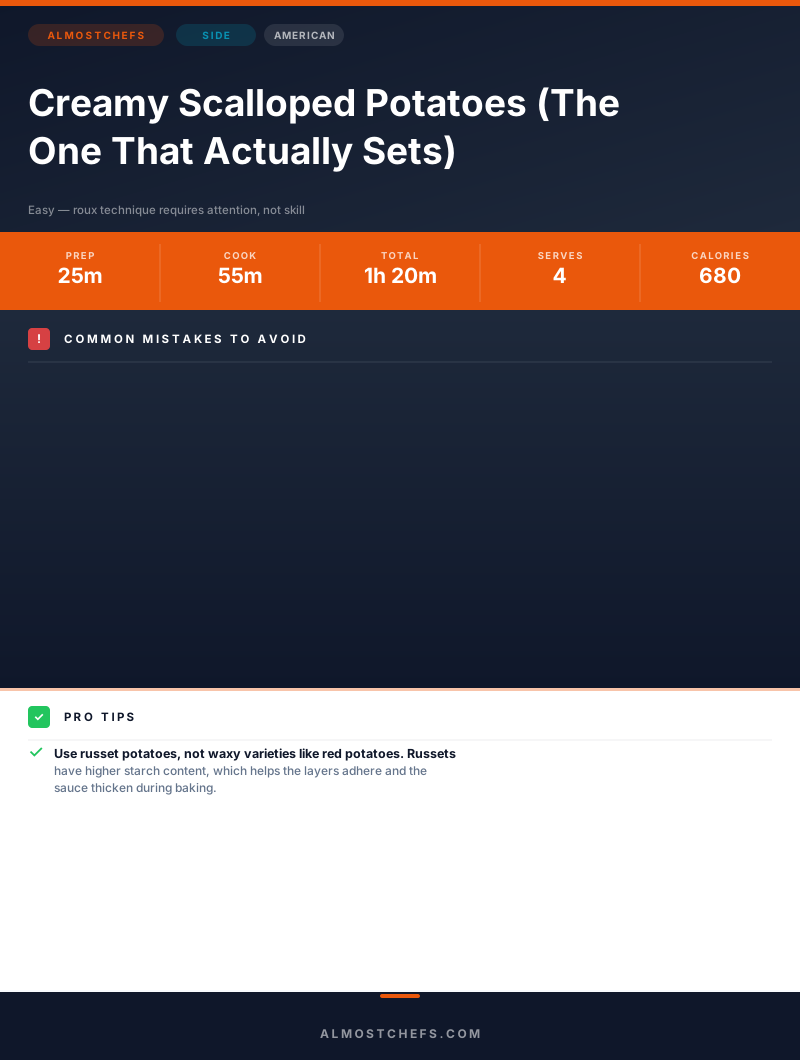
Before we start, read this. These are the 4 reasons your creamy scalloped potatoes (the one that actually sets) will fail:
- 1
Skipping the parboil: Raw potato slices go into the oven with too much internal moisture. That moisture bleeds into the cream sauce during baking, thinning it out and producing the characteristic watery pool at the bottom of the dish. Five minutes in salted boiling water drives off excess moisture and starts the starch gelatinization that helps the layers hold.
- 2
Adding cold milk to the roux: Cold milk hitting a hot roux shocks the starch granules and creates lumps that no amount of whisking will fully dissolve. Warm the milk before it goes in. This is not optional. Lumpy cream sauce does not become smooth in the oven — it becomes lumpy baked cream sauce.
- 3
Pulling the foil too early or too late: The foil phase traps steam that finishes cooking the potatoes through to the center. Remove it too early and the edges dry out before the middle is done. Leave it on too long and you get no browning at all. Thirty-five to forty minutes covered, then increase heat and uncover for eight to ten minutes — that sequence is the entire recipe.
- 4
Not resting before serving: Scalloped potatoes straight from the oven are liquid. The cream sauce needs ten minutes to set into a cohesive structure that holds when you cut into it. Cut early and you get a cascade of hot cream across the plate. Wait, and you get clean, layered slices.
The Video Reference Library
Want to see it in action? Here are the exact videos we analyzed and combined to build this foolproof recipe translation:

🛠️ Core Equipment
- 9x13 inch baking dishSurface area matters. A smaller dish forces the layers too high, meaning the center never fully cooks before the edges overbrown. Nine by thirteen gives each layer room to cook evenly.
- Heavy-bottomed saucepanFor the roux and cream sauce. Thin pans create hot spots that scorch the flour before it cooks through, producing a bitter, grainy sauce. Heavy stainless or enameled cast iron distributes heat evenly.
- Mandoline or sharp chef's knifeQuarter-inch slices. Thicker and the center won't cook through. Thinner and the potato disintegrates during parboiling. Consistent thickness is the only way every layer finishes at the same time.
- Aluminum foilTight cover for the first bake phase. Without it, the top dries and browns before the interior is done. The foil creates a steam environment that finishes the potatoes through gentle, trapped heat.
Creamy Scalloped Potatoes (The One That Actually Sets)
🛒 Ingredients
- ✦2.5 pounds russet potatoes, peeled and sliced ¼-inch thick
- ✦4 tablespoons unsalted butter
- ✦3 tablespoons all-purpose flour
- ✦2.5 cups whole milk, warmed
- ✦1 medium yellow onion, thinly sliced
- ✦3 cloves garlic, minced
- ✦1.5 teaspoons kosher salt
- ✦0.75 teaspoon freshly ground black pepper
- ✦0.5 teaspoon ground nutmeg
- ✦1.5 cups sharp cheddar cheese, shredded
- ✦0.5 teaspoon dry mustard powder
- ✦2 tablespoons fresh parsley, chopped
👨🍳 Instructions
01Step 1
Preheat your oven to 375°F and lightly butter a 9x13 inch baking dish.
02Step 2
Bring a large pot of salted water to a boil, add the sliced potatoes, and cook for 5 minutes until just starting to soften. Drain thoroughly.
03Step 3
Melt the butter in a heavy-bottomed saucepan over medium heat. Add the minced garlic and cook for 30 seconds until fragrant.
04Step 4
Whisk the flour into the butter, stirring constantly for about 1 minute to form a light golden roux.
05Step 5
Gradually pour the warmed milk into the roux, whisking continuously to prevent lumps. Stir until the sauce thickens, about 3-4 minutes.
06Step 6
Season the sauce with salt, pepper, nutmeg, and dry mustard powder. Taste and adjust.
07Step 7
Arrange half of the parboiled potato slices in the bottom of the prepared baking dish in an even layer.
08Step 8
Scatter half of the sliced onion over the potatoes, then pour half of the cream sauce over evenly.
09Step 9
Layer the remaining potatoes on top, followed by the rest of the onion and the remaining cream sauce.
10Step 10
Sprinkle the shredded cheddar cheese evenly across the entire surface.
11Step 11
Cover the baking dish tightly with aluminum foil and bake for 35-40 minutes, until the potatoes are tender when pierced with a fork through the foil.
12Step 12
Remove the foil, increase oven temperature to 425°F, and bake uncovered for 8-10 minutes until the cheese top is golden brown.
13Step 13
Let the dish rest at room temperature for 10 minutes before serving. The sauce needs to set.
14Step 14
Garnish with fresh chopped parsley and serve warm directly from the baking dish.
Nutrition Per Serving
Estimates based on standard preparation. Adjustments alter macros.
🔄 Substitutions
Instead of Russet potatoes...
Use Yukon Gold potatoes
Naturally buttery flavor and creamier texture. Slightly less starchy, so the sauce may be marginally thinner. No parboil time adjustment needed.
Instead of Sharp cheddar cheese...
Use 1 cup reduced cheddar plus ½ cup grated Gruyère
Gruyère adds nutty, complex flavor with better melt. Using less total cheese reduces saturated fat without sacrificing coverage.
Instead of Unsalted butter...
Use Ghee or extra virgin olive oil
Ghee deepens the nutty flavor and handles heat cleanly. Olive oil produces a lighter sauce but changes the flavor profile noticeably.
Instead of All-purpose flour...
Use Cornstarch (use half the amount)
Creates a more delicate, glossy sauce. Whisk cornstarch into cold milk before adding to the pan — it does not work the same way as a roux.
🧊 Storage & Reheating
In the Fridge
Store covered in the baking dish or transfer to an airtight container for up to 4 days. The sauce continues to set as it cools.
In the Freezer
Freeze in portions for up to 2 months. Texture degrades slightly on thaw — the sauce can separate. Reheat slowly to recombine.
Reheating Rules
Add 2 tablespoons of milk over the portion, cover tightly with foil, and reheat at 325°F for 20 minutes. Microwave works but the cheese top loses its texture.
❓ Frequently Asked Questions
Why are my scalloped potatoes watery?
Two causes: you skipped the parboil, or you added cold milk to the roux. The parboil drives off excess potato moisture before baking. Cold milk breaks the roux emulsion, thinning the sauce. Fix both and the water problem disappears.
Can I make scalloped potatoes ahead of time?
Yes, and you should. Assemble completely, refrigerate overnight unbaked, then bring to room temperature for 30 minutes before baking. Alternatively, bake fully and reheat covered at 325°F — the flavor is actually better the second day.
What's the difference between scalloped potatoes and au gratin?
Scalloped potatoes use a cream sauce without cheese between the layers — the cheese, if used, goes only on top. Au gratin potatoes have cheese layered throughout. This recipe is technically a hybrid, with cheese on top but not between layers.
Do I have to parboil the potatoes?
You don't have to, but without it you need an additional 20-30 minutes of covered bake time, and the sauce often turns watery from the moisture releasing out of raw potato slices. The parboil takes five minutes and solves two problems at once.
Why did my cheese turn greasy instead of melting?
Pre-shredded cheese is dusted with potato starch or cellulose to prevent clumping in the bag — the same coating prevents it from melting cleanly. Always shred from a cold block of cheese directly before using.
My sauce is lumpy — is there any way to fix it?
If the lumps are small, pass the sauce through a fine-mesh sieve before pouring it over the potatoes. If the lumps are large, the roux broke — start a new sauce. A broken roux cannot be rescued with stirring.
The Science of
Creamy Scalloped Potatoes (The One That Actually Sets)
We turned everything on this page into a beautiful, flour-proof PDF cheat sheet. Print it out, stick it to your fridge, and never mess up your creamy scalloped potatoes (the one that actually sets) again.
*We'll email you the high-res PDF instantly. No spam, just perfectly cooked meals.
AlmostChefs Editorial Team
We translate the internet's most popular cooking videos into foolproof, beginner-friendly written recipes. We analyze multiple methods, test them in our kitchen, and engineer a single "Master Recipe" that gives you the best possible result with the least possible stress.