The Best Oven Baked Chicken and Rice (One-Pan, No-Fuss Weeknight Winner)
Tender chicken breasts nestled into herbed brown rice with carrots, mushrooms, and onions — all baked in one pan with chicken broth that infuses every grain. We analyzed the most common one-pan failures to build a foolproof method that delivers fluffy rice and juicy chicken every single time.
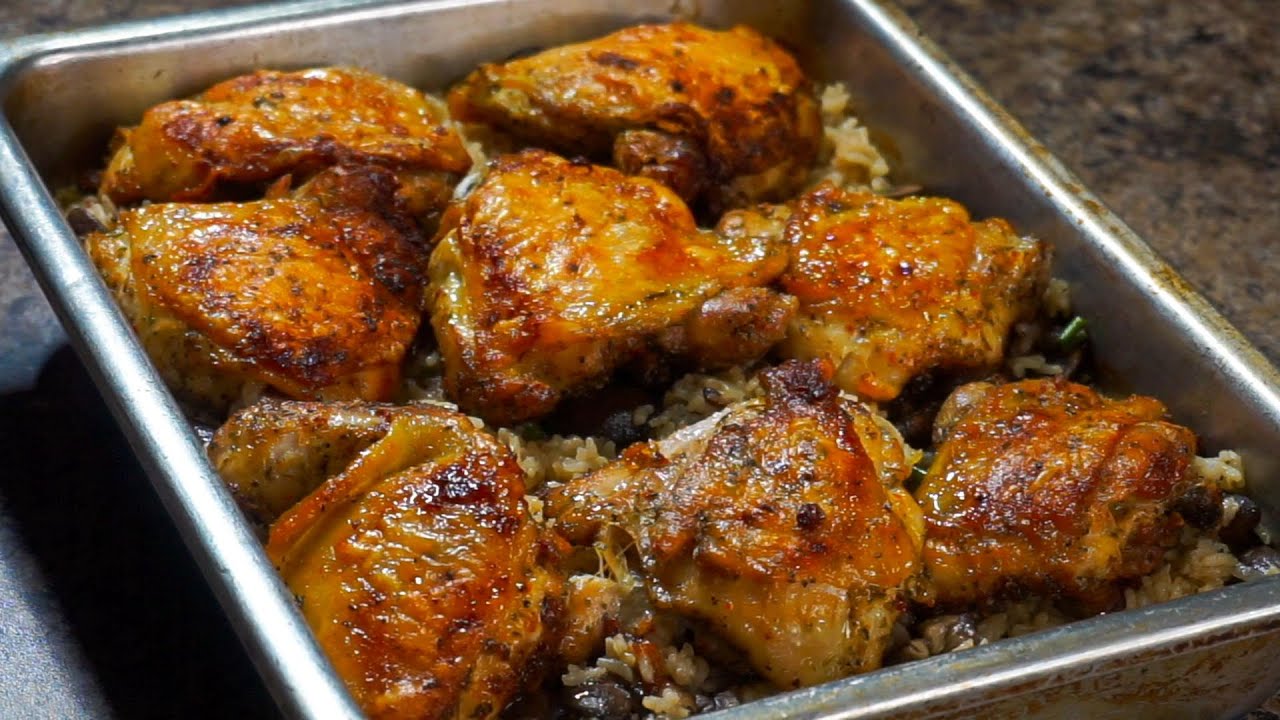
“One-pan chicken and rice sounds like it should be impossible to mess up. It isn't. Most versions come out with either dry, rubbery chicken sitting on top of crunchy undercooked rice, or mushy rice underneath chicken that cooked too fast. The fix is not a complicated technique — it's understanding the liquid ratio, the importance of not lifting the lid, and why brown rice is actually more forgiving here than white.”
Why This Recipe Works
One-pan chicken and rice is the most requested weeknight dinner in the English-speaking world, and somehow also one of the most consistently disappointing. The problem is not the concept. It's that most recipes treat it like a dump-and-forget proposition — which it is not, at least not until you've done the ten minutes of work that makes the difference between a meal and a chore.
The Sauté Foundation
Every great one-pan dish starts with a proper sauté base, and this one is no exception. The sequence — onions first, then garlic, then mushrooms, then a deglaze — is not ceremonial. It's flavor engineering.
The onions soften and sweeten over four minutes of medium-high heat. The garlic goes in last because it burns in 60 seconds flat if the pan is too hot or goes in too early. The mushrooms release about three tablespoons of liquid as their cell walls collapse, and that liquid picks up the color from the onions and the fond forming on the bottom of the pot. The white wine deglaze lifts all of it — every browned bit, every concentrated sugar, every caramelized protein fragment — and incorporates it into the liquid that will cook your rice for the next hour.
Skip this step and you get functional but flat food. Do it properly and the rice tastes like it absorbed something worth absorbing.
Why Brown Rice Works Better Here
The conventional wisdom is that brown rice is harder to cook than white. In a saucepan on the stovetop, that's true. In a sealed Dutch oven in the oven, the equation reverses. Brown rice's firmer bran layer means it takes longer to turn mushy, which gives you a wider window of doneness. White rice in a sealed oven environment can go from perfectly cooked to overcooked in four minutes. Brown rice gives you closer to a ten-minute window. For a recipe where you're managing a protein at the same time, that forgiveness matters.
The fiber difference is real too. The bran layer that slows cooking also slows starch digestion, which means a steadier blood sugar response over the hours after the meal. For a dinner dish where you're already eating a substantial portion of carbohydrate, that's not nothing.
The Nested Chicken Method
Pressing the chicken breasts partially into the rice rather than just laying them on top is the single most underrated technique in this recipe. The bottom third of each breast sits in hot liquid and braises. The top two-thirds roasts in the steam environment. The result is chicken that is moist from the bottom up without the rubbery texture you get from fully braised boneless breasts.
The target internal temperature is 165°F, measured at the thickest point. Pull it at exactly 165°F — carryover heat during the five-minute rest will bring it to about 168°F, which is the actual ideal. Waiting until 170°F on the thermometer means eating 173°F chicken, which is technically safe but texturally unfortunate.
The Pea Principle
The frozen peas are not an afterthought. They are a textural and color reset for a dish that, after an hour in the oven, trends toward brown and soft. Two minutes of residual heat from the just-pulled pot is all they need — they come out bright green, just cooked through, with a slight pop that contrasts against the yielding rice and tender chicken.
The lemon wedges follow the same logic. Acid doesn't just add brightness — it chemically resets your palate between bites, making each forkful taste as vivid as the first. Serve them on the side, not squeezed over the pan. Let each person calibrate.
This is not a complicated dish. It is a dish where the margin between mediocre and excellent is ten minutes of attentive stovetop work followed by sixty minutes of intentional restraint. Do the first part properly. Then leave it alone.
Where Beginners Mess This Up
Before we start, read this. These are the 4 reasons your the best oven baked chicken and rice (one-pan, no-fuss weeknight winner) will fail:
- 1
Wrong liquid ratio: Brown rice needs more liquid than white — roughly 2:1 ratio — and the vegetables release additional moisture as they cook. Too little liquid and the rice stays crunchy. Too much and you get a wet, gummy mess. The 4 cups of broth to 2 cups of rice in this recipe is calibrated for the vegetable moisture release. Don't add more liquid thinking you're being helpful.
- 2
Skipping the sauté step: Dumping everything raw into the pan skips the single most important flavor-building step. The Maillard reaction on the onions, the fond from the mushrooms, the deglazing with white wine — all of that becomes the flavor base that the rice absorbs for an hour. Raw aromatics produce a flat, one-dimensional dish.
- 3
Lifting the lid mid-bake: The sealed lid traps steam that cooks the top of the chicken and finishes the rice. Every time you check on it, you drop the internal temperature and extend the cook time unpredictably. Set the timer for 55 minutes and walk away. The only exception is when you're checking the internal temperature at the end.
- 4
Adding peas too early: Frozen peas take two minutes of residual heat to warm through. Add them to the oven and they turn army-green and mushy. They go in after the pot comes out, stirred into the hot rice while it rests. Bright green, just cooked. Order matters.
🛠️ Core Equipment
- Oven-safe Dutch oven with tight-fitting lidThe heavy base distributes heat evenly across the bottom, preventing scorched rice while the lid traps steam to cook the chicken from above. A [Dutch oven](/kitchen-gear/review/dutch-oven) is the single most useful piece of equipment for this dish — a thin baking dish will give you hot spots and dry edges.
- Instant-read meat thermometerChicken breasts vary in thickness and the difference between 160°F and 175°F is the difference between juicy and chalky. Don't guess. Check at 55 minutes and pull at exactly 165°F.
- Wooden spoon or silicone spatulaFor scraping the fond from the bottom of the pan after deglazing. Those browned bits are concentrated flavor — leave them stuck to the pan and you've wasted the best part of the sauté step.
The Best Oven Baked Chicken and Rice (One-Pan, No-Fuss Weeknight Winner)
🛒 Ingredients
- ✦4 boneless, skinless chicken breasts, about 6 ounces each
- ✦2 cups long-grain brown rice, uncooked
- ✦4 cups low-sodium chicken broth
- ✦3 medium carrots, cut into thin half-moon slices
- ✦2 medium yellow onions, finely diced
- ✦8 ounces cremini mushrooms, sliced
- ✦1 cup frozen peas
- ✦3 cloves garlic, minced
- ✦2 tablespoons extra-virgin olive oil
- ✦1 teaspoon dried thyme
- ✦1 teaspoon dried oregano
- ✦2 bay leaves
- ✦1/2 teaspoon black pepper
- ✦1 teaspoon sea salt
- ✦1/2 cup dry white wine or additional broth
- ✦2 tablespoons fresh parsley, finely chopped
- ✦1 lemon, cut into wedges for serving
👨🍳 Instructions
01Step 1
Preheat your oven to 375°F and position the rack in the middle of the oven.
02Step 2
Heat the olive oil in a large oven-safe Dutch oven or deep baking dish over medium-high heat.
03Step 3
Sauté the diced onions and carrots together, stirring frequently, until the onions become translucent and softened, about 4 minutes.
04Step 4
Add the minced garlic to the pan and cook until fragrant, stirring constantly, about 1 minute.
05Step 5
Stir in the sliced mushrooms and cook for 3 minutes, allowing them to release their moisture and begin to brown.
06Step 6
Pour in the white wine or additional broth and scrape the bottom of the pan to release any browned bits, cooking for 2 minutes.
07Step 7
Spread the uncooked brown rice evenly across the bottom of the pot, stirring it into the vegetable mixture.
08Step 8
Sprinkle the thyme, oregano, sea salt, black pepper, and bay leaves over the rice and vegetables.
09Step 9
Arrange the chicken breasts on top of the rice mixture in a single layer, pressing down gently so they're partially nestled into the rice.
10Step 10
Pour the chicken broth slowly and evenly over everything, ensuring the liquid reaches about 1/2 inch below the top of the rice.
11Step 11
Cover the pot tightly with a lid or heavy-duty aluminum foil and transfer it to the preheated oven.
12Step 12
Bake undisturbed for 55 to 65 minutes, until the rice is tender, the liquid is mostly absorbed, and the chicken reaches an internal temperature of 165°F.
13Step 13
Remove from the oven and let rest, covered, for 5 minutes to allow the rice to finish absorbing any remaining moisture.
14Step 14
Stir in the frozen peas gently, allowing the residual heat to warm them through, about 2 minutes.
15Step 15
Remove and discard the bay leaves, garnish with fresh parsley, and serve with lemon wedges on the side.
Nutrition Per Serving
Estimates based on standard preparation. Adjustments alter macros.
🔄 Substitutions
Instead of Long-grain brown rice...
Use Long-grain white rice
Reduce broth to 3.5 cups and cut bake time to 40-45 minutes. White rice overcooks fast in a sealed environment — check at 40 minutes.
Instead of Cremini mushrooms...
Use Shiitake or oyster mushrooms
More robust, earthy umami. Shiitakes in particular have a meatier texture that holds up well through the long bake. Remove stems from shiitakes — they stay woody.
Instead of Chicken breasts...
Use Bone-in, skin-on chicken thighs
More forgiving protein — nearly impossible to overcook. Increase bake time to 70-75 minutes. The skin won't crisp in this moist environment, but the extra fat from the skin enriches the rice considerably.
Instead of Dry white wine...
Use Additional chicken broth with a squeeze of lemon
The wine adds acidity and complexity to the fond deglaze. If skipping, add 1 teaspoon of lemon juice to the broth to approximate that brightness.
🧊 Storage & Reheating
In the Fridge
Store in an airtight container for up to 4 days. The flavors meld and the dish actually improves on day two as the rice fully absorbs the remaining aromatics.
In the Freezer
Freeze in individual portions for up to 2 months. Thaw overnight in the fridge. Chicken texture softens slightly after freezing but the overall dish holds well.
Reheating Rules
Add 2 tablespoons of chicken broth per portion, cover, and reheat on medium-low for 8-10 minutes on the stovetop. Microwave at 70% power with a damp paper towel over the top to retain moisture.
❓ Frequently Asked Questions
Why is my rice still crunchy after the full bake time?
Two likely causes: either the lid wasn't sealed tightly enough and steam escaped, or the liquid ratio was off. Check that your lid fits snugly — if there are gaps, cover with foil before putting the lid on. Also confirm you used 4 full cups of broth. Brown rice is unforgiving of under-liquid.
Can I use chicken thighs instead of breasts?
Yes, and for most cooks they're the better choice. Thighs have more fat and connective tissue, which means they stay moist even if you go slightly over time. Bone-in thighs add the most flavor. Add 10-15 minutes to the bake time and cook to 175°F internal — thighs benefit from the higher temperature.
Do I have to use wine?
No. Substitute an equal amount of low-sodium chicken broth plus a teaspoon of lemon juice. The wine contributes acidity to the deglaze, which brightens the overall flavor. The lemon juice approximates that without alcohol. The dish is still excellent without it.
My chicken is done but the rice is still wet. What happened?
Pull the chicken out and let it rest under foil. Return the pot to the oven uncovered for 5-8 minutes to evaporate the excess moisture. This is almost always a sealing issue — steam condensed on the lid and dripped back into the rice rather than staying as steam.
Can I add other vegetables?
Yes, with the same rule: add sturdy vegetables (bell peppers, celery, parsnips) with the onion sauté. Add delicate vegetables (zucchini, spinach) in the last 5 minutes of baking or after, like the peas. Anything that overcooks easily should not spend an hour in a sealed oven.
Why do you add the peas at the end?
Frozen peas are already blanched — they need two minutes of residual heat, not an hour in the oven. Baking them the full time turns them gray and chalky. Stirring them in after the pot comes out gives you bright green, tender peas with intact texture. Same principle applies to fresh herbs.
The Science of
The Best Oven Baked Chicken and Rice (One-Pan, No-Fuss Weeknight Winner)
We turned everything on this page into a beautiful, flour-proof PDF cheat sheet. Print it out, stick it to your fridge, and never mess up your the best oven baked chicken and rice (one-pan, no-fuss weeknight winner) again.
*We'll email you the high-res PDF instantly. No spam, just perfectly cooked meals.
AlmostChefs Editorial Team
We translate the internet's most popular cooking videos into foolproof, beginner-friendly written recipes. We analyze multiple methods, test them in our kitchen, and engineer a single "Master Recipe" that gives you the best possible result with the least possible stress.