Lighter Alfredo Pasta That Actually Tastes Like Alfredo (Not Sad Diet Food)
A creamy, indulgent-tasting fettuccine Alfredo built on Greek yogurt and cauliflower puree instead of heavy cream and butter. We reverse-engineered the classic to cut calories nearly in half without sacrificing the velvety texture that makes Alfredo worth eating in the first place.

“Classic Alfredo is 620 calories of butter, cream, and cheese coating a carbohydrate vehicle. Nobody argues with the flavor. The argument is whether you need all that fat to achieve the same silky, clinging texture — or whether there's a smarter path to the same destination. Greek yogurt and cauliflower puree sound like diet blog desperation until you actually make this sauce and realize it coats the pasta identically, holds its sheen, and doesn't taste like a compromise. It tastes like Alfredo.”
Why This Recipe Works
The problem with low-calorie Alfredo recipes is that most of them don't start with an honest understanding of what makes Alfredo work in the first place. They swap out the fat, watch the sauce turn into wallpaper paste, and conclude the healthy version is just going to be worse. That's the wrong conclusion.
Classic Alfredo sauce works because of emulsification — fat, protein, and starch suspended together in a matrix that clings to pasta and stays fluid rather than pooling at the bottom of the bowl. Heavy cream and butter achieve this easily because the fat content is so high that everything stays lubricated. The challenge isn't replicating the ingredients. It's replicating the physical behavior.
What Cauliflower Actually Does Here
Cauliflower puree is not a health trick. It's a structural decision. When cooked until soft and blended for a full minute on high, cauliflower breaks down into a thick, starchy gel that behaves almost identically to a cream reduction. It has low flavor presence but high body — meaning it gives the sauce its velvety mouthfeel and the coating weight that makes Alfredo feel substantial. Without it, Greek yogurt sauce is thin and flat no matter how much cheese you add.
The key is the blend time. Thirty seconds leaves granular texture that broadcasts the ingredient substitution. Sixty seconds on high in a proper blender produces a completely smooth emulsion that is indistinguishable from reduced cream in texture. Don't shortcut this step.
The Greek Yogurt Rules
Greek yogurt is not a drop-in replacement for cream. It has protein where cream has fat, and those proteins behave very differently under heat. Above 160°F, the proteins denature and clump — what's called "breaking" the sauce. This is not a flavor problem. It's a physics problem, and it only has one solution: low heat and patience.
The full technique for yogurt-based sauces is this: blend it in off heat, then use residual warmth to bring the sauce together. By the time the yogurt hits the pan, the pan should be barely warm — and it stays that way. A wide skillet helps here because the low sides allow heat to dissipate quickly and give you visual control over what's happening at the edges. Deep pots trap heat and make it harder to see the sauce approaching the danger zone.
The Dijon Emulsifier
Mustard contains allyl isothiocyanates and natural mucilage compounds that function as emulsifiers — the same role that egg yolk plays in mayonnaise or lecithin plays in commercial salad dressings. One teaspoon of Dijon, whisked into the yogurt and cheese mixture, creates a molecular bridge between the fat-soluble cheese compounds and the water-soluble yogurt proteins. The result is a sauce that holds together under gentle heat instead of splitting into greasy puddles and watery whey.
You will not taste the mustard. That is the point.
Pasta Water Is Not Optional
The starch content of properly salted pasta water is the final piece. As pasta cooks, it leaches surface starch into the boiling water — roughly 2-3% starch by weight over a nine-minute cook. That starchy water, added to the sauce a splash at a time during the final toss, acts as both a thinner and a binder. It loosens the sauce to the right flowing consistency while simultaneously helping it adhere to every strand.
Without it, yogurt-cauliflower sauce hits warm pasta and immediately tightens — you end up with clumped pasta and a thick paste instead of a glossy, evenly coated dish. Reserve half a cup before you drain. Use it generously.
The result of all this is a sauce that is 235 fewer calories per serving than the original, with 61% less saturated fat, nearly double the fiber, and a gut health profile that builds rather than undermines. It also tastes like Alfredo. Both things are true at once — you just have to respect the physics.
Where Beginners Mess This Up
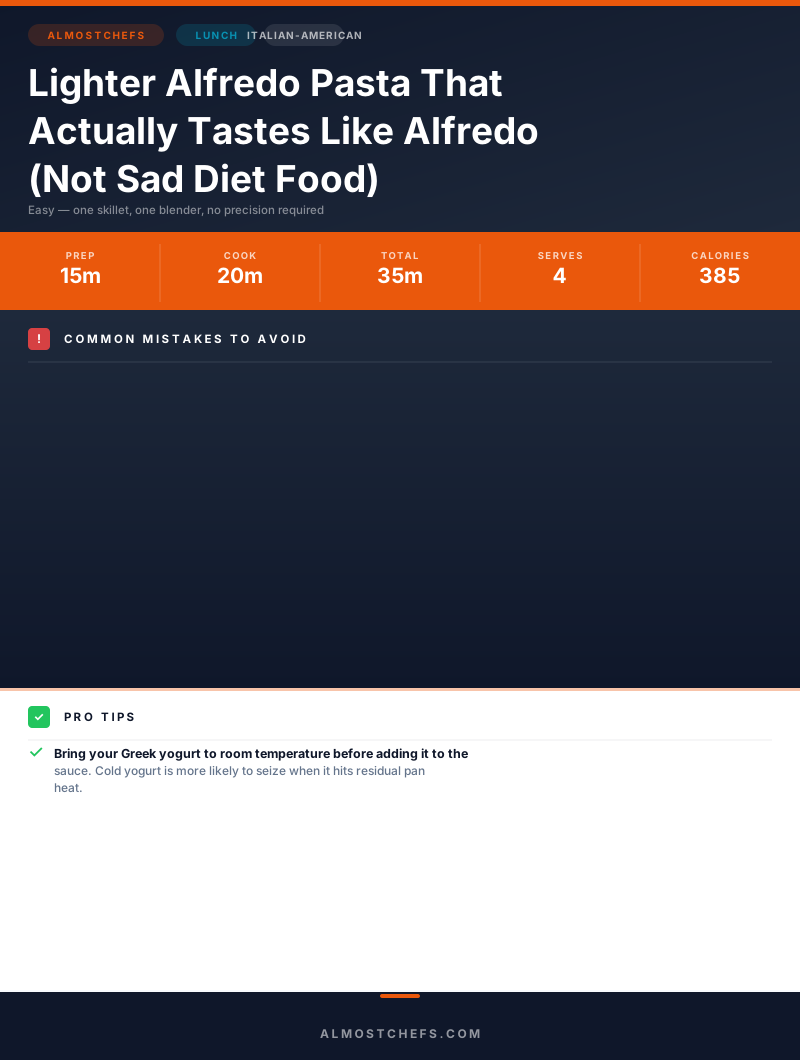
Before we start, read this. These are the 4 reasons your lighter alfredo pasta that actually tastes like alfredo (not sad diet food) will fail:
- 1
Boiling the yogurt sauce: Greek yogurt breaks above 160°F — the proteins seize, the sauce splits, and you get lumpy white chunks floating in thin liquid. After adding the yogurt, the heat must stay at a gentle low. If you see bubbles forming at the edge of the pan, you're already too hot. Stir constantly and keep it just warm enough to serve.
- 2
Skipping the cauliflower blend time: Thirty seconds in the blender leaves visible texture that reads as cheap baby food. The cauliflower puree needs a full minute of high-speed blending to become completely smooth and silky. This is what gives the sauce its body. Under-blended cauliflower destroys the illusion entirely.
- 3
Adding cold yogurt directly to hot pan: Thermal shock causes yogurt to separate instantly. Let the pan cool off heat for a full minute before whisking in the yogurt. The residual heat of the pan and the hot pasta water do the work without cracking the sauce.
- 4
Forgetting to reserve pasta water: The starchy pasta water is your insurance policy. Without it, a sauce that looks perfect in the pan turns into a thick paste the moment you add the pasta. Reserve at least half a cup before you drain.
🛠️ Core Equipment
- Blender or high-powered food processor ↗A standard blender runs hotter and longer than an immersion blender, which is what you need to fully emulsify the cauliflower into a smooth, cream-like consistency. An immersion blender leaves texture that betrays the vegetable.
- Large skillet with wide base ↗Surface area matters when tossing pasta in sauce. A narrow pot traps steam and makes the pasta steam rather than coat. Wide skillet lets you toss everything together evenly and keeps the sauce from pooling at the bottom.
- Fine grater or microplane ↗Pre-grated Parmesan from a canister contains cellulose that prevents proper melting and turns your sauce grainy. Fresh-grated Parmigiano-Reggiano on a microplane melts almost invisibly into the sauce, contributing flavor without texture.
Lighter Alfredo Pasta That Actually Tastes Like Alfredo (Not Sad Diet Food)
🛒 Ingredients
- ✦12 ounces fettuccine pasta or whole wheat penne
- ✦2 tablespoons extra virgin olive oil
- ✦4 cloves garlic, minced
- ✦1 cup cauliflower florets, chopped into small pieces
- ✦3/4 cup low-sodium vegetable broth
- ✦1 cup plain non-fat Greek yogurt
- ✦1/2 cup grated Pecorino Romano cheese
- ✦1/4 cup freshly grated Parmigiano-Reggiano cheese
- ✦2 tablespoons fresh lemon juice
- ✦1 teaspoon Dijon mustard
- ✦1/2 teaspoon garlic powder
- ✦1/4 teaspoon white pepper
- ✦1/4 teaspoon sea salt
- ✦1/4 teaspoon ground nutmeg
- ✦2 tablespoons fresh flat-leaf parsley, chopped
- ✦2 tablespoons grated Parmesan for garnish
- ✦Red pepper flakes to taste
👨🍳 Instructions
01Step 1
Bring a large pot of well-salted water to a rolling boil. Add fettuccine and cook until al dente, about 9 minutes. Reserve 1/2 cup pasta water before draining.
02Step 2
While pasta cooks, combine the cauliflower florets and vegetable broth in a small saucepan. Bring to a simmer over medium-high heat and cook until the cauliflower is completely tender, 7-8 minutes.
03Step 3
Transfer the cauliflower and all the broth to a blender. Blend on high for a full 60 seconds until completely smooth and creamy with no visible texture.
04Step 4
Warm the olive oil in a large skillet over medium heat. Add the minced garlic and sauté until fragrant and just turning golden, 45-60 seconds.
05Step 5
Pour the cauliflower puree into the skillet with the garlic. Stir to combine and cook for 2 minutes until heated through.
06Step 6
Remove the skillet from heat. Let cool for 1 minute, then whisk in the Greek yogurt, Pecorino Romano, Parmigiano-Reggiano, lemon juice, and Dijon mustard until fully smooth and incorporated.
07Step 7
Return the skillet to low heat. Gently warm the sauce, stirring frequently, for 3-4 minutes. Do not let it boil.
08Step 8
Season with garlic powder, white pepper, sea salt, and nutmeg. Taste and adjust.
09Step 9
Add the drained pasta to the skillet. Toss together, adding reserved pasta water a splash at a time until every strand is evenly coated and the sauce clings without pooling.
10Step 10
Serve immediately in warm bowls. Garnish with fresh parsley, extra Parmesan, and red pepper flakes.
Nutrition Per Serving
Estimates based on standard preparation. Adjustments alter macros.
🔄 Substitutions
Instead of Heavy cream...
Use Plain non-fat Greek yogurt
Slightly tangier flavor but equally velvety. Higher protein content and a fraction of the fat. The crucial rule: never boil it.
Instead of Butter (sauce base)...
Use Extra virgin olive oil
Loses the dairy fat richness but gains polyphenols and allows the garlic flavor to come forward more cleanly.
Instead of Traditional egg-based fettuccine...
Use Whole wheat or chickpea pasta
Nuttier flavor, chewier texture, significantly more fiber. Chickpea pasta adds 14g protein per serving and has a lower glycemic impact.
Instead of Cauliflower puree...
Use White bean puree
Blend one cup of drained cannellini beans with the broth instead. Higher protein, slightly earthier flavor, still completely smooth. Works identically as a sauce base.
🧊 Storage & Reheating
In the Fridge
Store sauce and pasta separately in airtight containers for up to 3 days. Combined, the pasta absorbs the sauce overnight and turns gluey.
In the Freezer
The sauce freezes well for up to 2 months. The pasta does not — freeze sauce only and cook fresh pasta when ready to serve.
Reheating Rules
Reheat sauce gently in a skillet over low heat with 2 tablespoons of water or broth, stirring constantly. Never microwave — the yogurt will separate. Toss freshly cooked pasta into the reheated sauce.
❓ Frequently Asked Questions
Will I taste the cauliflower?
No. Fully blended cauliflower is invisible in this sauce — it contributes creaminess and body but no identifiable vegetable flavor. The garlic, cheese, and nutmeg dominate completely. This has been tested on people who actively dislike cauliflower.
Why did my sauce turn grainy or lumpy?
The yogurt got too hot. Greek yogurt separates above 160°F — the proteins denature and clump. Let the pan cool for a full minute off heat before adding the yogurt, then keep the heat at its absolute lowest when warming through. If it separates, whisk vigorously and add a splash of pasta water — it can sometimes be saved.
Can I make this dairy-free?
Replace the Greek yogurt with unsweetened cashew cream (blend soaked raw cashews with water to a thick consistency). Use nutritional yeast in place of Parmesan — about 3 tablespoons. The flavor profile shifts but the sauce structure holds.
How do I keep the sauce from getting thick and gluey when tossing the pasta?
Pasta water. The starch dissolved in it loosens the sauce and helps it flow around and cling to the pasta rather than seize up. Add it in small increments while tossing — a splash at a time until the consistency looks glossy and coating rather than paste-like.
Is the Dijon mustard really necessary?
Yes, though you won't taste it. Mustard contains compounds that act as emulsifiers, keeping the yogurt proteins and cheese fats from separating during heating. Without it, the sauce is more prone to breaking. One teaspoon does the structural work invisibly.
Can I add chicken or shrimp to make it a full dinner?
Easily. Sauté sliced chicken breast or shrimp in the skillet before making the sauce, set aside, then fold back in when tossing the pasta. Add 3-4 minutes to cook time. The protein addition bumps each serving from 18g to roughly 35g.
The Science of
Lighter Alfredo Pasta That Actually Tastes Like Alfredo (Not Sad Diet Food)
We turned everything on this page into a beautiful, flour-proof PDF cheat sheet. Print it out, stick it to your fridge, and never mess up your lighter alfredo pasta that actually tastes like alfredo (not sad diet food) again.
*We'll email you the high-res PDF instantly. No spam, just perfectly cooked meals.
AlmostChefs Editorial Team
We translate the internet's most popular cooking videos into foolproof, beginner-friendly written recipes. We analyze multiple methods, test them in our kitchen, and engineer a single "Master Recipe" that gives you the best possible result with the least possible stress.