The High-Protein Meal Prep Bowl (That Actually Keeps You Full)
A batch-cooked lunch system built on seared chicken, fluffy quinoa, and caramelized roasted vegetables with a creamy tahini drizzle. We broke down the most popular meal prep methods to give you a five-day formula that prevents flavor fatigue and keeps protein high every single day.

“The reason most people abandon meal prep after one week isn't laziness. It's that everything tastes the same by Wednesday. The fix isn't more variety — it's better architecture. When you cook components separately, store the dressing apart, and understand how each ingredient holds up over five days, you get bowls that actually taste better on day four than they did on day one.”
Why This Recipe Works
Most meal prep fails for the same reason most diets fail: the system was designed for the first day, not the fifth. Enthusiasm is highest on Sunday when the containers are fresh and the dressing is bright. By Thursday, the quinoa has absorbed everything, the chicken has the texture of pencil eraser, and the dressing has fused into a gray paste at the bottom. This is not a discipline problem. It is an architecture problem.
The Component Principle
The foundational insight behind this formula is that the worst thing you can do is assemble a bowl and then store it. Pre-dressed bowls are not meal prep — they are leftovers. The difference: leftovers are engineered for one reheating. A properly architected meal prep system is engineered for five independent meals that each taste like they were assembled on demand.
That means every component travels separately and meets only at the moment of eating. Quinoa in its container. Chicken and roasted vegetables layered on top, yes — but the dressing in its own jar, the scallions in a small bag. This adds approximately 45 seconds to your Sunday prep time and buys you four extra days of food that tastes good.
Why the Sear Matters More Than You Think
The chicken sear is not about aesthetics. It is about the structural integrity of your meal prep. When you put raw, unseared chicken directly into the oven, the protein contracts and forces moisture outward. That liquid sits in your container and slowly soaks into the quinoa below, turning it mushy by day two.
A two-minute sear in a large oven-safe skillet at high heat creates a surface crust through Maillard browning. This crust acts as a partial moisture barrier, keeping internal juices trapped inside the chicken rather than migrating outward into your bowl. Seared chicken stays juicier longer. Unseared chicken donates its moisture to everything around it.
The Roasting Problem Nobody Talks About
Sweet potatoes, broccoli, and bell pepper have different sugar concentrations and water content. Roasted at the same temperature in the same window, they behave differently — and when crowded onto a single pan, they create a steam environment that cooks rather than caramelizes. You get pale, soft vegetables instead of charred edges and concentrated sweetness.
Two large rimmed baking sheets run simultaneously solve this. Space creates airflow. Airflow allows evaporation. Evaporation allows the surface temperature of each piece to climb above 212°F — the boiling point of water — where Maillard browning and caramelization can actually occur. The result is vegetables with textural contrast and flavor concentration that holds up across five days of cold storage.
The Tahini Architecture
Tahini is an emulsification challenge. At room temperature with proper whisking, it achieves a creamy, pourable consistency. In the refrigerator, the fat molecules slow down and the dressing seizes back into a thick paste. This is why separate storage jars are non-negotiable: if the dressing is poured over assembled bowls before refrigeration, it never rehydrates properly and instead forms a coating on the quinoa that reads as greasy rather than creamy.
Stored in small jars at room temperature or briefly run under warm water before use, the tahini emulsion stays stable and pourable. Add it to the cold bowl just before eating and it coats every grain, every vegetable, and every piece of chicken in exactly the way it was meant to.
The Five-Day Calculus
This system works because it respects the physics of food storage. Quinoa holds for five days. Roasted vegetables hold for four to five days with proper caramelization. Seared chicken holds for four to five days. Fresh spinach, dry and sealed, holds for three to four days. Tahini dressing, separate, holds for a week.
The weakest link is the spinach. If you're prepping for a full five days, add the spinach only to Monday through Wednesday containers. Prep the Thursday and Friday spinach fresh — it takes 30 seconds and is the only variable that requires mid-week intervention.
Forty minutes on Sunday. Five lunches that you actually want to eat.
Where Beginners Mess This Up
Before we start, read this. These are the 4 reasons your the high-protein meal prep bowl (that actually keeps you full) will fail:
- 1
Cooking quinoa in water instead of broth: Quinoa cooked in plain water is technically correct and culinarily boring. The grain is neutral by nature — it takes on whatever liquid surrounds it during cooking. Low-sodium chicken broth adds a savory baseline that makes the entire bowl taste more cohesive without adding significant sodium.
- 2
Skipping the chicken sear: Going straight from raw chicken to the oven produces gray, rubbery protein with no textural contrast. The two-minute sear in a hot skillet triggers Maillard browning on the surface, creating a crust that holds moisture in during the oven finish. Unseared chicken releases more liquid as it sits in containers, turning the quinoa soggy by day two.
- 3
Storing dressing directly on the bowl: Tahini dressing poured over assembled bowls softens the quinoa and turns the spinach to slime within 24 hours. Small separate jars extend the dressing shelf life to the full five days and let each bowl taste freshly assembled instead of pre-soaked. This is not optional.
- 4
Roasting all vegetables on one sheet pan: Sweet potatoes, broccoli, and bell pepper have different moisture levels and caramelization rates. Overcrowding one pan traps steam and steams the vegetables instead of roasting them. Two sheet pans with space between pieces gives you crispy edges and concentrated flavor — the difference between a bowl you want to eat and one you're forcing down.
The Video Reference Library
Want to see it in action? Here are the exact videos we analyzed and combined to build this foolproof recipe translation:
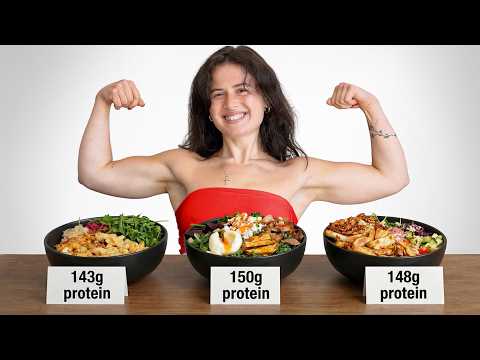
The original video that sparked this recipe's popularity. Demonstrates the component cooking method and assembly sequence clearly.
2. How to Actually Meal Prep Quinoa Bowls
Detailed walkthrough of the quinoa cooking technique and why broth matters. Good reference for timing multiple oven components simultaneously.
3. Tahini Dressing Master ClassBreaks down the ratio of tahini to lemon juice to water for a dressing that stays pourable after refrigeration — crucial for meal prep applications.
🛠️ Core Equipment
- Two large rimmed baking sheets ↗Spacing vegetables across two pans prevents steaming and ensures even caramelization. This is the single biggest variable in whether your roasted vegetables taste good or just cooked.
- Large oven-safe skillet ↗For the chicken sear before the oven finish. Cast iron or stainless steel holds high heat without dropping temperature when cold chicken hits the surface — critical for getting actual browning instead of just gray protein.
- Five glass meal prep containers ↗Glass doesn't absorb odors or leach chemicals during reheating. Equally important: the seal keeps moisture where it belongs. Plastic containers allow too much evaporation, drying out the quinoa by day three.
- Five small glass jars for dressing ↗Separate dressing storage is the architectural decision that makes this system work. Every container needs its own jar — not a single large container that gets passed around.
The High-Protein Meal Prep Bowl (That Actually Keeps You Full)
🛒 Ingredients
- ✦4 boneless, skinless chicken breasts (about 6 ounces each)
- ✦2 cups uncooked quinoa
- ✦4 cups low-sodium chicken broth
- ✦3 medium sweet potatoes, cut into 3/4-inch cubes
- ✦2 cups chopped broccoli florets
- ✦1 large red bell pepper, diced
- ✦3 cups fresh spinach leaves
- ✦1/4 cup tahini
- ✦3 tablespoons fresh lemon juice
- ✦2 tablespoons extra-virgin olive oil
- ✦3 cloves garlic, minced
- ✦2 teaspoons smoked paprika
- ✦1 teaspoon ground cumin
- ✦1 teaspoon sea salt
- ✦1/2 teaspoon black pepper
- ✦1/4 teaspoon cayenne pepper
- ✦2 tablespoons water (for dressing)
- ✦2 scallions, thinly sliced for garnish
👨🍳 Instructions
01Step 1
Preheat your oven to 425°F and line two large baking sheets with parchment paper.
02Step 2
Pat the chicken breasts dry with paper towels and season generously on both sides with 1 teaspoon smoked paprika, cumin, 1/2 teaspoon sea salt, and 1/4 teaspoon black pepper.
03Step 3
Heat 1 tablespoon of olive oil in a large oven-safe skillet over medium-high heat until shimmering, about 2 minutes.
04Step 4
Sear the chicken breasts for 4-5 minutes per side until deep golden brown, then transfer the skillet to the oven and cook for 12-15 minutes until the internal temperature reaches 165°F.
05Step 5
Combine the sweet potato cubes, broccoli florets, and diced bell pepper across the two prepared baking sheets, spreading them in a single layer. Drizzle with the remaining tablespoon of olive oil and season with 1/2 teaspoon sea salt and 1/4 teaspoon black pepper.
06Step 6
Roast the vegetables for 20-25 minutes, stirring once halfway through, until edges are caramelized and sweet potatoes are fork-tender.
07Step 7
Rinse the quinoa under cold running water for 1 minute to remove its natural bitter saponin coating.
08Step 8
Bring the chicken broth to a boil in a medium pot, add the rinsed quinoa, reduce heat to low, cover, and simmer for 15 minutes until the liquid is fully absorbed.
09Step 9
Remove the quinoa from heat and let it sit, covered, for 5 minutes. Fluff with a fork.
10Step 10
Whisk together the tahini, lemon juice, minced garlic, remaining 1/2 teaspoon sea salt, and 2 tablespoons water until smooth and pourable.
11Step 11
Slice the cooked chicken into bite-sized pieces and let all components cool to room temperature, about 15 minutes.
12Step 12
Divide the quinoa evenly among five glass containers (about 1/2 cup cooked per bowl), then layer roasted vegetables, fresh spinach, and sliced chicken on top.
13Step 13
Portion the tahini dressing into five small glass jars and store separately.
14Step 14
Add sliced scallions just before eating, or store separately and garnish when serving.
Nutrition Per Serving
Estimates based on standard preparation. Adjustments alter macros.
🔄 Substitutions
Instead of Chicken breasts...
Use Wild-caught salmon fillets
Richer and more buttery with higher omega-3 content. Same sear-then-oven technique applies. Check for doneness at 10 minutes in the oven — salmon moves faster than chicken.
Instead of Quinoa...
Use Farro or barley
Chewier and nuttier with higher fiber content. Cooking time increases to 30 minutes. Holds up even better in storage — the texture actually improves by day three.
Instead of Tahini dressing...
Use Greek yogurt dressing with lemon and fresh herbs
Tangier and lighter at roughly 80 fewer calories per serving. Blend Greek yogurt, lemon juice, garlic, and fresh dill. Contains probiotics that survive refrigeration.
Instead of Sweet potatoes...
Use Cauliflower florets mixed with roasted chickpeas
Reduces carbohydrates by about 15 grams per serving while adding plant-based protein from the chickpeas. Roast chickpeas for 30 minutes at 425°F before combining with cauliflower.
🧊 Storage & Reheating
In the Fridge
Store assembled bowls (dressing separate) in airtight glass containers for up to 5 days. Spinach holds better than expected when kept dry.
In the Freezer
Freeze the cooked quinoa and chicken separately for up to 2 months. Vegetables do not freeze well — their texture breaks down. Freeze components, not assembled bowls.
Reheating Rules
Reheat in the microwave for 90 seconds with a damp paper towel draped over the top to add steam. Add the dressing after reheating, never before — heat breaks the emulsion and turns it grainy.
❓ Frequently Asked Questions
Can I prep all five days on Sunday without the food going bad?
Yes, with one condition: the dressing must be stored separately. Assembled bowls with dressing stored on top degrade by day two. With separate dressing jars, the bowls remain fresh and appetizing through Friday.
Why does my quinoa taste bitter even after rinsing?
You probably rinsed it for 10 seconds instead of a full minute. The saponin coating on quinoa is water-soluble but requires sustained rinsing to remove completely. Run it under cold water in a fine-mesh sieve for a full 60 seconds, agitating with your hand.
Can I use pre-cooked rotisserie chicken to save time?
You can, but you lose the sear — the browned crust that adds textural contrast and holds moisture. Rotisserie chicken is already fully cooked and salted, so it dries out faster in storage. If you use it, consume those bowls within 3 days rather than 5.
How do I keep the broccoli from getting soggy by day three?
Two things: roast it until it has visible brown char on the edges (not just cooked through), and let it cool completely before sealing the container. Moisture is the enemy. Properly charred broccoli holds its texture for four days; underdone broccoli turns to mush by day two.
Is this actually filling enough for a full lunch?
At 468 calories and 40 grams of protein, yes — for most people. The combination of protein, complex carbohydrates, and fiber delays gastric emptying, which is the mechanism behind sustained fullness. If you're doing high-volume training, scale the chicken to 8 ounces per bowl and increase the quinoa to 3/4 cup.
Can I eat this cold straight from the fridge?
Intentionally, yes. Cold quinoa has a slightly lower glycemic index than hot quinoa due to resistant starch formation during refrigeration. Many people prefer the texture cold — it's firmer and more distinct. Try it both ways before defaulting to reheating.
The Science of
The High-Protein Meal Prep Bowl (That Actually Keeps You Full)
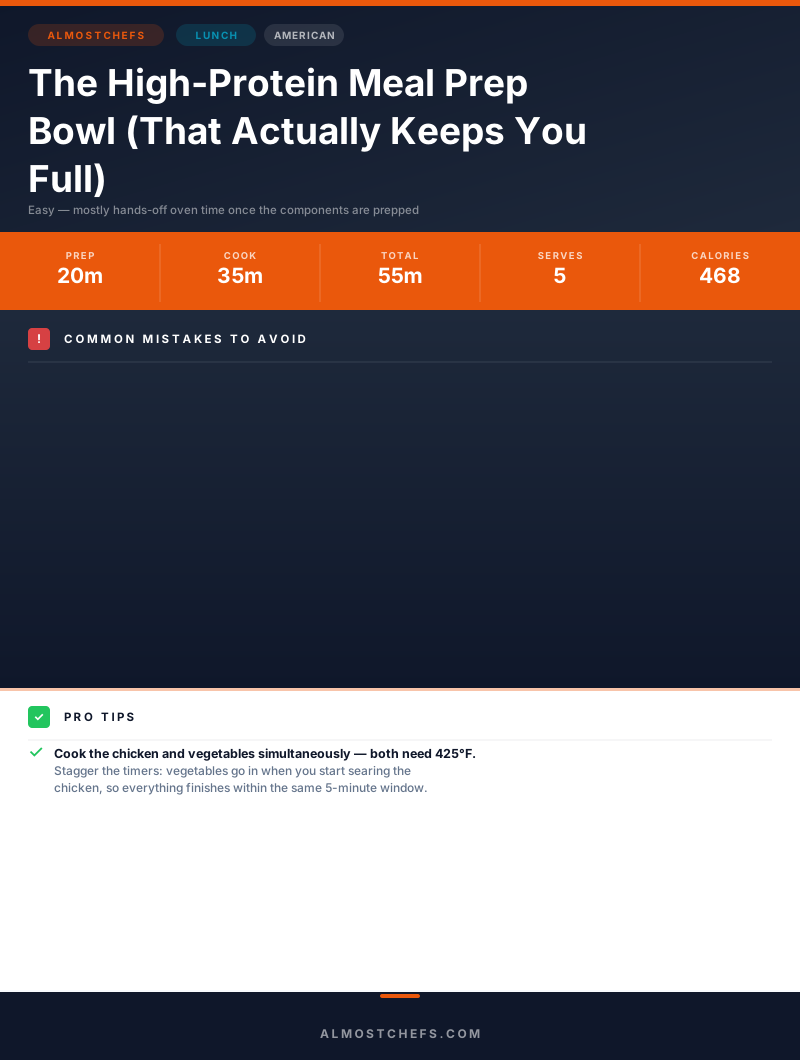
We turned everything on this page into a beautiful, flour-proof PDF cheat sheet. Print it out, stick it to your fridge, and never mess up your the high-protein meal prep bowl (that actually keeps you full) again.
*We'll email you the high-res PDF instantly. No spam, just perfectly cooked meals.
AlmostChefs Editorial Team
We translate the internet's most popular cooking videos into foolproof, beginner-friendly written recipes. We analyze multiple methods, test them in our kitchen, and engineer a single "Master Recipe" that gives you the best possible result with the least possible stress.