Viral Puff Pastry Triangles (Caramelized Onion & Cheese in 30 Minutes)
Buttery, flaky puff pastry folded around a savory-sweet filling of deeply caramelized onions, sharp cheddar, whole grain mustard, and fresh herbs. We reverse-engineered the viral method into a foolproof 30-minute technique that delivers golden, gooey results every single time.
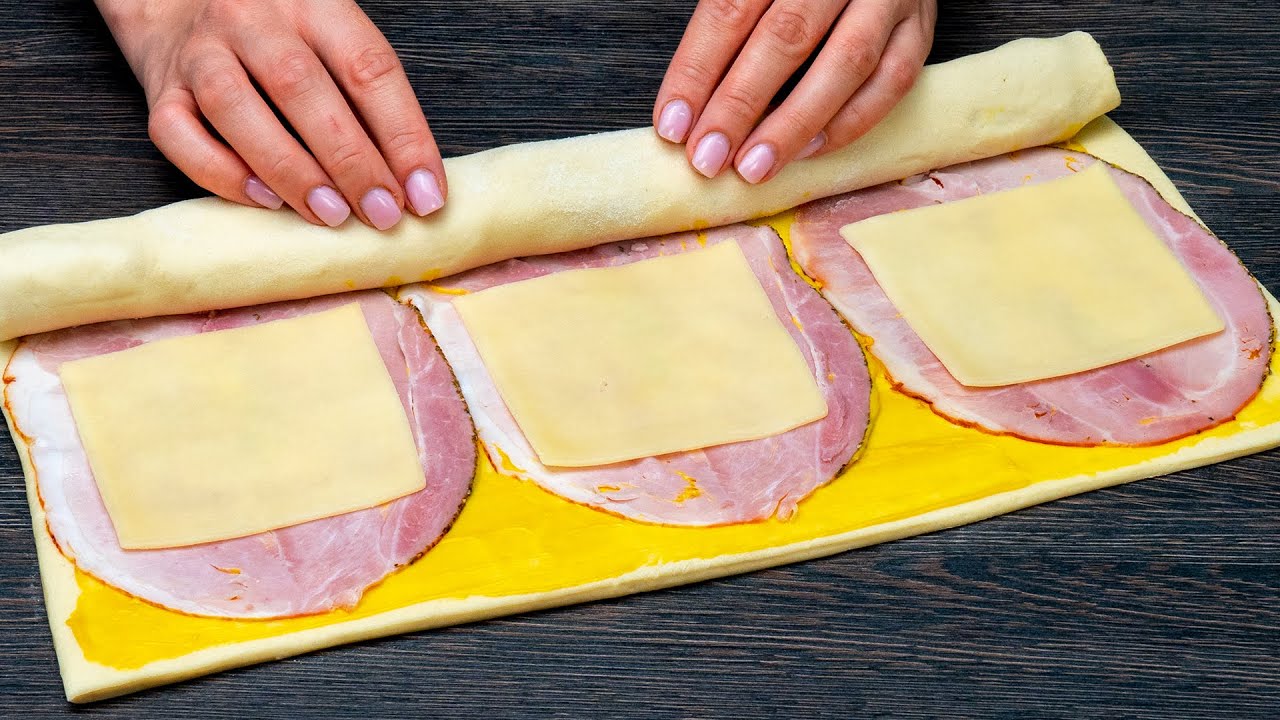
“A puff pastry snack took over social media and people acted like it was witchcraft. It isn't. It's three things executed correctly: onions cooked long enough to turn genuinely sweet, pastry kept cold until the moment it hits the oven, and a proper egg wash that gives you that lacquered golden shell. Everything else is just assembly.”
Why This Recipe Works
Puff pastry is the most forgiving high-impact ingredient in the entire supermarket. It requires no laminating skill, no special equipment, and no culinary training. What it requires is cold management and a filling worth the effort. This recipe solves both.
The Onion Problem
The filling in this recipe lives or dies on properly caramelized onions, and most people have never actually made them. Twenty minutes is the minimum. Mahogany brown is the target color. Medium-low heat is the speed.
Here is what is actually happening during those 20 minutes: raw onions contain sharp, sulfurous compounds (thiosulfinates and lachrymatory agents) that make your eyes water and your palate recoil. Sustained heat converts those compounds through a series of reactions — pyrolysis, the Maillard reaction, and sucrose caramelization — into furfurals, pyrazines, and disulfides. These new compounds are what produce the sweet, complex, almost jammy flavor that makes caramelized onions taste nothing like the vegetable they started as. Short-cutting this to five minutes produces onions that are merely sweated — still sharp, still watery, still raw-tasting beneath the surface.
The balsamic vinegar and honey in the filling are not there for sweetness alone. The acidity of the balsamic balances the richness of the butter and cheese. The honey ensures the filling sets up properly during baking rather than staying loose and runny. Together they create the glossy, concentrated filling that makes these pastries photographable.
Cold Pastry Is Everything
Store-bought puff pastry is a laminated dough — alternating layers of dough and fat built up through repeated folding. When that laminated stack enters a 400°F oven, the water in the butter layers converts to steam explosively, separating the layers apart and creating the characteristic puffy, flaky structure.
This only works if the fat layers are solid when they hit the heat. If your pastry is warm, the fat has already melted, the layers have merged, and there is nothing left to steam apart. The result looks and tastes like a dense, greasy flatbread.
Keep your pastry in the refrigerator until the exact moment you begin assembly. If your kitchen is warm or you're working slowly, assemble in batches and keep the rest refrigerated. After assembly, the filled triangles can go back into the fridge for up to 24 hours — cold is always better than room temperature when puff pastry is involved.
The Egg Wash Architecture
An egg wash is not just cosmetic. The beaten egg contains proteins that, when exposed to high heat, undergo Maillard browning at a rate far faster than the pastry dough itself. This is why egg-washed pastry turns a deep, lacquered amber while unwashed pastry stays pale and matte.
The rule: brush the top surface only. If egg wash runs down and coats the cut edges, it acts as a sealant and prevents the layers from separating. You want those edges free to bloom open. A pastry brush gives you control over where the egg goes — a spoon or your fingers does not.
The Parmesan-Paprika Crust
The finishing sprinkle of Parmesan and smoked paprika serves a specific function beyond flavor. Parmesan is an extremely low-moisture hard cheese with high protein content — it browns aggressively under heat without melting into a puddle. Combined with the smoked paprika, it creates a textured, visually striking crust on the surface that contrasts with the soft interior. It also signals doneness: when the Parmesan is visibly browned and the paprika has darkened slightly, the pastry underneath is done.
This recipe works because every element has a job. The onions build flavor depth. The cold pastry builds structure. The egg wash builds color. The fork crimp holds everything together under pressure. Remove any one piece and the recipe degrades. Keep all of them and you have something genuinely good — not just viral.
Where Beginners Mess This Up
Before we start, read this. These are the 4 reasons your viral puff pastry triangles (caramelized onion & cheese in 30 minutes) will fail:
- 1
Rushing the caramelized onions: The filling is the entire point of this recipe and it only works if the onions are cooked all the way down to deep mahogany. That takes 20 real minutes over medium-low heat, not 5 minutes on high. Undercooked onions taste sharp, watery, and raw. They also release steam inside the pastry during baking, making the bottom soggy.
- 2
Warm pastry before baking: Puff pastry works because cold fat layers create steam pockets that separate into flaky sheets. If your pastry has warmed up — from handling, a warm kitchen, or sitting too long — those fat layers melt before they can steam. The result is a flat, greasy, dense slab instead of an airy puff. Keep it cold until the very last second.
- 3
Overfilling the pastry: More filling does not mean more flavor. Too much filling prevents the edges from sealing, causes blowouts in the oven, and makes the interior soggy. One tablespoon per piece is the ceiling. The filling concentrates and intensifies during baking — trust the amount.
- 4
Skipping the fork-crimp seal: Pressing the edges down with a fork creates a mechanical seal that holds against the pressure of steam inside the pastry. Just pinching with your fingers creates a weak bond that opens during baking. Crimp hard. The pattern is decorative — the function is structural.
The Video Reference Library
Want to see it in action? Here are the exact videos we analyzed and combined to build this foolproof recipe translation:
The original video that sent this recipe around the world. Watch it for the visual benchmark on what properly caramelized onions should look like and how golden the finished pastry should be.
🛠️ Core Equipment
- Large heavy-bottomed skilletEven heat distribution is critical during the long onion caramelization. A thin pan creates hot spots that burn the outer onions while the inner ones remain raw. [Cast iron skillets](/kitchen-gear/review/cast-iron-skillet) are ideal — they hold temperature evenly and build fond on the bottom that adds depth.
- Pastry brushFor applying the egg wash. A [silicone pastry brush](/kitchen-gear/review/pastry-brush) gives better coverage than foam and doesn't shed bristles onto your food. Even egg wash means even browning — streaky application produces patchy, uneven color.
- Parchment-lined baking sheetPuff pastry sticks aggressively to bare metal and any filling that escapes will cement to the pan. Parchment eliminates both problems and allows you to slide the pastries off intact without tearing the bottom layer.
- Sharp chef's knife or pizza cutterDragging a dull knife through puff pastry compresses the layers at the cut edges, preventing them from puffing. A clean cut preserves the laminated structure. A [pizza cutter](/kitchen-gear/review/pizza-cutter) is faster and requires less downward pressure.
Viral Puff Pastry Triangles (Caramelized Onion & Cheese in 30 Minutes)
🛒 Ingredients
- ✦1 sheet frozen puff pastry, thawed
- ✦3 tablespoons unsalted butter
- ✦2 medium yellow onions, thinly sliced
- ✦4 cloves garlic, minced
- ✦8 ounces sharp cheddar cheese, shredded
- ✦2 tablespoons whole grain mustard
- ✦1 tablespoon fresh thyme leaves
- ✦1 tablespoon fresh rosemary, finely chopped
- ✦1/4 cup caramelized balsamic vinegar
- ✦2 tablespoons honey
- ✦1/2 teaspoon sea salt
- ✦1/4 teaspoon black pepper
- ✦1 egg, beaten (for egg wash)
- ✦2 tablespoons grated Parmesan cheese
- ✦1 teaspoon smoked paprika
- ✦Cooking spray for baking sheet
👨🍳 Instructions
01Step 1
Preheat your oven to 400°F and line a large baking sheet with parchment paper.
02Step 2
Melt the unsalted butter in a large skillet over medium heat until it foams and becomes fragrant.
03Step 3
Add the thinly sliced onions to the butter, stir well to coat, then reduce heat to medium-low and cook for 20 minutes, stirring occasionally, until the onions turn deep golden brown and caramelized.
04Step 4
Stir in the minced garlic and cook for 1 additional minute until fragrant, then remove from heat.
05Step 5
Mix in the whole grain mustard, fresh thyme, fresh rosemary, caramelized balsamic vinegar, and honey into the onion mixture. Season with sea salt and black pepper to taste. Allow to cool for 5 minutes.
06Step 6
Lay the thawed puff pastry sheet on a clean, lightly floured work surface and cut it into 12 equal squares or rectangles.
07Step 7
Spread approximately 1 tablespoon of the onion filling onto the center of each pastry piece, leaving a 1/2-inch border around the edges.
08Step 8
Sprinkle the shredded cheddar cheese evenly over each portion of filling.
09Step 9
Brush the edges of each pastry piece with the beaten egg wash using a pastry brush.
10Step 10
Fold each pastry square diagonally to create a triangle, then press the edges firmly with a fork to seal them completely.
11Step 11
Arrange the sealed pastries on the prepared baking sheet, spacing them about 2 inches apart. Brush the top of each pastry triangle with the remaining egg wash.
12Step 12
Combine the grated Parmesan and smoked paprika in a small bowl, then sprinkle this mixture over the tops of all pastries.
13Step 13
Bake for 15 to 18 minutes until the pastries are puffed and deep golden brown on top.
14Step 14
Remove from the oven and allow to cool for 3 to 5 minutes on the baking sheet before serving warm.
Nutrition Per Serving
Estimates based on standard preparation. Adjustments alter macros.
🔄 Substitutions
Instead of Unsalted butter...
Use Extra virgin olive oil
Slightly lighter, more Mediterranean flavor. The pastry stays flaky. Reduces saturated fat but loses the butter's nutty richness in the filling.
Instead of Sharp cheddar cheese...
Use Gruyère or aged Gouda
Richer, nuttier, deeper umami. Both melt cleanly without the graininess some cheddars develop at high heat. Aged Gouda adds a caramel note that plays well with the balsamic.
Instead of Honey...
Use Pure maple syrup or date paste
Maple syrup adds a subtle woodsy note and has a lower glycemic index. Date paste creates a creamier, richer texture. Either works in the same quantity.
Instead of Regular puff pastry...
Use Whole wheat or spelt puff pastry
Slightly denser and earthier in flavor. More fiber and micronutrients. Requires the same baking time and temperature. The lamination behaves identically.
🧊 Storage & Reheating
In the Fridge
Store in an airtight container for up to 3 days. The pastry softens overnight but retains its flavor completely.
In the Freezer
Freeze unbaked assembled pastries on a baking sheet until solid, then transfer to a freezer bag. Bake from frozen at 400°F for 20-22 minutes — no thawing needed.
Reheating Rules
Reheat baked pastries in a 350°F oven for 5 minutes to restore crispness. The microwave works but produces a soft, steam-damaged crust.
❓ Frequently Asked Questions
Why is my puff pastry not puffing?
Two likely culprits: the pastry was too warm when it went into the oven, or the oven wasn't fully preheated. Puff pastry requires a blast of high heat to convert the water in the butter layers to steam instantly. If either condition fails, you get a dense, flat result instead of separated flaky layers.
Can I make these ahead of time?
Yes — assemble the filled, crimped pastries and refrigerate them on the baking sheet for up to 24 hours before baking. Or freeze them solid and bake straight from frozen. The cold rest actually improves the puff because the fat layers firm up and the steam effect is more dramatic.
Why did my filling leak out during baking?
Either you overfilled (more than 1 tablespoon per piece) or the fork crimp wasn't firm enough. The steam pressure inside the pastry is significant. A weak seal opens under that pressure. Press harder with the fork, and respect the 1-tablespoon limit.
Can I use homemade puff pastry?
Absolutely, and the result will be noticeably better. Homemade puff pastry has more defined layers and better flavor from real butter. The tradeoff is 2+ hours of active work. Store-bought is a legitimate shortcut for a weeknight — homemade is the upgrade for when you want to impress.
What dipping sauces work with these?
The filling is already complex — it doesn't need much. A simple crème fraîche with chives, a honey-Dijon mix, or a good fruit chutney all complement without competing. Avoid heavy cream sauces that mask the caramelized onion flavor.
My onions aren't caramelizing, they're burning. What's wrong?
The heat is too high. True caramelization happens slowly at medium-low — it's a long, gradual process. High heat chars the exterior before the sugars inside have time to convert. If your onions are browning in under 10 minutes, the heat is too aggressive. Reduce it and add a tablespoon of water to deglaze any stuck bits.
The Science of
Viral Puff Pastry Triangles (Caramelized Onion & Cheese in 30 Minutes)
We turned everything on this page into a beautiful, flour-proof PDF cheat sheet. Print it out, stick it to your fridge, and never mess up your viral puff pastry triangles (caramelized onion & cheese in 30 minutes) again.
*We'll email you the high-res PDF instantly. No spam, just perfectly cooked meals.
AlmostChefs Editorial Team
We translate the internet's most popular cooking videos into foolproof, beginner-friendly written recipes. We analyze multiple methods, test them in our kitchen, and engineer a single "Master Recipe" that gives you the best possible result with the least possible stress.