The Fudgiest Brownies You'll Ever Eat (No Box Mix Required)
Dense, fudgy, rich-beyond-reason brownies built on melted dark chocolate, brown sugar, and a double-cocoa hit. We broke down the most common brownie failures and engineered a foolproof technique that delivers a crackly top, gooey center, and clean slice every single time.
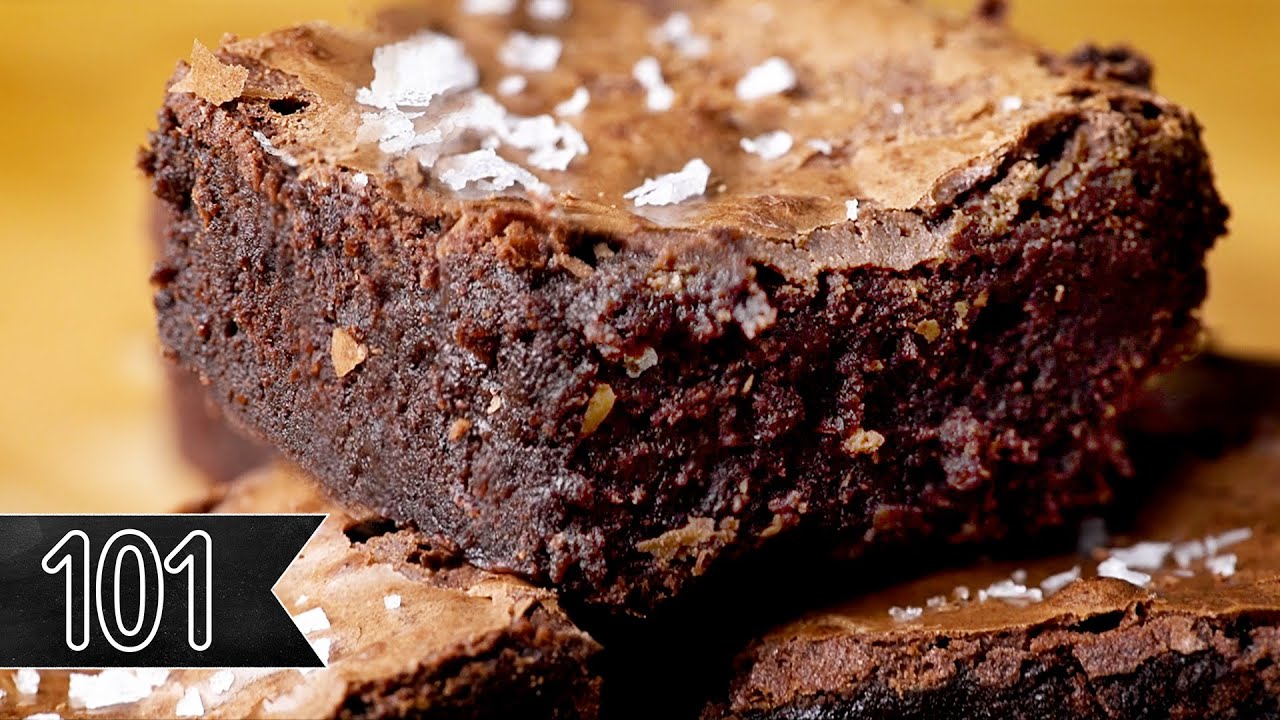
“Most brownie recipes fail at the same three points: they overbake, they overmix, or they pull the pan while everything's still molten and wonder why the center caves. A truly fudgy brownie is not an accident. It's the result of specific decisions — double chocolate, two sugars, a precise bake window, and the discipline to leave it alone until it's cool. This recipe makes all those decisions for you.”
Why This Recipe Works
A fudgy brownie is not a failed cake. It is a completely different object, governed by a different set of rules, and the reason most homemade brownies disappoint is that people bake them like cake and then wonder why they get cake.
Fat Is the Variable That Matters Most
Cake is built on creamed butter and flour — aeration and gluten structure. Brownies are built on melted fat and minimum flour — density and moisture retention. This recipe uses melted butter combined with chopped dark chocolate, which means you're starting with a pool of liquid fat before you add anything else. That fat coats the flour proteins and limits gluten development, which is exactly what you want. Less gluten means less structure, which means denser, chewier, fudgier results.
The almond butter reinforces this. It adds additional fat without adding flour — no structure, all richness. You won't taste almond. You'll taste a brownie that feels heavier and more complete than ones made without it.
Two Sugars, One Purpose
Organic cane sugar and coconut sugar aren't interchangeable here — they're doing different jobs. Cane sugar dissolves readily, migrates to the surface during baking, and creates the crackly, papery top that separates a great brownie from a good one. Coconut sugar has a lower melting point and a trace of molasses that adds flavor depth without making anything taste like coconut. Together, they build a more complex sweetness than either delivers alone.
The vigorous whisking of eggs and sugar before adding chocolate is not decorative. Two minutes of hard whisking partially dissolves the sugar crystals and incorporates air into the eggs. That air creates the slight lift in the final texture — enough to keep it from being a chocolate brick, not enough to push it toward cake. This is the step most home bakers phone in.
The Double Chocolate Architecture
Melted dark chocolate handles the fat and base flavor. Cocoa powder handles intensity and color. They're not redundant — they're complementary. Chocolate contains cocoa butter that coats the palate and creates richness. Cocoa powder, stripped of most fat, delivers concentrated, sharp chocolate flavor. Using both gives you depth across the entire flavor spectrum.
The espresso powder is not about coffee. Caffeine compounds bind to the same receptors as some bitter chocolate flavors and essentially turn up the volume on everything. Use it.
The mix-in chocolate pieces melt partially during baking and create pockets of concentrated chocolate throughout the interior. Use bar chocolate here, not chips — chips are formulated with stabilizers to hold their shape during baking. Chopped bar chocolate collapses into molten pools. That's what you want.
The Bake Window
Twenty-two to twenty-six minutes at 350°F. The variation exists because ovens lie. Buy a reliable oven thermometer — most home ovens run 15-25°F off their displayed temperature, and a 25°F error in either direction is enough to throw off every bake you've ever done.
The toothpick test for brownies is the inverse of the test for cake. Cake wants a clean toothpick. Brownies want moist crumbs. That distinction is the entire bake. Pull when crumbs stick. The center will look underdone. It will finish setting on the wire rack during cooling. If you wait for the center to look done in the oven, you have already overbaked.
Cooling on a wire rack is non-negotiable. A flat surface traps heat below the pan and keeps the bottom cooking after you've pulled it. The rack stops everything the moment it leaves the oven. That 30-minute window is where the proteins finish setting, the center firms from molten to fudgy, and the structure locks in. Cut before then and you're slicing into something that hasn't finished becoming what it's supposed to be.
The best brownie you've ever eaten was probably slightly underbaked by cake standards, cooled completely before cutting, and made by someone who didn't lift the lid — or in this case, didn't touch the pan — until the job was done.
Where Beginners Mess This Up
Before we start, read this. These are the 4 reasons your the fudgiest brownies you'll ever eat (no box mix required) will fail:
- 1
Overbaking by even two minutes: The line between fudgy and cakey is exactly two minutes in most ovens. A toothpick should come out with moist crumbs attached — not clean. Clean means dry. If it's clean, you've already crossed the line. Pull the pan the moment crumbs stick, not when the center looks set.
- 2
Overmixing the batter: Every extra fold develops more gluten, pushing the texture from dense-fudgy toward springy-cakey. Once you add the flour, count your strokes. Stop the moment you no longer see dry streaks. The batter should look slightly undermixed. It isn't.
- 3
Cutting before full cooling: Hot brownies are structurally incomplete. The proteins and starches are still setting. Cut too early and you get a smeared, collapsed interior — not a clean square. The 30-minute cooling window isn't a suggestion. It's load-bearing.
- 4
Skipping the espresso powder: You won't taste coffee. Espresso powder amplifies the chocolate compounds without adding its own flavor — it's a flavor multiplier, not an ingredient. Leaving it out produces brownies that taste one-dimensional compared to what they could be.
The Video Reference Library
Want to see it in action? Here are the exact videos we analyzed and combined to build this foolproof recipe translation:
The source video for this recipe. Walks through the double-chocolate method, the two-sugar combination, and why the toothpick test for brownies is different from cake.
🛠️ Core Equipment
- 8x8-inch metal baking panMetal conducts heat faster and more evenly than glass, giving you a crispier edge without overcooking the center. Glass pans run hot and increase the chance of overbaking. If you only own glass, reduce the temperature by 25°F.
- Heatproof bowl and saucepan for double boilerDirect heat scorches chocolate instantly. A [double boiler](/kitchen-gear/review/double-boiler) gives you gentle, controlled melting. If you don't own one, a stainless steel bowl over a saucepan of simmering water is identical — just make sure the bowl doesn't touch the water.
- Parchment paperNon-negotiable for clean removal. Grease alone causes brownies to stick and break at the corners. Parchment with overhanging edges lets you lift the entire slab onto a cutting board and slice clean squares.
- Wire cooling rackCooling the pan on a flat surface traps heat underneath and continues cooking the bottom. A [wire rack](/kitchen-gear/review/wire-cooling-rack) lets air circulate below, stopping the bake the moment the pan comes out of the oven.
The Fudgiest Brownies You'll Ever Eat (No Box Mix Required)
🛒 Ingredients
- ✦1/2 cup unsalted butter
- ✦6 ounces dark chocolate, chopped
- ✦3/4 cup all-purpose flour
- ✦1/4 cup whole wheat pastry flour
- ✦1/2 cup unsweetened cocoa powder
- ✦3/4 cup organic cane sugar
- ✦1/4 cup coconut sugar
- ✦2 large eggs
- ✦1 teaspoon vanilla extract
- ✦1/4 teaspoon sea salt
- ✦1/2 teaspoon baking powder
- ✦1/2 cup chopped dark chocolate pieces (mix-in)
- ✦2 tablespoons almond butter
- ✦1/4 teaspoon espresso powder
👨🍳 Instructions
01Step 1
Preheat your oven to 350°F. Line an 8x8-inch baking pan with parchment paper, leaving enough overhang on two sides to lift the slab out cleanly after baking.
02Step 2
Melt the butter and 6 ounces of chopped dark chocolate together in a heatproof bowl set over a pot of gently simmering water, stirring occasionally until completely smooth, about 4-5 minutes.
03Step 3
Remove from heat. Let the chocolate mixture cool for 2-3 minutes until warm but no longer steaming.
04Step 4
Whisk together the all-purpose flour, whole wheat pastry flour, cocoa powder, sea salt, baking powder, and espresso powder in a separate bowl until evenly combined.
05Step 5
In a large mixing bowl, combine the cane sugar and coconut sugar. Add both eggs and whisk vigorously for 2 minutes until the mixture is pale and slightly thickened.
06Step 6
Pour the warm chocolate-butter mixture into the egg-sugar bowl. Add the vanilla extract and almond butter. Fold gently with a spatula until just combined.
07Step 7
Add the dry flour mixture to the wet ingredients. Fold with as few strokes as possible — stop the moment you no longer see dry flour streaks. Do not overmix.
08Step 8
Fold in the chopped dark chocolate pieces until evenly distributed.
09Step 9
Scrape the batter into the prepared pan. Smooth the top into an even layer with the spatula.
10Step 10
Bake for 22-26 minutes, until a toothpick inserted in the center comes out with moist crumbs — not wet batter, not clean. Moist crumbs.
11Step 11
Transfer the pan immediately to a wire cooling rack. Cool completely — at least 30 minutes — before cutting.
12Step 12
Use the parchment overhang to lift the entire slab onto a cutting board. Slice into 9 or 16 squares with a sharp knife, wiping the blade clean between cuts.
Nutrition Per Serving
Estimates based on standard preparation. Adjustments alter macros.
🔄 Substitutions
Instead of Unsalted butter...
Use Coconut oil or ghee
Coconut oil keeps the fudgy texture but loses the dairy richness. Ghee adds a subtle nuttiness that actually plays well with dark chocolate. Either works — butter is just the best version.
Instead of Organic cane sugar...
Use Maple syrup or date paste
Reduce to 1/2 cup since liquid sweeteners add moisture. The batter will be slightly wetter. Add 1 extra tablespoon of flour to compensate. Maple syrup adds a light caramel undertone.
Instead of All-purpose flour...
Use Spelt flour or an ancient grain blend
Spelt has a nuttier flavor and slightly more fiber. The texture stays close to the original — spelt's gluten structure is weaker than AP flour, which actually helps the fudgy outcome. Don't substitute more than half with a gluten-free flour or the structure collapses.
Instead of Dark chocolate pieces (mix-in)...
Use Cacao nibs or 70% cacao chopped bar
Cacao nibs add crunch and bitterness without additional sugar. They're a more intense chocolate hit. If you want pockets of melty chocolate, stick with bar chocolate — nibs don't melt the same way.
🧊 Storage & Reheating
In the Fridge
Store in an airtight container at room temperature for up to 4 days. Refrigerating dries them out — avoid unless your kitchen is very warm.
In the Freezer
Wrap individual squares in plastic wrap, then place in a freezer bag. Freeze for up to 3 months. Thaw at room temperature for 1 hour — they come back almost perfectly.
Reheating Rules
10 seconds in the microwave restores the gooey center. 15 seconds is too long. If reheating from frozen, thaw first, then microwave.
❓ Frequently Asked Questions
Why are my brownies cakey instead of fudgy?
Three possible causes: you overbaked (pull at moist crumbs, not clean toothpick), you overmixed after adding the flour (gluten development makes them springy), or your butter-to-flour ratio is off. This recipe uses a high fat-to-flour ratio intentionally. Don't add extra flour.
Why didn't my brownies get a crackly top?
The crackly top comes from the dissolved sugar rising to the surface during baking. You need to whisk the eggs and sugar together vigorously for at least 2 minutes before adding the chocolate. Under-whisking leaves the sugar undissolved and the surface matte.
Can I double this recipe?
Yes. Use a 9x13-inch pan and increase bake time to 28-32 minutes. Check the same way — moist crumbs, not clean toothpick. The larger volume takes longer to set but behaves identically otherwise.
Can I use cocoa powder instead of melted chocolate?
You can make a cocoa-only brownie, but this recipe uses both for a reason. The melted chocolate provides fat and flavor depth that cocoa alone can't replicate. Substituting out the chocolate turns this into a different (lesser) recipe.
Why almond butter? Can I skip it?
You can skip it and get a good brownie. But the almond butter adds fat in a way that deepens the crumb density without making the batter taste nutty. It's a background player. If you have it, use it.
How do I know if I overbaked?
Cut one corner square after cooling. The interior should be glossy, dense, and slightly sticky-looking — not dry, not crumbly, not dry around the edges. If the whole interior is matte and set evenly like cake, you went 3-4 minutes too long. Adjust next time.
The Science of
The Fudgiest Brownies You'll Ever Eat (No Box Mix Required)
We turned everything on this page into a beautiful, flour-proof PDF cheat sheet. Print it out, stick it to your fridge, and never mess up your the fudgiest brownies you'll ever eat (no box mix required) again.
*We'll email you the high-res PDF instantly. No spam, just perfectly cooked meals.
AlmostChefs Editorial Team
We translate the internet's most popular cooking videos into foolproof, beginner-friendly written recipes. We analyze multiple methods, test them in our kitchen, and engineer a single "Master Recipe" that gives you the best possible result with the least possible stress.