Creamy Mushroom Chicken Skillet (The TikTok Technique That Actually Works)
A pan-seared chicken skillet with cremini mushrooms, wilted spinach, sun-dried tomatoes, and a Greek yogurt cream sauce that's lighter than it tastes. We stripped the viral format down to the actual technique — proper searing, deglazing, and tempering — so you get restaurant-quality results without the performance.

“Half the recipes going viral right now look better than they taste. This one is the exception. A properly seared chicken skillet with a tangy Greek yogurt sauce over mushrooms and wilted spinach is genuinely one of the best things you can put on a weeknight table — but only if you do three things right: dry the chicken before searing, deglaze the fond properly, and temper the yogurt off heat. Skip any of those and you get rubbery chicken, a pale sauce, and curdled dairy. We fixed the method so you don't have to.”
Why This Recipe Works
Social media has a complicated relationship with cooking. Viral food videos are optimized for views, not for the person trying to reproduce the dish on a Tuesday night with a gas range and a non-stick pan that's seen better days. The result is a generation of home cooks who have watched ten thousand hours of food content and still can't get a pan sauce right. This recipe fixes that — not by simplifying the dish, but by explaining what's actually happening at each step so you can course-correct when things go sideways.
The Sear Is the Whole Ballgame
Everything else in this recipe is secondary to what happens in the first ten minutes. Chicken breast is a lean, dense protein with almost no fat to protect it from overcooking. The only thing standing between you and rubbery, pale chicken is the Maillard reaction — the browning process that happens on a dry surface in very hot fat, converting proteins and sugars into hundreds of new flavor compounds.
Two things kill the Maillard reaction before it starts. The first is wet chicken — surface moisture converts instantly to steam, which drops the pan temperature and prevents browning. The second is crowding — too many pieces at once has the same cooling effect. Pat the chicken dry. Work in batches. Don't move the pieces for three full minutes. Let them release naturally from the pan instead of tearing. These are not suggestions.
The fond — the dark, caramelized drippings left behind in the pan — is the most valuable ingredient in the sauce. It's concentrated protein and fat that's been through the Maillard reaction, and it dissolves into the wine and broth during deglazing, giving the sauce depth that no amount of seasoning can replicate from scratch. This is why the recipe specifies a stainless steel or cast iron skillet over non-stick: non-stick surfaces don't develop fond. There's nothing to deglaze.
The Yogurt Sauce Problem
Greek yogurt is a legitimate heavy cream substitute in savory cooking — it's rich, tangy, and contributes real protein to the final dish. But it has one failure mode that catches every first-time cook: it curdles under direct heat. The proteins in yogurt, like all dairy proteins, denature rapidly above roughly 180°F. When that happens in a thin sauce, they seize and separate, leaving you with chalky white clumps floating in gray liquid.
The fix is simple and absolute: remove the skillet from the heat source entirely before the yogurt goes in. Residual heat in the pan and the liquid is more than enough to incorporate the sauce and finish the spinach. The cornstarch in the recipe adds a second layer of protection — it creates a starch network in the sauce that stabilizes the yogurt proteins against heat shock. Together, they make a sauce that holds together from pan to plate.
The Dijon in the yogurt mixture isn't decorative. Mustard contains emulsifying compounds that help bind fat and water into a cohesive sauce rather than letting them separate. It also adds a mild sharpness that counterbalances the sun-dried tomatoes' sweetness and the spinach's subtle bitterness.
Why These Specific Vegetables
Cremini mushrooms, spinach, and sun-dried tomatoes are not a random combination. Each one solves a texture or flavor problem the others create. Mushrooms contribute body and umami, but they're neutral in color and mildly flavored on their own. Spinach adds color and a clean, slightly bitter note that cuts through the richness of the sauce, but it wilts to almost nothing — it needs the mushrooms for substance. Sun-dried tomatoes bring concentrated sweetness and acidity that ties the whole sauce together, but used alone they'd be cloying. Together, they create a vegetable profile that's varied in texture, balanced in flavor, and substantial enough to make the dish feel like a complete meal.
The spinach goes in last, off heat, for one reason: it contains a high percentage of water that releases during cooking. If you add it earlier, it dilutes the sauce you've spent twenty minutes building. Off-heat folding wilts it perfectly without the waterlogging.
The Complete Technique
This is fundamentally a pan sauce recipe wearing comfortable clothes. Sear the protein, build fond, deglaze, reduce, enrich with dairy off heat. That's the sequence behind thousands of classic French preparations, and it works here for the same reasons it's worked for three hundred years. The TikTok angle is incidental. The technique is the point.
Where Beginners Mess This Up
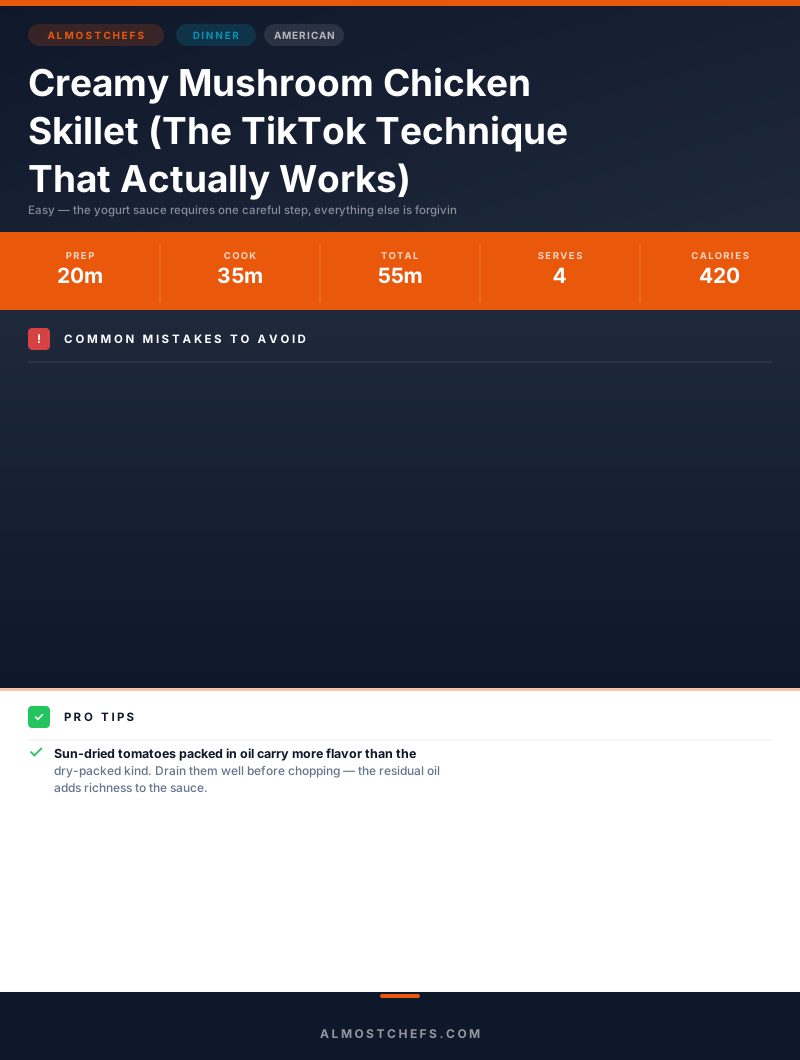
Before we start, read this. These are the 4 reasons your creamy mushroom chicken skillet (the tiktok technique that actually works) will fail:
- 1
Wet chicken going into the pan: Surface moisture on chicken creates steam instead of a sear. Steam is the enemy of browning. Pat every piece completely dry with paper towels before seasoning. The Maillard reaction — the thing that creates golden crust and deep flavor — only happens on a dry surface in very hot fat.
- 2
Crowding the pan: Too many pieces at once drops the pan temperature dramatically, and you're back to steaming instead of searing. Work in two batches minimum. The fond that builds up between batches is pure flavor — you'll deglaze it later and it becomes the backbone of the sauce.
- 3
Adding yogurt over active heat: Greek yogurt curdles when it hits a hot pan directly. The proteins seize and you get a grainy, broken sauce. Remove the skillet from heat entirely before stirring in the yogurt mixture, then let residual heat do the work. This is the one non-negotiable technique step in the entire dish.
- 4
Under-browning the mushrooms: Mushrooms are 90% water. If you don't give them space and time to release that moisture and then actually brown in the remaining fat, they taste steamed and rubbery. Five full minutes at medium heat, stirring only occasionally, gets you the nutty, concentrated flavor they're capable of.
The Video Reference Library
Want to see it in action? Here are the exact videos we analyzed and combined to build this foolproof recipe translation:

The source video that sparked this recipe. Watch for the searing sequence and the moment the sauce comes together — the technique translates directly to this method.
2. How to Deglaze a Pan Properly
The full breakdown on building and releasing fond with wine and broth. Understanding this step transforms every pan sauce you'll ever make.
3. Greek Yogurt in Savory Cooking — When It Works and When It BreaksWhy dairy proteins curdle under direct heat and how to use tempering and off-heat additions to keep sauces silky every time.
🛠️ Core Equipment
- Large stainless steel or cast iron skillet ↗You need a pan that can handle high heat for searing and retain enough temperature between batches. Non-stick pans don't develop fond — and the fond is where all the sauce flavor lives.
- Instant-read thermometer ↗Chicken breasts go from perfect to dry in about 90 seconds. Pull them at 160°F internal — carryover cooking finishes them to 165°F while they rest. Don't guess.
- Wooden spoon or flat-edged spatula ↗For deglazing. Metal on stainless steel works fine for scraping fond, but a wooden spoon lets you feel when the bits are releasing versus tearing. The difference matters for a clean sauce.
- Small whisk or fork ↗The yogurt, lemon juice, and Dijon need to be fully emulsified before they hit the hot pan. Streaks in the mixture become streaks in the sauce.
Creamy Mushroom Chicken Skillet (The TikTok Technique That Actually Works)
🛒 Ingredients
- ✦1.5 pounds boneless, skinless chicken breasts, cut into bite-sized pieces
- ✦3 tablespoons extra virgin olive oil, divided
- ✦1 large yellow onion, thinly sliced
- ✦6 ounces cremini mushrooms, quartered
- ✦4 cloves fresh garlic, minced
- ✦1 cup low-sodium chicken broth
- ✦3/4 cup full-fat Greek yogurt
- ✦2 tablespoons fresh lemon juice
- ✦1 teaspoon Dijon mustard
- ✦2 cups fresh spinach leaves
- ✦1/2 cup sun-dried tomatoes, chopped
- ✦1 teaspoon dried thyme
- ✦1/2 teaspoon smoked paprika
- ✦1 teaspoon cornstarch
- ✦1/4 cup dry white wine
- ✦Sea salt and freshly cracked black pepper to taste
- ✦2 tablespoons fresh flat-leaf parsley, chopped
👨🍳 Instructions
01Step 1
Pat the chicken pieces completely dry with paper towels. Season generously on all sides with sea salt and black pepper.
02Step 2
Heat 2 tablespoons of olive oil in a large skillet over medium-high heat until shimmering, about 2 minutes.
03Step 3
Sear the chicken in batches without overcrowding, cooking until golden brown on all sides, 6-8 minutes per batch. Transfer to a plate and set aside.
04Step 4
Add the remaining tablespoon of olive oil to the same skillet and reduce heat to medium. Sauté the sliced onion until translucent, about 4 minutes.
05Step 5
Add the quartered mushrooms and cook, stirring occasionally, until they release their liquid and begin to brown, about 5 minutes.
06Step 6
Stir in the minced garlic and cook until fragrant, about 1 minute. Sprinkle the cornstarch over the vegetables and stir to coat evenly.
07Step 7
Pour in the white wine and scrape up all the browned bits from the pan with a wooden spoon. Cook for 2 minutes to reduce slightly.
08Step 8
Return the chicken and any accumulated juices to the skillet. Add the chicken broth, dried thyme, and smoked paprika. Stir to combine.
09Step 9
Reduce heat to medium-low and simmer gently for 8 minutes, stirring occasionally, until the sauce reduces slightly and the chicken is cooked through.
10Step 10
In a small bowl, whisk together the Greek yogurt, fresh lemon juice, and Dijon mustard until completely smooth.
11Step 11
Remove the skillet from heat entirely. Slowly stir the yogurt mixture into the chicken until fully incorporated and no streaks remain.
12Step 12
Fold in the fresh spinach and sun-dried tomatoes. Stir gently until the spinach wilts completely, about 2 minutes.
13Step 13
Taste and adjust seasoning. Garnish with fresh parsley and serve warm over rice, pasta, or with crusty bread.
Nutrition Per Serving
Estimates based on standard preparation. Adjustments alter macros.
🔄 Substitutions
Instead of Greek yogurt...
Use Labneh (strained yogurt) or full-fat sour cream
Labneh is even thicker and more stable. Sour cream works well but adds a slightly more pronounced tang. Both require the same off-heat tempering technique.
Instead of White wine...
Use Additional chicken broth with a teaspoon of white wine vinegar
The vinegar replaces the acidity the wine provides for deglazing. Use sparingly — a little goes a long way.
Instead of Cremini mushrooms...
Use Shiitake or oyster mushrooms
Shiitake adds deeper umami. Oyster mushrooms cook faster — reduce browning time to 3 minutes. Both work well in the sauce.
Instead of Chicken breast...
Use Boneless, skinless chicken thighs
Thighs are more forgiving — they won't dry out if slightly overcooked. The fat content also enriches the sauce. No technique changes needed.
🧊 Storage & Reheating
In the Fridge
Store in an airtight container for up to 4 days. The sauce thickens in the fridge — add a splash of broth when reheating.
In the Freezer
Freeze for up to 2 months. Note that yogurt-based sauces can separate slightly after freezing — whisk vigorously while reheating to re-emulsify.
Reheating Rules
Reheat on the stovetop over low heat with 2-3 tablespoons of chicken broth, stirring frequently. Avoid microwave high-power settings — they cause the yogurt sauce to break.
❓ Frequently Asked Questions
Why did my yogurt sauce curdle?
You added it over active heat. Greek yogurt's proteins seize and separate when they hit temperatures above 180°F directly. Always remove the skillet from the burner completely before stirring in the yogurt mixture, then let residual heat finish the job.
Can I use chicken thighs instead of breasts?
Yes, and honestly thighs are the better choice. They're more forgiving if slightly overcooked, and the extra fat enriches the sauce naturally. Use the same technique — pat dry, sear in batches, check internal temp (165°F).
My sauce is too thin. How do I fix it?
Return the pan to very low heat and stir constantly for 1-2 minutes. The cornstarch in the sauce activates with gentle heat. Alternatively, mix a half teaspoon of cornstarch with a tablespoon of cold broth, stir it in off-heat, then return to low heat briefly.
Can I skip the white wine?
Yes. Use an equal amount of chicken broth plus a teaspoon of white wine vinegar to replicate the acidity. The deglaze step is what matters — you need liquid to lift the fond from the pan. The flavor will be slightly less complex but still excellent.
Is this recipe actually healthy?
By weeknight dinner standards, yes. Greek yogurt replaces heavy cream, cutting saturated fat from 12g to 4g per serving. Olive oil replaces butter. Low-sodium broth keeps sodium at 380mg. With 52g of protein and 4g of fiber per serving, it hits the macros without feeling like diet food.
Can I add pasta or rice directly to the skillet?
You can serve it over pasta or rice, but adding starch directly to the skillet will absorb the sauce and make the yogurt more likely to break under the extra heat needed to cook through. Keep the grain separate and spoon the chicken and sauce over the top.
The Science of
Creamy Mushroom Chicken Skillet (The TikTok Technique That Actually Works)
We turned everything on this page into a beautiful, flour-proof PDF cheat sheet. Print it out, stick it to your fridge, and never mess up your creamy mushroom chicken skillet (the tiktok technique that actually works) again.
*We'll email you the high-res PDF instantly. No spam, just perfectly cooked meals.
AlmostChefs Editorial Team
We translate the internet's most popular cooking videos into foolproof, beginner-friendly written recipes. We analyze multiple methods, test them in our kitchen, and engineer a single "Master Recipe" that gives you the best possible result with the least possible stress.