Authentic Som Tam (The Thai Papaya Salad You've Been Getting Wrong)
A vibrant, mortar-and-pestle street food salad of shredded green papaya, fresh chilies, lime juice, and fish sauce that delivers all four flavor notes — spicy, sour, salty, sweet — in a single bite. We broke down the technique so you can nail the texture and balance every time.
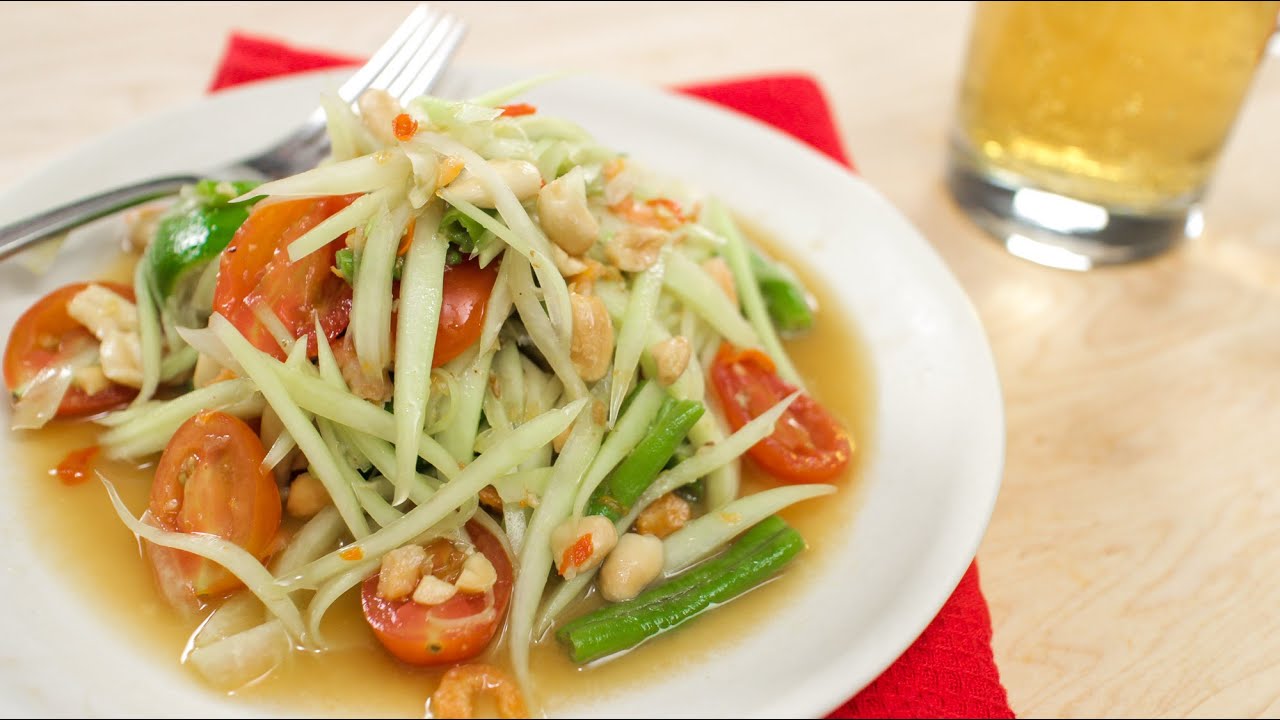
“Som tam is the most popular street food in Thailand for a reason. It costs almost nothing to make, takes under 15 minutes, and hits every major flavor note at once. The reason most Western home versions taste flat is not the ingredients — it's the technique. Using a knife instead of a mortar, shredding papaya on the wrong grater, or mixing the dressing separately instead of building it in layers all kill the dish before it starts.”
Why This Recipe Works
Som tam is the clearest example in all of global cuisine of a dish where technique is the ingredient. The vegetables are raw. There is no cooking. The entire outcome depends on how you handle a mortar, when you add what, and whether you taste as you go. Get those three things right and you have one of the most addictive salads on earth. Get them wrong and you have a bowl of limp vegetables in sour water.
The Mortar Is Not Optional
Every shortcut version of som tam swaps the mortar for a knife and a mixing bowl. The logic is plausible: you're just combining the same ingredients, right? Wrong. The mortar doesn't just crush garlic — it creates a volatile, aromatic emulsion that a knife cannot produce. When you pound garlic and chilies against rough granite, you rupture the cell walls and release allicin, capsaicin, and terpene compounds simultaneously. They mix together under pressure in a way that chopping never achieves. The result smells different, tastes different, and coats the papaya differently.
The tomatoes are equally important. Halved cherry tomatoes bruised in the mortar split open and release their juice directly into the garlic-chili paste, creating a loose, intensely flavored liquid that becomes the foundation of the entire dressing. Whole tomatoes added to a mixing bowl just sit there. The mortar activates them.
If you don't own a mortar and pestle, this is the dish to justify the purchase. A large granite one costs less than a restaurant meal and lasts indefinitely.
The Papaya Problem
Green papaya is not an exotic ingredient — it's just unripe papaya. The confusion is that most Western grocery stores only carry ripe papaya, which is soft, orange-fleshed, and completely wrong for this application. You need fully green papaya with white flesh and zero scent. It should feel like a dense vegetable, not fruit, because that's essentially what it is at this stage.
The shred size and technique matter more than people realize. A julienne peeler produces strips of the right length and thickness to absorb dressing while maintaining crunch. Fine machine shreds from a food processor are too short and too uniform — they collapse under the dressing and turn the salad into a mound of wet confetti within minutes.
The Four-Note Balance
Som tam's genius is that it hits spicy, sour, salty, and sweet simultaneously, and the order in which those notes register on your palate is as important as the presence of each. Lime hits first (sour, bright), then the chilies build (heat that lingers), then fish sauce coats the back of the throat (salt, umami depth), then palm sugar smooths everything at the finish (sweet, round). If any of those notes is missing or out of sequence, the dish loses its character.
This is why tasting and adjusting is non-negotiable. Papaya ripeness varies. Chilies vary in heat by season. Limes vary in acidity. The recipe gives you ratios to start from, but the balance is always calibrated by the person making it. Add the dressing, toss, taste, and correct — that sequence is the whole technique.
Why It Must Be Eaten Immediately
Raw vegetables continue to respire after cutting. The lime juice and fish sauce accelerate moisture loss through osmosis. Within ten minutes of dressing, the papaya has already begun to weep and soften. Within thirty minutes, you have salad soup. Som tam is a to-order dish — in Thailand, it's made in front of you while you wait exactly because of this. Dress it, serve it, eat it. It is not a dish that benefits from resting, sitting on a buffet, or being made ahead for dinner parties. Plan accordingly.
Where Beginners Mess This Up
Before we start, read this. These are the 4 reasons your authentic som tam (the thai papaya salad you've been getting wrong) will fail:
- 1
Using a food processor to shred the papaya: A food processor creates uniform, limp shreds with no textural variation. Authentic som tam uses a cleaver-and-mortar shredding technique — or at minimum a julienne peeler — to produce irregular strips that have both crunch and flexibility. Wet, fine machine shreds turn the salad into mush within minutes of dressing.
- 2
Skipping the mortar for the aromatics: Mincing garlic and chilies with a knife releases almost none of the volatile oils that make som tam addictive. The mortar's crushing action ruptures cell walls and creates a fragrant, slightly bruised paste that distributes through every strand of papaya. A blender produces a watery slurry. A knife produces raw dice. Neither works.
- 3
Dressing the salad and letting it sit: Som tam is a serve-immediately dish. The lime juice and fish sauce begin drawing moisture from the papaya within minutes of contact. Wait too long and you have a puddle at the bottom of the bowl and limp, desaturated vegetables on top. Dress it, toss it, eat it. That's the sequence.
- 4
Balancing by ingredient volume instead of taste: The ratio of lime to fish sauce to palm sugar varies by papaya ripeness, chili heat, and personal preference. You must taste as you go and adjust. A recipe can give you starting quantities, but the final balance is always yours to dial in. This is not optional — it's how the dish was designed.
The Video Reference Library
Want to see it in action? Here are the exact videos we analyzed and combined to build this foolproof recipe translation:
The source video for this recipe. Demonstrates the mortar technique, the correct papaya shred texture, and how to layer the dressing components for maximum flavor impact.
🛠️ Core Equipment
- Large granite mortar and pestleThe non-negotiable tool for authentic som tam. The granite's weight and rough texture bruise aromatics and tomatoes without pulverizing them. A ceramic mortar is too smooth. A wooden one absorbs the chili oils. If you're buying one, go granite, at least 8 inches wide.
- Julienne peeler or mandoline with julienne attachmentCreates the long, thin, slightly irregular papaya strips that give som tam its signature texture. Box graters produce shreds that are too fine and too short. You want strips between 3-4 inches long with some variation in width.
- Large mixing bowlYou need room to toss aggressively. The tossing action is part of the technique — it slightly bruises the papaya and drives the dressing into the shreds. A small bowl means uneven coating and timid tossing.
Authentic Som Tam (The Thai Papaya Salad You've Been Getting Wrong)
🛒 Ingredients
- ✦1 medium green papaya, about 2 pounds, peeled and shredded into long strips
- ✦2 medium carrots, cut into thin matchsticks
- ✦1 cup cherry tomatoes, halved
- ✦1/2 cup fresh peanuts, roughly chopped
- ✦3 green onions, cut into 1-inch pieces
- ✦1/4 cup fresh cilantro leaves, roughly chopped
- ✦3 cloves garlic, minced
- ✦2 Thai bird's eye chilies, finely sliced
- ✦3 tablespoons fresh lime juice
- ✦2 tablespoons fish sauce or coconut aminos
- ✦1 tablespoon palm sugar or honey
- ✦1 tablespoon sesame oil
- ✦1/4 teaspoon sea salt
- ✦1/4 teaspoon white pepper
- ✦2 tablespoons vegetable oil
- ✦1 tablespoon rice vinegar
👨🍳 Instructions
01Step 1
Pound the minced garlic and sliced chilies together in a mortar and pestle for about 1 minute, until fragrant and slightly bruised.
02Step 2
Add the halved cherry tomatoes and chopped peanuts to the mortar. Gently bruise everything together for another 30 seconds to release the tomato juices without completely crushing the ingredients.
03Step 3
Combine the lime juice, fish sauce, palm sugar, sesame oil, and rice vinegar in a small bowl, whisking until the sugar fully dissolves.
04Step 4
Transfer the shredded green papaya and matchstick carrots to a large mixing bowl.
05Step 5
Scrape the entire contents of the mortar — garlic, chilies, tomato juice, peanuts — into the bowl with the papaya and carrots.
06Step 6
Add the green onions and fresh cilantro to the bowl.
07Step 7
Pour the lime-based dressing over all the vegetables.
08Step 8
Toss everything together vigorously using two spoons or salad tongs for about 2 minutes, until the papaya softens slightly and releases its juices.
09Step 9
Taste the salad and adjust the seasoning — more lime juice for brightness, more fish sauce for depth, more palm sugar for balance.
10Step 10
Season with sea salt and white pepper to preference.
11Step 11
Let the salad rest for 5 minutes at room temperature to allow the flavors to meld.
12Step 12
Divide among serving bowls, garnish with additional peanuts and cilantro, and serve immediately while everything is still crisp.
Nutrition Per Serving
Estimates based on standard preparation. Adjustments alter macros.
🔄 Substitutions
Instead of Fish sauce...
Use Coconut aminos or tamari
Coconut aminos are the better call for a vegan version — slightly milder and sweeter than tamari, which brings more soy depth. Neither fully replicates the fermented fish funk, but both provide the necessary umami backbone.
Instead of Palm sugar...
Use Raw honey or maple syrup
Honey integrates more smoothly into cold dressings than palm sugar, which can be gritty if not fully dissolved. Use slightly less — honey is sweeter per gram than palm sugar.
Instead of Roasted peanuts...
Use Raw almonds or cashews, roughly chopped
Cashews add buttery richness and hold their texture well. Almonds are firmer with a slightly bitter edge that actually works against the sweet dressing. If using raw nuts, toast them briefly in a dry pan first — 2-3 minutes — to develop flavor.
Instead of Green papaya...
Use Shredded cabbage or broccoli slaw
Cabbage is the most accessible substitute and holds up well under aggressive dressing. Use a mix of green and purple for visual contrast. Broccoli slaw adds more bitterness — pair it with extra palm sugar to compensate.
🧊 Storage & Reheating
In the Fridge
Technically up to 24 hours in an airtight container, but the texture degrades significantly. The papaya continues releasing moisture and goes limp. Eat it fresh.
In the Freezer
Not suitable for freezing. The cell structure of raw vegetables collapses on thaw and the result is watery and unpleasant.
Reheating Rules
Som tam is a cold dish served at room temperature. If refrigerated, let it sit out for 10 minutes before eating to take the chill off. Do not heat it.
❓ Frequently Asked Questions
Where do I find green papaya?
Asian grocery stores almost always carry it. Look for a papaya that is completely firm with no give at all when pressed, with green skin that may have faint white streaks. If the skin has any yellow patches, it's past the point of ripeness for som tam. Call ahead to confirm availability before making a special trip.
Can I make this without a mortar and pestle?
You can get close. Mince the garlic and chilies as finely as possible, then use the flat side of a knife to smear and crush the mixture against the cutting board. It takes about 90 seconds of firm pressing. Halve the tomatoes, score the cut face with a knife, then press them with the back of a spoon to release juice. It's not identical but it's functional.
How do I make it less spicy?
Remove the seeds and white pith from the chilies before slicing — that's where most of the capsaicin lives. You can also use just one chili, or substitute a milder long red chili. Adding extra palm sugar also counteracts perceived heat without neutralizing the flavor entirely.
Why is my papaya too watery?
Either the papaya was too ripe, or the salad sat too long after dressing. A fully green, firm papaya releases very little moisture on its own. Once the acidic dressing hits, it begins drawing moisture out — which is why the 5-minute rest is the maximum wait time before serving. Beyond that, you're fighting physics.
Is som tam the same as green papaya salad?
Som tam is the Thai name for the dish, which translates roughly to 'pounded sour.' Green papaya salad is the generic English description. The Lao version (tam mak hoong) is considered the original and is slightly less sweet. Thai som tam has spread globally because of its more accessible sweet-spicy balance.
Do I need to salt and drain the papaya first?
No. That technique is for zucchini and eggplant, which have higher water content and benefit from drawing out moisture before cooking. Green papaya is firm and dry enough that pre-salting is unnecessary and actually works against you — it starts the wilting process before you're ready.
The Science of
Authentic Som Tam (The Thai Papaya Salad You've Been Getting Wrong)
We turned everything on this page into a beautiful, flour-proof PDF cheat sheet. Print it out, stick it to your fridge, and never mess up your authentic som tam (the thai papaya salad you've been getting wrong) again.
*We'll email you the high-res PDF instantly. No spam, just perfectly cooked meals.
AlmostChefs Editorial Team
We translate the internet's most popular cooking videos into foolproof, beginner-friendly written recipes. We analyze multiple methods, test them in our kitchen, and engineer a single "Master Recipe" that gives you the best possible result with the least possible stress.