Easy Thai Basil Chicken (Pad Krapow Gai — One-Pan Masterclass)
Ground chicken stir-fried at blistering heat with Thai bird's eye chilies, garlic, oyster sauce, fish sauce, and holy basil. The Thai street food standard that takes 12 minutes and destroys anything you'd order for delivery.

“Pad krapow gai is Thailand's national hangover cure and most common street food, which tells you everything about its accessibility and its appeal. It's ground chicken, garlic, chilies, and basil cooked in a screaming-hot wok for twelve minutes. The sauce is four ingredients. The technique is high heat and speed. Most Western home cooks make it too mild, too slow, and with the wrong basil, which produces something pleasant but bears no relationship to the dish eaten from a vendor cart on a Bangkok street corner.”
Why This Recipe Works
Pad krapow gai is Thailand's most ubiquitous street dish. At lunch on any weekday, the plume of smoking oil and the scent of charred garlic, chilies, and basil drifts out of cart setups and shophouse kitchens across every Thai city simultaneously. It's made in about three minutes by a person who has made it several thousand times, which creates the mistaken impression that the recipe is complicated. It isn't. The technique is high heat, the correct basil, and a four-ingredient sauce mixed before the cooking starts.
The Holy Basil Problem Is a Sourcing Problem
The name of the dish is pad krapow — stir-fry krapow. Krapow is Thai holy basil. The dish is named after its defining ingredient, which is the ingredient most Western home cooks substitute or skip. Italian sweet basil is not the same food. Under the high heat of a wok, Italian basil's relatively delicate cell structure collapses immediately, turns black, and releases its volatile oils all at once in a burst that then fades. Thai holy basil has more structural integrity and a pepper-forward, slightly clove-like flavor profile that is genuinely different from sweet basil's anise character. The herb is what makes pad krapow taste like pad krapow and not like a generic stir-fry with some green flecks in it.
Find it at any Asian grocery store. It keeps for several days wrapped in a damp paper towel in the fridge. If you cannot find holy basil, Thai sweet basil is a legitimate substitute with a different but still correct flavor. Italian basil is the third option, not the first.
The Sauce Is Pre-Mixed For a Reason
Oyster sauce, fish sauce, soy sauce, dark soy sauce, and sugar. These five ingredients, combined in a bowl before cooking starts, are poured as one motion into the wok after the chicken is mostly cooked. The stir-fry sequence at high heat takes about six minutes total and requires focused attention. There is no moment during active cooking to measure and pour four separate sauces without burning something. Pre-mixing takes 30 seconds and eliminates a category of failure.
Fish sauce is the umami backbone. It's fermented fish liquid with a glutamate content that's difficult to replicate with any substitute. The smell directly from the bottle is misleading — cooked into a hot wok with other ingredients, it contributes depth without tasting fishy. Oyster sauce adds sweetness, thickness, and a savory complexity. Dark soy sauce adds color as much as flavor — without it, the dish is lighter and less visually accurate. The sugar balances the salt load from the fish sauce without making the dish sweet.
Wok Hei Is a Temperature Argument
The slight smokiness and char that defines good pad krapow doesn't come from any ingredient — it comes from Maillard reactions occurring at temperatures that home burners struggle to reach. Restaurant wok setups produce 100,000+ BTU. A residential gas burner produces 15,000-25,000 BTU. The gap is real. The workaround is using the smallest pan you can fit your full batch into (less mass to heat means faster temperature recovery), letting the empty pan preheat for at least 2 minutes, and using the highest burner setting without hesitation.
A carbon steel wok is the single highest-impact equipment upgrade for this recipe — seasoned, responsive, and capable of handling the temperature spikes that wok cooking demands. A non-stick pan cannot be used for this recipe without damaging the coating and the dish simultaneously. A stainless skillet on high heat is the home cook's best alternative if a wok isn't available.
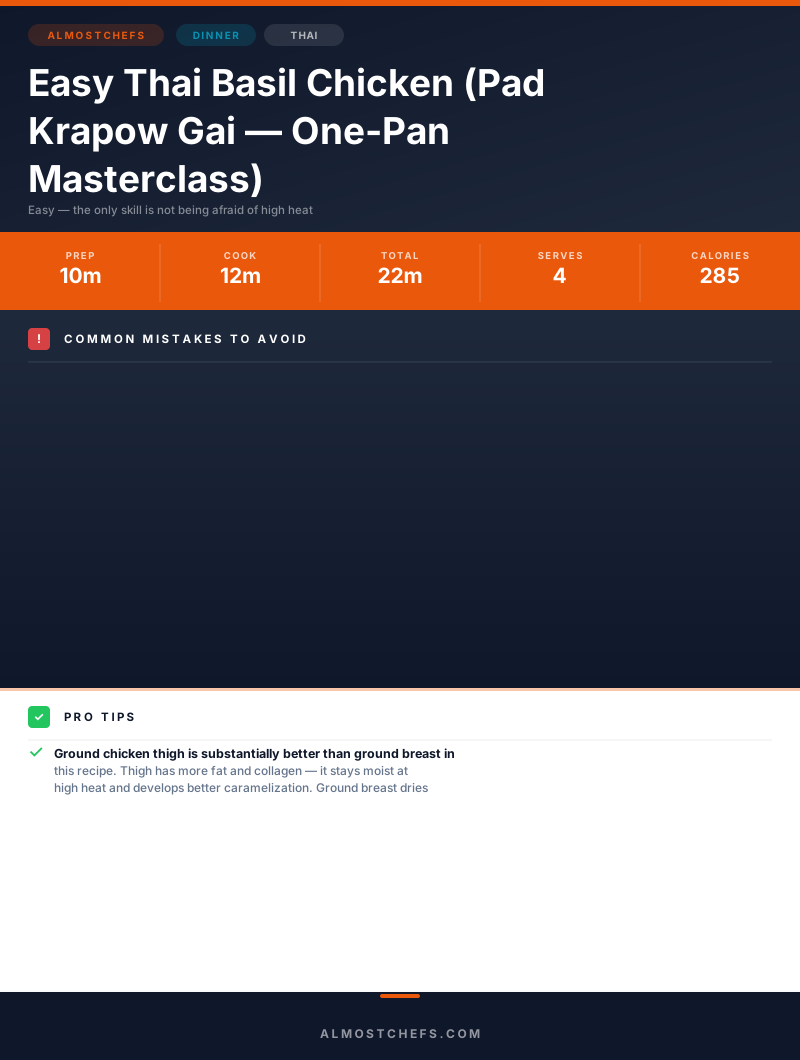
Ground chicken thigh is the correct protein choice. Thigh has enough intramuscular fat to develop caramelization rather than drying out at extreme heat. Ground breast turns grey, dry, and texturally similar to sawdust by the time a genuine wok char has developed. Thigh tolerates the abuse and rewards you for it.
The Basil Is a Finishing Herb
Everything else in pad krapow is a cooking ingredient. The basil is added off heat in the final 30 seconds. It wilts in the residual heat of the chicken and pan, releasing its volatile aromatic compounds without cooking them off. The goal is bright green, just-wilted leaves that smell fresh and peppery. Leaves that go in over direct flame emerge black, flavorless, and texturally unpleasant. The same principle applies to delicate herbs in French cooking — they finish the dish rather than cook with it.
The fried egg is structural, not decorative. The yolk, broken and mixed into the rice and chicken, acts as a binding sauce that distributes fat and richness evenly through every bite. Street vendors in Thailand will look at you strangely if you decline the egg. Take the egg.
Where Beginners Mess This Up
Before we start, read this. These are the 3 reasons your easy thai basil chicken (pad krapow gai — one-pan masterclass) will fail:
- 1
Using Italian sweet basil instead of Thai holy basil: Italian basil wilts into a sad, dark green mass under high heat and contributes a faint anise note. Thai holy basil (krapow) has a peppery, slightly clove-like flavor and more structural integrity that survives a 30-second stir-fry. Thai sweet basil is the second-best substitute if holy basil isn't available. Italian basil is a distant third.
- 2
Cooking over insufficiently high heat: Pad krapow requires wok hei — the slightly charred, smoky flavor that develops only at extremely high temperatures. A home burner can approximate this if you use the highest setting and don't crowd the pan. On a low or medium flame, the ingredients steam rather than sear and the dish loses its defining character. High heat is non-negotiable.
- 3
Adding the basil too early: Holy basil goes in the last 30 seconds of cooking, off or nearly off the heat. Added earlier, it darkens, loses flavor, and contributes nothing. The wilted basil in the final dish should be bright green-to-slightly-darker-green, not black. The basil is a finishing herb in this context, not a cooking ingredient.
The Video Reference Library
Want to see it in action? Here are the exact videos we analyzed and combined to build this foolproof recipe translation:
The definitive home-cook reference for pad krapow gai from a Thai chef. Watch the sauce ratio, the heat level throughout, and the basil addition timing — Pailin is specific about each of these and all three matter.
A home-cook adaptation that makes the wok hei technique accessible without professional equipment. The improvisation technique for achieving high heat on a standard burner is directly applicable.
A methodical breakdown of why wok hei happens at the chemical level — Maillard compounds, pyrazines, and the thermal requirements. Explains why a cast iron skillet at maximum heat gets you close and why a non-stick pan on medium cannot.
🛠️ Core Equipment
- Carbon steel wok or large stainless skilletA wok reaches the sustained extreme temperatures needed for wok hei that a non-stick pan cannot handle. If you don't have a wok, use the largest, heaviest stainless skillet you own on the highest burner. A carbon steel wok is the single highest-impact tool for this recipe.
- Wok spatula or fish spatulaA thin, flexible spatula lets you toss and scrape the chicken quickly while keeping it moving at high heat. A thick spatula breaks up the ground chicken less efficiently.
- Small mixing bowl for sauceCombine oyster sauce, fish sauce, soy sauce, and sugar in a bowl before you start cooking. The stir-fry moves too fast to measure and pour individual sauces mid-cook. Pre-mixing means you add everything in one motion.
Easy Thai Basil Chicken (Pad Krapow Gai — One-Pan Masterclass)
🛒 Ingredients
- ✦1.5 lbs ground chicken (thigh preferred)
- ✦4 garlic cloves, minced
- ✦3-4 Thai bird's eye chilies, minced (adjust to heat preference)
- ✦2 tablespoons vegetable oil
- ✦2 tablespoons oyster sauce
- ✦1.5 tablespoons fish sauce
- ✦1 tablespoon soy sauce
- ✦1 teaspoon dark soy sauce
- ✦1 teaspoon granulated sugar
- ✦1 cup Thai holy basil leaves, loosely packed
- ✦4 fried eggs (optional, for serving)
- ✦Jasmine rice, for serving
👨🍳 Instructions
01Step 1
Mix oyster sauce, fish sauce, soy sauce, dark soy sauce, and sugar in a small bowl until sugar dissolves. Set aside.
02Step 2
Heat a wok or large heavy skillet over the highest heat your burner will produce. Let the pan heat for at least 2 minutes until a drop of water vaporizes instantly on contact.
03Step 3
Add vegetable oil. Swirl to coat. Add garlic and chilies simultaneously and stir-fry for 15-20 seconds — just until fragrant. Do not let them burn.
04Step 4
Add ground chicken. Spread into an even layer and let sit undisturbed for 30-40 seconds to develop searing on the bottom. Then break apart and stir-fry aggressively, keeping everything moving, for 4-5 minutes until the chicken is cooked through and slightly caramelized in places.
05Step 5
Pour the sauce mixture over the chicken. Toss to coat evenly and cook for 1-2 minutes until the sauce reduces slightly and glazes the chicken.
06Step 6
Remove the pan from heat. Add the holy basil leaves and toss until just wilted, about 30 seconds.
07Step 7
Serve immediately over jasmine rice, topped with a fried egg if desired.
Nutrition Per Serving
Estimates based on standard preparation. Adjustments alter macros.
🔄 Substitutions
Instead of Ground chicken...
Use Ground pork or ground turkey
Ground pork is arguably more traditional and has more fat, producing a richer result. Ground turkey works but is lean — add an extra teaspoon of oil to compensate.
Instead of Thai holy basil...
Use Thai sweet basil
Thai sweet basil (horapa) is more widely available than holy basil. Similar structural integrity under heat, slightly more anise flavor and less pepper. A good substitute.
Instead of Fish sauce...
Use Soy sauce plus a small amount of lime juice
The fish sauce provides glutamates and a specific fermented salinity. Soy sauce approximates the saltiness but lacks the depth. Use it if fish sauce is unavailable; the dish will be different but edible.
Instead of Bird's eye chilies...
Use Serrano or fresno chilies
Less heat per chili, similar fruitiness. Use 5-6 serranos where the recipe calls for 3-4 bird's eye. Adjust based on your heat tolerance.
🧊 Storage & Reheating
In the Fridge
Store the chicken mixture (without rice) for up to 4 days. Reheat in a hot skillet with a splash of water.
In the Freezer
Freeze for up to 2 months. Thaw overnight and reheat in a hot skillet. The texture of ground chicken holds up reasonably well from frozen.
Reheating Rules
Hot skillet with a teaspoon of oil and a splash of water. High heat for 2-3 minutes. The microwave makes the chicken rubbery and steams out the wok hei character.
❓ Frequently Asked Questions
What is wok hei and can I achieve it at home?
Wok hei (literally 'breath of the wok') is the smoky, slightly charred, complex flavor that develops when food is cooked at extreme temperatures in a seasoned wok. It involves Maillard reactions, the creation of pyrazine compounds, and the interaction of the food with the wok's seasoned surface. At home, you can approximate it by using the highest burner setting, letting the pan pre-heat thoroughly, and not crowding the pan. It won't be identical to a restaurant wok setup (which pumps 100,000+ BTU), but it gets meaningfully closer than a medium-heat cook.
What is the difference between Thai holy basil and Thai sweet basil?
Thai holy basil (krapow) has narrow, serrated leaves, a peppery and slightly clove-like flavor, and structural integrity under high heat. Thai sweet basil (horapa) has wider, smoother leaves, a more pronounced anise flavor, and is more commonly available in Western grocery stores. For pad krapow specifically, holy basil is traditional and the name of the dish literally means 'stir-fry holy basil.' Sweet basil is the best substitute. Italian basil is a distant fallback.
Can I use chicken breast instead of ground thigh?
Ground breast works but is noticeably drier and less flavorful than thigh. The high heat and short cook time mean there's no opportunity to introduce moisture or fat to compensate. If breast is all that's available, add an extra teaspoon of oil and consider slightly reducing the fish sauce to compensate for the leaner, less savory protein.
How spicy is this with 3-4 bird's eye chilies?
Moderately hot to quite hot, depending on the specific batch of chilies. Thai bird's eye chilies range from 50,000 to 100,000 Scoville units — they're genuinely hot, not just 'spicy for Americans.' If you're heat-sensitive, start with 1-2 chilies. If you want the street food experience, use 4 and seed half of them to reduce heat without losing flavor.
Why add a fried egg?
A runny-yolk fried egg on top of pad krapow is the traditional street food serving style. The yolk breaks when you mix the egg into the rice and chicken and acts as a rich, fatty sauce that binds everything together and mellows the chili heat. It's not optional in Thailand — ordering pad krapow without the egg is unusual enough to merit a comment.
Can I make this ahead?
The chicken mixture holds well in the fridge and reheats acceptably. The fried egg and fresh basil must be made fresh. The wok hei character fades after refrigeration — you won't fully recover it on reheat — but the flavor of the sauce and spiced chicken remains excellent.
The Science of
Easy Thai Basil Chicken (Pad Krapow Gai — One-Pan Masterclass)
We turned everything on this page into a beautiful, flour-proof PDF cheat sheet. Print it out, stick it to your fridge, and never mess up your easy thai basil chicken (pad krapow gai — one-pan masterclass) again.
*We'll email you the high-res PDF instantly. No spam, just perfectly cooked meals.
AlmostChefs Editorial Team
We translate the internet's most popular cooking videos into foolproof, beginner-friendly written recipes. We analyze multiple methods, test them in our kitchen, and engineer a single "Master Recipe" that gives you the best possible result with the least possible stress.