Copycat Texas Roadhouse Rolls (Better Than the Basket)
Soft, pillowy dinner rolls with a golden crust and cinnamon butter finish — reverse-engineered from the restaurant chain's most iconic giveaway. We broke down the dough chemistry and proofing logic to build a foolproof home method that delivers the same cloud-like crumb every single time.
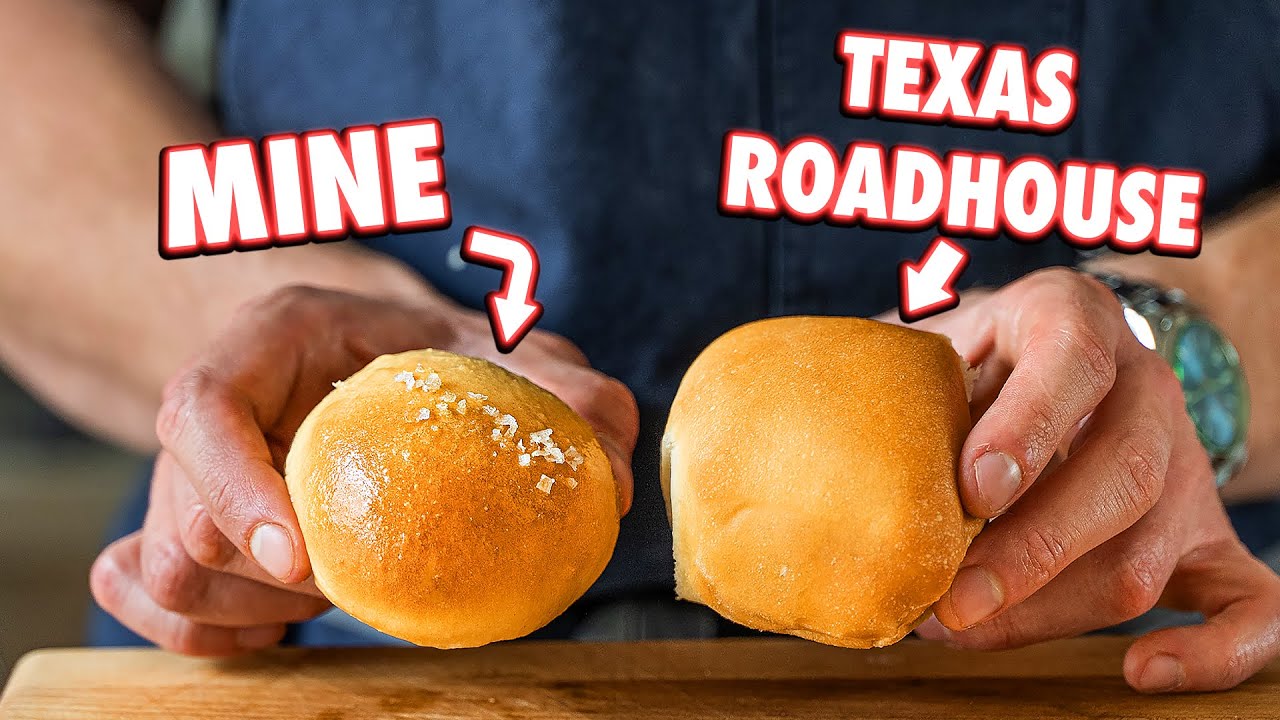
“The reason you keep going back to Texas Roadhouse isn't the steak. It's the rolls. Specifically, it's that moment when the basket lands on the table still warm, pulling apart in thick, pillowy layers, soaked through with cinnamon butter. Most copycat recipes miss it entirely because they rush the proof and skip the overnight cold fermentation. We fixed that.”
Why This Recipe Works
Texas Roadhouse didn't become famous for their ribeyes. They became famous for giving away free bread. The rolls land before you've touched the menu, warm and steaming, and by the time your entrée arrives you've already eaten three of them. That's not an accident — it's an engineered feeding strategy, and it works because the rolls are legitimately excellent.
The question worth asking is: what specifically makes them excellent? Most copycat attempts fail because they reverse-engineer the ingredient list rather than the technique. They look at "soft dinner roll" and produce a serviceable generic result. But the texture that makes Texas Roadhouse rolls memorable — that specific pillowy interior with a thin golden shell — comes from dough enrichment, fermentation time, and finishing technique. Miss any of those three and you have a fine roll, not that roll.
Enriched Dough Behaves Differently Than Lean Bread
Bread flour forms the structural backbone here, but the enrichment components — butter, milk, egg wash, honey — are what transform the texture. When fats coat gluten strands during mixing, they shorten and tenderize them. This is why brioche and challah feel rich and soft instead of chewy and lean. The whole wheat flour, added at a modest 12% of total flour weight, contributes a subtle nuttiness and additional fiber without meaningfully affecting the crumb. If you go higher than 15–20% whole wheat in an enriched dough, the bran particles start cutting gluten strands and the roll loses its lift.
Honey performs a specific function beyond sweetness. It contains fructose, which caramelizes at lower temperatures than table sugar, contributing to the deep amber crust even at a moderate oven temperature. It also retains moisture better than sucrose, which is why these rolls stay soft for longer than rolls made with granulated sugar alone.
The Cold Fermentation Is the Actual Secret
Every recipe instruction will tell you to let the dough rise until doubled. Few will tell you that the flavor you're trying to replicate requires 8–12 hours in a cold environment rather than 90 minutes at room temperature. Cold fermentation slows yeast activity dramatically while allowing enzymatic activity — specifically, proteases breaking down gluten into flavor compounds and amylases converting starches to sugars — to continue at a meaningful rate. The result is a dough that, when baked, tastes complex, slightly sweet, and developed rather than neutral and yeasty.
This is not optional if you're trying to hit the restaurant target. Room-temperature rolls are fine. Cold-fermented rolls are the ones people ask you to bring to every dinner party from now on.
The Finishing Window Is Sixty Seconds
The cinnamon butter step is where most home cooks leave points on the table. The butter goes on hot — not warm, not room temperature, but immediately-out-of-the-oven hot. In that window, the surface of each roll is still porous and actively releasing steam, which creates a pressure differential that pulls liquid butter into the crumb. Let the rolls cool for five minutes and a surface skin forms. The butter sits on top rather than penetrating, and the end result is greasy rather than rich.
Keep your cinnamon butter warm in a small saucepan while the rolls bake. The moment they clear the oven, brush every surface — tops, sides, between adjacent rolls where they've pressed together. Apply a second coat after the first absorbs. That second coat is the one that gives the finished rolls their lacquered sheen.
Why the Egg Wash Matters
An egg wash is a emulsion of fat and protein applied to dough before baking. During the oven's initial heat, the proteins in the egg white set into a thin, rigid film that reflects light at a slightly different angle than bare dough — this is what creates the glossy finish. The fat from the yolk inhibits surface drying, keeping the crust thin and flexible rather than crackling and hard. For rolls specifically, a thin flexible crust is what lets you pull them apart cleanly at the seam rather than shattering. Use a pastry brush for even coverage, and don't skip the sides — the sidewall color tells you as much about doneness as the top.
The total time on this recipe looks alarming at 10-plus hours, but 9 of those hours are the refrigerator doing your work for you. Active time is under 40 minutes. That's a favorable trade for rolls that are genuinely better than the ones they put in the basket.
Where Beginners Mess This Up
Before we start, read this. These are the 4 reasons your copycat texas roadhouse rolls (better than the basket) will fail:
- 1
Using milk that's too hot: Yeast dies at temperatures above 120°F. Most people warm their milk by feel and overshoot. Use a thermometer and target 105–110°F. If you kill the yeast, you won't know it until the dough sits flat for an hour. There's no saving it.
- 2
Skipping the overnight cold proof: A warm room-temperature rise produces serviceable rolls. An overnight cold fermentation — 8 to 12 hours in the refrigerator — produces rolls with complex, slightly sweet flavor that no shortcut can replicate. The cold slows yeast activity and lets enzymatic processes develop gluten and flavor simultaneously. This is the actual secret.
- 3
Undertapping the rolls before adding cinnamon butter: The cinnamon butter must go on while the rolls are still hot — within 60 seconds of leaving the oven. Hot rolls have open pores that absorb the butter into the crumb. Rolls that have cooled even five minutes form a surface skin that the butter slides off instead of penetrating.
- 4
Overbaking to a pale gold: These rolls need to be deep golden brown, not light tan. Pale rolls look like they might be done but the interior is still gummy and the flavor hasn't fully developed. Pull them when they're the color of a well-toasted marshmallow and sound hollow when tapped on the bottom.
The Video Reference Library
Want to see it in action? Here are the exact videos we analyzed and combined to build this foolproof recipe translation:
The source video for this recipe. Clear demonstration of the shaping technique and cinnamon butter application timing that makes the difference between good rolls and great ones.
🛠️ Core Equipment
- Instant-read thermometerNon-negotiable for yeast bread. You need to confirm milk temperature (105–110°F) before adding yeast, and internal roll temperature (190°F) to confirm doneness without guessing.
- Stand mixer with dough hookEight to ten minutes of hand kneading is achievable but punishing. A stand mixer develops the gluten network more consistently and frees you to prep other components. If hand-kneading, the dough should pass the windowpane test before you stop.
- Pastry brushFor both the egg wash before baking and the cinnamon butter after. A brush gets even coverage in the crevices between rolls where pooled butter creates the richest bites.
- Kitchen scaleDividing dough into 12 equal portions by weight guarantees uniform rolls that proof and bake at the same rate. Eyeballing produces uneven rolls where small ones burn before large ones are cooked through.
Copycat Texas Roadhouse Rolls (Better Than the Basket)
🛒 Ingredients
- ✦3.5 cups bread flour
- ✦0.5 cup whole wheat flour
- ✦1 packet (2.25 tsp) instant yeast
- ✦1 tablespoon granulated sugar
- ✦2 tablespoons honey
- ✦1.5 teaspoons salt
- ✦2 tablespoons vegetable oil
- ✦6 tablespoons unsalted butter, divided
- ✦1 cup whole milk, warmed to 110°F
- ✦0.5 cup water, warmed to 110°F
- ✦1 egg yolk mixed with 1 tablespoon water (egg wash)
- ✦1 teaspoon vanilla extract
- ✦0.25 teaspoon ground cinnamon
- ✦Cooking spray or additional butter for proofing bowl
- ✦Flaky sea salt for topping (optional)
👨🍳 Instructions
01Step 1
In a large mixing bowl, whisk together bread flour, whole wheat flour, instant yeast, sugar, and salt until evenly distributed.
02Step 2
In a separate bowl, whisk together warmed milk, warm water, vegetable oil, vanilla extract, and honey until fully combined.
03Step 3
Pour the wet mixture into the dry ingredients and stir with a wooden spoon until a shaggy dough forms and all flour is incorporated.
04Step 4
Transfer dough to a lightly floured surface and knead for 8–10 minutes until smooth, elastic, and slightly tacky. Alternatively, use a stand mixer with a dough hook on medium speed for 6–8 minutes.
05Step 5
Shape dough into a ball and place in a lightly oiled bowl, turning to coat all sides. Cover with plastic wrap and let rise at room temperature for 1 hour until doubled.
06Step 6
Divide the risen dough into 12 equal portions by weight. Shape each portion into a tight round ball using the pinching method — pull the dough around the bottom and pinch to create surface tension on top.
07Step 7
Place shaped rolls seam-side down on a parchment-lined baking sheet, spacing 2 inches apart. Cover loosely with plastic wrap.
08Step 8
For best results: refrigerate overnight (8–12 hours). For same-day rolls: proof at room temperature for 1.5–2 hours until puffy and increased by about 50 percent.
09Step 9
Preheat oven to 425°F. If rolls were refrigerated, allow them to come to room temperature for 30 minutes first.
10Step 10
Brush the tops and sides of each roll evenly with egg wash. Sprinkle lightly with flaky sea salt if desired.
11Step 11
Bake for 14–18 minutes until deep golden brown and hollow-sounding when tapped on the bottom. Internal temperature should read 190°F.
12Step 12
While rolls bake, melt 4 tablespoons unsalted butter in a small saucepan with ground cinnamon over low heat, stirring until combined.
13Step 13
Immediately after removing rolls from the oven, brush each roll generously with cinnamon butter while still hot.
14Step 14
Cool on the baking sheet for 5 minutes, then serve warm with additional cinnamon butter on the side.
Nutrition Per Serving
Estimates based on standard preparation. Adjustments alter macros.
🔄 Substitutions
Instead of Bread flour + whole wheat flour...
Use 4 cups all-purpose flour
Produces softer, slightly less structured rolls. All-purpose flour has lower protein content, so the crumb will be more tender but won't hold its shape as crisply.
Instead of Whole milk...
Use Unsweetened oat milk or 2% Greek yogurt thinned with water
Oat milk: nearly identical texture, slightly milder flavor. Greek yogurt thinned to milk consistency adds a subtle tang and additional protein to the dough.
Instead of Unsalted butter...
Use Vegan butter (Miyoko's or similar)
Works well in both the dough and the cinnamon butter finish. Avoid margarine — the water content is too high and will affect browning.
Instead of Honey...
Use Maple syrup or agave nectar
Maple syrup adds a faint woodsy sweetness. Agave is more neutral. Both provide similar moisture retention and browning benefits as honey.
🧊 Storage & Reheating
In the Fridge
Store in an airtight container or zip-lock bag for up to 3 days. They will firm up slightly but reheat beautifully.
In the Freezer
Freeze fully baked and cooled rolls for up to 2 months in a sealed freezer bag. Thaw at room temperature for 1 hour before reheating.
Reheating Rules
Wrap in foil and heat in a 300°F oven for 8–10 minutes. Brush with fresh cinnamon butter immediately after. Avoid the microwave unless you want a soft, steamed texture instead of a proper crust.
❓ Frequently Asked Questions
Can I make these rolls without a stand mixer?
Yes. Hand-kneading for 8–10 minutes works fine. The dough is enriched with butter and milk, which makes it slightly sticky. Resist adding excess flour — the tackiness is correct. The windowpane test is your reliable benchmark for sufficient gluten development.
Why do my rolls come out dense instead of fluffy?
Usually one of three causes: the milk was too hot and killed the yeast, the dough didn't proof long enough to double in size, or you added too much flour during kneading and tightened the gluten network. Measure milk temperature with a thermometer and proof by volume, not by time.
Can I make the dough the night before?
That's actually the recommended method. Shape the rolls after the first rise, place them on the baking sheet, cover, and refrigerate overnight. Pull them out 30 minutes before baking for the cold proof rollout. Cold-fermented rolls have noticeably better flavor than same-day rolls.
What makes the cinnamon butter stick to the rolls?
Heat. The rolls must be freshly out of the oven — the surface is porous and hot, which allows the butter to absorb into the crumb rather than just sitting on top. Wait even five minutes and you lose most of the penetration. Keep the butter warm and brush immediately.
Why use bread flour instead of all-purpose?
Bread flour has a higher protein content (12–14% versus 10–12% for all-purpose), which forms more gluten strands during kneading. More gluten means more structure, which means rolls that hold their round shape and produce that characteristic chew. All-purpose flour works but produces a softer, slightly flatter result.
How do I know when the dough has proofed enough?
For the first rise: the dough should double in volume. For the second proof of shaped rolls: they should increase by about 50% and look visibly puffy. The poke test also works — press a floured finger gently into a roll. If the indent springs back slowly, they're ready. If it springs back immediately, proof longer. If it doesn't spring back at all, they're overproofed.
The Science of
Copycat Texas Roadhouse Rolls (Better Than the Basket)
We turned everything on this page into a beautiful, flour-proof PDF cheat sheet. Print it out, stick it to your fridge, and never mess up your copycat texas roadhouse rolls (better than the basket) again.
*We'll email you the high-res PDF instantly. No spam, just perfectly cooked meals.
AlmostChefs Editorial Team
We translate the internet's most popular cooking videos into foolproof, beginner-friendly written recipes. We analyze multiple methods, test them in our kitchen, and engineer a single "Master Recipe" that gives you the best possible result with the least possible stress.