Crispy Teriyaki Salmon (The Glaze-First Method Changes Everything)
Pan-seared salmon with a silky homemade teriyaki glaze built from soy sauce, mirin, and sake. We analyzed the most popular YouTube methods and found that making the glaze separately — before the fish ever hits the pan — is what separates glossy restaurant results from soggy home versions.
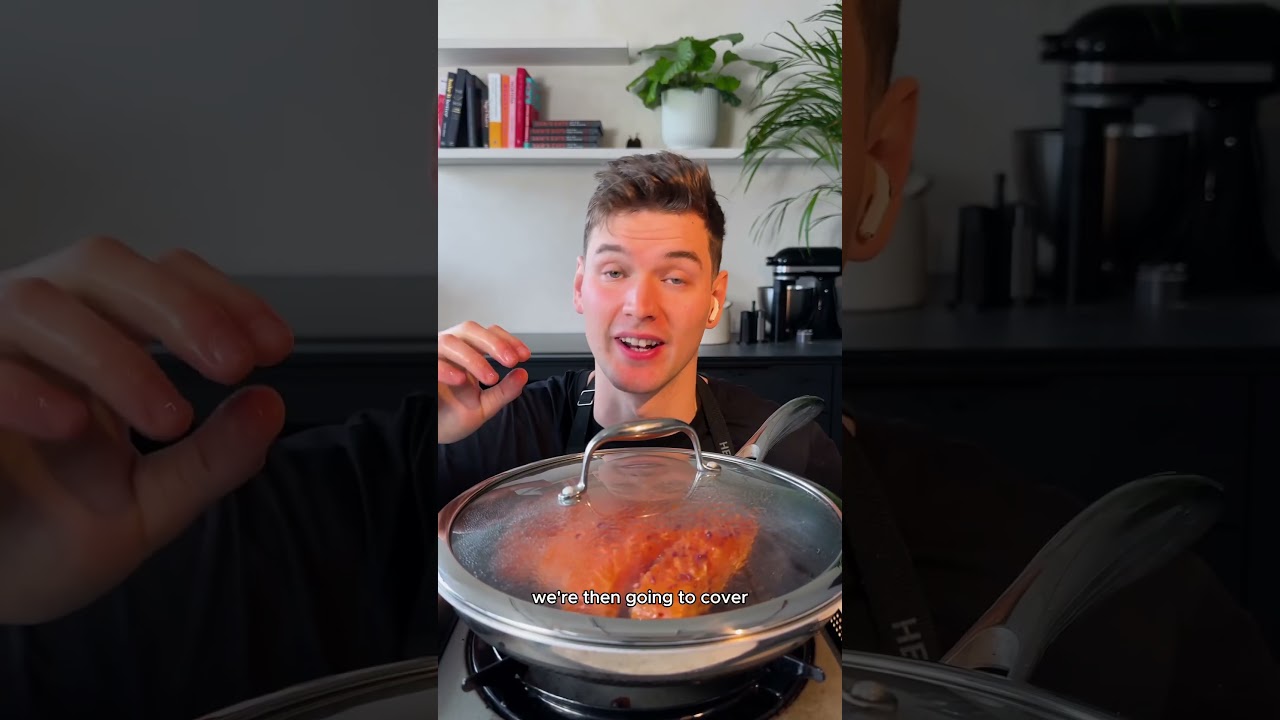
“Most teriyaki salmon recipes tell you to pour sauce over the fish and cook it down together. That's why most teriyaki salmon is either burned on the outside or undercooked in the center. The fix is counterintuitive: build the glaze in a separate pan, reduce it to perfect consistency, then introduce it to the fish only in the final two minutes. You get crispy skin, fully cooked salmon, and a glossy glaze that clings instead of sliding off.”
Why This Recipe Works
Teriyaki salmon is the dish that separates cooks who understand heat from cooks who follow instructions. The ingredients are simple. The timing is short. There is almost no prep. And yet most home versions produce salmon that is simultaneously overcooked and undersauced, with a glaze that has either burned into lacquer or been diluted into a watery slick that slides off the moment you plate it.
The problem is sequence. Almost every standard recipe tells you to build the glaze in the same pan as the fish, adding sauce partway through and cooking everything together. This sounds intuitive. It produces consistently bad results. Teriyaki glaze contains multiple forms of sugar — mirin, brown sugar, soy's own natural sweetness — and sugar burns at around 320°F while a proper fish sear runs at 400-450°F. You cannot maintain both in the same pan simultaneously. Something has to give, and it's always the glaze.
The Separate Glaze Principle
Build the glaze first, in its own pan, before the salmon touches heat. Combine soy, mirin, sake, brown sugar, water, and rice vinegar. Simmer until fragrant with garlic and ginger. Thicken with a cornstarch slurry until the glaze coats a spoon cleanly. Pull it off heat. Add sesame oil. Set it aside. The entire process takes five minutes.
Now your glaze is at perfect consistency, ready to deploy on your terms. The salmon cooks uninterrupted. The glaze joins the party only in the final two minutes, over reduced heat, with constant basting. Every element does its job at the temperature it was designed for.
The Sear Architecture
A cast iron skillet holds the heat you need for this. Stainless works too. What doesn't work is nonstick — the coating chemistry prevents the extreme high heat that creates a genuine crust, and nonstick pans run cooler than their thermostat suggests. You want the oil shimmering before the fish goes in. Not smoking, not lukewarm — shimmering.
Salmon skin-side down, no movement, five to six minutes. This is the part where impatient cooks destroy their dinner. The skin fuses to the pan immediately and will stick if disturbed. What looks like a problem is actually the Maillard reaction doing its job — the proteins are contracting, the moisture is driving off, and a crust is forming that will eventually release cleanly from the pan surface. The fish tells you when it's ready. If it resists your spatula, it needs more time. If it releases cleanly, it's ready to flip.
Why Salmon Specifically
Salmon's fat content — roughly 10-12g per 5-ounce fillet, distributed through the flesh as intramuscular marbling — makes it one of the most forgiving fish to sear at high heat. The fat conducts heat internally, cooking the center more evenly than lean fish like cod or tilapia, which cook from the outside in and can produce a raw center even when the exterior looks done. The same fat content gives teriyaki glaze something to cling to — it adheres to the fish rather than pooling on the plate.
The omega-3 fatty acids in salmon (EPA and DHA) also have meaningful anti-inflammatory properties. This isn't food marketing — the research is substantial. A 5-ounce salmon fillet delivers roughly 2-3g of combined EPA and DHA, a quantity associated with measurable reductions in inflammatory markers in controlled trials. Combined with garlic and ginger — both of which contain well-documented anti-inflammatory compounds — this is one of the few weeknight dinners where the health claims are actually earned.
Finishing Right
Two minutes rest after the pan. The internal temperature of the fish continues to climb by 5-10 degrees off heat — this is carryover cooking, the same principle that applies to steak and roast chicken. If you plate immediately and cut in, the juices run. If you rest, they redistribute. It's a two-minute investment with a measurable return on every bite.
Scallions and sesame seeds are not decoration. The raw scallion bite cuts through the sweet-savory glaze. The sesame seeds add a textural layer — the only crunch in an otherwise soft dish. Leave either out and the plate is slightly less than what it should be.
Where Beginners Mess This Up
Before we start, read this. These are the 4 reasons your crispy teriyaki salmon (the glaze-first method changes everything) will fail:
- 1
Adding the glaze too early: Sugar-based sauces like teriyaki burn at high heat before the salmon has time to cook through. Dumping the glaze in at the start scorches the exterior while leaving the center raw. The glaze goes in during the last 2-3 minutes only — not a second earlier.
- 2
Moving the salmon during the skin-side cook: The crispy skin is non-negotiable, and you destroy it by fussing. Place the salmon skin-side down and do not touch it for a full 5-6 minutes. The skin releases naturally from the pan when it's ready. If it sticks when you try to move it, it needs more time.
- 3
Not patting the salmon dry: Surface moisture is the enemy of a sear. Wet salmon steams instead of browns, and the glaze won't adhere to a steamed surface. Pat every fillet aggressively dry with paper towels before seasoning. This is the single most skipped step and the most consequential.
- 4
Cooking a cold fillet straight from the fridge: Cold fish dropped into a hot pan seizes immediately and cooks unevenly — overcooked on the edges, underdone in the thick center. Pull the fillets from the fridge 15 minutes before cooking to take the chill off.
The Video Reference Library
Want to see it in action? Here are the exact videos we analyzed and combined to build this foolproof recipe translation:
The primary reference for this recipe. Demonstrates the separate glaze method, the correct sear time for crispy skin, and the exact moment to introduce the sauce. Clear technique, honest timing.
🛠️ Core Equipment
- Large stainless steel or cast iron skilletYou need high heat retention for a proper sear. Nonstick pans run cooler and won't produce the golden crust. A [cast iron skillet](/kitchen-gear/review/cast-iron-skillet) holds heat through the thermal shock of cold fish hitting a hot surface.
- Small saucepanThe glaze builds separately before the fish cooks. You need a dedicated pan to reduce it to glossy consistency without managing the salmon at the same time. Trying to do both in one pan is where the burned teriyaki story starts.
- Instant-read thermometerSalmon is done at 145°F internal temperature for food safety, though many cooks pull at 125-130°F for a silkier center. Either way, guessing by color alone is unreliable. An [instant-read thermometer](/kitchen-gear/review/instant-read-thermometer) removes the uncertainty entirely.
- Fish spatulaThin, angled, and flexible — the only tool that can slide cleanly under a salmon fillet without tearing the skin or breaking the flesh. A standard spatula is too thick and will destroy the crust you spent 6 minutes building.
Crispy Teriyaki Salmon (The Glaze-First Method Changes Everything)
🛒 Ingredients
- ✦4 salmon fillets, 5-6 ounces each, skin on and patted dry
- ✦1/3 cup low-sodium soy sauce
- ✦3 tablespoons mirin (sweet rice wine)
- ✦2 tablespoons sake or dry sherry
- ✦1 tablespoon brown sugar
- ✦1 tablespoon fresh ginger, finely minced
- ✦3 cloves garlic, minced
- ✦1/4 cup water or dashi stock
- ✦1 tablespoon rice vinegar
- ✦1 teaspoon sesame oil
- ✦1.5 teaspoons cornstarch mixed with 1 tablespoon water
- ✦2 tablespoons vegetable or canola oil
- ✦2 scallions, sliced thin for garnish
- ✦1 tablespoon sesame seeds for garnish
- ✦Kosher salt and cracked black pepper to taste
👨🍳 Instructions
01Step 1
Pull salmon fillets from the refrigerator 15 minutes before cooking. Pat every surface aggressively dry with paper towels.
02Step 2
Combine soy sauce, mirin, sake, brown sugar, water, and rice vinegar in a small saucepan over medium heat. Bring to a gentle simmer.
03Step 3
Add minced garlic and ginger to the simmering sauce. Stir continuously for 1 minute until fragrant.
04Step 4
Whisk in the cornstarch slurry in a steady stream. Continue simmering for 2-3 minutes, stirring constantly, until the glaze thickens and turns glossy.
05Step 5
Remove glaze from heat. Stir in sesame oil. Set aside.
06Step 6
Season both sides of each salmon fillet generously with kosher salt and cracked black pepper.
07Step 7
Heat vegetable oil in a large skillet over medium-high heat until shimmering, about 1-2 minutes.
08Step 8
Place salmon fillets skin-side down into the hot skillet. Do not move them. Cook for 5-6 minutes until the skin is deeply golden and crispy.
09Step 9
Flip each fillet carefully using a fish spatula. Cook flesh-side down for 3-4 minutes until internal temperature reaches 145°F (63°C).
10Step 10
Pour the prepared teriyaki glaze over the salmon. Tilt the pan to coat the fillets evenly. Cook for 2-3 minutes, spooning the glaze over the fish repeatedly.
11Step 11
Transfer salmon to a serving platter. Rest for 2-3 minutes.
12Step 12
Drizzle any remaining pan sauce over the fillets. Garnish with sliced scallions and sesame seeds. Serve immediately.
Nutrition Per Serving
Estimates based on standard preparation. Adjustments alter macros.
🔄 Substitutions
Instead of Mirin...
Use Honey or maple syrup
Honey is the closer match — similar viscosity and caramelization behavior. Maple syrup works but introduces a faint earthiness. Use a 1:1 swap. Reduce the brown sugar by half to compensate for added sweetness.
Instead of Sake...
Use Dry sherry or water
Dry sherry is the better substitute — it preserves the fermented complexity. Water produces a cleaner, lighter glaze with less umami depth. Either works for weeknight purposes.
Instead of Low-sodium soy sauce...
Use Tamari or coconut aminos
Tamari is gluten-free and nearly identical in flavor — a direct 1:1 swap. Coconut aminos cuts sodium by roughly 50% and adds subtle sweetness; reduce the brown sugar slightly to balance.
Instead of Cornstarch...
Use Arrowroot powder or tapioca starch
All three produce a glossy glaze. Arrowroot is slightly cleaner tasting and sets firmer when cold. Tapioca adds very faint chewiness. Use the same ratio as cornstarch.
🧊 Storage & Reheating
In the Fridge
Store cooked salmon and any leftover glaze separately in airtight containers for up to 2 days. The skin will soften — that's unavoidable with refrigeration.
In the Freezer
Freeze unglazed cooked salmon for up to 1 month. Glaze does not freeze well — the cornstarch breaks down and turns grainy on thawing. Make fresh.
Reheating Rules
Reheat gently in a covered skillet over low heat with a splash of water to generate steam. Microwave makes salmon rubbery and releases unpleasant fishy odors. Avoid.
❓ Frequently Asked Questions
Why does my teriyaki glaze burn before the salmon is done?
You added it too early. The glaze contains sugar — brown sugar, mirin, and the natural sugars in soy sauce — all of which caramelize and then burn under sustained high heat. The glaze goes in during the last 2-3 minutes only, over medium heat, with constant basting. Any earlier and you're making charcoal.
Can I use skinless salmon fillets?
You can, but the technique changes. Without skin, the flesh-side makes direct contact with the pan and overcooks faster. Reduce heat to medium, shorten the first sear to 3-4 minutes, and flip gently. The crust won't be as dramatic, but the fish will cook correctly.
What's the difference between mirin and sake in the glaze?
Mirin is sweet rice wine — it provides sweetness, glossiness, and helps the glaze cling. Sake is dry rice wine — it provides aromatic complexity and helps tenderize the fish slightly. They're not interchangeable. If you're short on one, see the substitutions section.
How do I know when the salmon is done without a thermometer?
Press the thickest part of the fillet gently with a finger. Raw salmon feels soft and yielding like raw steak. Fully cooked salmon feels firm with slight spring. The flesh should just begin to flake when pressed — not fall apart. The center should be opaque but still slightly darker than the edges. This takes practice; a thermometer removes the guesswork entirely.
Why is my salmon sticking to the pan?
Either the pan wasn't hot enough before the fish went in, or you tried to move the fillet before it was ready. Salmon releases naturally from a properly heated pan once the skin has formed a crust. If it resists when you try to flip, wait another 60-90 seconds. It will release.
Can I bake this instead of pan-searing?
Yes, though you lose the crispy skin. Bake at 400°F for 12-15 minutes, then brush with glaze and broil for 2-3 minutes at the end to caramelize. The glaze won't be as deeply layered as the stovetop version, but it's a workable alternative if you're cooking for a crowd.
The Science of
Crispy Teriyaki Salmon (The Glaze-First Method Changes Everything)
We turned everything on this page into a beautiful, flour-proof PDF cheat sheet. Print it out, stick it to your fridge, and never mess up your crispy teriyaki salmon (the glaze-first method changes everything) again.
*We'll email you the high-res PDF instantly. No spam, just perfectly cooked meals.
AlmostChefs Editorial Team
We translate the internet's most popular cooking videos into foolproof, beginner-friendly written recipes. We analyze multiple methods, test them in our kitchen, and engineer a single "Master Recipe" that gives you the best possible result with the least possible stress.