Sheet Pan Teriyaki Salmon Bowl (42g Protein, Zero Guesswork)
A high-protein sheet pan dinner with glazed salmon fillets, crispy baked tofu, and caramelized roasted vegetables — all finished with a homemade Greek yogurt teriyaki glaze. We broke down the technique so every component finishes at the right time with minimal effort.
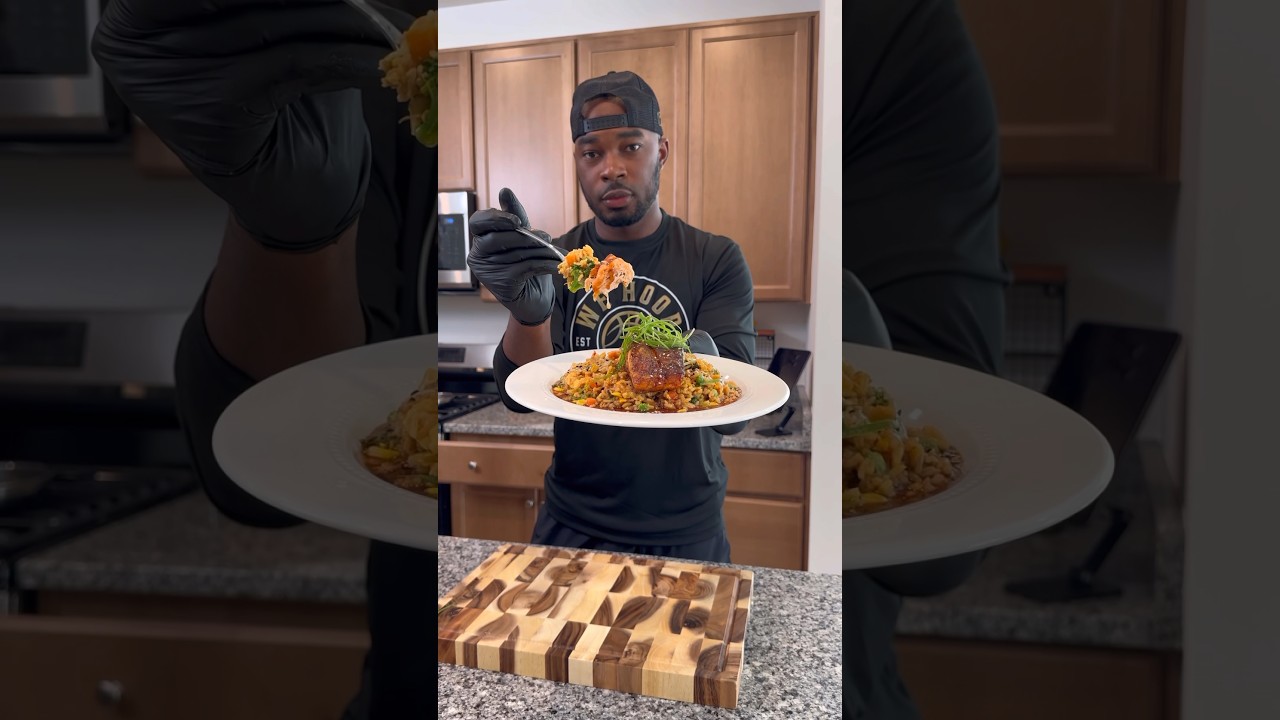
“Most teriyaki salmon recipes either undercook the tofu or overcook the fish. The reason is always the same: everything goes in the oven at once with no regard for the fact that each component has a completely different thermal profile. This recipe staggers the timing deliberately. The tofu goes in first, the vegetables follow, and the salmon finishes last. Every component lands on the plate at its personal best — crispy tofu edges, tender-caramelized vegetables, and salmon that flakes cleanly at exactly 145°F.”
Why This Recipe Works
Sheet pan meals fail for one reason: the oven doesn't care about your timeline. It heats everything at the same rate, which means if you put a 12-minute ingredient and a 30-minute ingredient in at the same time, one of them is going to be wrong. This recipe is built around staggered timing — the deliberate sequencing of three components with three different thermal profiles so they all finish within the same five-minute window.
The Tofu Problem (And Why Most People Give Up on It)
Tofu is mostly water. Extra-firm tofu — despite the name — is roughly 85% moisture by weight. Put a cube of it directly into a 425°F oven without pressing and you're not roasting it, you're boiling it from the inside. The water steams out, the surface stays pale and soft, and you end up with beige squares in a puddle of liquid that have no business being called crispy.
The press is not optional. Fifteen minutes under weight — a heavy cast iron skillet or any flat heavy pan — extracts enough moisture that the oven can do its actual job: Maillard browning on the surface while the interior firms up. Single-layer spacing on the pan matters for the same reason. Crowded cubes trap each other's released moisture and steam instead of roast. Give every piece its own air space.
The two-stage glaze application is also load-bearing. The tofu goes into the oven plain with just oil and seasoning for the first 25-30 minutes. Only when it's already crispy does it get the teriyaki glaze, then back in for 5 more minutes to set. Adding the glaze at the start would turn the honey and yogurt to a sticky, burned coating before the tofu had time to dry out.
The Glaze Architecture
Traditional teriyaki sauce is soy, mirin, sake, and sugar — thin, sweet, and perfectly calibrated for lacquering proteins. This version replaces mirin and sake with rice vinegar (sharper, more accessible) and adds Greek yogurt for two reasons: creaminess and protein. The result is a glaze that clings rather than runs, and adds roughly 3-4g of protein per serving without changing the fundamental flavor profile.
The cornstarch-into-cold-yogurt technique is a small thing that matters enormously. Starch granules need to be separated before they hit liquid heat or they clump irreversibly. By whisking cornstarch into cold yogurt first — where each granule gets coated in fat and protein — you create a smooth slurry that disperses evenly when added to the soy mixture. This is the same principle behind tempering eggs into a custard. Cold incorporation first, then heat.
The Salmon Window
Salmon at 425°F takes 12-15 minutes to reach 145°F at the thickest point — the FDA's recommended safe internal temperature and, not coincidentally, the temperature at which salmon stops being translucent and starts flaking cleanly. This is not a window you can compress. Salmon at 450°F doesn't cook faster, it just scorches the glaze while leaving the center underdone.
The skin-side-down position is not about presentation. It's about heat management. The skin acts as a thermal buffer between the direct pan heat and the delicate flesh. Without it, the bottom of the fillet overcooks while the top is still coming up to temperature. With it, heat moves through the insulating skin layer more slowly, giving the flesh time to cook evenly from all directions.
An instant-read thermometer is the difference between guessing and knowing. Salmon's visual doneness cues — color change, opacity, surface firmness — lag behind internal temperature by enough to matter. By the time it looks done from the outside, it's often already past 145°F. Check early, at the 12-minute mark, and pull it the moment the number reads right.
Why This Combination Works Nutritionally
The salmon provides omega-3 fatty acids, complete protein (28g per fillet), and B12. The tofu adds another 10-14g of plant protein plus isoflavones and additional anti-inflammatory compounds. The vegetables contribute fiber, vitamin C from the bell pepper, and sulforaphane from the broccoli. The Greek yogurt in the glaze adds calcium and a small but meaningful protein bump.
The result is a bowl that hits 42g protein per serving without any protein powder, bars, or supplements — just four real ingredients doing their jobs simultaneously in a 425°F oven. That's not a marketing claim. That's arithmetic.
Where Beginners Mess This Up
Before we start, read this. These are the 4 reasons your sheet pan teriyaki salmon bowl (42g protein, zero guesswork) will fail:
- 1
Not pressing the tofu: Tofu is approximately 85% water by weight. If you skip the 15-minute press, that water steam-vents during roasting and you get soft, pale cubes sitting in a puddle instead of golden, crispy edges. Press it hard between paper towels, weight it with a heavy pan, and don't rush this step.
- 2
Crowding the sheet pan: When tofu or vegetables overlap, moisture can't escape and you're steaming instead of roasting. Use two separate sheet pans with space between pieces. The hot circulating air needs to reach every surface. If your oven is small, roast in two batches rather than stacking.
- 3
Adding the salmon too early: Salmon at 425°F takes 12-15 minutes to reach 145°F internal. It goes in during the last window — not at the start. Salmon that bakes for 30 minutes is dry, flavorless protein leather. The stagger is the entire point of this recipe.
- 4
Making the glaze without mixing the yogurt into the cornstarch first: Cornstarch whisked directly into cold yogurt creates a smooth slurry before it hits the warm soy mixture. If you add the yogurt directly to the sauce and then add cornstarch, you'll chase lumps for five minutes. Mix dry into cold, then combine wet.
The Video Reference Library
Want to see it in action? Here are the exact videos we analyzed and combined to build this foolproof recipe translation:
The foundational video reference for this recipe. Strong close-ups of glaze consistency and visual cues for doneness on both the salmon and the tofu.
🛠️ Core Equipment
- Two rimmed baking sheetsTofu and vegetables need separate pans to avoid moisture cross-contamination and crowding. Rimmed edges prevent oil from dripping into the oven.
- Parchment paperThe teriyaki glaze contains honey and yogurt — both will burn and fuse to bare metal at 425°F. Parchment makes cleanup trivial and prevents the glaze from scorching on the pan.
- Instant-read thermometerSalmon is done at exactly 145°F. Visual doneness cues (color, flaking) are unreliable because fish continues cooking off heat. A thermometer removes the guesswork entirely.
- Heavy flat pan or cast iron skillet (for pressing tofu)Weighted pressing extracts significantly more moisture than paper towels alone. Set the pan on top of the tofu stack for the full 15 minutes.
Sheet Pan Teriyaki Salmon Bowl (42g Protein, Zero Guesswork)
🛒 Ingredients
- ✦4 salmon fillets (5 oz each)
- ✦14 oz extra-firm tofu, pressed and cubed
- ✦2 cups broccoli florets
- ✦1 large red bell pepper, cut into 1-inch chunks
- ✦2 medium zucchini, halved lengthwise and sliced into half-moons
- ✦3 tablespoons low-sodium soy sauce
- ✦2 tablespoons rice vinegar
- ✦1 tablespoon honey
- ✦1 tablespoon sesame oil
- ✦2 cloves garlic, minced
- ✦1 tablespoon fresh ginger, grated
- ✦1/4 cup plain nonfat Greek yogurt
- ✦2 teaspoons cornstarch
- ✦2 tablespoons olive oil, divided
- ✦1 teaspoon sesame seeds
- ✦2 green onions, thinly sliced
- ✦1/4 teaspoon red pepper flakes
- ✦Salt and black pepper to taste
👨🍳 Instructions
01Step 1
Press the extra-firm tofu between paper towels for 15 minutes to remove excess moisture, then cut into 3/4-inch cubes.
02Step 2
Preheat your oven to 425°F and line two baking sheets with parchment paper.
03Step 3
Toss the tofu cubes with 1 tablespoon olive oil, salt, pepper, and red pepper flakes. Spread in a single layer on one baking sheet with space between each piece. Roast for 25-30 minutes, stirring halfway through, until golden and crispy on the edges.
04Step 4
On the second baking sheet, toss broccoli, bell pepper, and zucchini with 1 tablespoon olive oil, salt, and pepper. Roast for 20-25 minutes alongside the tofu until tender and lightly caramelized.
05Step 5
While everything roasts, whisk together soy sauce, rice vinegar, honey, sesame oil, minced garlic, and grated ginger in a small bowl.
06Step 6
In a separate small bowl, stir the cornstarch into the Greek yogurt until completely smooth, then whisk this slurry into the soy sauce mixture until fully combined with no lumps.
07Step 7
When the tofu reaches golden-brown crispiness, remove from the oven, toss gently with half the teriyaki glaze, and return to the oven for 5 more minutes.
08Step 8
Pat the salmon fillets dry with paper towels and place skin-side down on a clean baking sheet. Brush the remaining teriyaki glaze evenly over each fillet.
09Step 9
Add the salmon to the oven during the last 12-15 minutes of the tofu's total cooking time. Bake until the flesh flakes easily with a fork and an instant-read thermometer reads 145°F at the thickest point.
10Step 10
Remove all components from the oven. Let the salmon rest for 2 minutes before plating.
11Step 11
Divide the roasted vegetables among four bowls. Top each with one salmon fillet and a quarter of the glazed tofu cubes.
12Step 12
Garnish with sesame seeds and sliced green onions. Serve immediately.
Nutrition Per Serving
Estimates based on standard preparation. Adjustments alter macros.
🔄 Substitutions
Instead of Extra-firm tofu...
Use Tempeh, cut into cubes
Richer, earthier flavor with a chewier bite. Slightly higher protein per ounce. Requires no pressing — tempeh's density means you go straight to tossing and roasting.
Instead of Salmon fillets...
Use Swordfish or halibut steaks (same weight)
Milder, less oily flavor. Both hold the glaze well and share salmon's firm, meaty texture. Cooking time and temperature remain identical.
Instead of Plain nonfat Greek yogurt...
Use Silken tofu blended smooth
Keeps the recipe fully plant-based. Slightly less tang — compensate with an extra teaspoon of rice vinegar. Adds 2-3g more protein per serving without dairy.
Instead of Honey...
Use Miso paste (1 tablespoon) plus 1 teaspoon maple syrup
More complex, savory-sweet profile with fermented depth. The umami from the miso amplifies the soy sauce and makes the glaze taste noticeably more restaurant-grade.
🧊 Storage & Reheating
In the Fridge
Store components separately in airtight containers. Salmon keeps for up to 2 days. Tofu and roasted vegetables keep for up to 4 days.
In the Freezer
Freeze the tofu and vegetables for up to 2 months. Salmon can be frozen but loses texture on reheating — consume fresh if possible.
Reheating Rules
Reheat tofu and vegetables on a baking sheet at 400°F for 8-10 minutes to restore crispiness. Reheat salmon gently in a covered skillet over low heat with a splash of water, or eat it cold over rice — it's excellent that way.
❓ Frequently Asked Questions
Why is my tofu still soft after roasting?
Two causes, almost always together: insufficient pressing and pan crowding. Tofu needs 15 minutes of weighted pressing minimum to shed enough moisture for oven-crisping. If pieces are touching on the pan, they're steaming each other. More time pressing plus more space on the pan solves it every time.
Can I use a different fish?
Yes. Swordfish and halibut work best because they share salmon's firm, meaty texture and won't fall apart when glazed. Tilapia or cod can work but tend to flake more aggressively — handle gently and reduce cooking time by 2-3 minutes.
My glaze is lumpy. What went wrong?
The cornstarch hit warm liquid before being dissolved in cold yogurt first. Fix: strain the glaze through a fine-mesh sieve to remove lumps, or blend it briefly with an immersion blender. Next time, mix cornstarch into cold yogurt until completely smooth before adding to the soy mixture.
Can I make this without tofu?
Yes. Double the salmon or substitute shrimp (15-20 large, peeled and deveined). Shrimp roasts in 8-10 minutes at 425°F — they go in with the salmon during the final window, not at the beginning.
How do I know the salmon is done without a thermometer?
Press the thickest part with a finger. It should feel firm but not rigid — like a well-done handshake, not a limp one. The flesh should flake in clean layers when prodded with a fork, showing opaque pink throughout with no translucent center. A thermometer is more reliable, but this tactile test works.
Is this actually good for meal prep?
The tofu and vegetables are excellent meal prep — they hold texture and flavor for 4 days and reheat well in the oven. The salmon is better eaten fresh within 2 days. For a full week of prep, consider cooking salmon twice rather than once.
The Science of
Sheet Pan Teriyaki Salmon Bowl (42g Protein, Zero Guesswork)
We turned everything on this page into a beautiful, flour-proof PDF cheat sheet. Print it out, stick it to your fridge, and never mess up your sheet pan teriyaki salmon bowl (42g protein, zero guesswork) again.
*We'll email you the high-res PDF instantly. No spam, just perfectly cooked meals.
AlmostChefs Editorial Team
We translate the internet's most popular cooking videos into foolproof, beginner-friendly written recipes. We analyze multiple methods, test them in our kitchen, and engineer a single "Master Recipe" that gives you the best possible result with the least possible stress.